European Hotels Cut Services in the Name of Sustainability: Greenwashing or Genuine Environmentalism?

European hotels face backlash for cutting services under the guise of sustainability.
A traveler's viral post about a Dutch hotel slashing services — capping AC at 23°C, canceling daily cleaning, and withholding toiletries — all in the name of environmentalism, has reignited debate over greenwashing in Europe's hotel industry. While EU climate policies provide legitimate grounds for green measures, critics argue many hotels use sustainability as cover for cost-cutting without lowering prices or investing savings into real environmental projects.
Background
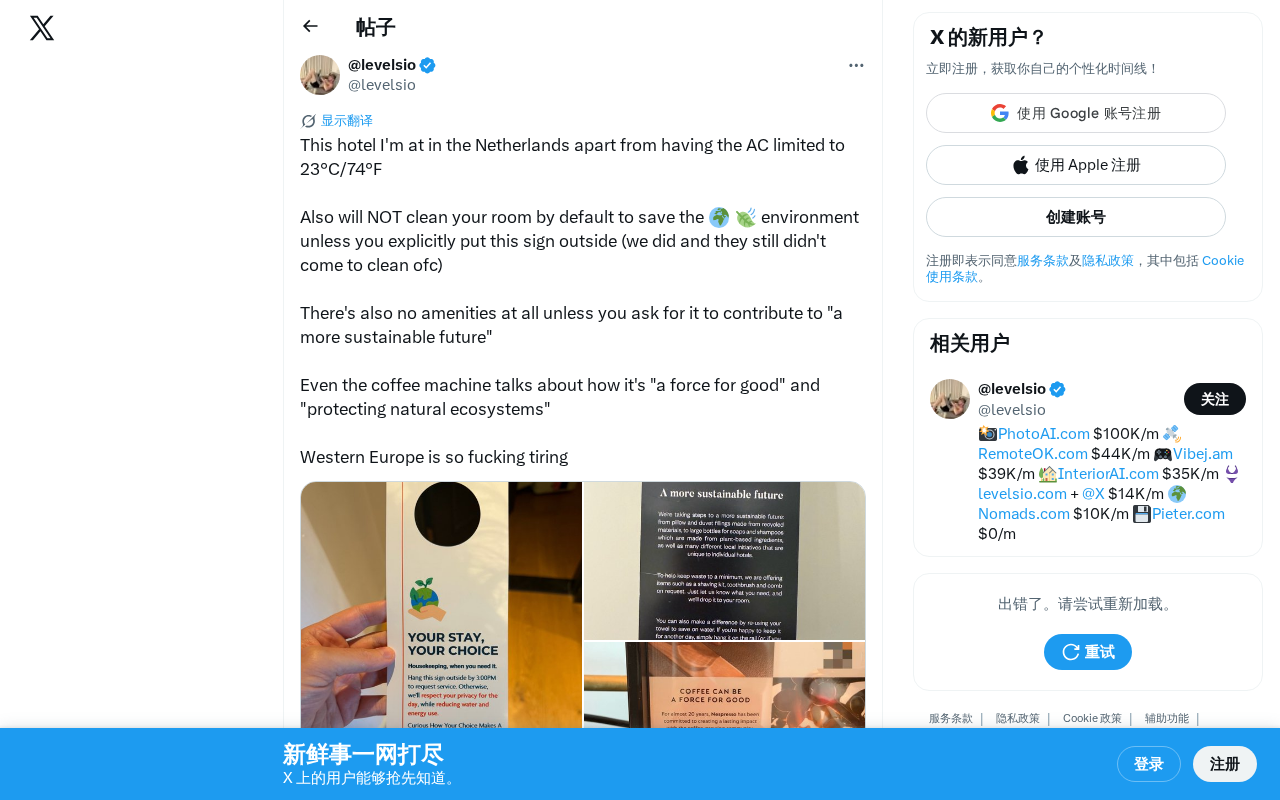
Recently, a traveler shared their experience at a hotel in the Netherlands on social media, sparking widespread debate about the balance between environmental policies and guest experience. The traveler pointed out that the hotel had significantly cut traditional services under the banner of "protecting the environment," causing considerable inconvenience to guests.
The Policy Context Behind Europe's Hotel Industry Green Transition
The green transition in Europe's hotel industry is rooted in deep policy drivers. The EU's European Green Deal, launched in 2019, set the goal of achieving carbon neutrality by 2050, prompting member states to roll out supporting regulations. The Netherlands, as an active advocate of EU environmental policy, passed its Climate Act in 2019, committing to a 49% reduction in greenhouse gas emissions by 2030 compared to 1990 levels. As a significant contributor to commercial building energy consumption, the hotel industry has naturally become a key target for emission reduction policies. According to data from the International Tourism Partnership (ITP), the global hotel industry generates approximately 1% of global carbon emissions annually, with HVAC systems accounting for 40%-60% of a hotel's total energy consumption. These figures provide a legitimate basis for hotels to implement energy-saving measures — but they also offer a convenient narrative framework for cost-shifting.
What Specific Green Measures Are Hotels Implementing?
Air Conditioning Minimum Temperature Set at 23°C
The hotel limits the air conditioning minimum temperature to 23°C (74°F), meaning guests cannot cool their rooms below this threshold during hot weather. This practice is becoming increasingly common across Europe, aimed at reducing energy consumption and carbon emissions.
From an energy science perspective, this restriction has technical justification. According to research by the International Energy Agency (IEA), each 1°C decrease in air conditioning temperature increases energy consumption by approximately 6%-8%. During the 2022 European energy crisis, multiple governments introduced temperature control policies for public buildings — Spain mandated that commercial premises keep summer AC no lower than 27°C, while Italy set the limit at 25°C. Although the Netherlands hasn't legislated mandatory limits, industry self-regulation standards generally recommend 23°C as the lower bound. However, thermal comfort varies from person to person. The World Health Organization recommends an indoor comfort temperature range of 18°C-24°C, while ASHRAE (American Society of Heating, Refrigerating and Air-Conditioning Engineers) standards suggest maintaining summer indoor temperatures between 23°C-26°C. For travelers from tropical regions or those sensitive to temperature, 23°C may indeed feel too warm.
Daily Room Cleaning Canceled by Default
The hotel has eliminated daily room cleaning by default, claiming the move is meant to "save the planet." Guests must proactively place a sign outside their door to request cleaning service. However, according to the traveler, even after placing the sign, housekeeping staff never showed up.
Toiletries Available Only Upon Request
The hotel no longer provides toiletries and other in-room amenities by default. Guests must request them at the front desk. The hotel frames this policy as "contributing to a more sustainable future."
Even the Coffee Machine Pushes the Green Message
Even the in-room coffee machine is printed with slogans like "a force for good" and "protecting natural ecosystems," weaving the environmental narrative into every detail of the stay.
The Core Debate: Genuine Sustainability or Greenwashing to Cut Costs?
This phenomenon is increasingly common across Western European hotels and has prompted two starkly different interpretations:
Supporters argue: The hotel industry is a major carbon emitter. Reducing unnecessary cleaning, limiting AC usage, and cutting single-use products can genuinely lower environmental impact. Every small step adds up to a meaningful contribution to sustainability.
Critics argue: Many hotels are using the environmental banner as cover for cutting operational costs. Fewer cleanings mean lower labor expenses; not providing toiletries means lower procurement costs — yet room rates haven't dropped accordingly. This is essentially "greenwashing."
What Is Greenwashing?
The concept of greenwashing was first coined by environmentalist Jay Westerveld in 1986 to describe the practice of companies misleading consumers through false or exaggerated environmental claims. In the hotel industry, typical greenwashing behaviors include: using vague environmental language (such as "contributing to the planet") without providing specific emission reduction data; packaging cost-cutting measures as environmental actions without investing the savings into genuine green initiatives; and lacking support from third-party certifications (such as LEED, Green Key, or EarthCheck). The EU proposed the Green Claims Directive in 2023, requiring companies to provide verifiable scientific evidence when making environmental claims — legislation specifically designed to curb the growing prevalence of greenwashing.
How Can Guest Experience and Sustainability Be Balanced?
The core challenge facing the hotel industry is: how to advance environmental goals without undermining the basic experience of paying guests. When green policies are over-packaged, forcibly imposed, and service quality declines (such as housekeeping not showing up despite the sign being placed), consumer frustration is entirely understandable.
Truly effective sustainability strategies should be transparent — letting consumers understand specific environmental impact data, offering choices rather than mandates, and ensuring that promised services are actually delivered. When "going green" becomes an excuse for service degradation, it actually erodes public trust in the concept of sustainability itself.
Industry Best Practices: Sustainability Doesn't Have to Mean Service Downgrade
Several hotel groups offer noteworthy models for balancing sustainability with guest experience. For example, Scandinavian chain Scandic Hotels uses an "opt-in" model, allowing guests to choose at booking whether they want daily cleaning — those who opt out receive loyalty points or dining discounts. Marriott International, through its "Serve 360" program, publicly discloses water consumption, energy usage, and waste data for each property, making environmental commitments quantifiable and trackable. The Dutch-based QO Amsterdam hotel integrates sustainable design into the building itself — using geothermal energy for heating and cooling, rainwater harvesting systems, and smart energy management to achieve near-zero-carbon operations without sacrificing comfort. These examples demonstrate that true sustainability isn't about simply cutting services — it's about systemic design innovation.
Key Takeaways
- Europe's hotel industry green transition is driven by policy, but how it's executed determines consumer acceptance
- AC temperature limits, elimination of daily cleaning, and reduction of single-use amenities are the three most common measures currently in use
- The key to distinguishing genuine sustainability from greenwashing lies in: whether there is verifiable data to back up claims, whether consumers are given a choice, and whether cost savings are reinvested into environmental projects
- EU legislation such as the Green Claims Directive is tightening oversight of corporate environmental claims
- Best practices show that transparency, consumer choice, and systemic innovation are the core pathways to balancing sustainability with guest experience
Related articles

Six AI Coding Tools Compared: Claude Code and Cursor Lead the Pack
In-depth comparison of six AI coding tools in 2026: Claude Code, Cursor, Codex, Trae, Qoder, CodeBuddy. Analyzed across Agent capabilities, IDE experience, and team collaboration with scenario-based recommendations.

Roo Code Deep Dive: A Guide to the Multi-Model AI Coding Assistant for VS Code
Deep dive into Roo Code (formerly Roo Cline) VS Code extension: multi-AI backend switching, auto-diff code review, terminal command execution, and Architect Mode explained with practical tips.
NotebookLM Service Restored: Google's AI Research Assistant Back Online
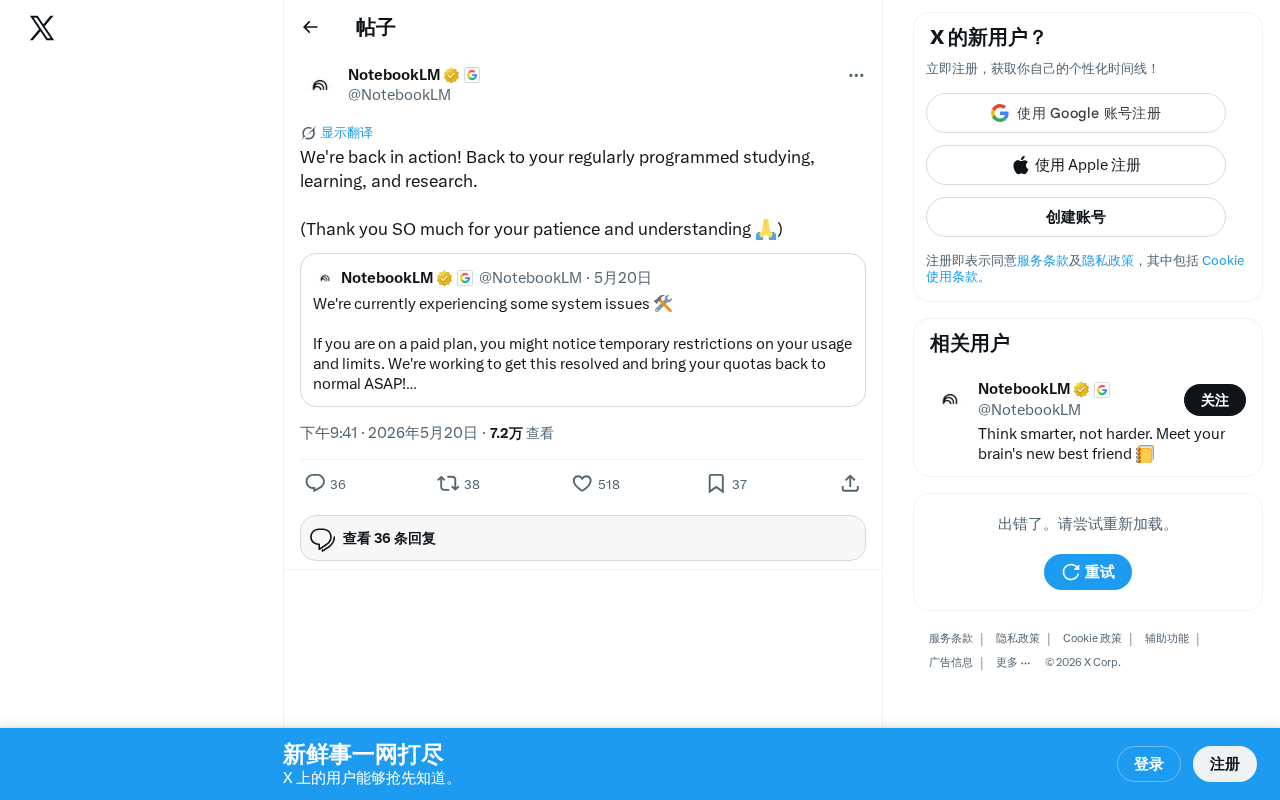
Google NotebookLM is fully back online after a service outage. Learn about the incident details, NotebookLM's core features, and backup tips for AI-dependent researchers.