NotebookLM Service Restored: Google's AI Research Assistant Back Online
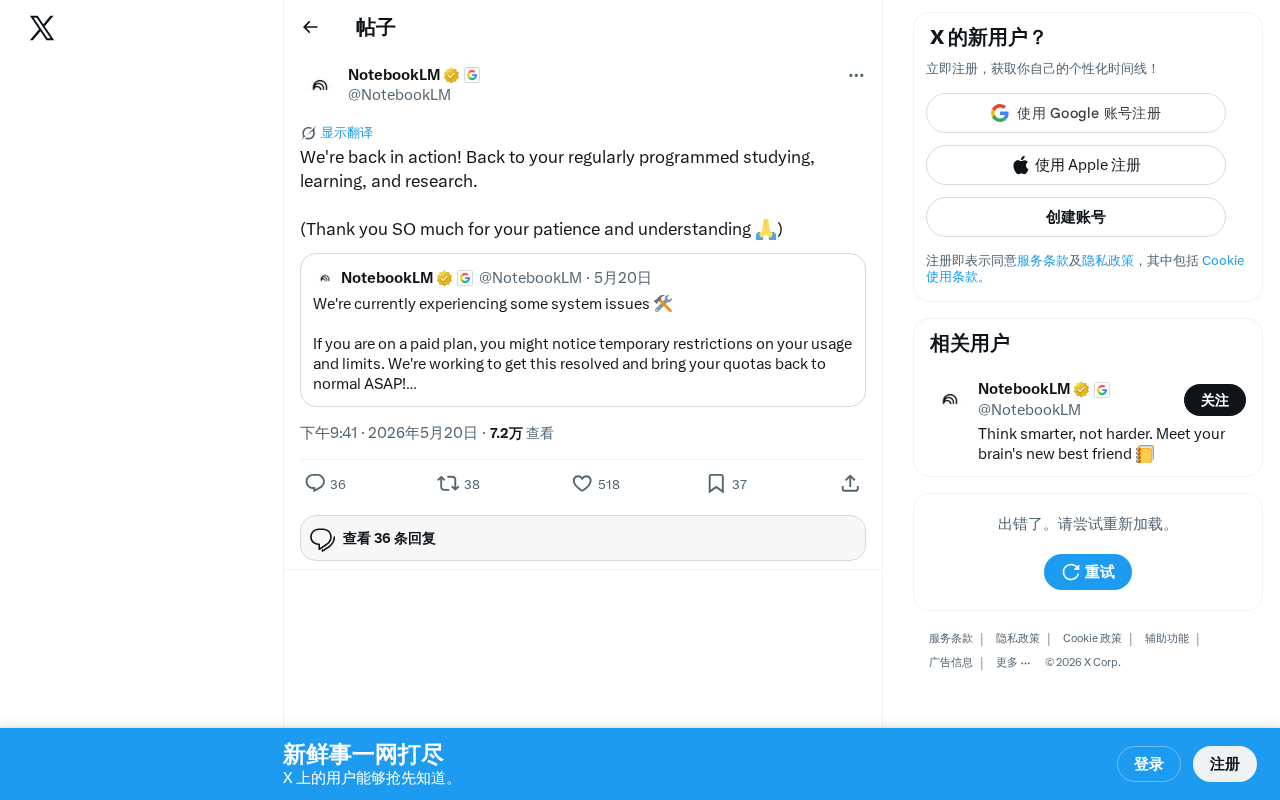
Google's NotebookLM AI research assistant is back online after a brief service outage.
Google's AI research tool NotebookLM has fully restored service after a brief outage. Built on Gemini with RAG architecture, NotebookLM offers document summarization, intelligent Q&A, and its signature Audio Overview feature. The incident highlights the importance of maintaining backup workflows when relying on cloud-based AI tools.
NotebookLM Service Restored, Users Back on Track with Learning and Research
Google's AI learning and research tool NotebookLM recently announced that its service has been fully restored, allowing users to resume normal use of its learning, research, and knowledge organization features.
NotebookLM Back Online After Brief Outage
The NotebookLM team posted a brief restoration announcement on social media, stating that the platform is back up and running and users can return to their daily learning and research workflows. The team also expressed gratitude for users' patience and understanding during the service interruption.
While the official announcement didn't detail the specific cause or duration of the outage, the tone of the announcement suggests it had a noticeable impact on users who rely on the tool for their daily learning and research. Cloud-based AI service stability issues aren't unique to NotebookLM — as large language model inference demands enormous GPU compute resources, AI services face infrastructure pressures far exceeding those of traditional cloud services. A single inference request may require billions of floating-point operations, and server load management, model version update deployments, and underlying cloud infrastructure maintenance (such as Google Cloud Platform) can all cause brief interruptions. Major AI services like OpenAI's ChatGPT and Anthropic's Claude have also experienced similar service fluctuations multiple times, reflecting the reality that current AI infrastructure is still in a period of rapid expansion.
NotebookLM Core Features and Technical Architecture
As Google's AI-powered research assistant, NotebookLM is built on Google's Gemini large language model and employs a Retrieval-Augmented Generation (RAG) technical architecture. Unlike general-purpose chatbots, the core advantage of RAG architecture is that AI responses are strictly grounded in user-uploaded source documents rather than the model's pre-trained knowledge, significantly reducing the risk of AI "hallucinations" (generating content that seems plausible but is actually incorrect). User-uploaded documents are vectorized and stored in a knowledge base. When users ask questions, the system first retrieves relevant document fragments, then the large language model generates answers based on those fragments and provides citation sources.
Its core features include:
- Document Understanding and Summarization: Upload materials in various formats including PDFs, web pages, and videos, with AI automatically extracting key information
- Intelligent Q&A: Precise question-and-answer interactions based on user-uploaded materials
- Audio Overview Generation: Transform complex documents into podcast-style audio summaries
- Note Organization: Help users systematically organize research materials
Among these, the Audio Overview feature is one of NotebookLM's most distinctive differentiators. This feature leverages Google's text-to-speech (TTS) technology and dialogue generation capabilities to transform complex academic papers or lengthy documents uploaded by users into a podcast format featuring two AI hosts discussing the content. This approach draws on the "elaborative processing" theory from cognitive science — by listening to others discuss and interpret material, learners can understand content from different perspectives and deepen their memory retention. Since its launch in 2024, this feature quickly went viral and became NotebookLM's signature selling point.
These features make it an essential productivity tool for students, researchers, and knowledge workers.
How AI-Dependent Users Should Handle Service Outages
This brief outage also reminds us that in an era of increasing reliance on AI tools for work and learning, building a diversified toolchain and maintaining local backup habits remains critically important. When a single cloud service experiences an outage, users shouldn't find themselves completely stuck in passive waiting mode.
For heavy NotebookLM users, it's recommended to regularly export important notes and research outputs to ensure work continuity under any circumstances. Additionally, consider pairing it with local knowledge management tools (such as Obsidian, Notion, etc.) as supplementary solutions, promptly capturing AI-generated insights into your personal knowledge base to avoid having your entire research workflow disrupted by a single platform's unavailability.
Key Takeaways
Related articles
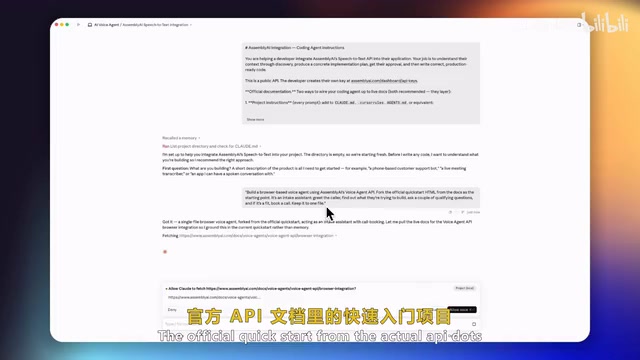
Claude Code + AssemblyAI in Practice: A Complete Tutorial for Building a Voice Agent in One Afternoon
Learn how to build a Voice Agent with speech recognition, conversation understanding, and calendar booking using Claude Code and AssemblyAI in one afternoon.
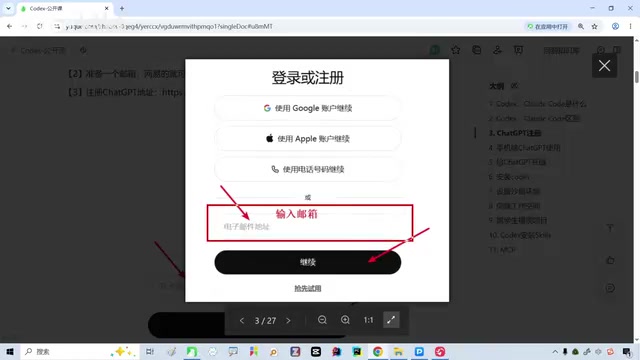
Getting Started with Codex from Scratch: Complete Guide from Registration to Setup
Complete guide to getting started with Codex: GPT registration, SMS verification, US Apple ID setup, ChatGPT app installation, and subscription plan selection for beginners.

Conductor CEO Demo: Multi-AI Agent Programming Workflow Explained
Conductor co-founder Charlie Holtz demos his AI coding workflow, showing how to orchestrate multiple AI agents in parallel with insights on model selection and human-AI collaboration.