Former Anthropic Engineer's Hands-On Review: Why He Ditched Claude Code for Codex
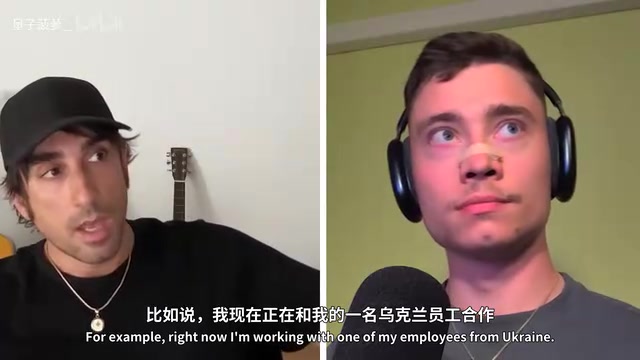
Former Anthropic engineer explains why he switched from Claude Code to Codex and shares his AI-first workflow.
Pietro, a former Anthropic engineer and MagicPath founder, reveals why he abandoned Claude Code for Codex after five months, citing better agentic loops and token efficiency. He details his productivity workflow using macOS text replacements, model switching strategies, and argues that AI Agents are killing traditional SaaS while making brand and community the only real moats for founders.
Core Thesis: Codex Is Eating All Software
Pietro, founder of MagicPath and former Anthropic engineer, shared a shocking revelation on David Ondrej's podcast: he hasn't touched Claude Code in five months. Coming from someone who was involved in Claude Code and MCP development internally at Anthropic, this shift carries significant weight.
Pietro believes Codex is superior to Claude Code for two core reasons: first, Codex has built a better agentic loop, while Claude Code is too bloated; second, Codex's token efficiency far exceeds Claude Code's. In deep SWE benchmarks, Codex completes the same tasks using fewer tokens, faster, and at lower cost.
This isn't just a matter of tool preference — it reflects a deeper trend: the future of work is no longer about "doing things" but about "supervising things being done."

AI Agents Are Reshaping the Software Industry
The End of Traditional SaaS
Pietro makes a bold prediction: the traditional SaaS business model is dying. His logic chain goes like this:
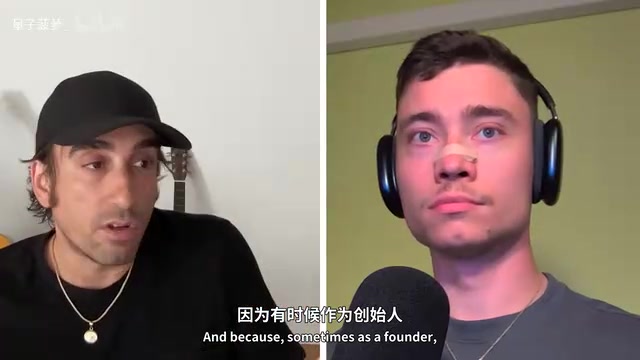
In the past, engineers on a team used VS Code, PMs used Google Drive, designers used Figma — each role was bound to specific tools. But AI Agents are causing role boundaries to collapse: designers can write code, engineers can make product decisions, PMs can directly implement features. Everyone is building their own tool chains and workflows.
In this environment, requiring everyone to use the same tool becomes unrealistic. Users are already accustomed to running their own Agents. What they need isn't another website, but services that can integrate with any Agent.
The Browser Goes from Lead to Supporting Role
Pietro predicts OpenAI will release a Codex SDK that allows applications to communicate directly with Codex. He believes ChatGPT Atlas failed because it was "browser-first, Agent-second," when the correct approach should be "Agent-first, browser-second."
He did a live demo on the podcast: using Codex on his phone, he said "make me a website about David Ondrej," and the Agent automatically searched for information, created a project, and generated a complete website — all of which could be done while taking a walk. This is what he describes as the future of work: you don't need to sit at a computer with an editor open; you just need to tell the Agent what you want.
Pietro's Efficient Codex Workflow in Detail
Keyboard Text Replacement: The Underrated Productivity Weapon
Pietro shared his most essential efficiency secret — leveraging macOS keyboard text replacement to compress commonly used complex prompts into short trigger words:
- "Absorb": Triggers a full prompt like "deeply absorb this code, resolve all functional issues"
- "Explain": Triggers "explain this project as if to a junior developer, and write out a build plan"
- "Spawn": Triggers a multi-Agent parallel work prompt, having multiple Agents handle different tasks simultaneously
- "PR": Automatically handles branch merging, cherry-pick, and other Git operations
- "Bug": Triggers a code review to find potential bugs, regressions, and edge cases
Even better, these text replacements sync to iPhone via iCloud, so they work just as well when using Codex on mobile. And you can even have Codex go into your text replacement settings and add new shortcuts itself.
Model Switching Strategy: High-Low Pairing
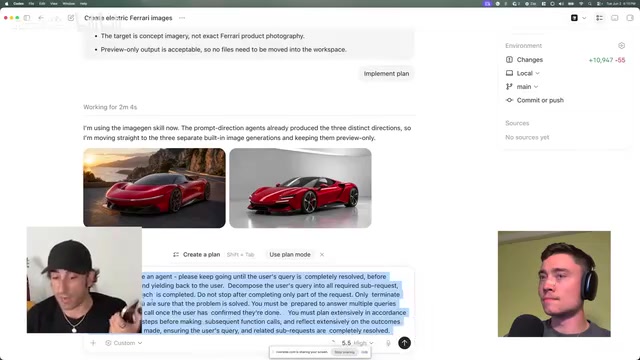
Pietro revealed an elegant model usage strategy: use the strongest model (like GPT-5.5 High) to create the plan, then switch to a weaker model (Low mode) to execute it. His reasoning is simple: the smartest model should be used for thinking through problems; execution can be handed off to cheaper models.
But Codex's plan mode has a limitation — once you select a model, you can't switch. So Pietro works around this with text replacement: first have the high-end model output in the form of "write a plan for a junior developer," then manually switch to the lower-tier model for execution.
The Context Secret for Frontend Design
Many people complain that OpenAI models are bad at frontend design, but Pietro believes this is purely a context problem. By providing design context through MagicPath, GPT-5.5 generates interface quality comparable to Opus. His live demo was genuinely impressive — "When people say AI-generated stuff is garbage, it's because they haven't provided the right context."
Practical Advice for Founders
Brand and Community Are the Only Moats
Pietro believes that in the AI era, technical barriers barely exist. The only things that matter are brand and community. He himself is the best example: a year and a half ago he tweeted "Figma is dead," was attacked by countless people, but time proved him right. This kind of consistent, opinionated output helped him build a powerful personal brand.
How to Create a Viral Demo
Pietro summarized three golden rules:
- Tools: Use Screen Studio for screen recording — it automatically tracks mouse clicks and zooms in, making demos look more professional
- Length: Keep it under one minute; on Twitter, viewers drop off after 60 seconds
- Story: Build a coherent use-case narrative rather than listing features
He used a 43-second video showcasing MagicPath's usage in Codex, which got nearly 500,000 views and directly drove a surge in users.
Advice for First-Time Founders Starting from Zero
If starting a company from scratch today, Pietro would do this:
- Build as little UI as possible — everything should be an Agent-callable API or service
- Focus on context and data, not product interfaces
- Solve one problem first — don't try to build a hundred features from the start — "perfect is the enemy of good"
- Find 20 beta testers — the AI space is so hot right now that you can easily find plenty of willing testers for free
- Use Codex to make a demo, record a video, and ship it — don't be afraid of getting only three likes
Pietro's own experience is the best proof: one tweet got a million views, and he closed funding within a week. Of course, behind this was years of accumulation and perfect timing, but if he had never posted that tweet, none of it would have happened.
The Only Sure Bet: Models Will Keep Getting Stronger
Pietro's final takeaway is simple but profound: in AI, the only thing you can be certain of is that models will keep getting stronger. Four months ago, nobody expected Anthropic to lose its throne in the coding Agent space; now everyone is switching to Codex.
So don't try to predict specific product forms. Instead, choose a subset of human experience that you believe AI will excel at, and keep building toward that direction. As he put it: "Choose something you love, build it, ship it. If it's interesting, people will notice."
Related articles
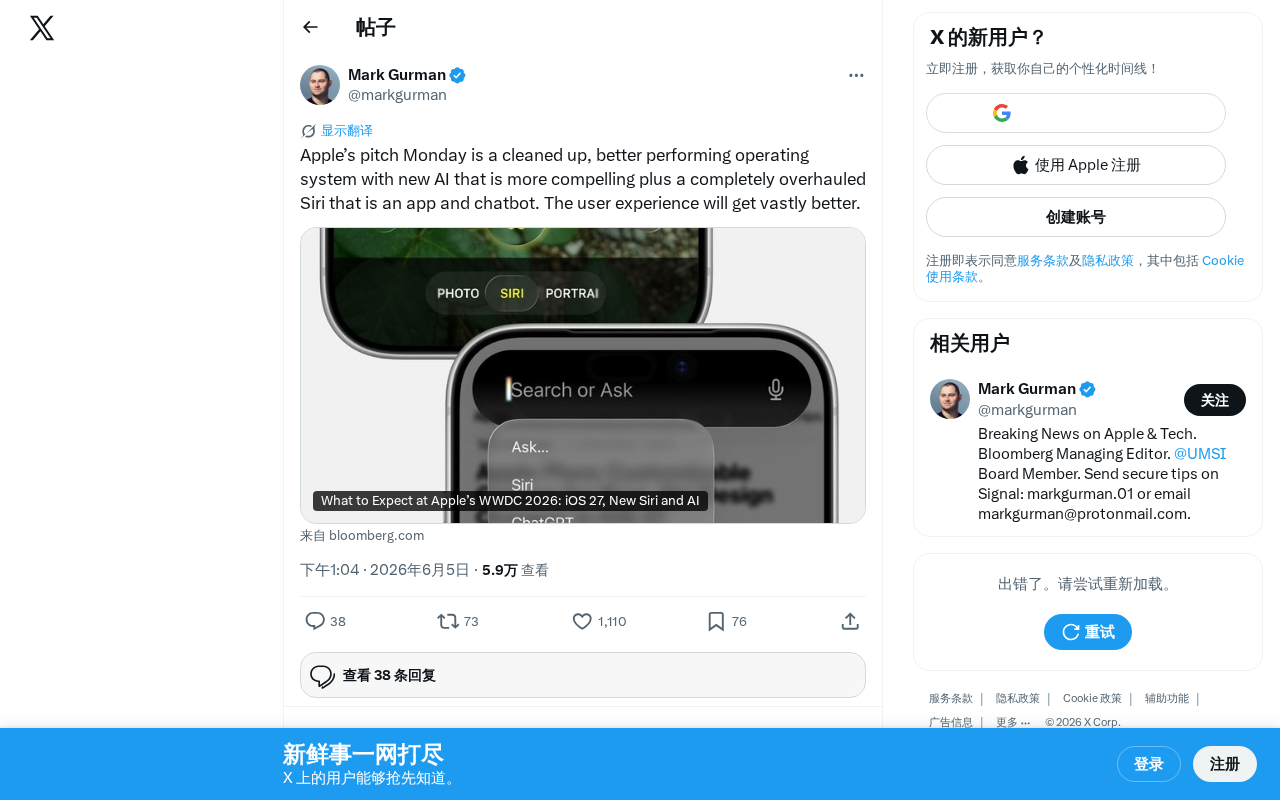
WWDC Keynote Preview: Complete Siri Overhaul, Major AI Upgrades, and System Performance Optimization
Apple's WWDC keynote set to unveil major system updates including a completely overhauled Siri chatbot, more compelling AI features, and significantly optimized OS performance.
OpenAI Investor Innovation Day: How Co…
OpenAI Investor Innovation Day: How Codex Is Reshaping Enterprise Workflows
OpenAI Investor Innovation Day reveals new enterprise AI trends: from asking to doing mode, how Codex and ChatGPT Enterprise drive workflow transformation through contextual decision support, data processing acceleration, and organization-wide GPTs ecosystems.
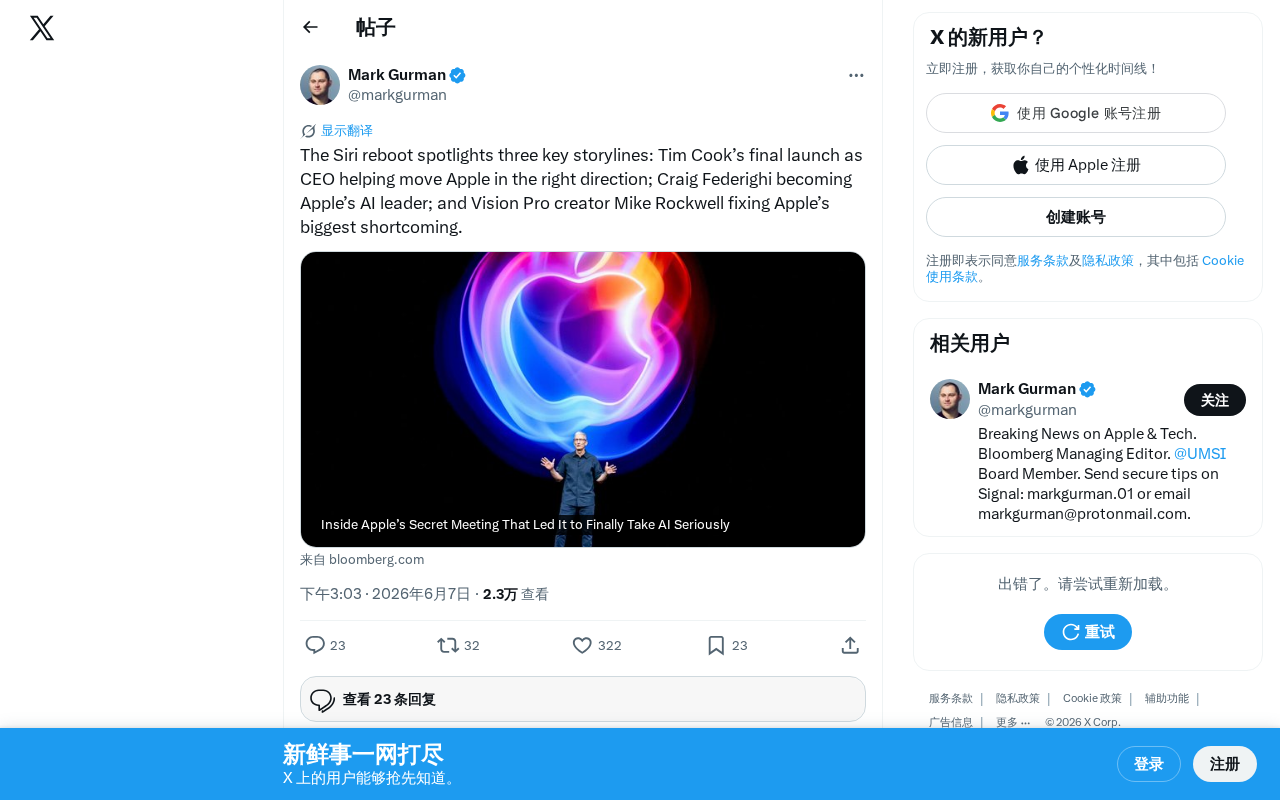
Three Key Narrative Threads Behind Siri's Reboot
Apple's Siri is undergoing its biggest reboot ever. Tim Cook sets AI strategy, Craig Federighi leads integration, and Mike Rockwell rebuilds Siri from the ground up.