Free Full-Power GPT on AI Aggregation Platforms? The Risks and Truth Behind Shared Accounts
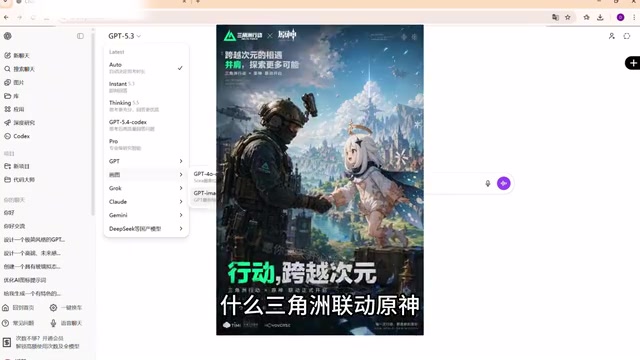
Exposing the privacy and legal risks behind free AI aggregation platforms using shared account pools.
This article analyzes the viral AI aggregation platforms promoted on Bilibili that claim to offer free access to GPT, Claude, and other top AI models through shared account pools. It reveals the serious risks including privacy leaks, legal violations, and service instability, while recommending safer alternatives like official free tiers, OpenRouter, and local open-source model deployment.
Why AI Aggregation Platforms Are Suddenly Booming
Recently, platforms like Bilibili have seen a flood of videos promoting "free access to the world's top AI models." These videos typically claim to offer a "super powerful site" that lets users access the "full-power versions" of GPT-5.5, Grok 4.2, Claude Opus 4.7, Gemini 3.1 Pro, and other major AI models—without paying, and without needing a VPN.
These videos often use highly clickbait titles (like "Never Use DeepSeek to Write Papers") to attract clicks, while the actual content promotes a third-party AI aggregation platform. Access typically requires users to follow, like, and comment before receiving a link via private message—essentially a traffic-driving promotion scheme.
This social media traffic-funneling model is extremely common in internet gray-market industries, known as "private domain traffic monetization." Operators exploit the algorithmic recommendation systems of platforms like Bilibili and Douyin, using clickbait titles and trending keywords to gain exposure, then funnel users into WeChat groups, Telegram groups, or independent sites. This model circumvents platform advertising review mechanisms while using "free" as a hook to rapidly accumulate a user base, laying the groundwork for subsequent monetization (such as paid memberships or data sales).
Core Features Claimed by AI Aggregation Platforms
Free Multi-Model Switching
According to video demonstrations, the core selling points of these aggregation platforms include:
- Full model coverage: Integration of the entire GPT series (including the latest GPT-5.5), the full Grok series, Claude, Gemini, DeepSeek V4, and other mainstream AI models
- Cross-model conversation memory: When switching between different models within the same chat window, context memory is maintained for "seamless switching"
- Official-site-level experience: Claims to provide functionality identical to official sites, including code execution, image generation, and web search
It's worth noting that so-called "cross-model conversation memory" technically requires injecting conversation history as a Prompt into the new model's request, which consumes a large number of tokens (the text units processed by models). Every AI model has a context window limit—for example, GPT-4 Turbo has 128K tokens, and Claude 3 has 200K tokens. If the platform truly implements cross-model memory, it means it stores users' complete conversation history in an intermediate layer and resends the historical content to the new model when switching—further confirming that user data is being fully recorded and stored by the platform.
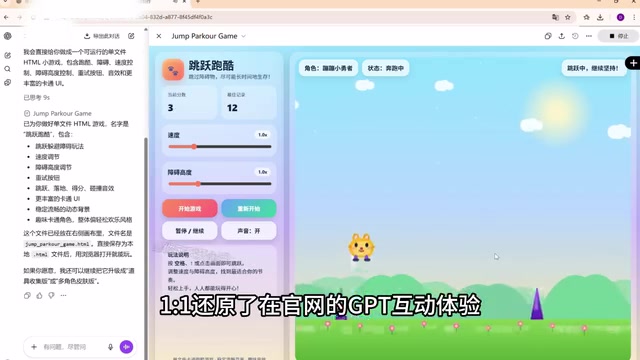
Shared Account Pool Mechanism
The operating principle behind these platforms is no mystery—they have a large pool of paid accounts from various platforms built in. When one account reaches its usage limit, users can click "switch ride" to switch to another account and continue using the service. Videos mention that platforms have "hundreds of official accounts" built in, enabling so-called "freedom from range anxiety."
From a technical perspective, a shared account pool is an operational method that involves bulk-registering or purchasing paid accounts, then using load-balancing technology to distribute user requests across different accounts. These platforms typically use a reverse proxy architecture, inserting an intermediate layer between users and the AI official site. Users actually access AI services indirectly through the platform's servers, while the platform automatically manages account rotation, cookie maintenance, and request rate control. This is essentially the same as the old "Netflix shared accounts" or "Spotify family plan splitting," but since AI conversations involve large amounts of personalized content, the security risks are far higher than streaming media sharing.
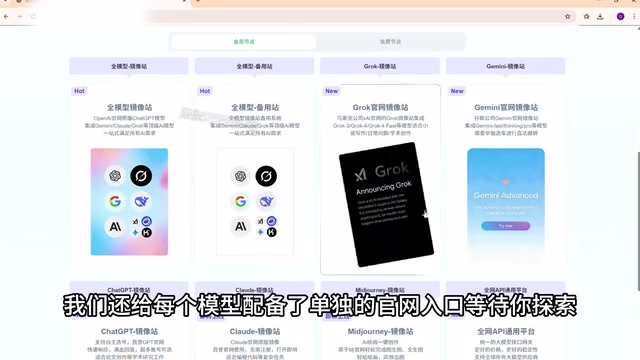
AI Image Generation Capabilities
The videos also showcase various fun images generated using GPT models, including AI-generated images like "Tim Cook livestreaming phone sales" and "Elon Musk endorsing Lao Gan Ma," demonstrating the image generation model capabilities accessible through the platform.
Risks and Hidden Dangers Behind Free AI Aggregation Platforms
Account Security and Privacy Leak Risks
This is the most critical concern. Using shared accounts means:
- Complete exposure of conversation content: All your questions and AI responses are stored in the shared account. Other users sharing the same account and platform operators may be able to see your conversation content. If you use it to process work documents, personal privacy, or trade secrets, the consequences could be devastating.
- Input information leakage: Many users habitually paste code, documents, or even content containing sensitive information into AI conversations—all of which remains in the shared account's history.
- Phishing risks: Some platforms may require users to register or provide personal information, creating the possibility of information being collected and misused.
Legal and Compliance Issues
Sharing paid accounts itself violates the Terms of Service (ToS) of various AI platforms. OpenAI, Google, Anthropic, and other companies explicitly prohibit account sharing and resale. Using such services:
- Accounts may be banned at any time, resulting in loss of conversation history
- The platform itself may be shut down for infringement, leaving users with no protection
- In certain jurisdictions, accessing services using unauthorized accounts may involve legal risks
On the legal front, this issue is more serious than many users realize. OpenAI explicitly states in its usage policy that users may not share account credentials or allow third-party access to their accounts. Anthropic's Terms of Service similarly prohibit account transfer and sharing. Violating these terms not only results in permanent account bans—under the U.S. Computer Fraud and Abuse Act (CFAA) framework, unauthorized access to computer systems may constitute a federal crime. In 2024, multiple cases involving AI API key theft and resale entered judicial proceedings, indicating that AI companies are intensifying legal prosecution of such behavior.
Questionable Service Stability
The free model is unsustainable. Maintaining hundreds of paid accounts requires continuous financial investment. The revenue models for these platforms typically include:
- Eventually converting to paid or limiting free quotas
- Monetizing through advertising or data sales
- Funneling users to other paid services
- Collecting user data for secondary exploitation
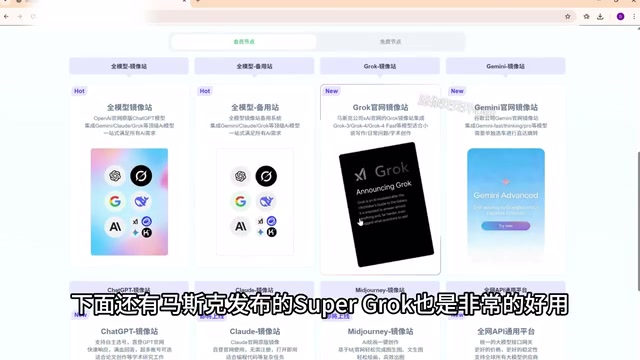
Safer AI Model Alternatives
If you genuinely need access to multiple AI models, here are more reliable options:
Official Free Tiers
- ChatGPT Free: OpenAI offers a free version—while it has usage limits, it's sufficient for daily use
- Gemini: Google provides free access, including some advanced models
- DeepSeek: A Chinese-developed model that's free and doesn't require a VPN, with performance at world-class levels
- Grok: X platform users can access the basic version for free
Compliant AI Aggregation Tools
- OpenRouter: A legitimate AI model API aggregation platform with pay-per-use pricing and transparent costs. OpenRouter operates through formal API distribution agreements with model providers, where users pay based on actual token usage—typically at or slightly above official API pricing. Its core value lies in providing a unified API interface format, so developers don't need to separately integrate with dozens of different model providers. The fundamental difference from gray-market sharing platforms is that every OpenRouter call goes through legitimate API channels, data transmission is protected by encryption, and there are no privacy leak issues from account sharing.
- Poe: A multi-model conversation platform launched by Quora, offering free quotas
- Official model APIs: For developers, using APIs directly is the safest and most flexible approach
Local Deployment of Open-Source Models
- Use tools like Ollama to run open-source models locally (such as Llama, Qwen, etc.)—completely free with data never leaving your machine
Ollama is an open-source local large model runtime framework that supports running Meta's Llama series, Alibaba's Qwen series, Mistral, and other open-source models on personal computers. Requirements depend on model scale: 7B parameter models need approximately 8GB VRAM or 16GB RAM, while 70B parameter models require professional-grade GPUs. The core advantage of local deployment is that data never leaves the user's device, making it suitable for processing sensitive business documents and personal privacy content. In 2024-2025, open-source model capabilities have improved dramatically—models like Llama 3.1 405B and Qwen2.5-72B have approached or even surpassed early GPT-4 levels on multiple benchmarks, and are more than sufficient for most daily tasks.
Conclusion: Are Free AI Aggregation Platforms Worth Using?
"Free" is never truly free. When a product doesn't charge you money, you yourself might be the product. When choosing AI tools, data security and privacy protection should be the top priority. Rather than risking information leaks by using dubious shared platforms, it's better to make good use of official free tiers from major AI models, or invest a reasonable amount for safe and reliable service.
For users in China, domestic AI models like DeepSeek, Tongyi Qianwen, and Kimi already possess considerable capabilities that can fully meet the vast majority of daily needs—without any additional cost or security concerns. Making rational tool choices is the only way to truly make AI work for you.
Related articles

A Complete Guide for Solo Developers to Build Profitable Apps from Scratch Using AI Tools
A solo developer used Vibe Coding to build an AI app earning $1,400/month in 23 days. Learn how to find validated ideas, choose tools, build MVPs fast, and generate recurring income.
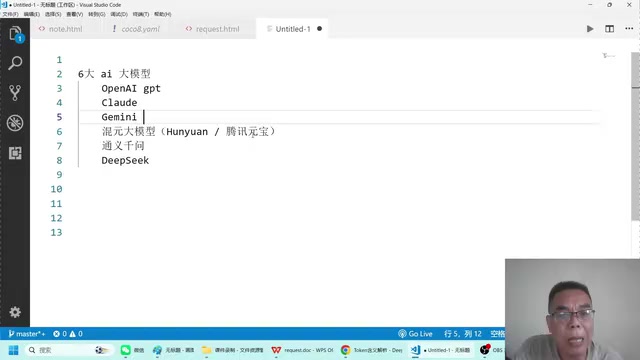
Six Major AI Models Compared: Coding Ability, Chinese Language Proficiency & Value for Money
Comprehensive comparison of GPT, Claude, Gemini, Hunyuan, Tongyi Qianwen & DeepSeek across coding ability, Chinese proficiency & API pricing with a full price table.
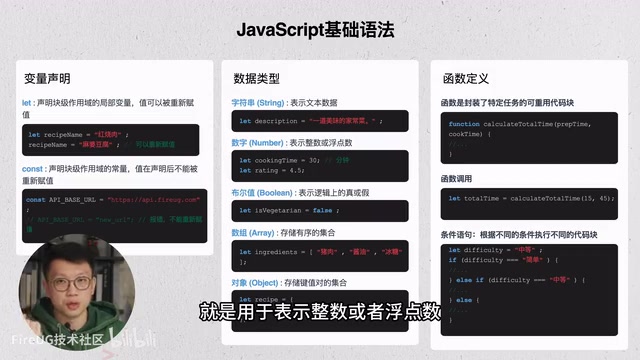
JavaScript Fundamentals: A Complete Guide to Variables, DOM Manipulation, Event Handling, and API Calls
A systematic guide to JavaScript fundamentals covering variables, data types, functions, DOM manipulation, event handling, and Fetch API calls to help beginners transition from static pages to dynamic interactive development.