Gemini Spark: Google's AI Workflow Assistant with Deep Workspace Integration
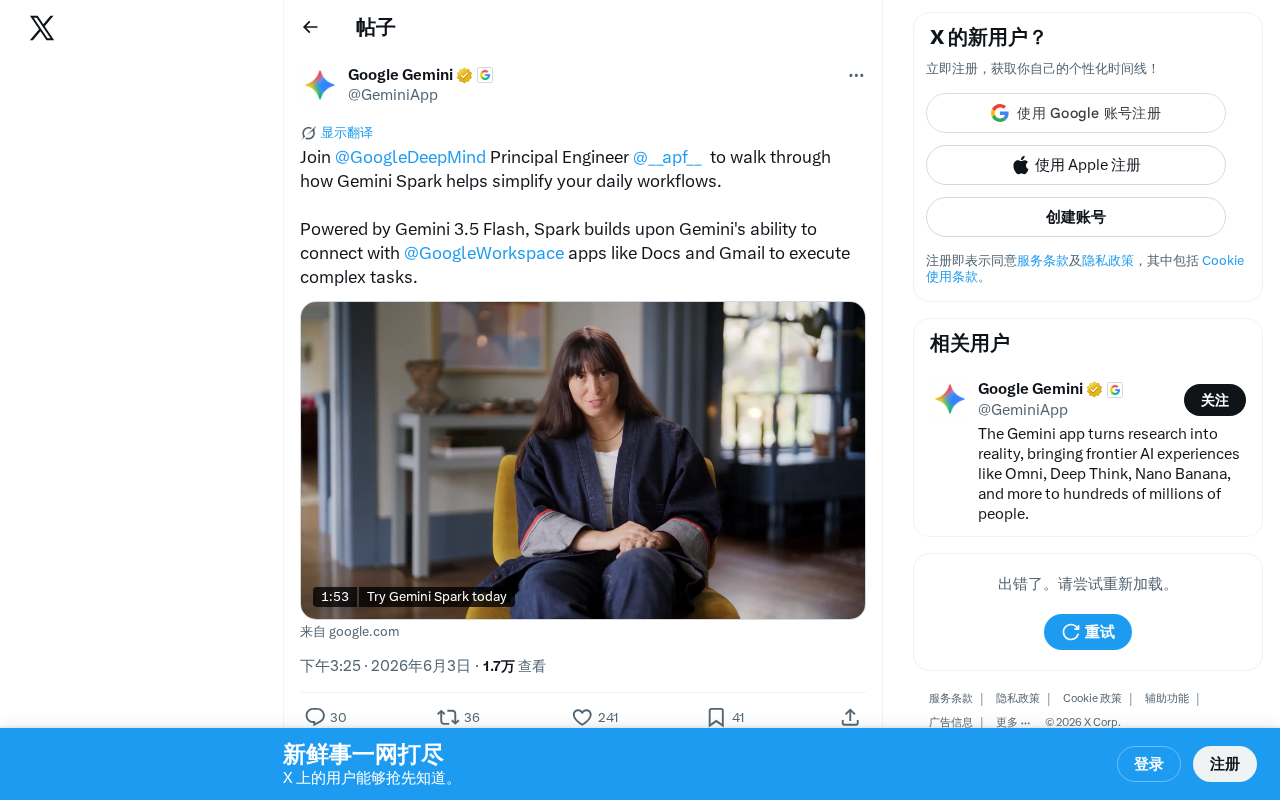
Google launches Gemini Spark, an AI workflow assistant deeply integrated with Workspace, powered by Gemini 3.5 Flash.
Google has unveiled Gemini Spark, an AI workflow assistant powered by Gemini 3.5 Flash that deeply integrates with Google Workspace apps like Gmail and Docs. Spark enables cross-app task orchestration — extracting email info, organizing documents, and drafting replies automatically. It represents the shift from conversational AI to task-executing AI Agents, putting Google in direct competition with Microsoft's Copilot in the office productivity space.
Gemini Spark Makes Its Official Debut
Google DeepMind recently showcased Gemini Spark, a brand-new AI workflow assistant, through a demo by its chief engineer. Powered by the latest Gemini 3.5 Flash model, Spark is designed to help users streamline complex daily tasks, marking a significant step forward for Google in the AI-powered office productivity space.
Core Capability: Deep Integration with Google Workspace
Seamless Connection with Office Applications
The biggest highlight of Gemini Spark is its deep integration with core applications in the Google Workspace ecosystem, including Google Docs, Gmail, and other commonly used tools. Google Workspace (formerly G Suite) is Google's cloud-based collaborative office suite for businesses and individual users, encompassing core products like Gmail, Google Docs, Sheets, Slides, Calendar, Drive, and Meet. As of 2024, it serves over 10 million paying enterprise organizations and covers billions of end users worldwide. Since all its applications are natively built on the cloud, data flows naturally between them — providing an ideal infrastructure for cross-app task orchestration by an AI assistant, which can access user data and operational permissions across different applications through a unified API layer.
Users no longer need to constantly switch between multiple applications. Spark serves as a unified intelligent entry point that can coordinate and execute complex work tasks across apps. For example, users can use Spark to extract key information directly from Gmail and automatically organize it into a Google Docs document, or generate reply drafts and create to-do items based on email content. This cross-app task orchestration capability is precisely the core differentiator in today's AI assistant competition.
Gemini 3.5 Flash Provides the Computing Backbone
Under the hood, Spark runs on the Gemini 3.5 Flash model. Gemini is Google DeepMind's multimodal large language model family, tiered by capability and resource consumption into Ultra, Pro, Flash, Nano, and other levels. The Flash series is specifically designed for high-throughput, low-latency scenarios, using techniques like Model Distillation to extract core capabilities from larger models while significantly reducing inference costs and response times without sacrificing intelligence. Compared to its predecessor, Gemini 3.5 Flash offers improvements in context window length, multimodal understanding, and tool-calling capabilities, making it particularly well-suited for productivity scenarios that demand frequent invocations and rapid responses.
The Flash series has always been known for its efficiency and low latency, enabling Spark to maintain fast response times during everyday tasks without wasting users' time on waiting. Choosing Flash over the heavier Pro model also reflects Google's deliberate trade-off between speed and cost-effectiveness in real-world office scenarios — daily workflows demand agile responses rather than extreme reasoning power. Most tasks in office settings (such as email summarization and document organization) don't require extreme reasoning capabilities but do demand high response speed and concurrent processing capacity, which is exactly where the Flash architecture excels.
Industry Trend: AI Agents Enter the Office Battlefield
The Leap from Conversation to Execution
The launch of Gemini Spark reflects a major industry trend: AI assistants are evolving from "Q&A-style chatbots" to "task-executing Agents." AI Agents are one of the most important development directions in artificial intelligence today. The core idea is to enable AI systems not only to generate text responses but also to autonomously plan task steps, invoke external tools, interact with real-world environments, and accomplish specific goals. A typical AI Agent architecture includes four key modules: Perception (understanding user intent and environmental state), Planning (decomposing complex goals into executable sub-task sequences), Tool Invocation (operating actual applications through APIs or interfaces), and Feedback Loops (adjusting subsequent actions based on execution results).
Unlike traditional chatbots, Spark can not only understand user intent but also take direct action within real office applications — this is the very essence of the AI Agent concept. The fundamental difference with Agents is that they possess "action capability": instead of telling you how to do something, they do it for you. This paradigm shift is widely regarded in the industry as the critical leap for large language models upgrading from "information tools" to "productivity tools."
Microsoft's Copilot has already deployed similar capabilities within Microsoft 365. Microsoft was first to market in 2023 with Microsoft 365 Copilot, deeply embedding OpenAI's GPT-4 model into Word, Excel, PowerPoint, Outlook, Teams, and other Office suite applications. Through the Microsoft Graph data connectivity layer, Copilot can access users' emails, files, calendars, and contacts across the entire ecosystem, enabling cross-app contextual understanding. As of early 2025, Copilot has been adopted by numerous enterprise customers, though it faces challenges including relatively high pricing ($30 per user per month) and inconsistent accuracy in certain scenarios. Google's Spark represents its answer within Google Workspace, and this head-to-head competition between the two tech giants in the AI office assistant space will further accelerate product iteration across the entire industry.
What It Means for Users
For individual users and enterprise teams that rely heavily on Google Workspace, Spark has the potential to significantly reduce the time spent on repetitive work. High-frequency but low-creativity tasks like processing emails, organizing documents, and coordinating schedules are precisely the scenarios where AI assistants can deliver the most value.
Of course, the actual user experience of such deeply integrated AI tools remains to be seen through broader user testing and feedback. Accuracy of cross-app task execution, the ability to understand complex instructions, and data privacy protection will all be critical factors determining whether Spark can truly deliver on its promise. On the data privacy and compliance front in particular, when an AI Agent needs to access users' email content, document data, and calendar information across applications, it essentially gains broad read-write permissions over users' core work data. This raises multi-layered security concerns: whether data will be used for model training (Google has committed that enterprise data will not be used for training), permission boundary issues (whether AI might access files users aren't authorized to view), and strict requirements from regulations like the EU's GDPR and China's Personal Information Protection Law regarding automated data processing. Enterprises need to conduct comprehensive compliance assessments before deploying such tools, and these factors will directly impact Spark's adoption rate in the enterprise market.
Takeaway
Gemini Spark represents Google's strategic direction of extending large model capabilities from general-purpose conversation to concrete workflow execution. Powered by Gemini 3.5 Flash and deeply integrated with Google Workspace, it targets the efficiency pain points that every knowledge worker faces daily. As AI Agent technology continues to mature, the very form of office productivity tools is being redefined. The fierce competition between Google and Microsoft in this arena will ultimately benefit billions of office users worldwide — smarter, more proactive AI assistants that are more deeply embedded in workflows are moving from concept to reality.
Related articles

Claude Code for Test Development in Practice: An AI Programming Workflow That Doubles Your Efficiency
A practical guide to Claude Code for test development: auto-generating test scripts, Plan Mode workflows, MCP + Playwright integration, and Subagent parallel tasks to build systematic AI-assisted workflows.
Hermes Agent Hands-On Review: An AI Efficiency Revolution for Indie Game Developers
Indie game developer reviews Hermes Agent vs OpenClaude: intelligent context compression, real-time Memory, remote control via Telegram, and practical use cases in game dev, social media, and email.
Vibe Coding Beginner's Guide: Tool Selection Across Three Categories with Practical Examples
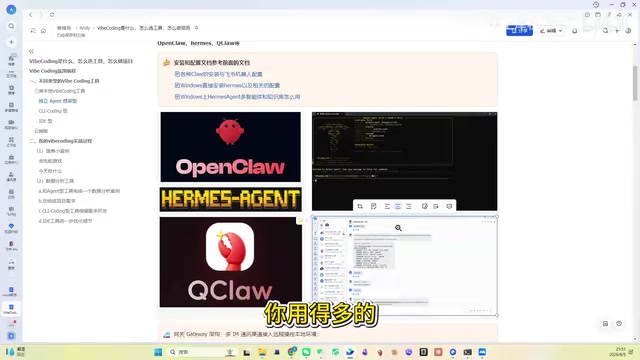
A comprehensive guide to Vibe Coding's three tool categories: Agent frameworks, CLI Coding, and IDE tools, with practical examples including Snake game and data analysis workbench.