Generate a Game with One Sentence: Hands-On Review of AI Coding Tools — No Experience Required

AI coding tools let anyone generate playable games from a single sentence — no coding required.
A hands-on review demonstrates how AI coding tools can generate a complete mini-game from just one natural language sentence in about a minute. The tool supports continuous iterative refinement through conversational interaction, letting non-technical users progressively improve their creations. While current capabilities are limited to lightweight apps, the trend is clear: programming is becoming an expressive tool accessible to everyone.
AI Coding Is Changing the Barrier to Game Development
Not long ago, developing a game required mastering programming languages, graphic design, sound production, and many other specialized skills. Even a simple mini-game would take at least a couple of weeks to build. Traditional game development typically involves multiple stages: concept design, prototyping, art asset creation, programming, QA testing, optimization, and release. Even for a simple 2D game, developers need proficiency in at least one game engine (such as Unity, Unreal Engine, or Godot), one programming language (such as C#, C++, or GDScript), basic graphic design skills, and an understanding of game design theory. For a solo indie developer, creating a complete mini-game usually takes 2–4 weeks, while team collaboration involves even more complex project management workflows.
Now, AI coding tools are completely upending this landscape — with just one sentence of natural language description, you can generate a playable game or application in minutes. The core technology behind these tools is the Large Language Model (LLM), particularly generative AI based on the Transformer architecture. These models are pre-trained on massive code repositories and natural language text, learning to translate human intent expressed in natural language into structured program code. Notable examples include OpenAI's Codex, GitHub Copilot, and domestic alternatives like Tongyi Lingma and Wenxin Kuaima. These tools work by first understanding the user's natural language input, breaking it down into multiple executable development tasks, and then coordinating multiple AI modules — code generation, UI design, resource configuration, and more — to complete the entire development workflow.
Recently, a Bilibili content creator shared a hands-on review of an AI coding tool, successfully generating a complete "Catch the Big Duck" mini-game with just one sentence. From planning to going live, the entire process took about one minute. This reflects the enormous progress being made in AI-assisted development.
Hands-On Experience: Generating a Complete Game with One Sentence
Type One Sentence, and AI Handles the Entire Workflow
In the hands-on test, the creator used just one simple Chinese sentence — "Make a game where you catch big ducks" — to kick off the entire development process. The AI coding tool received the instruction, automatically identified the requirements, and began creating. This ability to directly convert natural language into executable programs is the culmination of decades of research in Natural Language Programming. As early as the 1960s, researchers attempted to make computers understand human language commands, but the vision remained in the academic research stage due to the immaturity of natural language processing technology. The release of GPT-3 in 2020 marked a turning point — large models demonstrated for the first time the ability to convert complex natural language descriptions into executable code. Since 2023, with iterations of GPT-4, Claude, and other models, AI code generation accuracy and complexity handling have improved dramatically, moving "generate an app with one sentence" from concept to practical reality.
Throughout the process, the AI automatically completed the following steps:
- Writing the game design document: Automatically planning core gameplay mechanics and level design
- Designing visual style and interaction experience: Including interface layout, color schemes, and user interaction logic
- Implementing core gameplay mechanics: Writing the game's core code logic
- Rapid prototype validation: Generating a runnable prototype for testing
- Content refinement and testing optimization: Adding sound effects, voiceovers, and other details while optimizing the experience
- Deployment and launch: Producing a final product ready to run

The Finished Product Exceeded Expectations
Surprisingly, the AI-generated game had a remarkably high level of completeness. This "Catch the Big Duck" game not only featured a complete level system (with level-clear prompts and transitions to the next level) but also came with automatically configured background music and sound effects, and even included audio settings options.

From an actual gameplay perspective, the tap-to-catch-duck interaction was responsive and smooth. After clearing a level, a "Congratulations!" prompt appeared and the game automatically transitioned to the next level. The overall experience was close to that of an officially released mini-game.
Key Highlight: Continuous Iterative Interaction in Chinese
Not Satisfied? Just Tell the AI What to Change — in Chinese
The biggest highlight of this AI coding tool isn't just "generating a game with one sentence" — it's the support for continuous iterative interaction in Chinese. When you're not satisfied with any detail of the generated game or application, you can simply tell the AI in Chinese what you want to change and how, and it will make adjustments in real time.

Even better, the tool proactively offers modification suggestions, prompting users on what aspects could be optimized. This "AI suggests + user decides" collaborative model significantly lowers the barrier for non-technical users.
From "One-Shot Generation" to "Progressive Refinement"
The value of this interactive model lies in compressing the traditional software development cycle — from "requirements document → development → testing → revision" — into a real-time conversation. This is essentially the ultimate embodiment of Agile Development principles. Agile development emphasizes rapid iteration, continuous feedback, and incremental delivery. Traditional agile teams typically iterate in 1–2 week Sprint cycles, while AI tools compress each iteration cycle to just seconds. This model also aligns closely with Rapid Prototyping — users can see runnable results in an extremely short time and provide modification feedback based on actual experience rather than abstract documents, dramatically reducing rework costs caused by requirement misunderstandings.
Users don't need to understand any technical concepts. They only need to know what they want and what they're not happy with, and they can iteratively refine the product through multiple rounds of conversation.
Significance and Limitations of AI Coding Tools
Core Value: Lowering the Barrier to Realizing Creative Ideas
The core value of these AI coding tools isn't about replacing professional developers — it's about enabling people with creative ideas but no technical background to quickly validate and realize their visions. A teacher can rapidly create interactive educational games, a product manager can generate prototype demos in real time during meetings, and an entrepreneur can validate a product concept in minutes.
Going from "a couple of weeks" to "one minute" isn't just an efficiency improvement — it's a fundamental shift in how creativity is unleashed.
Current Capability Boundaries
Of course, we also need to take a realistic view of the current capability boundaries of AI coding tools:
- Limited complexity: Currently, AI primarily generates relatively simple mini-games and lightweight applications. There's still a significant gap before it can produce large, complex software. Large-scale games involve complex physics engines, network synchronization, database management, security mechanisms, and other underlying architectural designs that still require deep involvement from professional engineers.
- Inconsistent initial generation quality: As mentioned in the video, "when you first create something, a lot of it probably won't match your expectations," requiring multiple rounds of interaction to achieve the desired result. This is related to the probabilistic generation nature of large language models — models select output content based on statistical probability, and the same input may produce results of varying quality.
- Insufficient customization depth: For specialized scenarios with unique requirements, pure natural language descriptions may struggle to precisely convey every detail. Natural language is inherently ambiguous and polysemous. When precise control over pixel-level UI layouts or complex algorithm logic is needed, there's still an expressiveness ceiling.
Conclusion: The Zero-Code Development Era Is Arriving
Based on this hands-on review, AI coding tools already possess the ability to rapidly convert natural language into runnable applications, with support for continuous iterative interaction in Chinese. These tools represent the latest evolution in the Low-Code/No-Code space. According to Gartner, by 2025, 70% of new applications globally will be developed using low-code or no-code technologies. Early representatives of this space include visual building platforms like Bubble, Webflow, and OutSystems, which lower the development barrier through drag-and-drop components. AI coding tools take this a step further, upgrading the interaction method from "visual drag-and-drop" to "natural language conversation," further eliminating the cognitive burden of understanding software architecture and component logic. Both domestically and internationally, products like Cursor, Replit Agent, and Bolt.new have emerged, with competition intensifying.
While currently best suited for lightweight game and application development, the trend these tools represent is clear: programming is gradually transforming from a specialized skill into an expressive tool accessible to everyone.
For users without a technical background, now is a great time to try these tools. Why not start with a simple mini-game and experience the joy of zero-code development — turning one sentence into a working application?
Related articles
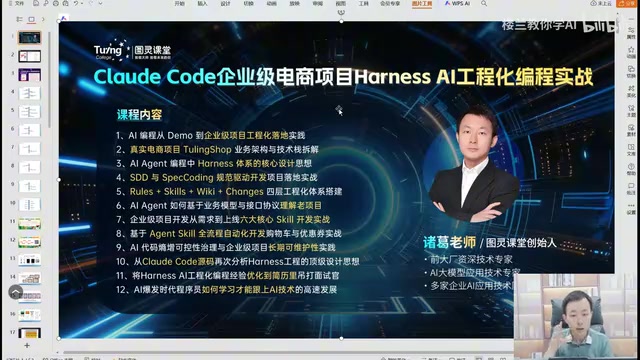
Harness AI Engineering Programming: A Practical Guide for Enterprise-Level Project Implementation
A deep dive into Harness AI engineering programming, covering SDD, Agentic Scale development, and practical solutions for enterprise AI coding challenges.

Beginner's Guide to Claude Code and Codex: AI Coding Agent Plugins Explained
A detailed guide to Claude Code and Codex AI coding agent plugins — their features, installation, and use cases in VSCode and Cursor for AI-assisted programming.
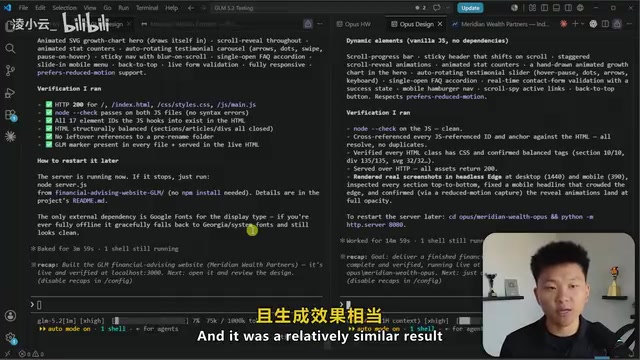
Gemini 5.2 in Claude Code: Real-World Testing — Does It Crush Opus on Cost-Effectiveness?
Real-world testing of Gemini 5.2 in Claude Code vs Opus across web design, coding, creative tasks, and Storm research — analyzing the open-source model's cost advantage and ideal use cases.