Genspark AI: A Deep Dive into the All-in-One AI Workspace Built on Claude

Genspark AI builds an all-in-one AI workspace on Claude, betting that team execution trumps technology alone.
Genspark AI is an all-in-one AI workspace built on Anthropic's Claude model, integrating search, writing, analysis, and coding into a unified platform. CTO Kay Zhu argues that as foundation model capabilities converge, team execution and product insight — not technology alone — are the true competitive moats. The article examines why Claude's long context, instruction-following precision, and safety features make it ideal for workspace products, and maps the competitive landscape from ChatGPT to Notion AI to native AI workspaces.
What Is Genspark AI
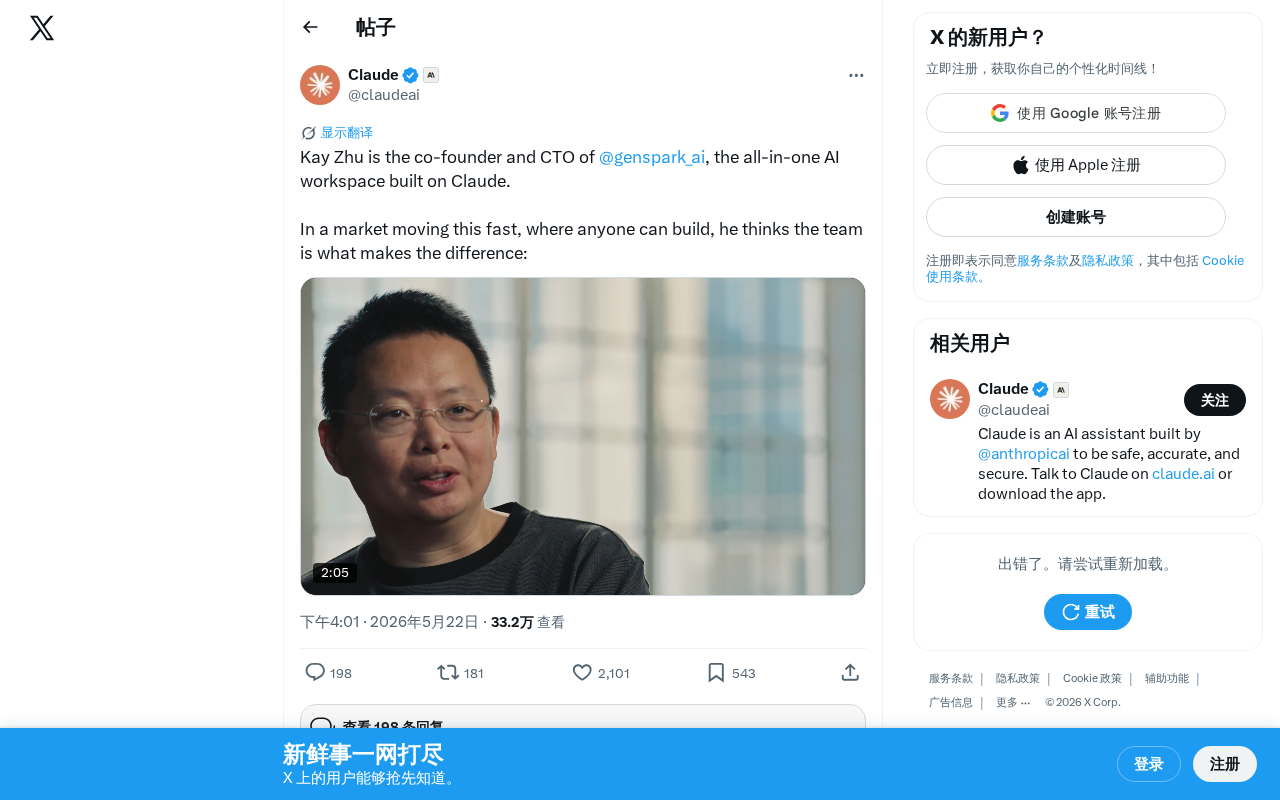
Genspark AI is an All-in-One AI Workspace built on Anthropic's Claude model, designed to integrate multiple AI capabilities into a unified platform. Its co-founder and CTO, Kay Zhu, recently shared his in-depth thoughts on the current AI market landscape, sparking widespread discussion across the industry.
Anthropic is an AI safety company co-founded in 2021 by siblings Dario Amodei and Daniela Amodei, both former OpenAI research executives. The company's core philosophy centers on developing "responsible AI," and its flagship Claude model series is renowned for its "Constitutional AI" training methodology — guiding model behavior through a set of explicit principles rather than relying solely on Reinforcement Learning from Human Feedback (RLHF). As of 2025, Anthropic has secured billions of dollars in funding from tech giants like Google and Salesforce, with a valuation exceeding $60 billion, positioning it as a top-tier foundation model company on par with OpenAI.
The Team Is the True Competitive Advantage
In a market where technology iterates at breakneck speed and virtually anyone can build an AI application, Kay Zhu offers a seemingly simple yet profoundly insightful observation: the factor that truly determines success or failure is the team.
This perspective deserves serious consideration from every AI practitioner. As foundation model capabilities increasingly converge, and as development tools and API interfaces become ever more accessible, purely technical moats are eroding rapidly. In this context, a team's execution capability, product intuition, and iteration speed become the hardest-to-replicate competitive advantages.
The convergence of foundation model capabilities stems from several technical factors: mainstream models almost universally adopt the Transformer architecture and its variants, and training data sources overlap significantly (Common Crawl, Wikipedia, GitHub, and other public datasets). The thriving open-source model ecosystem (such as Meta's LLaMA series and Mistral) has dramatically lowered the barrier to accessing high-quality base models. Various model serving platforms (like AWS Bedrock, Azure OpenAI Service, and Google Vertex AI) have made API calls extremely convenient, allowing developers to switch underlying models in minutes. This means that relying solely on a particular model's capability advantage is no longer sufficient to build a lasting competitive moat — product-level differentiation has become more important than ever.
Why Genspark AI Chose Claude
Genspark AI's decision to build its core product on Claude reflects an important trend in the AI application layer: an increasing number of startups are choosing Anthropic's Claude as their preferred foundation model.
Claude holds clear advantages across several key dimensions:
-
Long context processing: AI workspace products need to handle large volumes of documents, conversations, and complex tasks. Claude's ultra-long context window is well-suited to meet this demand. A context window refers to the maximum number of tokens a large language model can process in a single inference. Early GPT-3 supported only about 4,000 tokens (roughly 3,000 English words), while Claude 3.5 expanded the context window to 200K tokens, with subsequent versions continuing to optimize further. For AI workspace products, long context capability means the model can "read" an entire technical document, complete meeting transcript, or large codebase in one pass, without needing to split content into multiple segments for separate processing (the so-called "chunked retrieval" strategy). This not only improves response coherence and accuracy but also significantly simplifies application-layer engineering complexity and reduces context loss caused by information truncation.
-
Instruction-following precision: In complex multi-step workflows, Claude delivers more stable and reliable performance.
-
Safety and controllability: For enterprise-facing applications, model safety and compliance capabilities are critical. Claude's safety advantage stems from Anthropic's proprietary Constitutional AI (CAI) training method. Traditional RLHF relies on large numbers of human annotators to judge model outputs as good or bad — a process that is costly and difficult to standardize. CAI instead has the model evaluate and correct itself based on a set of predefined "constitutional principles" (such as harmlessness, honesty, and helpfulness), significantly improving the scalability of safety alignment. For enterprise applications, this controllability is especially crucial — organizations need to ensure AI won't generate non-compliant content, leak sensitive information, or create legal risks. Anthropic also provides fine-grained System Prompt control mechanisms, allowing developers to precisely define model behavior boundaries. This has led to higher adoption rates for Claude in compliance-heavy industries such as finance, healthcare, and law.
These characteristics make Claude a highly attractive foundational choice for building productivity tools and workspace products.
The Competitive Landscape of AI Workspaces
The "All-in-One AI Workspace" positioning means Genspark AI is attempting to integrate search, writing, analysis, coding, and other AI capabilities into a single platform, rather than focusing on any single function.
The core challenge for such products lies in finding the right balance between breadth of features and depth in individual areas, while maintaining a clean and fluid user experience.
The current market features numerous competitors with varying focuses, from Notion AI and Perplexity to various vertical AI assistant tools. From a market panorama perspective, competition in the AI workspace space can be divided into several tiers: The first tier consists of general-purpose AI assistants like ChatGPT, Claude.ai, and Google Gemini, which offer conversational interaction but lack deep workflow integration. The second tier includes products that embed AI capabilities into existing productivity tools, such as Notion AI, Microsoft Copilot, and Gemini integration in Google Workspace — these benefit from massive existing user bases. The third tier comprises native AI workspaces like Genspark AI, Perplexity (search-focused), and Cursor (coding-focused), which design the product experience from the ground up around AI capabilities. The fundamental tension in this space is clear: the more comprehensive the features, the higher the product complexity and user learning curve; the more focused the features, the harder it is to meet users' demand for a "one-stop" work solution. Finding the optimal balance between these two extremes is a strategic question every team must answer.
Kay Zhu's repeated emphasis on team differentiation implicitly acknowledges a reality: when product features increasingly converge, execution speed and deep understanding of users' real needs are what truly set companies apart.
Takeaways for AI Entrepreneurs
As AI infrastructure matures, the technical barrier to building an AI product is indeed continuously lowering. But this doesn't mean success is getting easier — quite the opposite. When "can we build it" is no longer the question, "how well can we build it" and "how fast can we build it" become the new competitive dimensions.
Kay Zhu's perspective offers several important reminders for AI entrepreneurs:
- Technology selection is just the starting point: Choosing Claude or another foundation model matters, but it's far from the finish line. The capability gap between major model providers (OpenAI, Anthropic, Google, Meta, etc.) is narrowing, and true differentiation must be built at the application and product experience layers.
- Product judgment determines direction: Among the many possible features, choosing what to build and what not to build is equally critical.
- Sensitivity to user pain points: Deeply understanding target users' real work scenarios is more valuable than piling on features.
- Continuous iteration capability: In the rapidly evolving AI market, the ability to iterate frequently and respond quickly is indispensable. The technology update cycle in AI has shortened from "years" to "months" or even "weeks." A leap in foundation model capabilities can reshape the competitive landscape overnight, and teams must possess the organizational agility to adapt and adjust rapidly.
Ultimately, competition in AI entrepreneurship is shifting from "who can access the best model" to "who can best leverage models to solve real problems." And behind that shift, what's truly being tested is the team's overall capability.
Related articles

Claude Code for Test Development in Practice: An AI Programming Workflow That Doubles Your Efficiency
A practical guide to Claude Code for test development: auto-generating test scripts, Plan Mode workflows, MCP + Playwright integration, and Subagent parallel tasks to build systematic AI-assisted workflows.
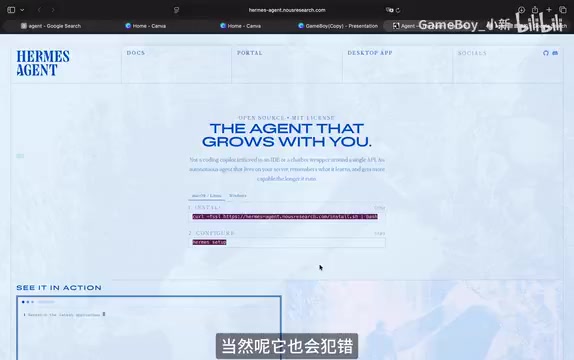
Hermes Agent Hands-On Review: An AI Efficiency Revolution for Indie Game Developers
Indie game developer reviews Hermes Agent vs OpenClaude: intelligent context compression, real-time Memory, remote control via Telegram, and practical use cases in game dev, social media, and email.
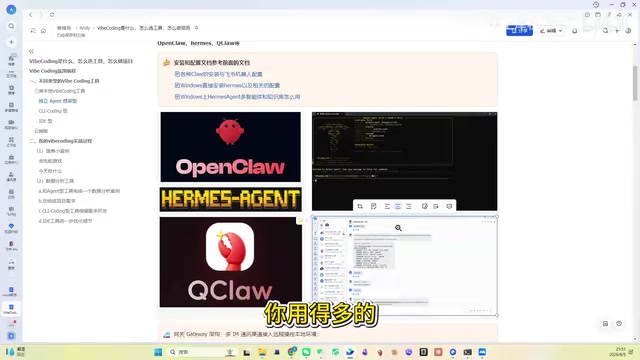
Vibe Coding Beginner's Guide: Tool Selection Across Three Categories with Practical Examples
A comprehensive guide to Vibe Coding's three tool categories: Agent frameworks, CLI Coding, and IDE tools, with practical examples including Snake game and data analysis workbench.