Getting Started with AI Agent Development: A Detailed Three-Stage Learning Roadmap

A three-stage roadmap to master AI Agent development from zero to hands-on projects.
This guide presents a structured three-stage learning framework for AI Agent development. Stage one covers Python, LLM fundamentals, and core Agent concepts. Stage two dives into five essential capabilities: task planning, tool use, memory management, self-reflection, and context optimization, along with hands-on practice using LangChain and LangGraph. Stage three progresses from simple demos to complete RAG knowledge base and Multi-Agent projects, building real-world skills in 1-2 months.
Why You Need to Learn AI Agent Development
AI Agents have become the core direction for deploying large language model applications. Whether it's enterprise workflow automation, intelligent customer service, or personal productivity tools, Agents are everywhere. However, many beginners stumble repeatedly when getting started — either their weak foundations make later progress painfully slow, or they blindly chase advanced projects without even understanding the basic concepts.
The reason AI Agents have become the core direction for LLM applications is that they solve the fundamental limitations of traditional automation. Traditional RPA (Robotic Process Automation) relies on preset, fixed rules and workflows, breaking down the moment it encounters anything outside those rules. AI Agents, powered by the reasoning capabilities of large language models, can understand ambiguous instructions, process unstructured information, and make reasonable decisions in unforeseen situations. This paradigm shift from "rule-based" to "understanding-based" enables Agents to handle over 80% of real-world business scenarios that cannot be pre-coded.
This article presents a clearly structured three-stage AI Agent learning framework to help you systematically master Agent development from scratch while avoiding common pitfalls.
Stage One: Building a Solid Foundation for AI Agent Development
Python Programming and LLM Fundamentals
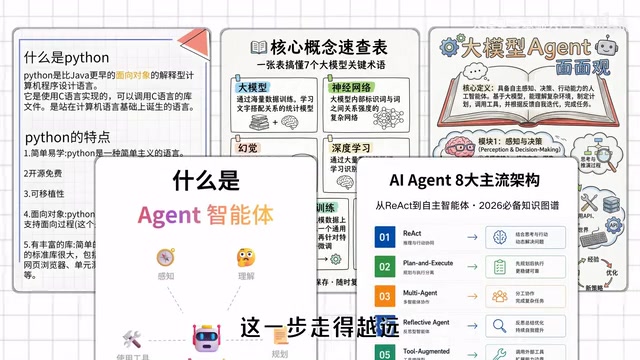
Every great building starts with a strong foundation. The first step in Agent development isn't rushing to write code — it's getting the basics right. This stage focuses on three key areas:
- Python programming fundamentals: Agent development is almost inseparable from the Python ecosystem. You don't need to be a Python expert, but you should be proficient with functions, classes, async programming, API calls, and other commonly used skills.
- LLM fundamentals: Understand the basic principles of Large Language Models, including Prompt engineering, the Token mechanism, context windows, and related concepts. These form the underlying logic for all subsequent Agent development.
- Core Agent terminology: Get clear on what Agent, Tool, Chain, Memory, and other basic concepts mean, as well as how they relate to each other.
Regarding LLM fundamentals, it's important to deeply understand the underlying logic: Prompt engineering is the core technique for interacting with large models. A large language model is essentially a conditional probability generator — it predicts the next most likely Token based on the input text sequence (Prompt). A Token is the smallest unit of text the model processes; in Chinese, one character typically corresponds to 1-2 Tokens, while in English, one word corresponds to 1-4 Tokens. The Context Window is the maximum number of Tokens the model can process in a single pass, ranging from 4K to 128K in current mainstream models. Understanding these mechanisms helps explain why Agents "forget" earlier content during long conversations and why context optimization is so critical.
Understanding the Core Traits of Agents and Mainstream Frameworks
Beyond the basics, you need to deeply understand what sets Agents apart from ordinary chatbots — their autonomous decision-making ability. A true AI Agent doesn't just passively answer questions; it can proactively plan tasks, invoke tools, and adjust strategies based on feedback.
At the same time, understanding the positioning and differences of current mainstream frameworks (such as LangChain, LangGraph, AutoGen, CrewAI, etc.) will help you make the right technology choices in later hands-on work.
Key tip: This stage may seem tedious, but the more solid your foundation, the smoother your path to enterprise deployment and career transition will be. The root cause of most pitfalls is skipping this step.
Stage Two: Mastering Core Agent Development Skills and Tools
The Five Essential Capabilities for Agent Development
This is the most critical stage of the entire learning roadmap. The core capabilities of AI Agent development can be summarized into five areas:
-
Task Planning: How an Agent breaks down a complex task into multiple executable sub-steps. This involves classic paradigms like ReAct and Plan-and-Execute.
ReAct (Reasoning + Acting) is currently the most widely adopted paradigm for Agent task planning, proposed by a Google research team in 2022. Its core idea is to have the model alternate between "thinking" and "acting": first reasoning in natural language about what should be done (Thought), then executing a specific operation (Action), and then deciding the next step based on the result (Observation). This approach simulates how humans solve problems, significantly reducing error rates compared to pure reasoning or pure action approaches. Plan-and-Execute is another paradigm that creates a complete plan first and then executes it step by step, making it suitable for structured tasks with clearly defined steps.
-
Tool Use: The power of an Agent lies in its ability to call external tools — search engines, databases, APIs, code executors, and more. Learning to define and register tools is a fundamental skill in Agent development.
-
Memory Management: The design and management of short-term memory (conversation context) and long-term memory (vector database storage) directly determines the upper limit of an Agent's "intelligence."
-
Self-Reflection: Giving an Agent the ability to check its own output, detect errors, and self-correct. This is the key leap from "functional" to "effective."
-
Context Optimization: How to efficiently organize and compress contextual information within a limited Token window is an unavoidable challenge in real-world engineering.
Hands-On Guide to LangChain and LangGraph
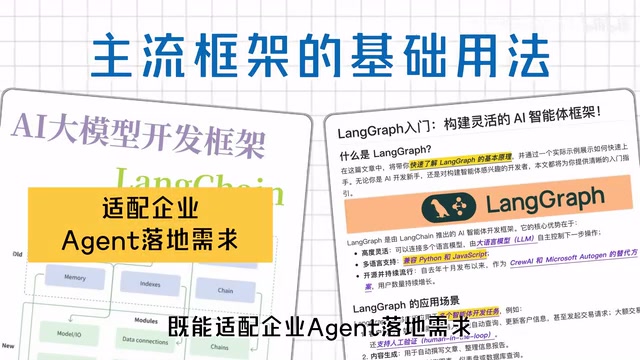
With an understanding of the five core capabilities, you need to choose one or two mainstream frameworks for in-depth study:
- LangChain: Currently the most mature Agent development framework in terms of ecosystem, ideal for rapid prototyping.
- LangGraph: A graph-structured orchestration framework from the LangChain team, suitable for building complex multi-step Agent workflows.
It's recommended to start with LangChain to understand basic Chain and Agent construction patterns, then transition to LangGraph for more complex state management and workflow orchestration.
Stage Three: Hands-On Agent Projects and Advanced Growth
A Progressive Path from Demos to Projects
Practice is the only true test of learning. This stage follows a step-by-step progression:
Step 1: Simple Demos
- Build a simple Agent that can call a search tool
- Implement a multi-turn conversational Agent with memory
- Try having an Agent automatically execute Python code and return results
Step 2: Simple Projects
- Develop a local document RAG knowledge base application (one of the most in-demand enterprise use cases right now)
- Build an intelligent assistant with multi-tool collaboration
RAG (Retrieval-Augmented Generation) is one of the hottest technical solutions for enterprise AI deployment today. Here's how it works: enterprise documents are converted into high-dimensional vectors using an Embedding model and stored in a vector database (such as Milvus, Pinecone, Chroma, etc.). When a user asks a question, the question is first vectorized, the most relevant document fragments are retrieved from the vector database, and these fragments are then passed as context to the large model to generate an answer. This architecture both avoids the model "hallucination" problem and solves the pain point of private enterprise data being inaccessible to public models — making it one of the key technologies for implementing Agent long-term memory.
Step 3: Advanced Practice
- Independently develop a complete RAG knowledge base agent, including the full pipeline of document parsing, vector storage, retrieval augmentation, and answer generation
- Experiment with Multi-Agent systems, where multiple Agents collaborate to complete complex tasks
A Multi-Agent system refers to multiple Agents with different roles and capabilities working together to accomplish complex tasks. Typical collaboration patterns include: hierarchical (a manager Agent assigns tasks to multiple executor Agents), debate-style (multiple Agents discuss the same problem from different angles to improve output quality), and pipeline-style (Agents process different stages of a task sequentially). AutoGen and CrewAI are frameworks specifically focused on Multi-Agent orchestration. This multi-Agent collaboration approach draws from the microservices architecture concept in software engineering — decomposing complex systems into multiple independent modules, each focused on a single responsibility, communicating and collaborating through protocols.

The Dual Value of Hands-On Project Experience
The value of these project experiences is twofold:
- For enterprise deployment: RAG knowledge bases, intelligent customer service, and automated workflows are among the most urgent enterprise needs right now. Mastering these skills can directly create business value.
- For job seekers and career changers: A complete Agent project experience is far more convincing than listing a bunch of course names on your resume. Interviewers care more about whether you can solve real problems.
Learning Tips and Common Mistakes in AI Agent Development
Avoid These Three Common Mistakes
- Don't skip the basics and jump straight into frameworks: Many people start by copying LangChain example code and have no idea how to debug when problems arise.
- Don't just watch — practice: Agent development is an engineering skill. You must write code and run projects to truly master it.
- Don't try to learn everything at once: Mastering one small scenario thoroughly is more valuable than learning five frameworks simultaneously.
Recommended Learning Pace
- Weeks 1-2: Python fundamentals + LLM concepts + core Agent terminology
- Weeks 3-4: Deep dive into the five core capabilities + hands-on LangChain basics
- Weeks 5-8: Progress from simple demos to complete projects, gradually building practical experience
Conclusion
AI Agent development is not an unreachable skill. Through systematic learning across these three stages — "solid foundations → core skills → hands-on advancement" — even complete beginners can develop the ability to independently build simple Agent applications within 1-2 months. The keys are: build a solid foundation, thoroughly master the core capabilities, and get your hands dirty with real projects.
In the AI wave, Agent development skills are becoming one of the core competitive advantages for technical professionals. The earlier you get in, the better positioned you'll be to seize the opportunity.
Related articles
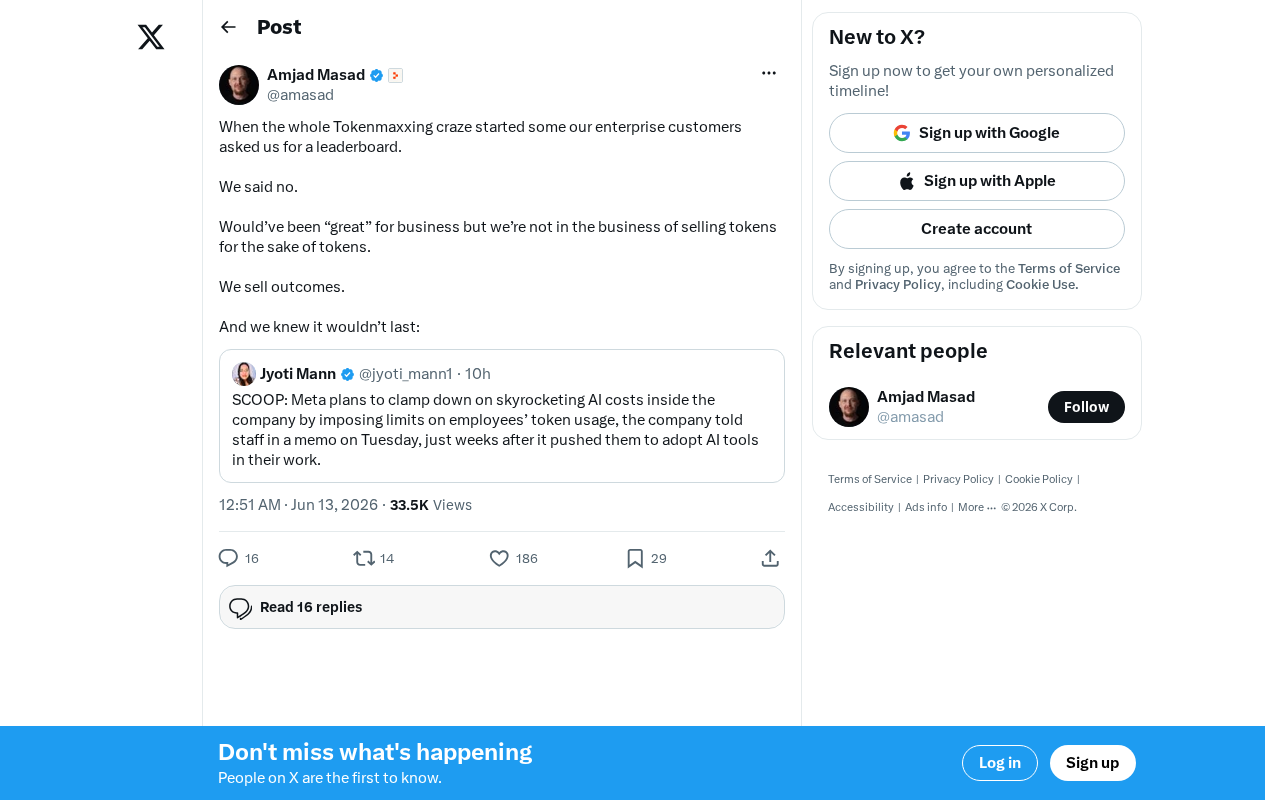
The Decline of Tokenmaxxing: Why Selling Outcomes Matters More Than Selling Tokens
The Tokenmaxxing craze is fading as enterprise AI procurement shifts from chasing Token counts to focusing on actual business outcomes. Learn why outcome-based AI evaluation is the right approach.
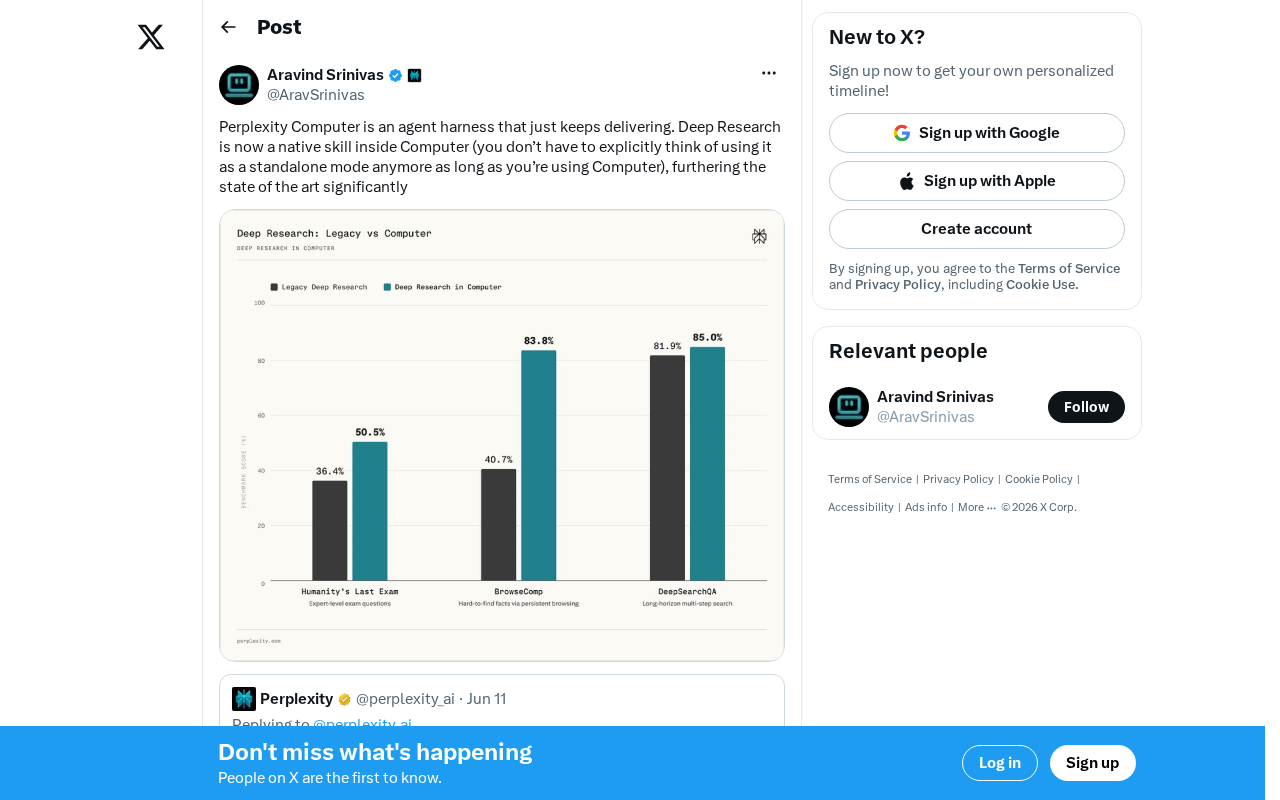
Perplexity Computer Integrates Deep Research as a Native Skill: A New Paradigm for AI Agent Capability Fusion
Perplexity integrates Deep Research as a native skill in Computer, enabling automatic invocation without manual mode switching. Analyzing the Agent Harness design philosophy and AI capability fusion trends.
Key Takeaways from Andrew Ng × OpenAI's Prompt Engineering Course: Two Core Principles Explained
Deep dive into Andrew Ng & OpenAI's ChatGPT Prompt Engineering course: Base LLM vs instruction-tuned models, two core prompting principles, and API-first development thinking for developers.