GitHub Copilot Switches to Per-Token Billing: The End of AI Coding Tool Subsidies

GitHub Copilot's switch to per-token billing signals the end of AI coding tool subsidies industry-wide.
GitHub Copilot has shifted from flat-rate monthly pricing to per-token billing, potentially increasing daily costs to $250-$400 for active developers. The change reflects unsustainable losses—GitHub was subsidizing up to $1,900 in compute costs per heavy user monthly. This isn't isolated: Windsurf, Cursor, and others are making similar moves, signaling the end of AI coding tool subsidies. Developers are turning to open-source alternatives like Cline, Codex CLI, and self-hosted models as the industry transitions from cash-burning growth to sustainable operations.
The Big Shift: Copilot's Billing Model Overhaul
Starting June 1, 2025, GitHub Copilot officially transitioned its billing model from a flat monthly fee to per-token usage-based pricing. The announcement sent shockwaves through the developer community—a related post on Hacker News racked up over 700 upvotes, with comments almost unanimously expressing frustration.
Previously, developers could pay just $10/month (Individual) or $39/month (Business) for unlimited access to Copilot's code completion and chat features. Under the new billing model, while the nominal subscription price remains unchanged, actual usage costs could skyrocket by 10 to 50 times. Some developers estimated that their typical daily coding workload would now cost $250 to $400 per day—a burden that's virtually unbearable for independent developers and small teams.
What Does Per-Token Billing Actually Mean?
A token is the fundamental unit that large language models use to process text. In English, one token corresponds to roughly 4 characters or 0.75 words; in Chinese, a single character is typically encoded as 1-2 tokens. When developers use Copilot for code completion, the system sends context code (input tokens) to the model, which then generates suggested code (output tokens). A simple code completion might consume hundreds to thousands of tokens, while a deep code conversation or refactoring request could consume tens of thousands. Per-token billing means every model inference has a clear cost, with input and output tokens typically priced differently—output tokens generally cost 2-4x more than input. This explains why daily coding costs can be so staggering—an active developer might trigger hundreds of code completion requests per day, each consuming tokens.
What's even more infuriating is the situation for annual subscribers. Some users who had already paid for a full year discovered that the token multiplier jumped from 3x to 27x—meaning the same money now buys dramatically less usage. To users, this feels like a unilateral breach of contract.
Why the Sudden Change? Because Copilot Was Hemorrhaging Money
This billing transition wasn't a whim. The core reason is simple: the previous pricing model was fundamentally unsustainable, and GitHub was losing enormous amounts of money.
One developer made a jaw-dropping calculation: a $22/month subscription quota actually consumed $1,900 worth of API compute costs behind the scenes—an 86x difference. This means GitHub was subsidizing nearly $1,900 in compute costs out of pocket for every heavy user it served.
Why Are Compute Costs So High?
GitHub Copilot relies on OpenAI's Codex series models (later upgraded to the GPT-4 series), which run on massive GPU clusters. Every code completion request requires a full model inference pass, consuming GPU compute. Take the NVIDIA H100 GPU as an example: a single card costs around $30,000-$40,000, and running a large language model typically requires dozens or even hundreds of GPUs working in parallel. Factor in electricity, cooling, network bandwidth, and operations staff, and the inference cost per million tokens ranges from a few dollars to tens of dollars, depending on model size and optimization. When a heavy user makes hundreds of code completion and chat requests daily, monthly cumulative token consumption can easily reach tens of millions or even hundreds of millions, generating compute costs that far exceed the $10 subscription fee.
This "burn money to acquire users" strategy wasn't unusual in the early AI industry. Backed by Microsoft, GitHub had sufficient capital reserves to sustain this subsidy model, aiming to rapidly capture market share and build user habits. The strategy borrowed from classic internet-era playbooks—the Didi vs. Uber subsidy wars and food delivery platform cash-burning competitions are well-known precedents. In the AI coding tool space, when GitHub Copilot launched commercially in June 2022 at $10/month, OpenAI's API costs were far higher than today. Microsoft's strategy was to lock developers into the GitHub ecosystem through Copilot, driving adoption of Azure cloud services, VS Code, and other products. According to Wall Street analyst estimates, Copilot was costing Microsoft approximately $80 million per month in losses in 2023, but in return secured over 1.5 million paying users and deep developer ecosystem lock-in.
However, as user scale expanded and usage surged, the losses grew ever larger—even Microsoft couldn't fill that hole indefinitely. When investors started demanding answers about when AI businesses would turn profitable, the end of the subsidy model became merely a matter of time.

From a business logic perspective, per-token billing is actually more rational—you pay for what you use, and light users don't subsidize heavy users. But the problem lies in how abruptly the transition was executed, lacking a transition period and transparent communication, catching developers who had already formed usage habits completely off guard.
It's Not Just Copilot: AI Coding Tools Are Collectively Shifting to Usage-Based Billing
Here's an important detail: this isn't just GitHub Copilot acting alone—it's an industry-wide pivot:
- Windsurf (formerly Codeium) had already adjusted its billing model in March 2025, shifting from unlimited usage to usage-based pricing
- Cursor has always used usage-based billing and never offered a truly "unlimited" plan
- Even cloud-hosted services for some open-source solutions are gradually tightening their free tiers
This signals an industry-wide trend: the subsidy era for AI coding tools is coming to an end. The phase of attracting users through low-cost or free strategies is over, and every vendor is searching for a sustainable business model.

Developer Response: Open-Source Alternatives Gain Traction
Facing skyrocketing costs, the developer community has begun a large-scale search for Copilot alternatives:
- Cline: An open-source AI coding assistant that supports multiple LLM APIs, allowing developers to freely choose the most cost-effective model
- Codex CLI: OpenAI's command-line coding tool, billed by actual API calls with relatively transparent pricing
- Self-hosted open-source models: An increasing number of developers are deploying Code Llama, DeepSeek Coder, and other open-source coding models on local machines or private servers—while performance may be slightly inferior to commercial solutions, costs are fully controllable
Can Open-Source Coding Models Truly Replace Commercial Solutions?
Code Llama is Meta's code-specialized model fine-tuned from Llama 2, with parameter sizes ranging from 7B to 70B, supporting mainstream languages like Python, C++, and Java. DeepSeek Coder, developed by DeepSeek, performs close to GPT-4 levels on multiple code benchmarks. These open-source models can be deployed locally using inference frameworks like Ollama and vLLM—a consumer-grade RTX 4090 GPU (around $1,600) can smoothly run 7B-13B parameter models. While locally deployed models still lag behind cloud-based commercial models in complex reasoning and long-context understanding, they're more than adequate for daily code completion and simple refactoring tasks, with near-zero marginal cost. For teams, the one-time hardware investment can often be recouped within 1-2 months through saved subscription fees.
This "voting with their feet" behavior is reshaping the competitive landscape of AI coding tools. Tools that offer transparent pricing and reasonable costs will gain more favor, while vendors trying to "boil the frog slowly" on pricing may face user attrition.
An Industry Inflection Point: From Cash-Burning Subsidies to Refined Operations
From a broader perspective, Copilot's billing overhaul marks a critical inflection point for the AI industry—the shift from "burning cash to acquire customers" to "refined operations."
Over the past two years, the competitive logic in AI was: whoever subsidizes more captures more users. But as investors increasingly demand profitability, every company has been forced to seriously address commercialization. Per-token billing essentially brings prices back to true costs, which is actually beneficial for the industry's long-term health.

But for everyday developers, this means reassessing their toolchains and workflows. Here are some recommendations worth considering:
- Monitor your token consumption to understand the true cost of your daily work
- Optimize your prompt strategy to reduce unnecessary token waste
- Build a multi-tool combination rather than over-relying on a single platform
- Keep an eye on open-source alternatives to find the right balance between cost and effectiveness
How to Effectively Reduce Token Consumption?
Prompt engineering becomes especially important in the usage-based billing era. Developers can reduce token consumption through several technical approaches: trim the context window by providing only code snippets directly relevant to the current task rather than entire files; use system-level instructions to set clear output formats, preventing the model from generating redundant explanations; use few-shot rather than zero-shot prompting, guiding the model to quickly understand intent with minimal examples. Additionally, some tools support local caching mechanisms that return cached results for repetitive queries without calling the API again—this can save 30%-50% of token consumption in large projects. Developers can also consider a tiered strategy: use lightweight local models for simple code completion, and only invoke high-performance cloud models for complex architectural design and debugging scenarios.
The "free lunch" era of AI coding tools is over, but this doesn't mean the value of AI-assisted programming will diminish. On the contrary, when price signals become real, market competition becomes healthier, and developers ultimately still benefit.
Related articles

Codex VS Claude Code: The Token Economics Behind a 10x Price Gap
Same coding task: Codex costs $15, Claude Code costs $155. Deep dive into the real reasons behind the 10x gap — it's not pricing, it's token volume, output style, and context strategy.
Gemma 4 Open-Source Model Local Deployment Guide: Ollama Installation & Mobile Setup
Step-by-step guide to deploying Google's Gemma 4 open-source model locally with Ollama and running the lightweight version on mobile with tool calling support.
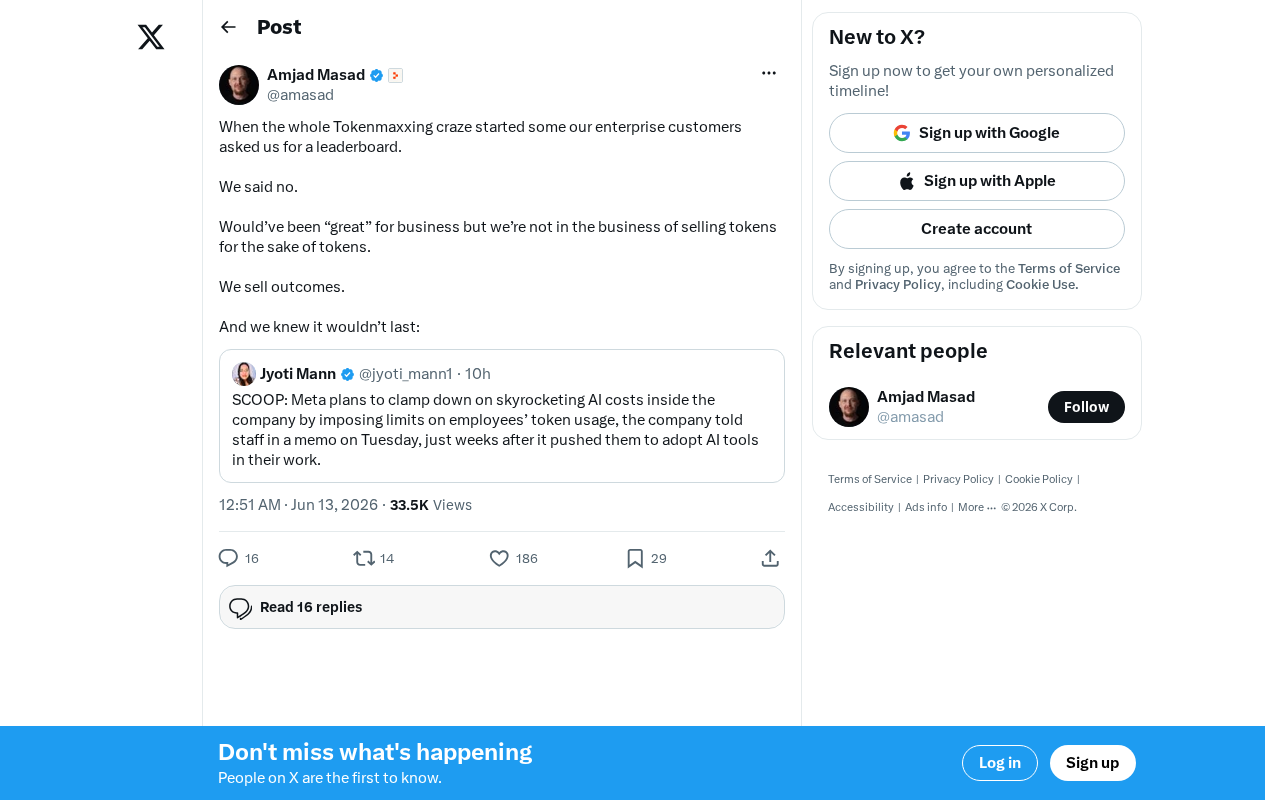
The Decline of Tokenmaxxing: Why Selling Outcomes Matters More Than Selling Tokens
The Tokenmaxxing craze is fading as enterprise AI procurement shifts from chasing Token counts to focusing on actual business outcomes. Learn why outcome-based AI evaluation is the right approach.