Google Agent Skills Library Hands-On: Can 12 Skills End AI's Obviously Fake UI Problem?
Google Agent Skills Library Hands-On: …
Google open-sources Agent Skills to standardize AI coding assistant capabilities across competing platforms.
Google's newly open-sourced Agent Skills library offers 12 Skills covering design generation, code building, and tool enhancement for AI coding assistants like Gemini CLI, Claude Code, and Cursor. While the direction is promising — packaging design specs into reusable Skills to combat generic AI-generated UIs — hands-on testing reveals significant friction: OAuth dependencies, cross-Skill coupling, and weak Chinese language support. The real story isn't the toolkit itself but Google's strategic play to define an open standard for AI coding skills.
Why Is Google Building Tools for Its Competitors?
Google recently open-sourced a skill library called Agent Skills, racking up 5.8K Stars and 712 Forks on GitHub within just one week under the Apache 2.0 license. But what's truly surprising isn't the hype itself — it's that the library doesn't just support Google's own Gemini CLI, but also offers seamless integration with Claude Code and Cursor.
Google building tools for competitors? The strategic intent behind this deserves serious consideration. Rather than calling it charity, it's more accurate to say Google is betting on an open Agent Skills standard — by defining skill specifications for AI coding assistants, it's racing to claim ecosystem dominance. No matter which AI coding tool developers use, as long as they plug into this Skill framework, Google wins.
Notably, Google's choice of the Apache 2.0 license itself is a deliberate calculation. Apache 2.0 is one of the most commercially friendly open-source licenses available, allowing anyone to freely use, modify, and distribute the code — including for commercial products — without requiring derivative works to be open-sourced. Google previously adopted the same license for successful open-source projects like Kubernetes and TensorFlow. This sends a clear signal: it wants enterprises and third-party developers to integrate these Skills into their products without hesitation, maximizing the standard's adoption velocity.
The Problem It Solves: Saying Goodbye to "Obviously AI" Interfaces
Any developer who's used AI to write frontend code knows the drill: gray backgrounds, blue buttons, default fonts, cookie-cutter card layouts — the classic "obviously AI" interface. AI-generated code works functionally, but has virtually zero design sense, producing output that looks like assembly-line templates.
Google's approach is refreshingly direct: package design specifications into Skills and feed them to AI. Through 12 Skills covering three major areas — design generation, code building, and tool enhancement — it aims to elevate AI coding assistant output from "functional" to "presentable."
Three Directions Covered by 12 Skills
Design Generation: A Two-Way Bridge Between Design and Code
Three features in this category stood out during hands-on testing:
- Code to Design: Converts existing React or Vue code directly into design mockups. Developers can write code first and generate design documentation afterward, reversing the traditional workflow.
- React Components: The reverse operation — generates React components from design mockups while automatically validating Design Token consistency, ensuring colors, spacing, fonts, and other design variables aren't lost in translation.
- Taste Design: The most noteworthy one — it's essentially an "anti-template aesthetic engine" that forces AI to produce UI with strong design sensibility rather than cookie-cutter Bootstrap-style output.
It's worth explaining the concept of Design Tokens here, as it's key to understanding the value of these Skills. Design Tokens are fundamental building blocks of modern design systems, first systematically formalized by Salesforce around 2014. They abstract design decisions like colors, fonts, spacing, and border radius into platform-agnostic variables (e.g., primary-color: #0066FF), enabling design specifications to remain consistent across Web, iOS, Android, and other platforms. Major design systems like Material Design, Ant Design, and Chakra UI all rely heavily on Design Tokens to manage visual consistency. One of the most common problems with AI-generated code is bypassing Tokens by hardcoding color values and pixel spacing, causing output to disconnect from existing design systems. The React Components Skill matters precisely because it enforces Token consistency validation during code generation, solving this problem at the source.
These three Skills form a closed loop: design mockups and code can be converted bidirectionally, with an aesthetic engine gatekeeping quality. For solo developers or small teams, this is essentially equivalent to having a junior UI designer on staff.
Code Building and Tool Enhancement
Beyond design-focused Skills, the library also includes code building and tool enhancement capabilities. Worth highlighting is the Remotion integration, which can automatically generate product demo videos — extremely practical for scenarios requiring quick Demo presentations.
Remotion is a React-based programmatic video generation framework that allows developers to create videos by writing React components — each video frame is essentially a rendered React component, and developers can leverage CSS animations, SVG, Canvas, and other existing frontend skills to create complex dynamic visual effects. It's already widely used abroad for product demos and automated marketing videos. However, it's important to note that Remotion's Chinese language support is virtually nonexistent — its rendering engine has very limited support for Chinese typesetting, CJK character line-break rules, and Chinese font loading, and community solutions for these issues are scarce. Developers targeting Chinese-speaking users will need additional workarounds.
Pitfalls Encountered During Hands-On Testing
The direction is exciting, but the problems exposed during actual testing must be honestly reported.
Pitfall 1: Not Plug-and-Play
All Skills depend on Stitch MCP (Model Context Protocol) and require a Google account plus OAuth authentication. You can't simply clone the repository and start using it — there's a series of configuration and authorization steps to complete. For developers in China, the Google account requirement alone is a significant barrier.
Some background on the MCP protocol is necessary here. Model Context Protocol is an open protocol introduced by Anthropic in late 2024, designed to provide large language models with a standardized interface for interacting with external tools and data sources. MCP uses a client-server architecture: the AI assistant acts as a client making requests, while the MCP Server connects to specific tools or databases and returns results. This design enables the same tool capability to be reused across different AI applications, similar to how the USB interface standardized peripheral connections. Google's decision to adopt MCP rather than a proprietary protocol in its Agent Skills is a thought-provoking choice — it means Google has acknowledged the protocol standard proposed by competitor Anthropic and chosen to build its own ecosystem layer on top of it, rather than starting from scratch.
Pitfall 2: Heavy Cross-Dependencies Between Skills
The 12 Skills have complex cross-dependency relationships. If you try to install just one Skill individually, you'll most likely encounter errors from missing dependencies. Modularization isn't good enough yet — you essentially need a full installation for things to work properly.
Pitfall 3: Weak Chinese Language Support
Beyond Remotion's zero Chinese support, some Skills also have compatibility issues when handling Chinese content. For product development targeting Chinese-speaking users, this is a notable limitation.
Strategic Significance: Not Just Tools, But a Standards War
From a technical completeness standpoint, this Agent Skills library is currently a half-finished product. But from a strategic perspective, Google's ambitions extend far beyond that.
5.8K Stars, 712 Forks, Apache 2.0 license — this isn't a demo-level experimental project; it's a significant bet by Google on an open Agent Skills standard. By open-sourcing and adapting to competitors (Claude Code, Cursor), Google is attempting to define the standard format and distribution method for AI coding assistant "skills."
If this standard gains widespread adoption, future AI coding assistant capability expansion will no longer depend on a single vendor but will be achieved through a standardized Skill marketplace. This follows the same logic as VS Code's plugin ecosystem and Chrome's extension store — the platform doesn't necessarily have to win, but the standard must be mine.
This logic has ample historical precedent in the tech industry. After Microsoft open-sourced VS Code and opened its Extension API in 2015, even though JetBrains IDEs were more feature-rich, VS Code still became the world's most-used code editor within five years, powered by its plugin ecosystem. Chrome's extension store follows the same logic: the browser itself can be replaced, but when a critical mass of extensions are built exclusively for Chrome APIs, user migration costs spike dramatically. Google is repeating this strategy in the AI coding assistant space, essentially betting on one judgment: the competitive focus of future AI coding tools will shift from model capability to skill ecosystem richness. Whoever defines the standard format for Skills controls the gateway to the ecosystem.
Who Should Pay Attention to This Project
- Claude Code users: If you use Claude Code for daily development, these Skills can significantly improve the quality of AI-generated UI — worth the time to configure.
- Cursor users: Cursor integration is already complete; it can be used as an enhancement plugin.
- Solo developers and small teams: Teams without a dedicated designer but needing presentable UI — these tools can fill the design capability gap.
- AI toolchain practitioners: Even if you don't use it immediately, it's worth tracking the project's evolution — it represents an important trend toward AI coding tool ecosystem-building.
Conclusion
Google's Agent Skills library has the right direction — standardizing and skill-ifying design specifications to elevate AI coding assistant output quality. But the current level of completeness isn't there yet: complex dependency configuration, weak Chinese language support, and heavy module coupling mean it's still a considerable distance from "plug-and-play."
What truly deserves attention isn't these 12 Skills themselves, but the Agent Skills standardization trend that Google is driving through open-sourcing and cross-platform adaptation. When AI coding assistant capabilities can be freely combined and distributed like plugins, the entire developer tools ecosystem will undergo a profound transformation.
Related articles
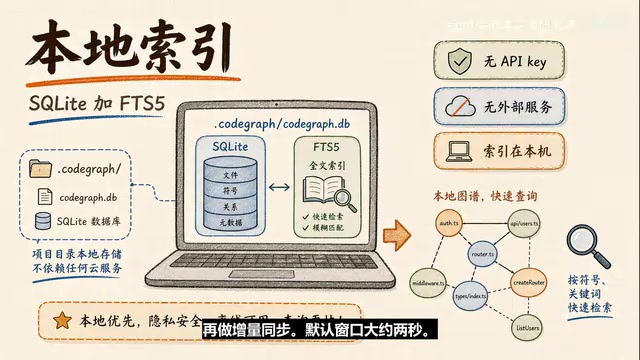
CodeGraph: Give Your Coding Agent a Code Map, Save 47% Tokens
CodeGraph is an open-source project with ~40K GitHub stars that uses Tree-sitter to build a local queryable code map, helping Claude Code and Cursor reduce 47% token usage and 58% tool calls.
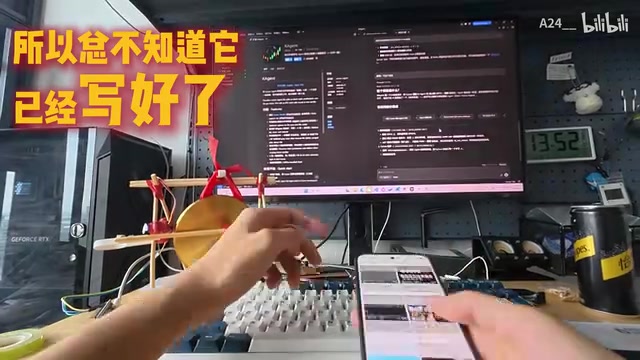
AI Finishes Writing Code, Automatically Strikes a Gong to Alert You: Open-Source Physical Feedback Tool DAgent
A developer built a physical feedback device with chopsticks and a small gong that auto-strikes when AI finishes coding. Now open-sourced as DAgent, it also simulates IPO bell-ringing when creating new files.

Level Up Claude Code: Building an Enhanced Plan Mode with Grill Me
Learn how to install and use the Grill Me Skill for Claude Code, replacing AI guesswork with structured questioning to clarify requirements before generating execution plans.