Google Teams Up with Flutter and Angular to Launch a New Generation of Developer Tool Series
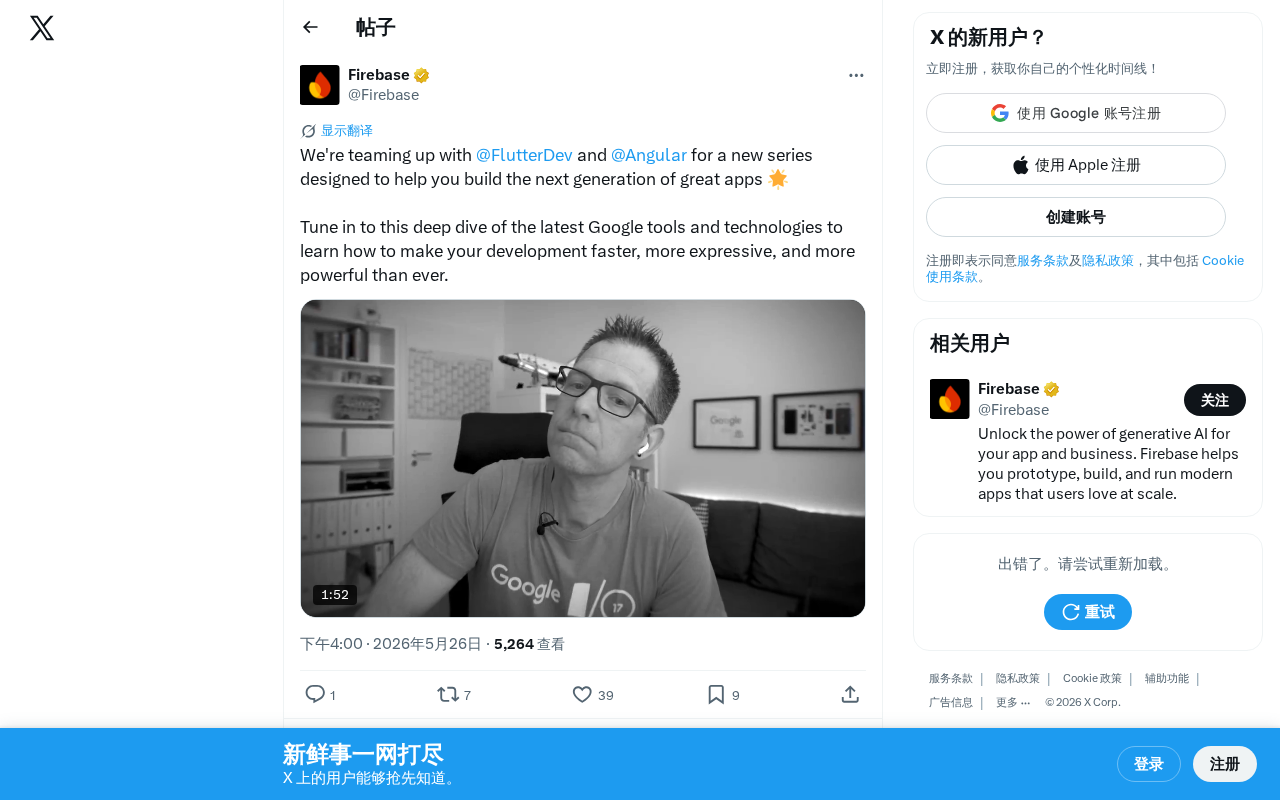
Google unites Flutter and Angular teams to launch a new developer series for next-gen app building.
Google has announced a new collaboration between its Flutter and Angular teams, launching a content series focused on three goals: faster development, more expressive UI, and more powerful features. The initiative deepens Google's cross-platform strategy, integrates AI capabilities like Gemini, and positions its tech stack against competitors like React and React Native.
Google's Developer Ecosystem Levels Up
Google recently announced an important collaboration on social media: Google is officially teaming up with the Flutter and Angular teams to launch a brand-new content series aimed at helping developers build the next generation of outstanding applications.
This move marks a new step in Google's integration of its developer tool ecosystem, bringing its two core frontend frameworks — the cross-platform mobile framework Flutter and the web frontend framework Angular — into deeper synergy.
Flutter is an open-source UI toolkit officially released by Google in 2017. Written in the Dart language, its core feature is rendering every pixel through the Skia graphics engine (now upgraded to the Impeller engine) rather than relying on platform-native controls. This allows Flutter apps to maintain a completely consistent visual experience across iOS, Android, Web, desktop, and other platforms. Angular, on the other hand, is a TypeScript web framework released by Google in 2016 (distinct from AngularJS, which debuted in 2010). It uses a component-based architecture and dependency injection design patterns and is widely adopted in enterprise-level web application development. Although the two target different platforms, they share a similar engineering philosophy within Google — strongly typed languages, declarative UI, and reactive programming paradigms.
Three Core Goals: Faster, More Expressive, More Powerful
According to the official announcement, this new series will focus on three key dimensions:
Faster Development Speed
Google has been continuously optimizing the efficiency of its development toolchain. Flutter's Hot Reload feature is already an industry benchmark, while Angular has also significantly streamlined the development workflow in recent years with mechanisms like Signals and Standalone Components. This joint series will likely showcase performance optimization achievements in the latest versions of both frameworks, as well as how to leverage Google's newest tools to shorten the cycle from code to product.
Hot Reload is one of Flutter's most iconic developer experience features. It works by incrementally compiling modified Dart source code into a kernel binary format while the app is running, then injecting it into the running application through the Dart VM's hot reload mechanism — all while preserving the app's current state (such as scroll position, form input content, etc.). The entire process typically completes in sub-second time, dramatically shortening the developer feedback loop. By comparison, traditional native mobile development often requires a full compile-deploy-launch cycle that can take tens of seconds or even minutes.
Angular's Signals mechanism is a reactive primitive introduced starting from v16, inspired by the fine-grained reactivity design of modern frameworks like SolidJS. Traditional Angular relies on Zone.js for change detection, which requires traversing the entire component tree after every asynchronous event to check for data changes — an approach that incurs performance overhead in large applications. Signals instead build a data dependency graph that precisely tracks which components depend on which data, updating only the affected parts when data changes. This mechanism not only improves runtime performance but also lays the groundwork for removing the Zone.js dependency in the future and enabling lighter-weight Angular applications.
More Expressive UI Construction
Flutter has always had a unique advantage in UI expressiveness thanks to its self-rendering engine, enabling pixel-level interface customization. Flutter's self-rendering engine means it doesn't use platform-native UI controls (such as iOS's UIKit or Android's View system) but instead draws all interface elements directly on a low-level canvas. The latest Impeller rendering engine is deeply optimized for mobile GPUs, pre-compiling all shaders to eliminate runtime shader compilation stutter (shader jank). The advantages of this architecture include: developers have complete control over the UI without being constrained by platform controls; cross-platform consistency is extremely high; and animations and complex visual effects are more freely achievable. The trade-off is a relatively larger app size and the need for extra work to fully match platform-native interaction details.
Angular provides powerful component-based architecture and data binding capabilities on the web. Integrating the best practices of both frameworks promises to offer developers a complete UI solution covering both mobile and web.
More Powerful Feature Support
Combining Google's technological expertise in AI, cloud services, and other areas, this series will likely cover how to integrate AI capabilities like Gemini into Flutter and Angular applications, as well as how to use backend services like Firebase to rapidly build fully-featured modern applications.
Google's Gemini large language model has been integrated into the development toolchain in multiple ways. In Android Studio, Gemini can provide code completion, error explanations, code refactoring suggestions, and more. At Google I/O 2024, the ability to generate Flutter UI code from natural language descriptions was also demonstrated. Firebase's Genkit framework provides developers with a standardized way to integrate AI capabilities into backend services. On the frontend level, both Angular and Flutter are exploring scenarios such as AI-assisted component generation, accessibility optimization, and performance analysis. This deep integration of AI with development frameworks represents the trend of software engineering shifting from "manual coding" to "human-AI collaborative coding."
What This Means for Developers
Deepening the Cross-Platform Strategy
Flutter covers mobile, desktop, and web, while Angular focuses on web application development. Their joint promotion signals that Google is building a more unified cross-platform development narrative. For teams that need to maintain multi-platform applications simultaneously, this could bring a more consistent development experience and lower learning costs.
A Reference for Technology Stack Selection
For teams currently evaluating their technology choices, this series will be an important window into Google's latest technical direction. By gaining a deeper understanding of the latest capabilities of Flutter and Angular, developers can better determine which framework best suits their project needs — or how to leverage the strengths of both within a single project.
Development Paradigms in the AI Era
Interestingly, this series launches at a critical time when AI technology is deeply integrating into development tools. Google has already integrated Gemini-assisted programming features into Android Studio, and this series will likely further demonstrate how AI can empower the Flutter and Angular development workflows, including scenarios like code generation and UI design assistance.
Industry Observations
From a broader perspective, Google's move is also an active response to the current competitive landscape of frontend development. Against the backdrop of continued evolution in frameworks like React and Vue, Google's decision to jointly promote its two major frameworks reflects both resource consolidation and a signal of long-term commitment to the developer community.
The current frontend development ecosystem presents a multipolar landscape. React dominates the web framework market thanks to its massive community ecosystem and Meta's continued investment; Vue is especially popular in Asian markets due to its progressive design and lower learning curve; emerging frameworks like Svelte and SolidJS attract attention with compile-time optimizations and extreme performance. In the cross-platform mobile development space, React Native is Flutter's primary competitor, with each having its own strengths and weaknesses in performance, developer experience, and ecosystem maturity. Google's joint promotion of Flutter and Angular is essentially building a complete Google technology stack narrative from web to mobile, directly positioning itself against Meta's React + React Native combination.
For developers who follow Google's technology ecosystem, it's recommended to closely follow subsequent updates in this series, stay informed about the latest tools and best practices for Flutter and Angular, and build up technical solutions for your projects.
Key Takeaways
Related articles
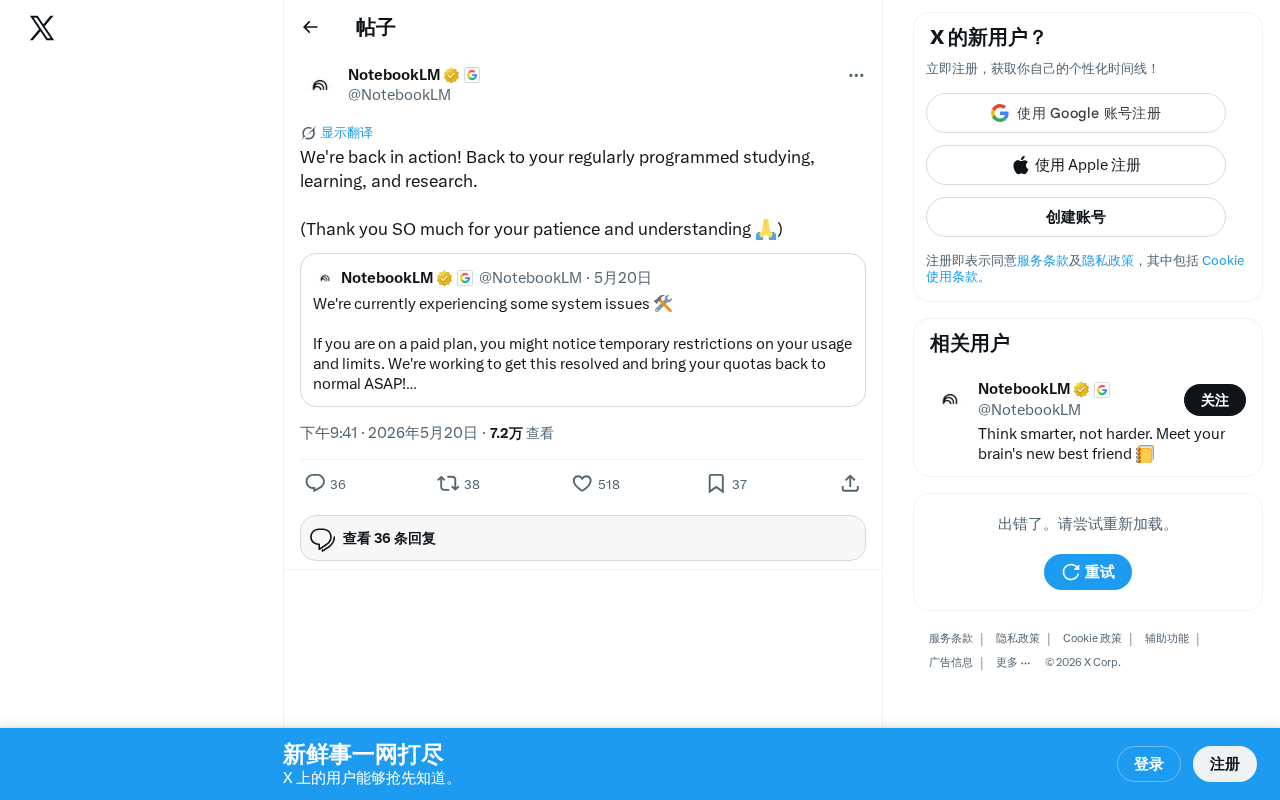
NotebookLM Service Restored: Google's AI Research Assistant Back Online
Google NotebookLM is fully back online after a service outage. Learn about the incident details, NotebookLM's core features, and backup tips for AI-dependent researchers.

Claude Code Chinese Tutorial: A 100-Page Systematic Learning Guide on Feishu Docs
A detailed look at the Claude Code Chinese learning resource on Feishu Docs, covering AI agent learning, memory systems, and task decomposition with a systematic path from beginner to advanced.
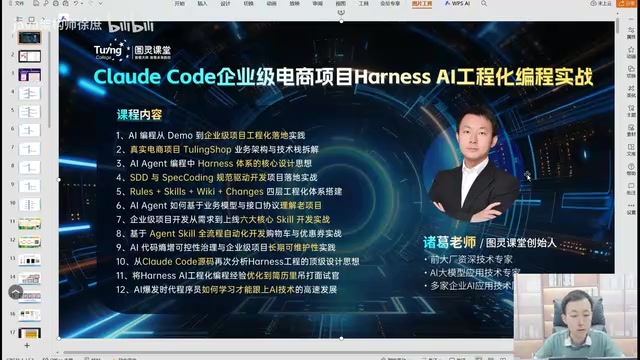
Claude Code Enterprise E-commerce in Practice: A Methodology for Taking AI Programming from Demo to Industrial-Grade
A deep dive into engineering methodology for enterprise e-commerce development with Claude Code and Harness AI, covering architecture, code quality, and CI/CD practices.