Gordon Ramsay's Wild American Food Adventure: A Culinary Journey Through Swamps, Smoky Mountains, and Texas
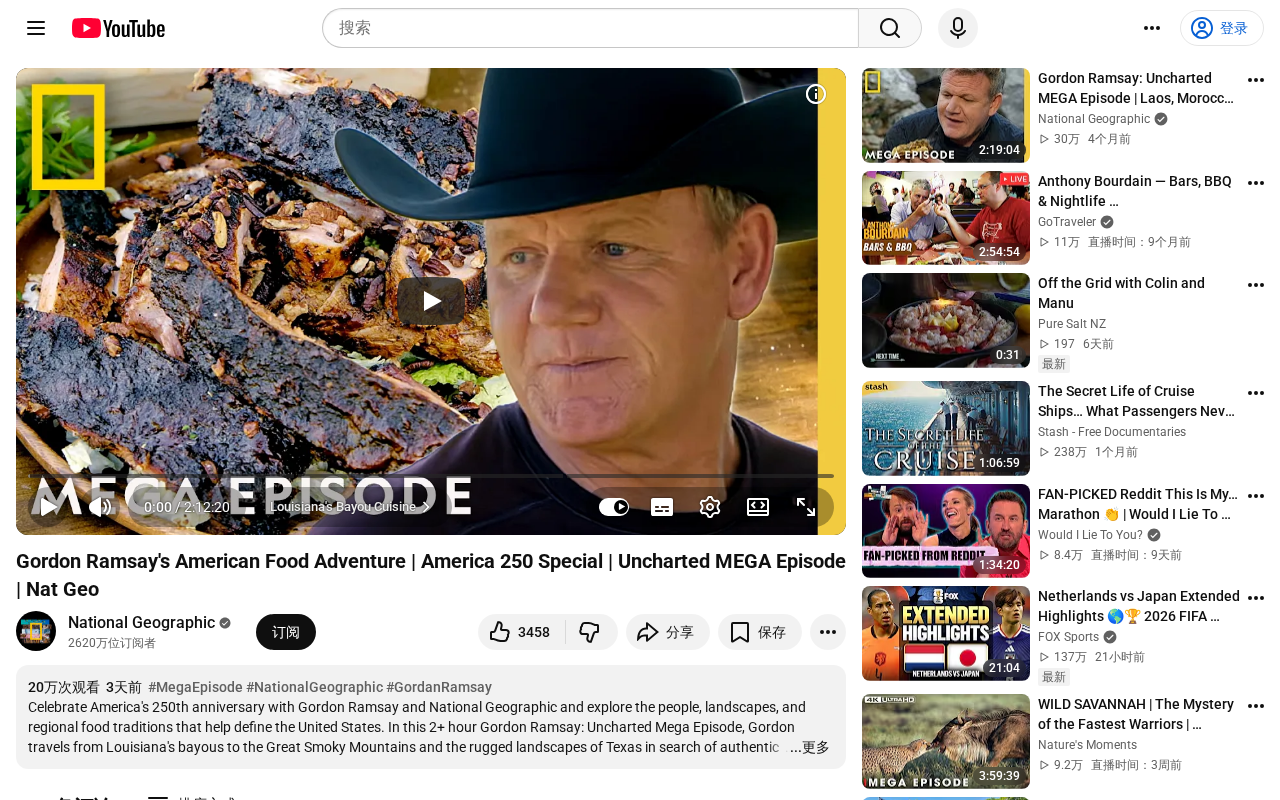
Gordon Ramsay's wild culinary journey through Louisiana, the Smoky Mountains, and Texas on Uncharted.
In National Geographic's Uncharted, Gordon Ramsay ventures into Louisiana's swamps, North Carolina's Smoky Mountains, and the Texas wilderness. He hunts invasive nutria, catches rattlesnakes bare-handed, tastes Viet Cajun crawfish, and learns Cherokee food traditions — uncovering the diverse cultural roots and resilient spirit behind America's regional cuisines.
In the National Geographic special Uncharted, Gordon Ramsay ventures deep into three iconic American regions — the Louisiana swamps, the North Carolina Smoky Mountains, and the Texas wilderness — on a weeks-long culinary adventure. This is more than a food show; it's a deep exploration into the roots of America's diverse food culture.
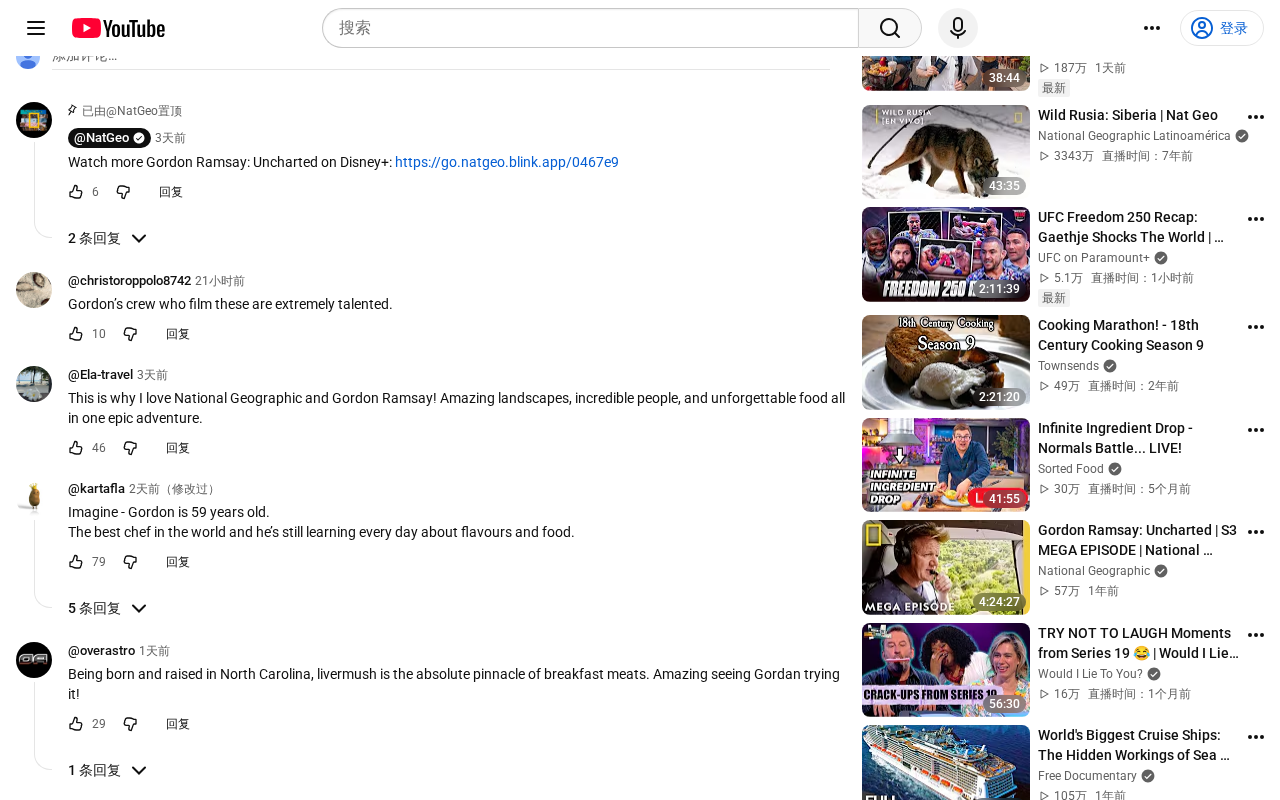
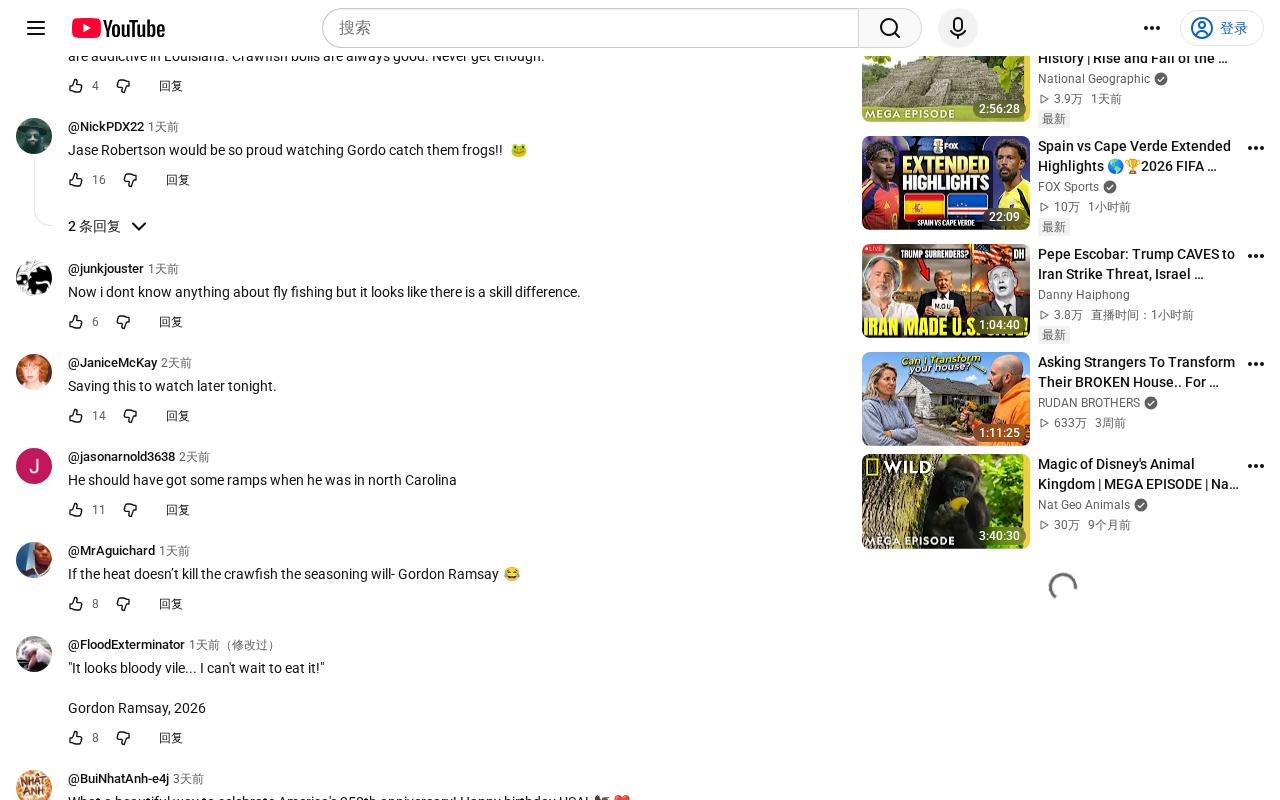
Louisiana Swamps: The Soul of Cajun Cuisine
Foraging at "The End of the World"
Ramsay's journey begins in the Louisiana swamplands south of New Orleans, a place locals call "the end of the world." His guide is Eric Cook, a former U.S. Marine and award-winning chef. Eric runs a restaurant called Grigri, specializing in Southern dishes made with the freshest ingredients from Louisiana's wetlands.
Eric introduces Ramsay to the essence of Cajun cooking — the dark roux. This sauce base made from flour and fat is the foundation of all great Southern classics. "That dark, dark, fudge-like roux is the foundation of all good Southern cooking," Eric explains. But he also reveals a troubling reality: due to land erosion, the area loses roughly a football field's worth of land every day, with losses far worse when major storms hit.
Turning Invasive Species into Dinner
One of the most surprising segments features Ramsay hunting nutria. These invasive rodents from South America were introduced in the 19th century for the fur trade and now number in the millions in the wild, wreaking havoc on the fragile wetland ecosystem. The local government even offers a $6 bounty per tail.
Eric suggests calling them "rat don't" (a Frenchified name) to make the ingredient more palatable to the public. After tasting a nutria stew made by local hunter Walter's mother, Ramsay is amazed: "It tastes like rabbit — no gaminess, no fat, very lean, and really delicious."
A Bold Collision of Vietnamese-Cajun Flavors
Ramsay also experiences "Viet Cajun" style crawfish cooking. Vietnamese American Tien and his cousin Nhu demonstrate a unique method that fuses two cultures: building on a traditional Cajun seasoning base, they add garlic butter sauce, celery seed, and lemon pepper — using roughly 20 pounds of seasoning alone. Ramsay initially thinks the seasoning is excessive, but he's ultimately won over by the bold flavors: "It's like eating candy — you just keep shoving it in your mouth."
Smoky Mountain Secrets: A Treasure Trove of Biodiversity
Extreme Challenges from Waterfalls to Rapids
The second stop is North Carolina's Great Smoky Mountains, where Ramsay meets multi-award-winning chef William Disson. William is known for using fresh, healthy, sustainable ingredients and works closely with a network of local farmers and fishermen. The two make a bet: if William's dishes prove more popular, Ramsay has to fly his entire family first class to London for dinner; if Ramsay wins, he gets William's off-road truck.
Ramsay's Smoky Mountain experience is nothing short of harrowing — rappelling down waterfall edges into water, paddling through Class III rapids with his bare hands, and nearly getting swept into a vertical waterfall. But all these adventures serve one purpose: sourcing the freshest ingredients — brook trout, crawfish, and prized forest mushrooms.
Deadly Poisonous Mushrooms and Precious Hen of the Woods
Guided by local expert Alan, Ramsay ventures deep into the forest to forage for mushrooms. The Smoky Mountains are one of the most biodiverse regions in the entire hemisphere outside the tropics. The first thing they find is the deadly "Destroying Angel" mushroom — "One cap is all it takes," Alan warns. Eventually, they discover the real treasure: Hen of the Woods, one of the most delicious mushrooms on Earth.
Ramsay also learns the traditional craft of making moonshine. The local Derek family has a recipe passed down for over 100 years, and they've been distilling since age 14. Interestingly, the origins of NASCAR racing trace back to moonshine runners speeding through winding mountain roads to evade federal agents.
Ancient Dietary Wisdom of the Cherokee
At the border of Great Smoky Mountains National Park, Ramsay visits Cherokee native Malia to learn how to make traditional hominy. This dish uses lye from hickory ash to remove the corn's outer hull, which not only makes it easier to digest but also releases more amino acids and reduces vitamin deficiency. This indigenous scientific wisdom deeply inspires Ramsay.
In the final showdown, William wins with his home-field advantage and deep understanding of local ingredients. Locals say Ramsay's liver pâté crackers "taste like something mama made," but William's dishes better capture the soul of the Smoky Mountains.
Texas Wilderness: Everything Is Bigger and Wilder
Herding Cattle on Horseback and Catching Rattlesnakes Bare-Handed
The final stop is Texas, where Ramsay faces off against Chinese American chef Justin Yu. Born in Houston to a family from Hong Kong, Justin's own story is a microcosm of Texas's multiculturalism.
Ramsay's Texas adventures include: herding cattle on horseback (and getting thrown off), administering deworming medicine to cattle, and the craziest of all — catching rattlesnakes bare-handed. His guide Bob Hansler is legally blind but can locate rattlesnakes by sound alone. "I can't see your face, but I can hear a rattlesnake," Bob says. Rattlesnakes can strike at speeds up to 175 miles per hour. Ramsay wraps the snake meat in cactus pads and buries it in ash to steam-roast for 45 minutes, producing a result that tastes "like refined chicken."
The Soul of Tex-Mex: Handmade Blue Corn Tortillas
In Texas, Ramsay also learns to make traditional Tex-Mex tortillas. Local chef Emmanuel uses native Mexican blue corn, hand-grinding it into masa dough to create stunningly colored blue tortillas. "Nothing is breaking apart," Ramsay marvels at how the paper-thin tortilla remains so pliable — "The starch perfectly absorbs all the flavors of the brisket."
The Final Showdown: Salt and Confidence
In the Texas finale, Justin sums up the Texas cooking philosophy in one line: "Salt and confidence — that's Texas." The local judges' verdict is razor-sharp: Ramsay's ribs earn approval ("He can smoke a good rib — that's Texas"), but his steak loses points for being over-garnished — "Texas is steak on a plate, don't overthink it."
Deeper Insights into American Food Culture
This show goes far beyond a cooking competition. It reveals several profound themes in American food culture:
Ecological Crisis and Culinary Innovation: Louisiana loses a football field of land every day, and invasive species run rampant, but locals turn crisis into opportunity — transforming nutria from pest to delicacy.
The Power of Multicultural Fusion: Viet Cajun crawfish, a Chinese American chef's Texas cuisine, Cherokee lye-treated corn — the essence of American food lies in the collision and blending of different cultures.
Ingredients as Identity: People in every region share a deep emotional bond with their ingredients. As Eric Cook puts it, Cajun cooking "comes from the soul"; Texans believe "steak is steak — don't overcomplicate it."
Resilience and Heritage: From Louisiana's storm rescue volunteers to the Smoky Mountains' moonshine distillers to Texas ranchers, these people don't just survive in harsh environments — they savor every moment of life.
Gordon Ramsay lost all three showdowns, but as he himself says: "Today isn't about winning — it's about learning." Perhaps that's the most honest attitude one can bring to exploring food culture.
Related articles

CosyVoice v3.5 in Practice: Solving the Performance Direction Challenge in AI Voice Acting
Hands-on testing of Alibaba's CosyVoice v3.5 instruction control and pronunciation correction vs Doubao TTS stability issues, with voice design tips and LLM debugging methodology for AI voice acting.

Vibe Coding in Practice: The Right Way to Communicate with AI — Just Ask When You Don't Understand
Learn effective AI communication techniques for Vibe Coding: how to ask when you don't understand, discover plan gaps through follow-ups, and align on terminology with AI.

AI Engineering in Practice: The Right Way to Build Enterprise Projects with Claude Code
Learn how to use Claude Code with Specification-Driven Development (SDD) to build enterprise projects, solving common AI coding pitfalls like infinite bug loops, code quality issues, and hallucination risks.