AI Engineering in Practice: The Right Way to Build Enterprise Projects with Claude Code
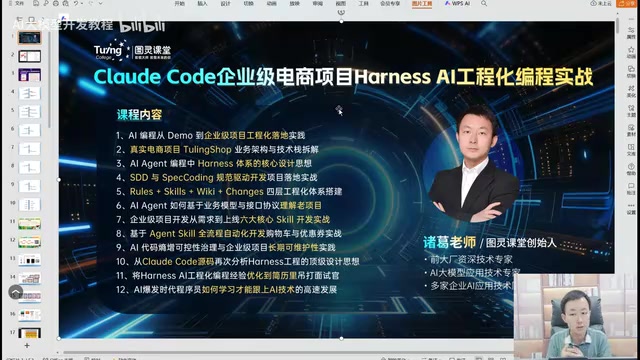
A practical guide to building enterprise projects with Claude Code using engineering-first methodology.
This article explores the Harness AI Engineering approach to building enterprise-grade software with Claude Code. It addresses common pain points like infinite bug-fix loops, code quality degradation, AI hallucinations, and token waste, then introduces Specification-Driven Development (SDD) and Agent Skill development as solutions for maintainable, scalable human-AI collaboration.
The Gap Between AI Programming Ideals and Reality: Demos vs. Enterprise Projects
Recently, the narrative that "non-technical people can use AI programming to replace developers" has been spreading wildly across major platforms. Many content creators claim that with AI programming tools like Claude Code and Cursor, product managers — or even people with zero technical background — can easily build software. But does this claim really hold up under scrutiny?
If you look closely, the projects these creators showcase are mostly small demos built from scratch, simple cross-border e-commerce sites, thin AI wrapper apps, or digital avatar tools that just call a few APIs. These projects have limited technical complexity, and AI programming tools can indeed handle them. But when it comes to real enterprise-grade projects — high concurrency, distributed microservice architectures, massive data processing — relying solely on AI programming tools without technical expertise is far from sufficient.
The technical complexity of enterprise projects goes far beyond what's visible on the surface. High concurrency means a system needs to handle tens of thousands or even millions of simultaneous user requests — for example, during China's Singles' Day shopping festival, Taobao processes hundreds of thousands of orders per second at peak. Distributed microservice architecture involves splitting a monolithic application into multiple independently deployed service units, each responsible for specific business functions, communicating through API gateways and message queues, involving complex mechanisms like service discovery, load balancing, circuit breaking, distributed transactions, and more. Massive data processing covers TB to PB-scale data storage, real-time stream processing, and offline batch processing. In these scenarios, a design flaw in any single component can trigger a system-wide cascade failure — a far cry from simple demo projects.
This article focuses on Harness AI Engineering as an enterprise-grade technical approach, exploring in depth how to use tools like Claude Code to build truly maintainable and scalable complex projects, rather than staying at the demo level.
Four Major Pain Points of AI Programming Tools in Complex Projects
In real enterprise development, programmers commonly encounter the following issues when using AI programming tools:
Infinite Bug-Fix Loops
In the early stages of a project, AI-generated code appears to run fine. But as system complexity grows and the codebase expands, once a bug appears, AI programming tools often fall into an "infinite loop" — making repeated modifications without truly solving the problem. If the developer lacks sufficient technical depth and hasn't carefully reviewed the AI-generated code, the project grinds to a complete halt.
Code Quality Spiraling Out of Control, Becoming Technical Debt
AI-generated code often fails to comply with a project's coding standards and architectural conventions. As features keep piling up, the project gradually devolves into an unmaintainable "code mountain," with technical debt accumulating relentlessly and refactoring costs far exceeding expectations.
Technical Debt is a concept introduced by Ward Cunningham in 1992, using financial debt as an analogy for the hidden costs accumulated in software development when code quality is sacrificed for short-term delivery speed. According to a McKinsey research report, large enterprises spend an average of 20%-40% of their IT budgets paying down technical debt. AI-generated code accelerates this problem because AI tends to produce "good enough to run" code without considering overall architectural consistency. When technical debt reaches a tipping point, every modification to the system can trigger chain reactions, development efficiency plummets, and a costly full-scale refactoring becomes inevitable.
Hallucination Risks Creating Hidden Dangers
The "hallucination" problem of AI models is particularly dangerous in programming scenarios — no matter how clearly requirements are described, AI may still generate code that looks correct but contains serious flaws. Even more frightening, these hidden issues may go completely undetected during testing, only to cause severe incidents like financial losses after going live.
AI Hallucination stems from the fundamental working principle of large language models — they are essentially probabilistic prediction systems that generate output by predicting the next most likely token. The model doesn't truly "understand" code semantics and logic; instead, it performs statistical inference based on patterns in training data. In programming scenarios, hallucinations can manifest as: calling non-existent API methods, fabricating fake library function signatures, generating syntactically correct but logically flawed algorithm implementations, or even ignoring race conditions and deadlock risks in concurrent scenarios. Google's research shows that even the most advanced code generation models have significantly lower accuracy in complex logic scenarios compared to simple CRUD operations.
Token Consumption and Context Loss
In complex projects, AI programming tools consume tokens at an alarming rate — generating a single feature can cost tens or even hundreds of dollars. At the same time, context loss in long conversations makes the AI "increasingly confused," with output quality degrading as conversation turns increase.
A token is the basic unit of text processing for large language models. In Chinese, roughly every 1-2 characters correspond to one token; in English, one word corresponds to approximately 1-3 tokens. Taking Claude 3.5 Sonnet as an example, its context window is 200K tokens, which seems large, but a medium-sized enterprise project's codebase easily exceeds millions of lines of code. When a conversation exceeds the context window limit, the model loses earlier conversation content, leading to contradictory code generation. Additionally, API calls are billed per token, with input and output tokens priced separately. Frequent code generation and modifications in complex projects cause costs to escalate rapidly, with development costs for a single feature module potentially reaching tens of dollars.
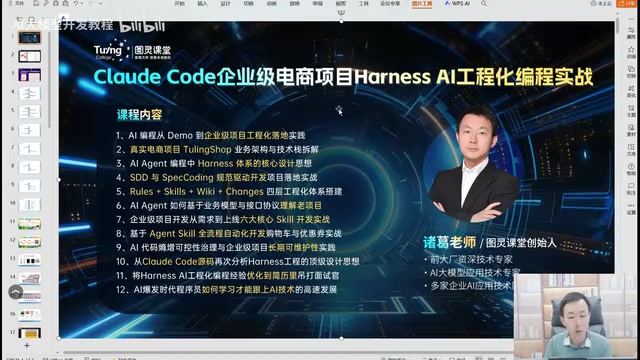
Harness AI Engineering: From Concept to Implementation
To solve the problems above, the core approach isn't to abandon AI programming tools, but to harness them with engineering methodology. This is the core value of Harness AI Engineering.
What Is Specification-Driven Development (SDD)?
Specification-Driven Development (SDD) is an AI programming methodology currently being adopted by major tech companies and leading IT organizations. Its core philosophy is: before letting AI generate code, first define the architecture, interfaces, coding standards, and business logic through rigorous specification documents (Specs).
SDD is not an entirely new concept. It inherits ideas from Design by Contract and API-First development in software engineering, adapted to the new context of AI-assisted programming. In traditional development, OpenAPI/Swagger specifications are already widely used to define RESTful API interfaces; in the database domain, defining schemas before data operations is a fundamental principle. SDD systematically applies this "define first, implement later" philosophy across the entire AI programming workflow: through structured Spec documents (typically in YAML or Markdown format), it explicitly defines module boundaries, data models, error handling strategies, performance constraints, and more. These Spec documents serve as input constraints for AI, standards for code review, and contracts for team collaboration.
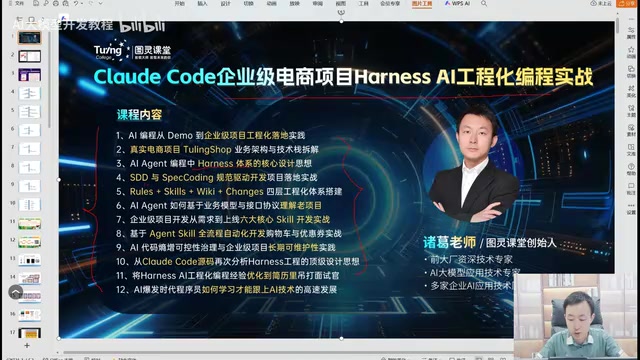
The key advantages of this methodology include:
- Controllability: AI-generated code must follow predefined specifications rather than improvising freely
- Maintainability: Unified coding standards ensure long-term project maintainability
- Traceability: Every feature implementation has a corresponding Spec document as its basis
You may not have noticed, but SDD has already become a high-frequency topic in technical interviews. If you're asked about Specification-Driven Development in an interview and have no idea what it is, the interviewer will likely conclude that you lack awareness of technology trends.
Agent Skill Development: A New Paradigm for AI Programming
In the AI large model space, Agent Skill development is becoming an extremely hot direction. Some tech bloggers even predict that in the future, developers may no longer write specific feature code, but instead develop reusable Skills.
Agent Skill development is a product of the evolution of AI Agent architecture. An AI Agent is an intelligent system capable of autonomously perceiving its environment, making decisions, and executing actions, while a Skill is a modular encapsulation of an Agent's capabilities. This concept draws from microservice architecture thinking — decomposing complex capabilities into independent, composable skill units. In terms of technical implementation, each Skill typically includes: trigger condition definitions, input/output schemas, execution logic (prompt templates or code logic), and error handling with fallback strategies. OpenAI's Function Calling, Anthropic's Tool Use, and LangChain's Tool abstraction all form the technical foundation for Skill development. Enterprise-grade Skill development also needs to address governance requirements such as version management, access control, and audit logging.
In enterprise projects, Skill development covers the complete software lifecycle:
- Requirements Analysis Skill: Transforms business requirements into structured technical specifications
- Code Implementation Skill: Automatically generates standards-compliant code based on specifications
- Code Review Skill: Automatically checks code quality and potential risks
- Test Generation Skill: Automatically generates unit tests and integration tests
- Continuous Integration Skill: Automates build and deployment pipelines
- Release Deployment Skill: Standardized release and monitoring workflows
Hands-On: Building an E-Commerce System with Claude Code
Why Choose an E-Commerce Project as the Case Study?
Choosing an e-commerce project as the hands-on case study isn't because it's the only applicable scenario. Harness AI Engineering is project-agnostic and language-agnostic — it works for all types of projects and programming languages. The reason for choosing e-commerce is simple: most people are familiar enough with e-commerce business logic that there's no need to spend extensive time explaining the business context, allowing us to focus on the engineering methodology itself.
Development Environment Setup
The hands-on environment uses the VS Code + Claude Code combination. Of course, using Codex or Cursor works perfectly fine too — the core methodology is the same. Tools are just vehicles; what truly matters is the engineering mindset.
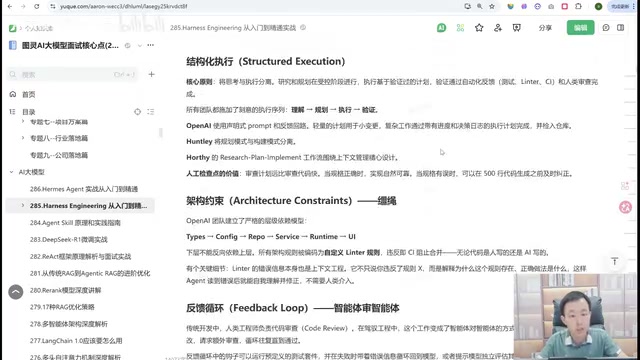
Key Principles for Implementing AI Engineering in Practice
When practicing AI engineering in enterprise projects, the following principles should be followed:
Specification Before Code: Before any AI code generation, architecture design documents, interface specifications, and coding standards must be completed. These documents aren't just for the AI — they're the consensus foundation for the entire team.
Human-AI Collaboration, Not Human-AI Replacement: AI programming tools are powerful productivity multipliers, but they're not replacements for programmers. Developers need the ability to review AI-generated code, identify potential issues, and make corrections.
Human-AI Collaboration in software development has evolved through three stages. The first stage is code completion (like GitHub Copilot's line-level suggestions), where developers lead the coding and AI provides suggestions. The second stage is conversational programming (like ChatGPT, Claude), where developers describe requirements and AI generates code snippets. The third stage is agentic programming (like Claude Code, Devin), where AI can autonomously execute multi-step development tasks, including reading files, running commands, and debugging errors. But even in the third stage, the human developer's role transforms from "coder" to "architect + reviewer" — responsible for defining specifications, reviewing outputs, and handling edge cases that AI cannot resolve. Research from Stanford University shows that the human-AI collaboration model produces superior code quality and development efficiency compared to purely manual or purely AI-driven development.
Continuous Verification and Testing: Never blindly trust AI-generated code. Every feature module must undergo rigorous testing and verification to ensure there are no hidden defects.
Engineering Design Insights from Claude Code Itself
The reason Claude Code is so powerful is that its backend is essentially a standard Harness engineering system. You can find Claude Code's open-source code on GitHub, and its internal engineering design is well worth studying.
This also reinforces an important truth: even the most advanced AI programming tools themselves are built using rigorous engineering methods. To use AI programming tools effectively, you first need to possess an engineering mindset.
Conclusion: Engineering Thinking Is the Core Competitive Advantage in AI Programming
AI programming tools are profoundly changing the way software is developed, but the claim that they'll "replace programmers" is premature. For enterprise-grade projects, the key isn't whether to use AI programming tools, but how to harness AI programming tools with engineering methodology.
For programmers, the immediate priorities are:
- Master the Harness AI Engineering methodology, especially the core workflow of Specification-Driven Development (SDD)
- Learn Agent Skill development to understand the new paradigm and future trends of AI programming
- Practice human-AI collaboration in real projects, rather than simply letting AI generate code on "full autopilot"
- Continuously strengthen your technical foundation, because the ability to review and correct AI-generated code is the irreplaceable core competitive advantage
Whether you use Java, Python, Go, or any other language, this methodology is universally applicable. A true AI programming expert isn't someone who knows how to use tools — it's someone who knows how to make tools serve engineering.
Related articles
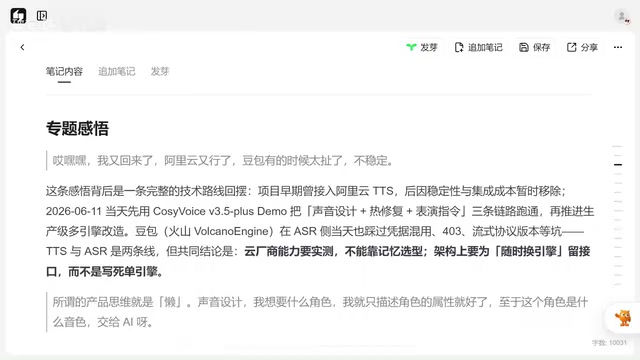
CosyVoice v3.5 in Practice: Solving the Performance Direction Challenge in AI Voice Acting
Hands-on testing of Alibaba's CosyVoice v3.5 instruction control and pronunciation correction vs Doubao TTS stability issues, with voice design tips and LLM debugging methodology for AI voice acting.

Gordon Ramsay's Wild American Food Adventure: A Culinary Journey Through Swamps, Smoky Mountains, and Texas
Gordon Ramsay explores Louisiana swamps, Smoky Mountains, and Texas in National Geographic's Uncharted — hunting nutria, catching rattlesnakes, and discovering America's diverse food roots.
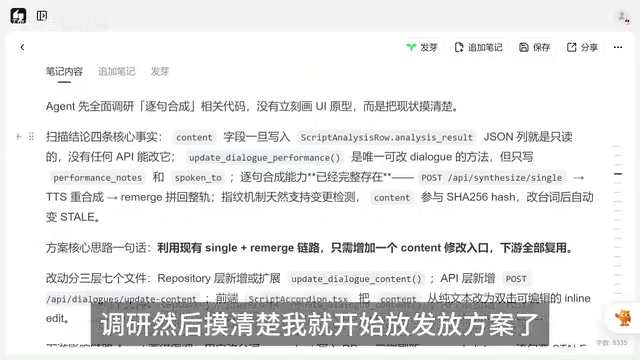
Vibe Coding in Practice: The Right Way to Communicate with AI — Just Ask When You Don't Understand
Learn effective AI communication techniques for Vibe Coding: how to ask when you don't understand, discover plan gaps through follow-ups, and align on terminology with AI.