GPT-5.2 Released: The Truth and Concerns Behind Its 390x Efficiency Gain

GPT-5.2 tops ARC-AGI with 390x efficiency gain, putting OpenAI back at the center of the AI race.
OpenAI released GPT-5.2, topping the ARC-AGI benchmark with a 390x reasoning efficiency improvement over the O3 model, demonstrating genuine generalized reasoning ability. Simultaneously, OpenAI signed a $1 billion IP partnership with Disney, building a content ecosystem moat. Yet ordinary users find model improvements increasingly hard to perceive, and AI-generated content quality concerns are growing. Current AI development is in a phase of capability surplus but application deficit—the real bottleneck lies in workflow integration, not models themselves.
Just last week, nearly everyone was ready to write off OpenAI as the Netscape of the 2020s—a once-pioneering force destined to be crushed by latecomers. Google Gemini 3's unexpected rise had Sam Altman sounding the "red alert." Yet mere days later, OpenAI answered with GPT-5.2, tipping the AI race back in its favor once again.
This new model not only leads across multiple benchmarks but also topped the ARC-AGI benchmark, demonstrating a staggering 390x efficiency improvement. Is this the dawn of AGI, or just another round of carefully packaged hype?
ARC-AGI Benchmark: Why GPT-5.2's Performance Is Different This Time
In the AI field, benchmarks are a dime a dozen, but most are mockingly called "Trust Me Bro benchmarks"—everyone claims to be the best, and nobody can convince anyone else. What makes ARC-AGI different is that it tests a model's genuine generalized reasoning ability, rather than simple pattern matching or memorization.
ARC stands for Abstraction and Reasoning Corpus, proposed in 2019 by François Chollet, creator of the Keras framework. Its design philosophy is rooted in Chollet's unique definition of "intelligence": true intelligence is the ability to efficiently acquire new skills in novel situations with minimal prior knowledge. Each ARC problem consists of colored grids, requiring the model to infer transformation rules from 2-3 input-output examples and then apply them to new inputs. These rules are intuitively obvious to humans but extremely difficult for neural networks that rely on massive data—because the rules themselves cannot be learned from statistical frequencies, and brute-force pattern matching completely fails. Ordinary humans can typically solve these problems after seeing just a few examples, but the vast majority of AI models fail completely.
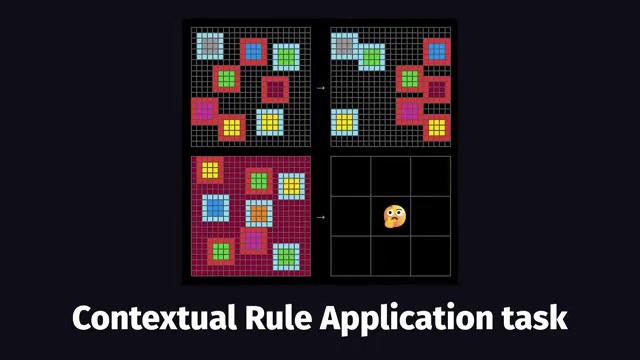
The key point is that a model performing well on ARC-AGI demonstrates genuine generalization ability, rather than being merely a sophisticated autocomplete tool. This is precisely why GPT-5.2's performance this time is so noteworthy.
What GPT-5.2's 390x Efficiency Gain Actually Means
The ARC Prize team officially verified an astonishing figure: from the O3 model to GPT-5.2, reasoning efficiency improved by 390x in just one year. This is not a typo—GPT-5.2 requires less than three-thousandths of the computational resources previously needed to complete the same reasoning tasks.
Behind this magnitude of efficiency leap likely lies the synergy of multiple technical approaches: Speculative Decoding, where a smaller model pre-generates drafts that are then verified by the larger model, drastically reducing main model invocations; Mixture of Experts (MoE) architecture, which activates only a subset of parameters during inference; and refined Test-Time Compute scheduling, allowing the model to "think" less on simple problems and invest more on complex ones. This cliff-like drop in costs triggers explosive demand growth in economic terms—similar to the historical logic of transistor cost reductions driving personal computer adoption.
The significance of this number extends far beyond the model itself. The cascading effects of efficiency gains include:
- Dramatic cost reduction: API call costs at equivalent performance levels could drop by several orders of magnitude
- Lower deployment barriers: More SMEs and individual developers gain access to top-tier reasoning capabilities
- Real-time applications become feasible: Efficient reasoning shrinks response times for complex tasks to acceptable ranges
Additionally, GPT-5.2 beat Claude Opus 4.5 in software engineering and reasoning tasks, which is undoubtedly a wake-up call for Anthropic. The landscape of the AI race has shifted subtly once again.
The User Experience Paradox: Stronger Models, Harder-to-Perceive Differences
However, an awkward reality is emerging for ordinary users: models keep getting stronger, but the differences are increasingly hard to perceive.
As the video creator candidly admitted, GPT-5.2 reportedly offers major improvements in coding ability and significantly reduced hallucinations, but in actual use, he "wasn't even sure he could tell the difference." He's still using it to generate Svelte 5 code, and the experience seems about the same as before.
This reveals a deep contradiction in current AI development: leaps in benchmark performance don't always translate into user-perceptible experience improvements. When a model is already good enough, the marginal utility of "better" diminishes. This is also why more and more developers are focusing on toolchains and deployment experience rather than simply chasing the latest model.

OpenAI's $1 Billion Disney Partnership: A New Signal for AI Commercialization
Beyond GPT-5.2's technical breakthrough, OpenAI is also making major moves on the business front. They've signed a $1 billion partnership agreement with Disney, allowing Disney's iconic characters to appear in AI-generated images and videos. This means anyone can use OpenAI's technology to generate their own Star Wars or Toy Story short films.
Disney's IP licensing has historically been notoriously strict—every detail of LEGO sets and Marvel merchandise must pass through Disney's legal team. This partnership represents an entirely new licensing paradigm: shifting from "case-by-case approval" to "platform-level licensing," similar to Spotify's copyright agreements with record labels but far more complex. For OpenAI, the strategic value of this deal lies in building a "content flywheel": exclusive IP attracts creators, creator-generated data feeds back into model training, and stronger models attract more IP partners. This collaboration not only brings massive revenue to OpenAI but more importantly establishes a content ecosystem moat—when users want to use these IPs, they're locked into OpenAI's tech stack.

Another phenomenon worth noting is the "accurate predictions" from prediction markets. Platforms like PolyMarket and Kalshi accurately predicted GPT-5.2's release date, but the reasons behind this may not be flattering. Notably, these two platforms exist in vastly different regulatory environments: Kalshi is a CFTC-regulated compliant prediction market, while PolyMarket runs on blockchain and primarily serves users outside the US. Traditional securities law's insider trading provisions target the combination of "material non-public information" and securities trading, but whether prediction market contracts constitute "securities" remains legally contested—this gray area means insiders face far lower legal risk than in stock markets. Reportedly, an apparent Google insider made $1 million through similar operations this month. The "accuracy" of prediction markets is largely built on insider trading, and as these platforms scale, the SEC has begun investigating.
The AI-Generated Content Quality Crisis Is Intensifying
While technology races ahead, quality issues with AI-generated content are worsening. McDonald's AI-generated Christmas ad is a textbook case—creators tried to package it as an "artfully prompt-engineered" masterpiece, but audience reaction was uniformly negative, ultimately forcing McDonald's to pull the ad.

As OpenAI's Disney partnership materializes, this kind of low-quality AI-generated content will only proliferate. Improved technical capability doesn't automatically equal improved content quality, and maintaining content standards while AI empowers creation will be a long-term challenge for the entire industry.
How Far Are We from the AGI Threshold?
Returning to the core question: does GPT-5.2 bring us to the edge of AGI?
From the ARC-AGI benchmark perspective, models' generalized reasoning ability is indeed improving at an astonishing pace. The 390x efficiency improvement means we're making breakthroughs not only in capability but also rapidly advancing in accessibility. But from a user experience standpoint, our intuitive sense of "artificial general intelligence" still feels distant.
A more realistic assessment might be: we're in a phase of capability surplus but application deficit. This phenomenon has appeared repeatedly throughout tech history—1990s internet bandwidth could already support video streaming, but Netflix didn't launch its streaming service until 2007. The bottleneck was user habits, content licensing, and business models, not technology itself. AI's current situation is highly analogous: model capabilities already exceed most knowledge workers' daily tasks, but workflow integration, data security, organizational change management, and other "last mile" problems remain unsolved. This means the greatest value creation in AI over the coming years may not lie in models themselves, but in deep vertical industry integration and process restructuring. The real bottleneck isn't the model itself—it's how to effectively embed these capabilities into workflows and products.
The AI race is far from over, but one thing is certain: OpenAI has used GPT-5.2 to prove it's far from "dead"—at least, not yet.
Key Takeaways
- GPT-5.2 topped the ARC-AGI benchmark with a 390x efficiency improvement over the O3 model, demonstrating genuine generalized reasoning ability
- OpenAI signed a $1 billion partnership with Disney, allowing iconic IP characters in AI-generated content and building a content ecosystem moat
- Despite massive benchmark improvements, ordinary users find it increasingly difficult to perceive differences between models—diminishing marginal utility
- Prediction markets accurately predicted GPT-5.2's release date, potentially built on insider trading in a legal gray area
- The AI-generated content quality crisis is intensifying, with McDonald's forced to pull its AI Christmas ad due to poor quality
Related articles
 Tech Frontiers
GitHub Agent HQ Launch: AI Coding Tools Enter the Era of Platform Competition
GitHub Universe unveils Agent HQ platform for unified coding agent management, Copilot upgrades with multi-model support. OpenAI completes restructuring, Anthropic tests new model, NVIDIA open-sources AI models.
 Tech Frontiers
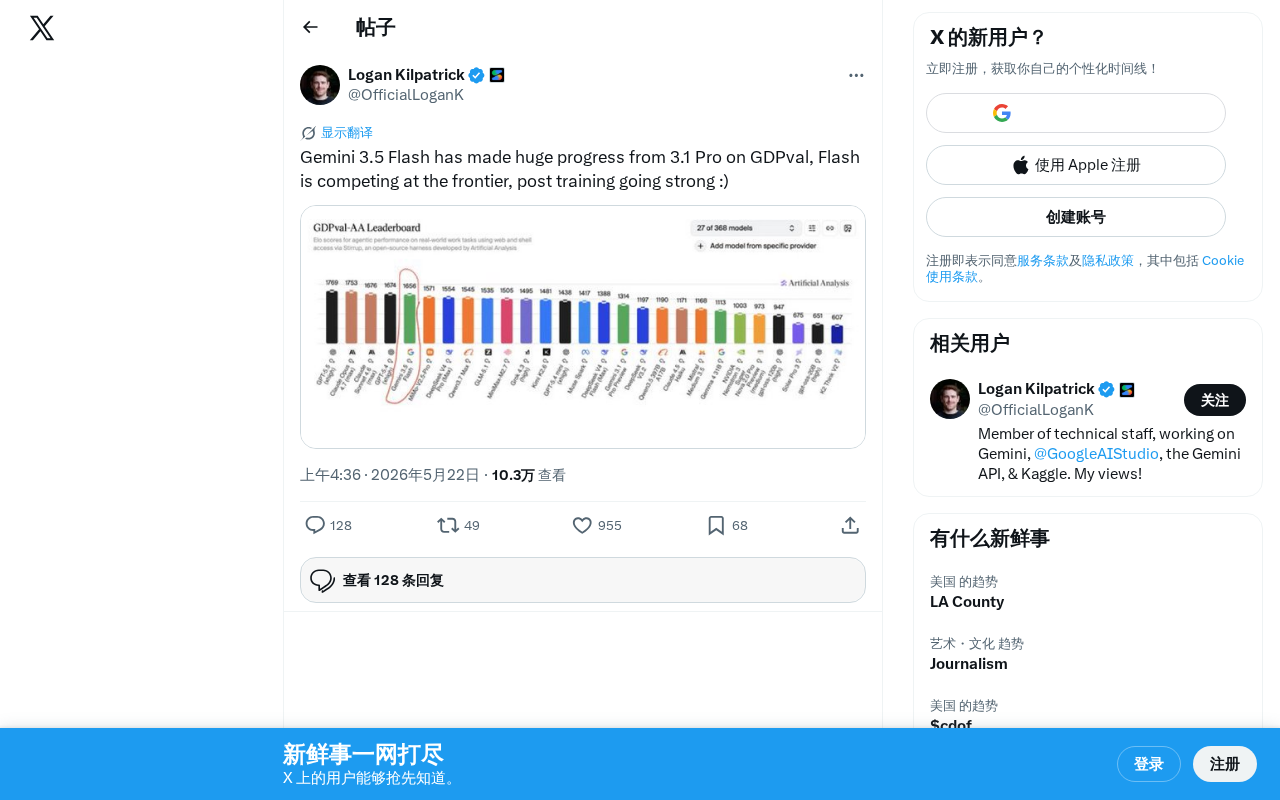
Gemini 3.5 Flash Achieves a Massive Leap on the GDPval Benchmark
Google Gemini 3.5 Flash surpasses Gemini 3.1 Pro on the GDPval benchmark. The lightweight Flash model leverages post-training techniques to approach frontier-level performance, redefining the balance between quality and cost.
 Tech Frontiers
Google Gemini Antigravity Weekly Quota Tripled — AI Coding Without Limits
Google Gemini triples Antigravity weekly quotas following a prior daily quota boost. Analyzing the impact on developers and its strategic significance in AI coding.