Guide to Identifying AI-Generated Videos: How to Tell AI Videos from Real Footage
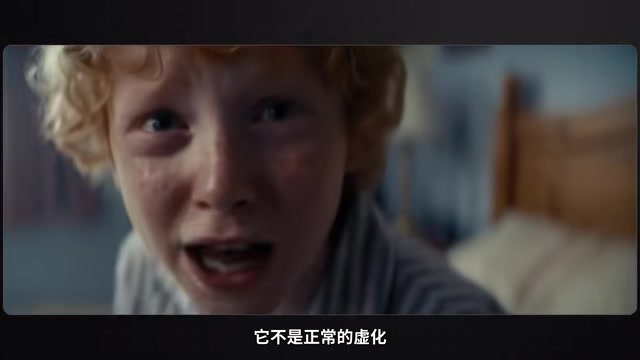
Expert-tested methods to distinguish AI-generated videos from real footage through visual analysis.
This guide summarizes findings from an experiment where VFX professionals and AI creators attempted to identify AI-generated videos. Key identification methods include detecting abnormal sharpening, unnatural bokeh transitions, inconsistent lighting logic, organic texture failures, and the "oil painting" quality of AI faces. The article also explores how real-world imperfections paradoxically serve as proof of authenticity.
Can We Still Tell the Difference When AI Videos Look This Real?
With the rapid advancement of AI video generation technology, the internet is flooded with increasingly convincing AI-generated content. An interesting experiment raises a thought-provoking question: what happens when professional VFX artists, AI video creators, and ordinary viewers sit together to determine whether a series of video clips are real or AI-generated?
This content from Bilibili invited professional VFX artists and AI video creators to test human ability to identify AI videos through multiple rounds of challenges. The results were surprising—even creators who make AI videos every day frequently got fooled.
As of 2024-2025, mainstream AI video generation technology is primarily based on a combination of Diffusion Models and Transformer architectures. Products like OpenAI's Sora, Google's Veo, ByteDance's Jimeng, and Kuaishou's Kling represent the current technological frontier. These models typically perform denoising generation in the video's Latent Space, learning spatiotemporal distribution patterns from massive video datasets to generate new content. Their core limitations include: understanding of physical laws remains statistical rather than causal, maintaining long-term consistency remains difficult, and the ability to generate precise text, brand logos, and other symbolic information is limited—which explains why specific branded items like "Xizhi Lang Jelly" became strong evidence for identifying real footage in the experiment.

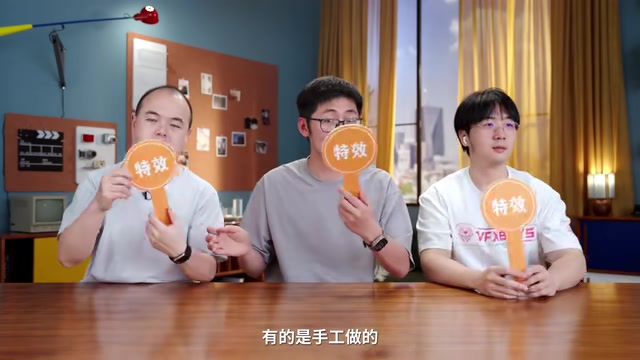
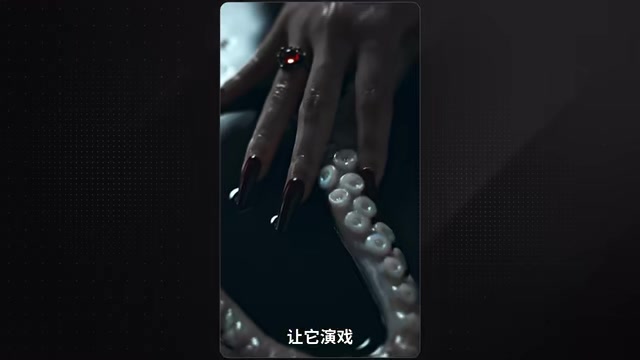
Everyday Scenes: Where AI Videos Are Most Likely to Fool You
One of the most interesting findings from the experiment: the more mundane the scene, the harder it is to distinguish real from fake. A video of a frog playing with walnuts, or someone holding a cat in a classroom—these seemingly ordinary scenes are precisely where AI excels at deception.
The VFX artist pointed out a key criterion: stability during motion blur. If an object maintains its integrity during rapid movement (such as hand gestures) without visual breakdown or deformation, it's more likely real footage. Conversely, AI often produces detail collapse when handling fast motion.
Motion Blur is a natural phenomenon in real photography caused by the relationship between shutter speed and object movement speed. When an object moves during the camera's shutter exposure, the sensor records the object's motion trajectory over the exposure time, creating a blurred trail. This is an inherent characteristic of optical imaging in the physical world. While AI video generation models learn from vast amounts of real video data containing motion blur during training, during inference generation—since they essentially predict pixel distributions frame by frame or segment by segment—they lack true understanding of physical motion continuity. This is why fast-motion scenes often exhibit inter-frame inconsistencies, dissolving object edges, changing finger counts, and other "breakdown" artifacts.
However, this rule isn't foolproof. In the classroom cat video, participants debated whether the cat's proportions were reasonable and whether the number of curtains in the background was consistent, ultimately discovering a decisive clue—a specific branded product ("Xizhi Lang Jelly") appeared in the frame. As one participant noted: "AI wouldn't generate a Xizhi Lang Jelly sitting there." This reveals an important principle: specific, recognizable real-world objects are strong evidence of authentic footage.
Core Methodology for AI Video Identification
Through multiple rounds of challenges, the participants developed a practical set of AI video identification methods:
1. Abnormal Sharpening and Bokeh
This is the most critical criterion. AI-generated videos often handle focus unnaturally—normal bokeh should be "that kind of genuine blur," while AI bokeh frequently shows unnatural transitions. The VFX artist specifically noted, "That feeling of focus drifting in and out—AI still can't replicate that well."
From an optical perspective, Depth of Field is a fundamental characteristic of optical imaging systems, determined jointly by lens focal length, aperture size, and focusing distance. In real photography, objects in front of and behind the focal plane exhibit progressive blurring, and the shape of this blur (called Bokeh) is influenced by the lens aperture blade shape, optical aberrations, and other factors, giving it unique physical characteristics. When AI models simulate depth of field effects, they tend to apply a "global" blur treatment, lacking the continuous, near-to-far focal transition found in real optical systems. Additionally, when real lenses zoom or rack focus, the size, shape, and brightness distribution of out-of-focus light spots change subtly—a dynamic characteristic that current AI struggles to precisely reproduce.
2. Authenticity of Object Form
In food video identification, the VFX artist judged authenticity by observing the texture and form of pork liver. AI still has notable deficiencies in handling organic object textures and forms, especially complex surfaces like food and skin. These objects possess highly irregular microstructures—muscle fiber orientation, fat distribution, surface moisture reflectivity—all following complex biological and physical laws. AI models can currently only approximate these through statistical distributions, making pixel-level realism difficult to achieve.
3. Consistency of Light and Shadow Logic
A brilliant judgment case came from a cooking video: the VFX artist noticed two different reflections on the pan surface—one from a large softbox and one from a hard light. This "mistake" actually proved it was real footage, because "if you're making AI content, you wouldn't specifically prompt it to add some lighting imperfections."
This judgment logic is quite elegant: lighting setups in real shooting environments are often arranged for practical purposes (illumination, fill light) rather than perfect visual presentation, leaving traces of various light sources. AI-generated images tend to produce "idealized" lighting effects because the high-quality videos in training data typically feature carefully designed lighting. AI learns an "averaged" lighting aesthetic that actually lacks the inadvertent optical imperfections of the real world.
4. Frame Consistency and the "Oil Painting" Look
AI video has made significant progress in maintaining long-term frame consistency, but faces often exhibit an "oil painting" or "misty filter" quality—a distinctive characteristic of current AI video generation technology. The technical root of this phenomenon lies in the diffusion model's denoising process—when recovering images from noise, the model tends to generate smooth surfaces dominated by low-frequency information. Real human skin texture contains abundant high-frequency details (pores, fine lines, subtle color variations from micro-blood vessels), and these details are easily "averaged out" during generation, ultimately producing a softening effect similar to oil painting brushstrokes.
Handmade VFX vs. AI Generation: A Higher-Level Challenge
The latter half of the experiment raised the difficulty: instead of comparing real footage with AI, it compared handmade VFX with AI generation. This demanded even more from participants.
Several key identification clues emerged:
-
Accuracy of software interfaces: If a professional software interface like Blender appears in the frame with correctly spelled English words on the right side, it's almost certainly human-made. AI currently struggles to accurately generate such professional interfaces. This relates to AI models' inherent deficiency in handling text—current video generation models essentially operate in pixel space without internal constraints on textual semantic correctness, resulting in generated text that often contains spelling errors, letter deformation, or semantic confusion.
-
Mask feathering variations: When VFX elements are composited, masks show diffusion changes—these subtle technical traces are evidence of human operation. In professional compositing workflows, mask feathering is a crucial step for seamlessly blending VFX elements with live-action footage. Artists need to adjust mask edge softness frame by frame to create natural transitions at composite element boundaries, and this precise manual adjustment leaves specific technical fingerprints.
-
Precision of perspective and Matte Painting: Works requiring extensive effort in perspective correction and digital matte painting are typically human-created. Matte Painting is a time-honored technique in film VFX, originating from early cinema's practice of using glass paintings to replace real locations. Modern digital matte painting typically involves 2D painting in Photoshop, followed by Camera Projection through compositing software like Nuke or After Effects, mapping 2D images onto 3D geometry to achieve parallax effects. This process requires precise perspective matching—artists must ensure that painted buildings, terrain, and other elements perfectly align with the vanishing points of the live-action footage.
A thought-provoking moment occurred when a participant faced a beautiful piece by an artist and admitted that his "brain defaulted to assuming it was AI"—this unfair prejudgment against creators is precisely a new problem brought about by the AI era.
The proliferation of AI-generated content is triggering a profound creator trust crisis. On social media and art communities, an increasing number of human creators find their work accused of being AI-generated. Platforms like ArtStation and DeviantArt have seen numerous "AI accusations" directed at human artists. This phenomenon is called the "Reverse Turing Test Dilemma"—when AI output quality is high enough, human creation must prove its "humanness." This not only discourages creators but is also reshaping the entire creative industry's value assessment system. During the 2023 Hollywood writers' and actors' guild strikes, AI replacement was one of the core issues.
The Oscar Irony: When Real People Imitate AI
The most dramatic case in the experiment was the 2024 Oscar opening segment. This video looked like low-quality 3D rendering or AI generation, but was actually performed entirely by real people—the Oscar committee deliberately had actors mimic the low-polygon appearance of game characters to satirize AI's impact on the film industry.
This case perfectly illustrates a paradox: when our judgment criteria are built on "what AI looks like," real people imitating AI's style can easily fool everyone. In cognitive science, this is known as the limitation of "Feature Heuristic"—we rely on specific visual features for quick judgments, but when these features are deliberately manipulated, the entire judgment framework collapses. This reminds us that any identification method based on surface features has inherent fragility.
Conclusion: How to Improve Your AI Video Identification Skills
From this experiment, we can draw several conclusions:
- AI video can already convincingly pass as real in specific scenarios, especially static or slow-motion everyday scenes
- Even professionals get fooled, but they possess more systematic analytical frameworks to improve accuracy
- Details remain the breakthrough point—abnormal sharpening, unnatural bokeh, distorted object forms, contradictory light and shadow logic
- The randomness and imperfection of the real world actually become evidence of authentic footage
It's worth noting that beyond human visual identification, technical detection tools are also being developed. Digital watermarks (such as the C2PA standard) and AI-generated content detection algorithms (based on frequency domain analysis, temporal consistency detection, etc.) are becoming important tools for platform governance. But this is essentially an ongoing "arms race"—generation technology and detection technology co-evolve through mutual competition.
As AI video generation technology continues to advance, this battle between real and fake will only intensify. Developing critical visual literacy and learning to analyze videos from dimensions like sharpening, bokeh, lighting, and object form will become an essential skill for everyone in the digital age. At the same time, establishing robust content provenance mechanisms and industry standards may be more important than relying solely on human visual identification—after all, when technology advances to the point where the human eye can no longer distinguish at all, institutional safeguards will become the last line of defense.
Related articles

Fireworks AI Launches Qwen 3.7 Plus: Zero Data Retention and 99.9% SLA for Enterprise Deployment
Fireworks AI launches Qwen 3.7 Plus with latency/throughput optimization, zero data retention, and 99.9% SLA enterprise guarantees. Explore the full-stack deployment solution for commercial open-source model inference.

Qwen3-Coder Deep Dive: A Coding Model Built for Long-Horizon Agent Loops
Deep dive into Qwen3-Coder: 11 hours continuous operation, 10K+ lines of code, 1000+ calls. Explore its long-horizon agent loop architecture, reasoning persistence, thinking mode switching, and deployment on Fireworks.

Moonshot K2.7 Code Released: 30% Fewer Reasoning Tokens, Comprehensive Coding Performance Improvements
Moonshot releases K2.7 Code, cutting reasoning tokens by 30% vs K2.6 while boosting coding benchmarks. Now live on Fireworks with serverless API access.