Guo Yu on the AI Agent Era: The End of Software and the Fate of Knowledge Workers
Guo Yu on the AI Agent Era: The End of…
Ex-ByteDance engineer argues AI Agents will end traditional software and reshape knowledge work within months.
Former ByteDance engineer Guo Yu argues that Claude Code's Skill feature marks the beginning of software's end — where AI Agents write personalized code on demand, collapsing the SaaS model and displacing knowledge workers. He highlights a 6–12 month US-China AI gap, predicts meaningful work has only months left, and says humanity's last edge is intuition and imagination.
From Financial Freedom to AI Evangelism: Guo Yu's Unique Perspective
Guo Yu — the legendary programmer who achieved financial freedom at 28, having worked at Alipay and ByteDance — now runs a hot spring hotel in Japan while spending over ten hours a day on "Vibe Coding."
Vibe Coding is a concept coined by Andrej Karpathy, former AI director at Tesla, in early 2025. It describes an entirely new programming paradigm: instead of writing code line by line, developers describe their intent in natural language and let AI generate and execute the code. The developer's role shifts from "person who writes code" to "person who describes requirements and validates results." This approach blurs the line between programmers and non-programmers, since the core skill is no longer mastering programming syntax but rather the ability to articulate ideas clearly and judge output quality.
As an early ByteDance engineer who witnessed the birth of Douyin (TikTok China) firsthand, his views on the AI revolution deserve serious consideration.
In a recent in-depth interview, Guo Yu dropped a bombshell: Starting in October 2024, when Claude Code launched its Skill feature, software engineering entered its greatest transformation in history — the end of software.
He emphasized that the real inflection point wasn't the release of ChatGPT in December 2022, but the qualitative leap in Agent coding capabilities last October. When you can describe your work as a document and AI automatically writes code to execute it, it means that traditional "fixed code" is being replaced by "dynamically flowing tokens."
Claude Code and Skills: Redefining Software Development
What Are Skills?
Claude Code is a command-line AI coding tool released by Anthropic. Unlike traditional IDE plugin-based code completion tools (such as GitHub Copilot), it operates as an Agent — capable of autonomously planning tasks, reading and writing file systems, executing terminal commands, and performing multi-step reasoning. The Skill feature is a higher-level abstraction that allows users to encapsulate complex workflows into reusable Markdown documents, which AI then uses to automatically orchestrate code execution. This represents a paradigm shift from "assisted coding" to "autonomous coding."
Guo Yu explained that Skills are essentially a way to document workflows. You can write out your daily tasks — checking emails, attending meetings, making decisions, executing actions — as a Markdown document, and Claude Code will automatically write and execute code based on that document.
In a live demo, he showed how Claude Code could rebuild a journalist's personal website in just two to three minutes:
- Automatically searched for publicly available information about the target person
- Loaded a professional designer's Skill (such as UX Pro Max)
- Automatically installed seven design-related Skill packages
- Generated a complete website by writing code on the fly
Even more impressive, the AI not only knew the journalist's areas of coverage and educational background but also identified his life experiences across Shanghai, Seoul, and Tokyo, automatically weaving them into the website design.
From WordPress to AI-Native
"Building a website used to require platforms like WordPress. Now the only thing you depend on is inference." Guo Yu stated bluntly that tools like WordPress may face an existential crisis — when AI can write code on the fly for your personalized needs, why would you still use generic software written by someone else?
Open Cloud (Lobster): A 24/7 AI Agent Matrix
Guo Yu gave special attention to Open Cloud (Lobster), which has recently exploded in popularity. He clarified: Lobster is not a language model — it's an orchestration platform.
An orchestration platform means it doesn't possess language understanding or generation capabilities itself. Instead, it serves as a middleware layer that dispatches and manages underlying language models to complete complex tasks. Think of it like a symphony conductor — the conductor doesn't play any instruments but decides when each section plays and at what tempo.
Its core features include:
- Runs persistently on your local machine with a "heartbeat" mechanism to maintain continuous activity
- Can connect to multiple language models (the best choice being Claude Opus 4.6)
- Interacts with users through chat tools like WeChat and Telegram
- Operates 24/7/365 without interruption
- Takes direct control of the computer to execute tasks fully automatically
Guo Yu shared his own practice: every night before bed, he has AI run 1,000 loops on a 5090 PC, completing an entire startup plan within six-plus hours — from designing an installation art company and creating 3D products, to financial planning, to automatically emailing galleries in Tokyo with collaboration proposals.
The Collapse of SaaS and the End of Knowledge Work
The "AI Panic" on Wall Street
The core business logic of SaaS (Software as a Service) is abstracting common needs into standardized products and achieving scalable revenue through subscriptions. This model's premise is that the cost of developing custom software far exceeds the cost of subscribing to a generic product. However, when AI drives the marginal development cost of custom software to near zero, that premise is fundamentally undermined. Users no longer need to pay for feature sets defined by someone else — they can have AI instantly generate solutions tailored to their exact needs.
Guo Yu pointed to a harsh reality: every time Claude releases a new feature, some publicly traded company on the U.S. stock market drops 20%. Adobe, Salesforce, and other SaaS giants are taking the biggest hits. The reason is simple — when users can tell AI directly what they need and AI writes personalized code to solve the problem on the spot, standardized SaaS services lose their reason for existence. This explains why these companies' valuations are so sensitive to AI developments — their business models are built on the assumption of "software reuse," and that assumption is crumbling.
The legal industry has been hit just as hard. Claude's Legal plugin triggered roughly $285 billion in stock selloffs. Guo Yu analyzed this from a political science perspective: when AI Agents put all information "on the same page," friction between people drops dramatically. Law will still exist, but it may lose its practical significance.
"Enjoy the Last Six Months of Meaningful Work"
On whether AI will "augment humans" or "replace humans," Guo Yu's answer was direct and sobering:
"In the short term, you can become more powerful — one person can do the work of ten thousand. In the long term, you'll be out of a job. Eventually, they won't need you at all."
He believes this "long term" might be just six months away. Many companies in Silicon Valley have already stopped hiring junior programmers entirely, because Claude Code writes code faster and better — and "you don't have to communicate with people, which eliminates the biggest source of friction."
The US-China AI Gap: A 6–12 Month Generational Divide
Guo Yu was candid about a 6- to 12-month gap between the US and China in AI, primarily in model coding capabilities.
The core reason lies in differences in resource allocation:
- Chinese companies: Devote massive GPU resources to consumer-facing products (Doubao chat, Jimeng video generation), chasing products usable by everyone from age 7 to 70
- American companies: Concentrate resources on training coding models, achieving breakthroughs in Agent automation capabilities
"More people in China use AI, but they're mostly making cat and dog videos or checking fashion recommendations." Guo Yu noted that domestic companies like Kimi and MiniMax are catching up, but primarily through distilling Claude's Opus model, which means the generational gap persists at a fundamental level.
Model distillation (Knowledge Distillation) is a model compression technique where a smaller model (student model) learns from the output distribution of a larger model (teacher model) to achieve capabilities close to the larger model. In this context, "distilling Claude's Opus model" means Chinese companies make large volumes of Claude API calls to obtain high-quality output data, then use that data to train their own models. While this approach can quickly narrow the gap, it has a ceiling: the student model can hardly surpass the teacher model, and it depends on the other party's iteration pace. The deeper gap lies in the high-quality code data and reinforcement learning environments required for training coding models — something that demands long-term infrastructure investment.
Another constraining factor is energy: the US faces electricity shortages that drive up inference costs, but once NVIDIA's Rubin architecture goes live, AI data center inference costs could drop to one-tenth of current levels within the next year or two. NVIDIA Rubin is the next-generation GPU architecture following Blackwell, expected to enter mass production in 2026. AI inference cost is a key bottleneck constraining large-scale Agent deployment: running a single Agent on a complex task can currently consume several dollars in compute resources, and running hundreds of Agents in parallel costs even more. The Rubin architecture aims to dramatically reduce per-unit inference costs through higher energy efficiency and greater memory bandwidth. This trend follows a Moore's Law–like pattern — when inference costs drop to one-tenth, many AI applications that are currently economically unviable will suddenly become feasible, triggering a new wave of application breakthroughs.
Facing the AI Era: What Is Humanity's Ultimate Advantage?
Intuition and Imagination
Guo Yu believes that humanity's greatest advantage over AI lies in intuition and imagination — the ability to spark entirely new ideas from seemingly unrelated things.
"If you use Claude Code frequently, you'll notice that during deep thinking it sometimes uses lots of exclamation marks to express amazement at your imagination — because it didn't think of it either. Language models are fundamentally probability models, so if you do things unconventionally, they simply can't predict it."
This observation touches on a fundamental limitation of current AI. Large language models operate on statistical probabilities — they excel at combining and extending known patterns, but for genuine "zero-to-one" creation — colliding two concepts that have never been connected before — they lack intrinsic drive. Human intuition often emerges from bodily sensations, emotional memories, and the unconscious integration of cross-domain experiences. This "irrationality" is precisely the quality that probabilistic models find hardest to simulate.
Advice for Young People
- Short term (3–6 months): Learn to use coding Agents like Claude Code
- Long term: Cultivate your intuition, sensibility, and unique ideas
- Core logic: In this era, ideas have become more important than action — people used to say "ideas don't matter, execution does," but now it's the complete opposite
The Gulf Between Thinking and Action
Guo Yu offered a profound observation: most people in the world don't want to think, and even when they do, they struggle to translate thought into action. The real value of AI Agents is bridging the gap between "an idea" and "a change." When that gap is eliminated, people will feel more, and who they can become will exceed their imagination.
"It's like surfing — no one can tell you in words how to find your balance or catch the wave. Wisdom is something you have to seek for yourself. It can't be taught through words."
Related articles

Claude Code for Test Development in Practice: An AI Programming Workflow That Doubles Your Efficiency
A practical guide to Claude Code for test development: auto-generating test scripts, Plan Mode workflows, MCP + Playwright integration, and Subagent parallel tasks to build systematic AI-assisted workflows.
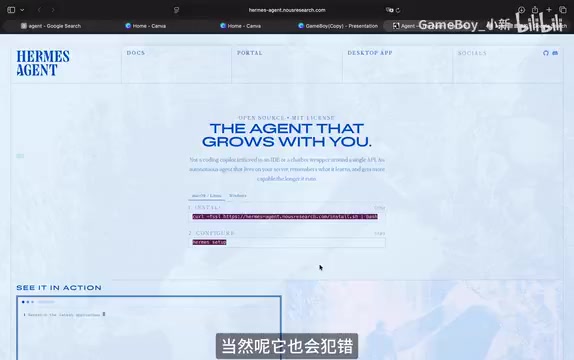
Hermes Agent Hands-On Review: An AI Efficiency Revolution for Indie Game Developers
Indie game developer reviews Hermes Agent vs OpenClaude: intelligent context compression, real-time Memory, remote control via Telegram, and practical use cases in game dev, social media, and email.
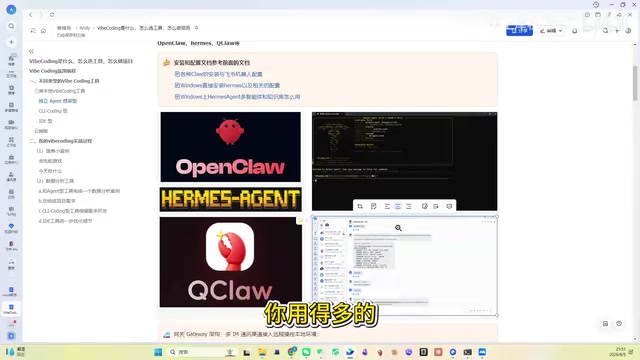
Vibe Coding Beginner's Guide: Tool Selection Across Three Categories with Practical Examples
A comprehensive guide to Vibe Coding's three tool categories: Agent frameworks, CLI Coding, and IDE tools, with practical examples including Snake game and data analysis workbench.