HarmonyOS 7 Developer Beta Launches: A Deep Dive into System-Level Transformation for the Agent Era
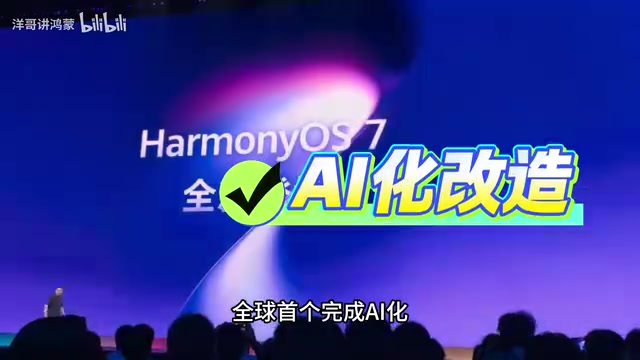
HarmonyOS 7 enters developer Beta as the world's first AI-native OS, ushering in the Agent era.
Huawei has launched the HarmonyOS 7 developer Beta, positioning it as the world's first operating system to complete AI-native transformation. Key upgrades include Xiaoyi Agent's system-level intelligent orchestration, StarShield end-to-end security, and Galaxy Interconnect's cross-platform openness to OpenHarmony and iOS. With 11M+ developers and 400K+ apps, HarmonyOS competes with Apple Intelligence and Google Gemini in the race to define the Agent-era OS.
HarmonyOS 7: The World's First OS to Complete AI-Native Transformation
In late May, Huawei officially announced at its Songshan Lake campus in Dongguan that HarmonyOS 7 is now open for developer Beta testing. This isn't just a routine version update — it's a system-level paradigm shift. HarmonyOS claims to be the world's first operating system to complete AI-native transformation, officially entering the Agent era.
From HarmonyOS 1.0 to 6.0, Huawei has been steadily building out its distributed capabilities and ecosystem. But with HarmonyOS 7, the core narrative has fundamentally shifted: the OS interaction model has evolved from "users searching for apps" to "AI understanding users." The operating system is no longer just a container for applications — it has evolved into an intelligent agent platform capable of proactively understanding user intent and orchestrating cross-app task execution.
Agent — or intelligent agent — is one of the most pivotal technical paradigms in AI over the past two years. Unlike traditional AI assistants, Agents can autonomously perceive their environment, formulate plans, invoke tools, and execute multi-step tasks. The technical foundation stems from breakthroughs in large language model (LLM) reasoning capabilities, combined with frameworks like ReAct (Reasoning + Acting), enabling AI to perform chain-of-thought reasoning and action in complex scenarios. Agent-ification at the OS level means AI is no longer a standalone application but is deeply embedded in the system kernel, with direct access to system APIs, inter-process communication management, and hardware resource scheduling — enabling seamless task execution across apps and devices. HarmonyOS 7 represents a critical step in this direction.
Xiaoyi Agent: From Voice Assistant to System-Level Intelligent Agent
The most significant change in HarmonyOS 7 is the role upgrade of Xiaoyi, Huawei's AI assistant. Previous voice assistants were essentially command translators — you'd say "open WeChat," and it would open WeChat. But in the Agent era, Xiaoyi's capabilities have been dramatically expanded.
Take the officially demonstrated scenario: when you say "help me plan a weekend camping trip," Xiaoyi won't simply open a camping app. Instead, it executes an entire task chain:
- Book a campsite: Search and reserve a camping spot based on your location and preferences
- Arrange transportation: Plan travel routes and transportation options
- Cross-device coordination: Remind the smart display at home to pre-download cartoons the kids love

The technical implication here is that Xiaoyi needs four layers of capability: intent understanding, task decomposition, cross-app orchestration, and multi-device coordination. This isn't feature stacking at the app level — it's deep integration at the operating system level. Only a system-level AI can break down data silos between applications and achieve true end-to-end task execution.
From a technical implementation perspective, Intent Recognition relies on natural language processing to convert users' ambiguous expressions into structured task descriptions through semantic parsing. Task Decomposition involves planning algorithms that break down a high-level goal into multiple executable subtasks while determining their dependencies and execution order. Implementing these capabilities at the OS level requires building a unified service description protocol that allows different apps to expose their capabilities in a standardized way — similar to service registration and discovery mechanisms in microservice architectures. This explains why Agent-ification must happen at the system level: only the operating system has the permissions and capability to establish such a unified orchestration framework.
Of course, how high a completion rate these demo scenarios can achieve in real-world use still requires extensive validation during the developer Beta phase. But from an architectural design standpoint, HarmonyOS 7 is clearly leading the industry.
Security and Connectivity: Two Essential Pillars of the Agent Era
HarmonyOS StarShield: Building an End-to-End AI Security Defense
The more powerful AI Agents become, the more critical security issues are. When the system can book hotels, arrange rides, and control smart home devices on behalf of users, the consequences of malicious exploitation are far more severe than traditional security vulnerabilities.
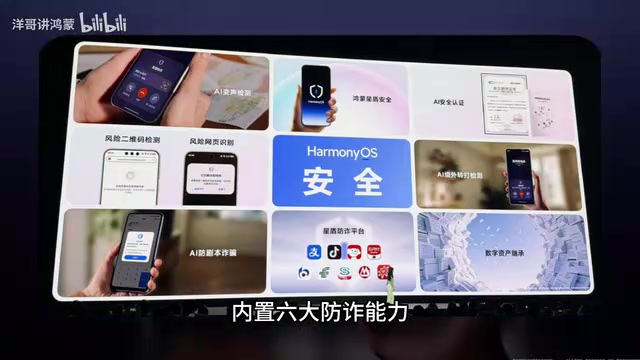
For this reason, HarmonyOS 7 introduces the HarmonyOS StarShield security framework, which has received end-to-end (device-to-cloud) AI security certification and includes six built-in protection capabilities. This security framework covers the entire data flow path from device endpoints to cloud servers.
In Agent scenarios, security challenges are particularly complex and multi-dimensional: prompt injection attacks could trick AI into executing dangerous operations through carefully crafted natural language; cross-app orchestration processes carry risks of user privacy data leakage; and AI agents may acquire system permissions beyond what's necessary during task execution. Device-side security typically relies on Trusted Execution Environments (TEE) and security chips to protect local inference processes, while cloud-side security requires techniques like federated learning and differential privacy to prevent user data misuse. StarShield's six protection capabilities are specifically designed to address these Agent-era security threats, ensuring data privacy and operational security throughout the Agent's task execution.
HarmonyOS Galaxy Interconnect: Breaking Down Device Connectivity Barriers
Another noteworthy move is HarmonyOS Galaxy Interconnect opening up fully to OpenHarmony and iOS. HarmonyOS's distributed capabilities are no longer confined to Huawei's own device ecosystem — instead, it aims to build a cross-OS device interconnection network.
OpenHarmony is an open-source operating system project that Huawei donated to the OpenAtom Foundation in 2020. It shares the underlying architecture with the commercial HarmonyOS but targets a broader IoT device ecosystem. Opening Galaxy Interconnect to OpenHarmony and iOS essentially builds a device interconnection layer similar to the Matter protocol (a unified smart home standard). In the distributed computing domain, cross-platform interconnection requires solving technical challenges including device discovery, identity authentication, data serialization, and transport protocol unification. Huawei's distributed soft bus technology uses a unified device virtualization layer to abstract devices running different operating systems into unified resource nodes, enabling Agents to schedule remote devices as seamlessly as local resources.
For the Agent era, this step is crucial. An intelligent agent's value lies in its ability to orchestrate as many devices and services as possible. If interconnection capabilities are restricted to a single ecosystem, the Agent's practical utility is significantly diminished. Opening connectivity to iOS reflects Huawei's pragmatic approach to ecosystem strategy.
HarmonyOS Ecosystem Data: The Foundation for AI Transformation and Remaining Challenges
Supporting HarmonyOS 7's bold transformation is an impressive set of ecosystem metrics:
- HarmonyOS 6 devices surpassed 66 million units
- HarmonyOS has become China's second-largest mobile operating system
- Over 11 million registered developers
- More than 400,000 available applications
These numbers indicate that HarmonyOS has crossed a critical threshold in ecosystem development. There's a widely recognized critical mass theory in the OS industry: when app count exceeds 160,000–200,000, it covers the vast majority of users' daily use cases, and the ecosystem enters a self-reinforcing positive cycle. HarmonyOS's 400,000 apps far exceed this threshold. The 11 million developer base is also significant — for comparison, Apple announced approximately 34 million registered developers worldwide at WWDC 2024. Developer count directly determines an ecosystem's innovation velocity and app quality. While the 66 million device base still trails Android and iOS, it's a considerable scale for an independent operating system.
However, the Agent era places entirely new demands on developers, and the dimensions of ecosystem competition have shifted accordingly. Previously, developers only needed to build great standalone apps. Now they need to think about how to make their apps correctly understood and invoked by AI Agents — the key metric is no longer just app quantity, but how many apps have completed Agent-ready adaptation, meaning they support being discovered, understood, and invoked by AI agents. This implies new development paradigms, new API interfaces, and new testing methodologies. The HarmonyOS 7 developer Beta is essentially an invitation for developers to collectively explore this new paradigm.
OS AI-ification: HarmonyOS 7's Competitive Landscape
The launch of HarmonyOS 7 doesn't exist in a vacuum. Apple has rolled out Apple Intelligence, and Google is deeply integrating Gemini into Android. OS-level AI transformation has become an industry-wide consensus, with competition centering on three dimensions:
- Depth of AI integration at the system level: Is it superficial feature layering, or a genuine architectural overhaul?
- Agent task completion rate in practice: Demos look impressive, but how reliably can tasks be executed in real user scenarios?
- Speed of developer ecosystem adaptation: How many apps can quickly integrate with the Agent framework?
In terms of competitive approaches, the three major platforms each have distinct focuses. Apple's Apple Intelligence employs a hybrid architecture combining on-device small models with cloud-based Private Cloud Compute, emphasizing privacy-first design, with AI capabilities primarily manifesting as system-level feature enhancements (smart summaries, image generation, Siri upgrades). Google deeply integrates the Gemini large model into Android, using Gemini Nano for on-device inference while leveraging its advantages in search and cloud services to build more powerful Agent capabilities. By contrast, HarmonyOS 7's differentiation lies in its distributed architecture, which is naturally suited for multi-device collaborative Agent scenarios — Huawei's extensive deployment across IoT devices (smart displays, speakers, vehicles, wearables) provides Agents with a richer device orchestration space than what Apple or Google can offer. The competition among the three is essentially a contest between three technical philosophies: "closed and refined," "open and expansive," and "distributed and collaborative."
HarmonyOS 7's positioning as "the world's first OS to complete AI-native transformation" has indeed seized the initiative in terms of timing. But the ultimate outcome will depend on real-world feedback during the developer Beta phase and user reception after the official release.
For developers, regardless of which platform they ultimately choose, the arrival of the Agent era signals one definitive trend: future applications will no longer be isolated islands, but service nodes that AI agents can orchestrate. The sooner you understand and adapt to this paradigm shift, the better positioned you'll be to capitalize on the next wave of platform opportunities.
Related articles

AI Agent Learning Roadmap: A Four-Step Practical Guide from Zero to Job-Ready
A proven AI Agent learning roadmap covering four core elements, mainstream architecture patterns, multi-agent collaboration, and hands-on projects to go from zero to job-ready in three months.
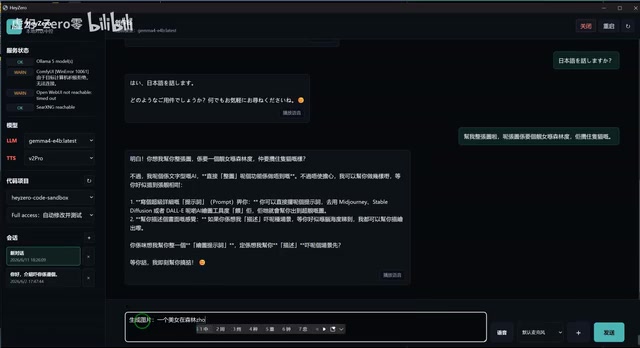
Deploying a Multimodal AI Agent Locally on a 3080Ti: VRAM Management and a Deep Dive into All Five Modules
A detailed guide to deploying a multimodal AI Agent on a 3080Ti with 12GB VRAM, covering LLM, STT, TTS, image and video generation module selection, dynamic VRAM loading, and real-world performance.
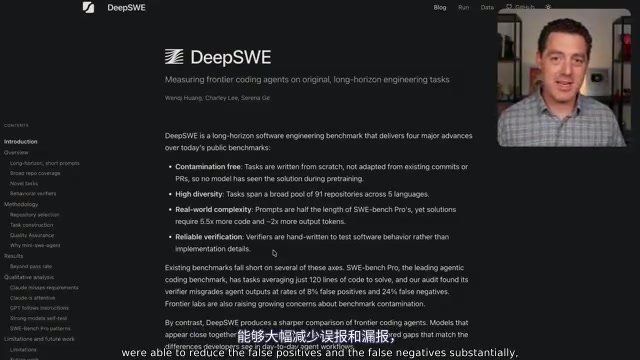
DeepSWE Benchmark Reveals the Truth: GPT 5.5 Leads Opus 4.7 by a Wide Margin
DeepSWE long-horizon benchmark shows GPT 5.5 leads Opus 4.7 by 15+ points with 70% pass rate at one-third the cost. Deep dive into contamination-free testing and AI coding implications.