Harness AI Engineering: A Practical Methodology for AI-Assisted Programming in Enterprise Projects
Harness AI Engineering: A Practical Me…
Harness AI Engineering solves the persistent challenges of AI programming in enterprise projects.
AI programming excels on simple projects but often struggles with enterprise-level complexity — code hallucinations, quality degradation, and unresolvable loops. Harness AI Engineering, the third evolutionary stage of prompt technology, uses systematic engineering methods including requirements decomposition, architecture design, context management, and quality assurance to let AI handle 80%–90% of code generation while humans focus on architecture and oversight, truly enabling human-AI collaborative enterprise development.
The Promise vs. Reality of AI Programming: Why Enterprise Projects Keep Hitting Walls
AI-assisted programming has become the hottest topic in software development. Top AI companies like Anthropic and OpenAI reportedly have over 90% of their code generated by AI models. Yet many developers find themselves constantly hitting walls in practice — code hallucinations, inconsistent output, quality degradation, and more. Some have even abandoned AI programming altogether, returning to the "old-fashioned" way of writing code by hand.
The core issue is this: AI programming shines on simple projects but often falls short when facing complex enterprise systems. The voices claiming that "even beginners can build projects from scratch with AI" are mostly talking about web pages and small demos. Once you're dealing with microservice architectures, high concurrency, and complex business logic in enterprise projects, purely conversational AI programming quickly hits a dead end.
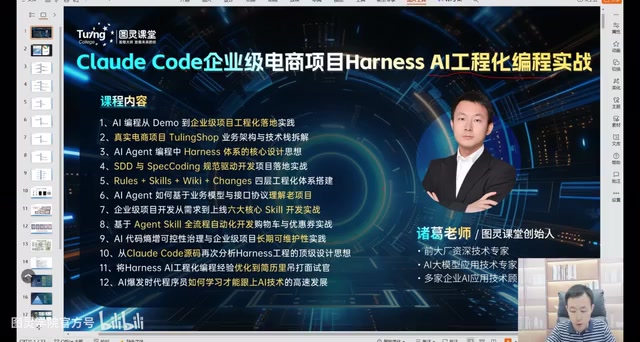
The methodology we're introducing today — Harness AI Engineering — was created precisely to solve this pain point. By combining AI programming tools like Claude Code with systematic engineering methods, it enables AI to genuinely handle 80%–90% of enterprise-level code development.
Three Major Challenges in Current AI Programming
Challenge 1: The "Infinite Loop" of Complex Problems
Many developers report that once they encounter a problem AI can't solve, they end up going back and forth with the model for dozens of rounds without resolution. For users who don't understand the underlying technology, the problem just stays stuck forever. This isn't because AI lacks capability — it's because there's no systematic strategy for problem decomposition and context management.
Challenge 2: Unreliable Code Quality
Common issues with AI-generated code include:
- Hallucinations: Generating non-existent API calls or incorrect logic
- Inconsistent coding standards: Different modules with wildly different styles, making maintenance difficult
- Quality degradation: Noticeable decline in generated code quality as project complexity increases
Challenge 3: The "Impossible Triangle" of Enterprise Projects
Enterprise projects typically have three characteristics: high business complexity, strict technical requirements, and large system scale. The traditional Q&A-style AI programming model cannot satisfy all three dimensions simultaneously. For example, in an e-commerce system, modules like orders, inventory, and payments have complex coupling relationships — a simple prompt can't help AI understand the overall architecture.
Three Evolutionary Stages of AI Prompt Technology
To understand Harness Engineering, you first need to understand the evolution of AI prompt technology:
Stage 1: Prompt Engineering
After ChatGPT launched in late 2022, prompt engineering became a hot concept. Its core idea is how to articulate your problem clearly — guiding AI to give better answers through carefully crafted prompts. This Q&A model works for simple tasks but struggles with complex scenarios.
Stage 2: Context Engineering
As the tasks AI needed to handle grew more complex, prompts alone were no longer sufficient. Context engineering emphasizes providing AI with adequate background information and constraints, including project architecture, coding standards, business rules, and more. This enables AI to generate more accurate code within a richer context.
Stage 3: Harness Engineering
"Harness" literally means to control or direct, and Harness Engineering represents the systematic mastery of AI programming capabilities. It goes beyond just how to talk to AI — it focuses on designing the entire engineering workflow, from requirements decomposition and architecture design to code generation and quality assurance, forming a complete methodology.
Core Principles of Harness AI Engineering
Human-AI Collaboration, Not Human-AI Replacement
A critical insight: AI programming doesn't mean humans have nothing to do. Quite the opposite — under the Harness AI framework, the human role shifts from "writing code" to "architecture design, task decomposition, and quality control." AI handles 80%–90% of code generation, while humans handle the work that truly requires judgment and experience.
Driven by Engineering Thinking
Unlike most Harness tutorials that stay at the conceptual level, truly valuable Harness practice must be driven by real-world implementation. Taking an e-commerce system as an example is a deliberate choice — everyone is familiar with e-commerce business logic, so there's no need to explain the domain, allowing you to focus entirely on the engineering methodology itself.
Choosing the Right Toolchain
In practice, toolchain selection is crucial. The recommended tech stack includes:
- Frontend interaction: Claude Code + VS Code development environment
- Backend models: Domestic LLMs (e.g., Zhipu GLM) or Claude models
- Methodology: Harness AI Engineering framework
Here's an interesting detail: even when using a domestic model like GLM instead of Claude's native model, the Harness engineering methodology can still deliver excellent results. With Claude models, the results are even better. This demonstrates that the value of methodology often outweighs the capability differences between individual tools.
Implications for Developers
No Need for Anxiety, But Proactive Transformation Is Essential
Facing the AI programming wave, professional developers have no reason to be anxious. Claims that "beginners can build complex projects" crumble in the face of enterprise-level development. The real value lies in this equation: skilled developers + engineered AI programming methods = 10x efficiency gains.
From "Writing Code" to "Harnessing AI to Write Code"
New capabilities developers need to cultivate include:
- Architecture design skills: Providing AI with a clear system blueprint
- Task decomposition skills: Breaking complex requirements into AI-executable granularity
- Quality review skills: Identifying issues in AI-generated code
- Context management skills: Providing AI with appropriate background information
Universal Applicability of the Methodology
The Harness AI Engineering methodology isn't limited to e-commerce systems — any large-scale enterprise project can adopt this approach, whether it's an internal management system, a SaaS platform, or a high-concurrency internet application. The key is mastering the engineering mindset, not memorizing specific operational steps.
Conclusion
AI programming is evolving from a "toy" into a "tool," and Harness AI Engineering is the critical bridge in this transformation. It teaches us that the bottleneck in AI programming isn't AI's capability itself, but whether we've mastered the right engineering methods to harness it. For small and medium-sized teams, mastering this methodology means building complex systems — ones that previously required large teams — with fewer people and lower costs.
The competitive edge for future developers will no longer be "how fast you can write code," but "how well you can harness AI to write code."
Related articles
 Tutorials
Cursor + Codex Dual-IDE Collaboration: A Practical Methodology for Open-Source Project Customization
A complete methodology for open-source project customization based on real-world experience, detailing the Cursor+Codex dual-IDE workflow, seven-stage process, MVP validation, and AI source code reading techniques.
 Tutorials
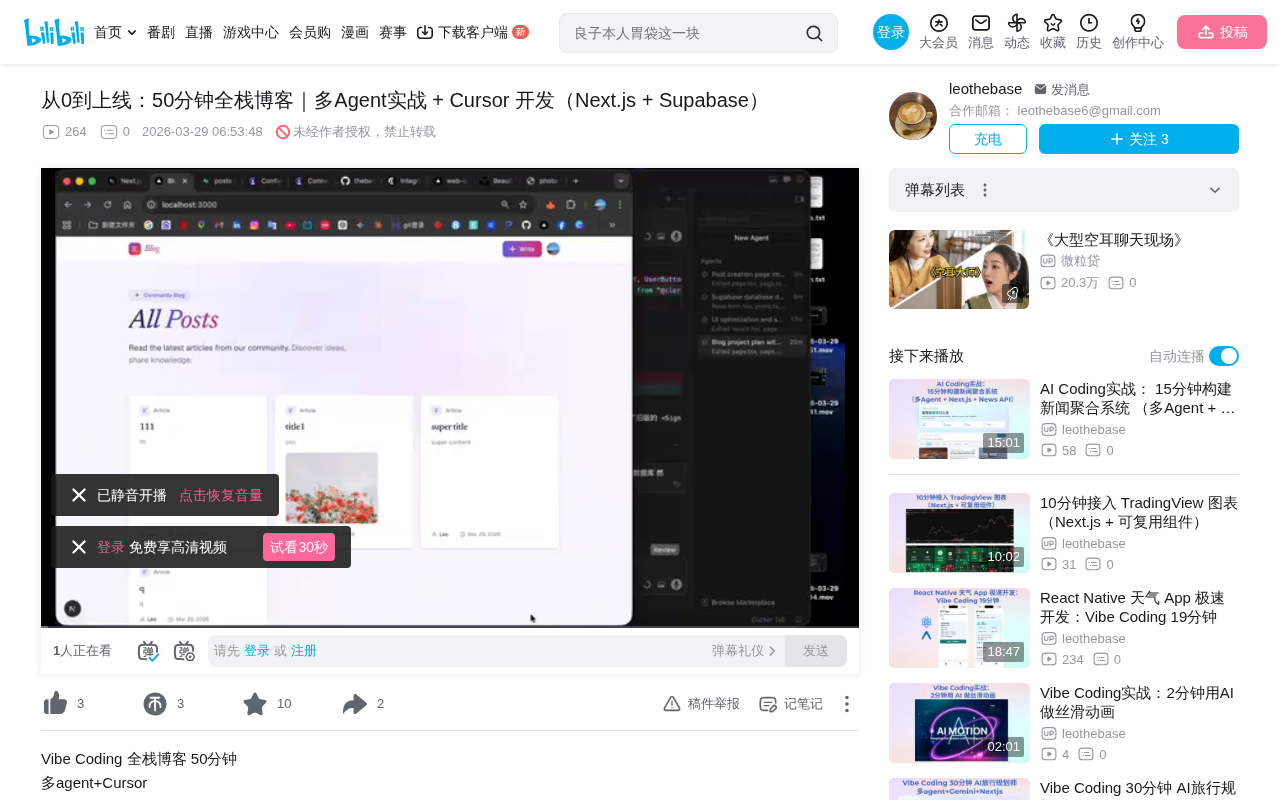
Cursor Multi-Agent in Practice: Building a Full-Stack Next.js Blog in 50 Minutes
Build a full-stack blog in 50 minutes using Cursor IDE's multi-Agent mode with Next.js, Clerk auth, and Supabase. Learn the 4-phase AI Agent workflow and key integration pitfalls.
 Tutorials
Building an AI Software Factory from Scratch: A Cursor Engineer's Hands-On Experience with Multi-Agent Collaboration
Cursor engineer Eric shares practical insights on building an AI software factory: automation levels, guardrail design, parallel Agent management, and scaling to 1000+ Agents for 24/7 development.