Harness AI Engineering Programming: A Practical Guide from Demo to Enterprise-Grade Delivery
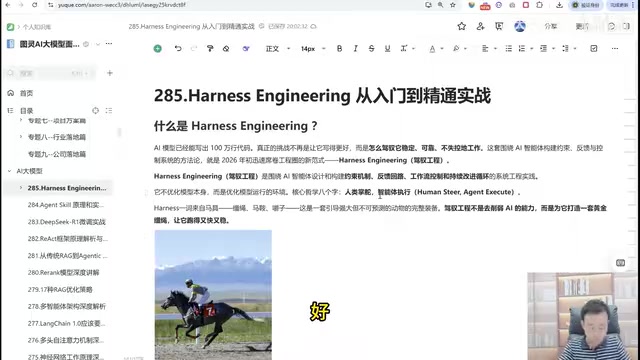
A practical methodology for harnessing AI to deliver enterprise-grade code instead of just demos.
This article explores Harness AI engineering programming — a methodology that transforms AI coding from demo-level output to enterprise-grade delivery. It addresses three core pain points (hallucinations, lack of standards, and infinite debugging loops) and demonstrates how standards-driven constraints, process management, and architecture guidance enable developers to systematically harness AI tools like Cloud Code for complex projects.
Introduction: Why Can Your AI Programming Only Produce Demos?
AI programming tools like Cloud Code, Cursor, and Copilot are now widely used, but there's an awkward reality: most people can only write small demos with AI programming — the moment they tackle enterprise-grade projects, everything falls apart — chaotic architecture, endless bugs, and code that simply can't be delivered.
The root cause isn't AI itself. According to reports, top AI companies like Anthropic and OpenAI already have over 90% of their code written by large language models. The gap lies in this: average developers let AI "freestyle," while truly efficient teams use AI engineering programming.
This article is based on practical experience shared by an instructor (Mr. Zhu) with senior architect backgrounds at major companies like JD.com and Vipshop. It systematically outlines the core philosophy and implementation methods of Harness AI engineering programming, helping developers truly apply AI programming to enterprise-grade projects.
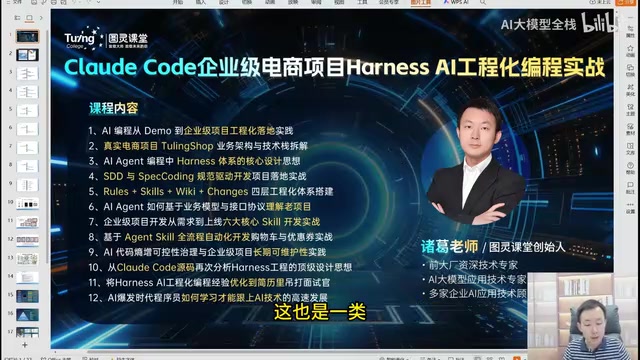
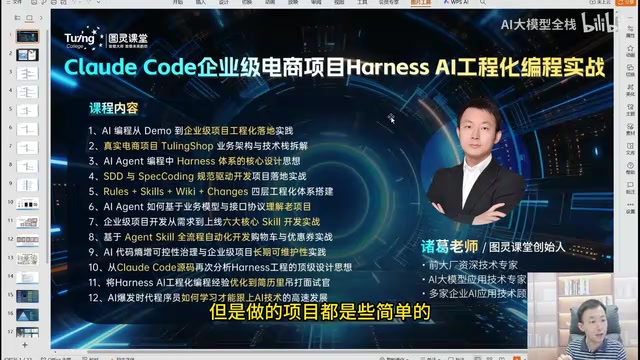
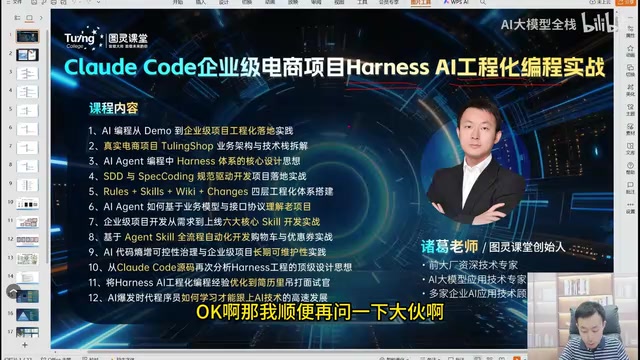
Three Core Pain Points of Current AI Programming
Pain Point 1: Hallucinations and Uncontrollable Code
Many developers have encountered this scenario when using AI programming: the AI-generated code looks logically sound, but is riddled with hidden bugs when actually running. The "hallucination" problem of large models might be tolerable in simple scenarios, but in enterprise-grade projects, a single hidden logic error can crash an entire business pipeline.
Pain Point 2: Severe Lack of Code Standards
When AI freely generates code, it doesn't understand your team's coding standards, project architecture conventions, or module division criteria. The result: inconsistent code styles across generations, severe coupling between modules, and extremely high maintenance costs. Multiple developers have reported that AI-generated code "runs but can't be used" and simply cannot pass enterprise-level Code Review.
Pain Point 3: Complex Problems Trapped in Infinite Loops
This is the most fatal issue. When AI programming encounters a bug it can't handle, you interact with the model back and forth for dozens of rounds, and it still can't solve it. If the developer doesn't understand the underlying technology, the problem remains permanently stuck and project progress completely stalls. This is the fundamental reason why "novice developers" who purely rely on AI without technical backgrounds are helpless in the face of enterprise-grade projects.
Core Philosophy of Harness AI Engineering Programming
From "Freestyle" to "Standards-Driven"
The core idea of Harness (literally meaning "to control and direct") is: not letting AI program for you, but having you harness AI to program according to engineering standards.
Specifically, Harness AI engineering programming involves several key shifts:
- Making AI write code according to standards: Constraining AI's output scope through preset coding standards, architecture templates, and constraint conditions
- Making AI follow processes for requirements analysis: Instead of tossing a single sentence at AI to generate code, guiding AI through standard software engineering processes for requirements decomposition
- Making AI generate modules according to project structure: Based on existing project architecture, having AI generate code that fits the overall design in the correct locations
The ultimate goal of this methodology is: producing truly deliverable enterprise-grade code, not demos that can only be demonstrated.
The Essential Difference Between Harness and Traditional AI Programming
Current AI programming usage can be roughly divided into three categories:
- Web copy-paste type: Using web tools like Doubao, ChatGPT, etc. to generate code snippets, then manually pasting them into the IDE
- IDE-assisted completion type: Using tools like Copilot for code completion and suggestions
- Full-process AI development type: Using tools like Cloud Code, Cursor, etc. for full-process development from requirements to code
Even with the third category, without engineering methodology guidance, you'll still fall into the three pain points mentioned earlier. Harness engineering programming essentially adds a layer of engineering constraints and process management on top of the third category, transforming AI output from "randomly usable" to "stably deliverable."
Practical Implementation: Cloud Code Driving an Enterprise-Grade E-commerce Project
Technology Stack Selection and Configuration
In the actual demonstration, the technology stack used was:
- Development tool: Cloud Code + VS Code
- Backend LLM: China's Zhipu AI model (latest GLM series version)
- Project type: Enterprise-grade e-commerce system
Interestingly, the instructor specifically pointed out that using domestic Chinese LLMs can already achieve very good results. If enterprises use stronger models like Claude, combined with the Harness engineering method, the results will only be better. This means the value of methodology exceeds the capability differences between models themselves.
Why Choose an E-commerce Project as the Practical Case?
The e-commerce project was chosen as a teaching case for good reason. It possesses all the typical characteristics of enterprise-grade projects:
- High business complexity: Involving multiple business domains including products, orders, payments, inventory, and logistics
- Strict technical requirements: Needing to consider high concurrency, microservice architecture, distributed transactions, and other technical challenges
- Universal business scenarios: No need to explain additional business context, allowing focus on the engineering methodology itself
More importantly, the instructor emphasized: the Harness methodology applies to all enterprise-grade projects — e-commerce is merely a vehicle, and the same methodology can be transferred to ERP, CRM, internal management systems, or any other complex project.
Deeper Implications of the AI Programming Era for Developers
Technical Professionals Won't Be Replaced, But Their Roles Are Being Redefined
Facing claims that "even novices can build projects with AI programming," many programmers feel anxious. But the reality is: what non-technical people produce with AI are mostly simple web pages, small tools, or demo-level products. Truly enterprise-grade projects — complex business management systems, high-concurrency internet platforms — still require people with technical foundations to harness AI.
In the AI programming era, a developer's core competitiveness shifts from "writing code" to "harnessing AI to write good code." This includes:
- Architecture design capability: Telling AI how to organize code
- Requirements decomposition capability: Breaking complex business into granularity that AI can handle
- Quality control capability: Reviewing AI output, identifying and correcting issues
- Engineering mindset: Establishing standards and processes to make AI output stable and controllable
Bridging the Gap from Conceptual Understanding to Practical Implementation
Most content about Harness on the market stays at the conceptual level — after listening, you get a general idea but don't know how to apply it. The real value lies in implementing these concepts into specific development workflows: how to write constraint files, how to design Prompt templates, how to establish code review mechanisms, and so on.
Conclusion
The dividend period of AI programming has arrived, but those who can truly capture these dividends aren't the ones who simply toss requirements at AI — they're the developers who have mastered engineering methodologies and can systematically harness AI. Harness AI engineering programming provides a clear path from "AI toy" to "AI productivity": through standards constraints, process management, and architecture guidance, transforming AI from a freestyling "intern" into a rule-following "efficient engineer."
For every developer who wants to stay competitive in the AI era, learning and practicing AI engineering programming may be one of the most worthwhile investments right now.
Related articles
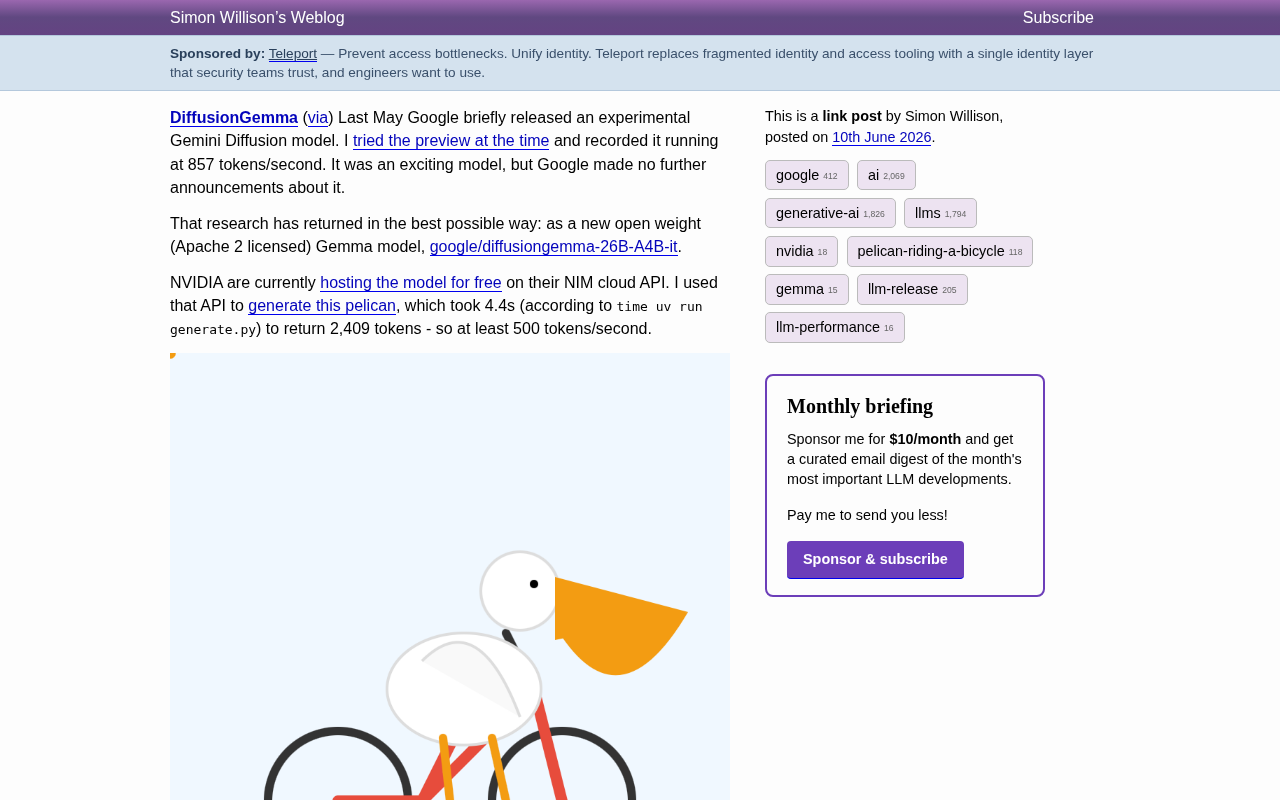
DiffusionGemma: Google's Open-Source Diffusion Language Model Exceeding 500 Tokens/s
Google releases DiffusionGemma, an open-source diffusion language model with Apache 2.0 license. The 26B-parameter MoE model achieves over 500 tokens/s in real-world tests.
Reviving a 28-Year-Old Quake 2 Custom …
Reviving a 28-Year-Old Quake 2 Custom Map with AI: New Possibilities in Digital Archaeology
A developer used AI tools to revive a 28-year-old Quake 2 custom map as a browser game, showcasing AI's new role in digital heritage restoration and game preservation.
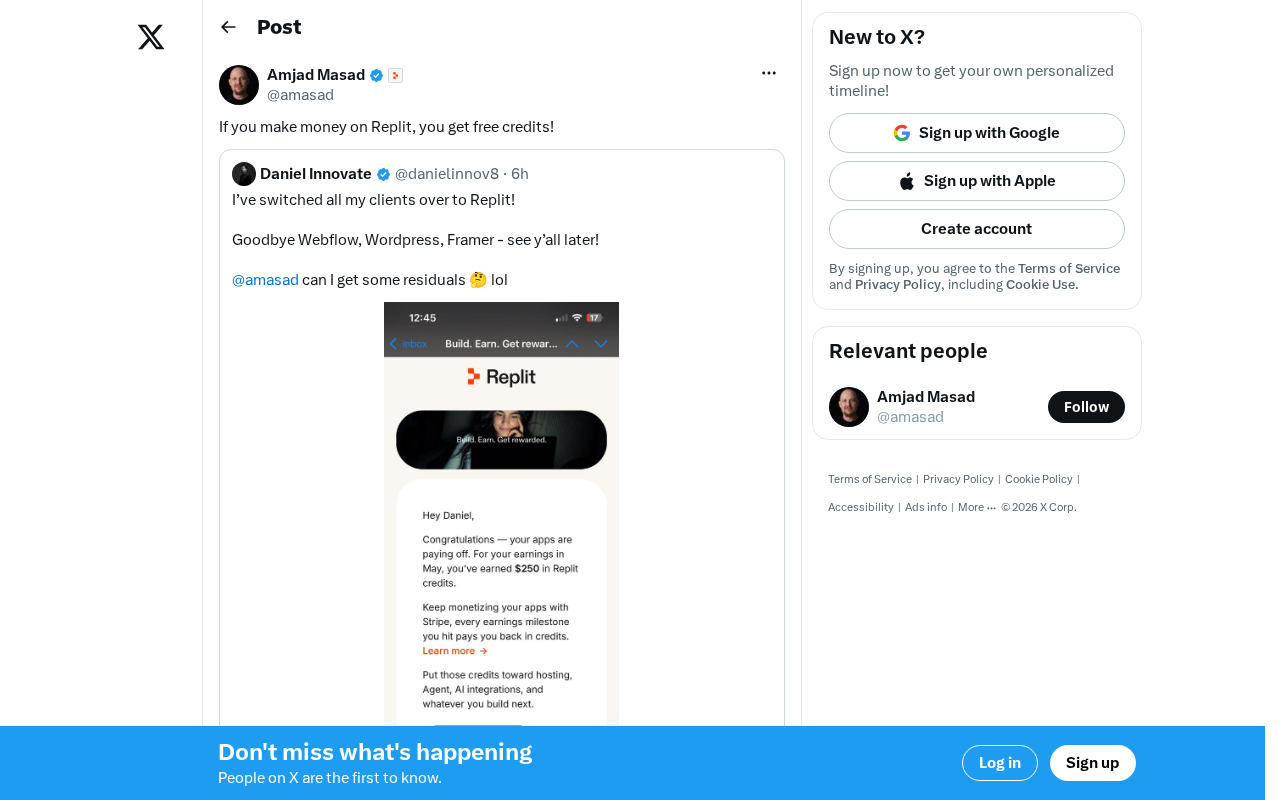
Replit's Revenue Incentive Policy Explained: Earn Money on the Platform, Get Free Credits
Replit's new revenue incentive policy gives developers free credits when they earn money on the platform. A deep dive into its impact on indie developers and the AI platform landscape.