Reviving a 28-Year-Old Quake 2 Custom Map with AI: New Possibilities in Digital Archaeology
Reviving a 28-Year-Old Quake 2 Custom …
AI revives a 28-year-old Quake 2 custom map, turning it into a browser-playable web game.
A developer used Fable's AI-powered fast mode to resurrect a custom Quake 2 map from 1997, converting it into a browser-playable web game. The project involved solving legacy file format challenges like PAK file repacking and texture compatibility. Beyond nostalgia, it highlights AI's emerging role as a "digital archaeologist" — capable of understanding obsolete formats, assisting game preservation, and making classic content accessible through modern web technologies like WebAssembly.
When AI Meets Nostalgic Gaming: Reviving a 28-Year-Old Classic
A developer recently shared an exciting project on Twitter — using Fable's fast mode, an AI-powered tool, he successfully revived a 28-year-old custom Quake 2 map and turned it into a browser-playable web game.
Quake 2, released by id Software in 1997, is a landmark first-person shooter in gaming history. It introduced the brand-new id Tech 2 engine, featuring hardware-accelerated OpenGL rendering, colored lighting systems, and improved netcode for the first time. Led by John Carmack, id Software essentially defined the technical standards for FPS games. Another major contribution of Quake 2 was its open modding culture — id Software released the game's source code and toolchain, allowing players to create custom maps and modify game content, spawning a massive community creation ecosystem. The late 1990s were the golden age of PC game modding culture, with countless amateur developers using id Software's editors to build their own levels. These creations embodied an entire generation's creative passion and technical exploration.
The original map was created by @javilopen around 1997. After nearly three decades, these old game files had long been forgotten in some corner of a backup hard drive. But with the power of AI, these digital artifacts have been brought back to life.
Technical Challenges: More Than a Simple Format Conversion
The revival process wasn't smooth sailing. The developer mentioned that on the first attempt, texture files failed to load properly — a very common issue when working with legacy game assets. Quake 2 used id Software's custom PAK file format to package game resources, and after 28 years, file format compatibility, path references, texture encoding, and other aspects can all present various problems.
A PAK file is essentially a simple archive container, similar to an uncompressed ZIP file. It contains an internal file directory table that records each resource file's name, offset within the PAK package, and size. Quake 2's game assets — including textures, models, sounds, maps, and more — were all packed into PAK files (typically named pak0.pak, pak1.pak, etc.). The game engine would search these PAK packages in priority order to load resources at runtime. This design was highly efficient at the time, but it also meant that file path references were hardcoded, textures used specific formats like PCX or WAL, and the color space was based on a 256-color palette. After 28 years, parsing tools for these formats have mostly been abandoned, and details like path separators, case sensitivity, and byte order can all cause compatibility issues on modern systems.
Ultimately, he solved the texture loading issue by repacking the PAK files. Although he casually brushed it off as "a bit of hacking," anyone familiar with old-school game modding knows that debugging these kinds of issues often requires a fairly deep understanding of low-level file structures.
Fable is a tool platform that leverages AI technology to assist with game development and porting. Its "fast mode" helps developers quickly understand and convert legacy game resource formats, automatically handling common issues in code adaptation and asset conversion. In a traditional game porting workflow, developers need to manually analyze the source game's file structure, write format conversion scripts, handle rendering pipeline differences, and debug various edge cases — a process that can take weeks or even months. AI tools have changed this paradigm — by learning from vast amounts of game engine documentation and open-source projects, they can quickly identify file formats, infer data structures, and generate conversion code, compressing work that previously required deep specialized knowledge into an extremely short timeframe.
AI as a "Digital Archaeologist": A New Role
The most thought-provoking aspect of this project isn't the technology itself, but the developer's insight into AI's capabilities:
AI is so good at reviving old stuff from your backups. I was always waiting for some backup app to come to finally be able to browse all my old files and figure stuff out from it, and now you can with AI.
This statement reveals an underappreciated use case for AI — the restoration and understanding of digital heritage. Every one of us likely has a trove of aging files sitting on our hard drives: project files from old software versions, documents in obsolete formats, mods and save files from early games. In the past, understanding and recovering these files required finding the corresponding legacy software, digging through long-vanished forum posts, or reverse-engineering file formats yourself.
Now, large AI models have effectively "read" virtually all documentation and discussions about these legacy formats available on the internet during their training process. They inherently possess the ability to understand niche knowledge like PAK file structures, WAD texture formats, and BSP map compilation. This makes AI an ideal "digital archaeologist."
It's worth noting that BSP (Binary Space Partitioning) is the core technology used by Quake-series engines to organize 3D scene geometry data. Level designers used editors (such as QERadiant or Worldcraft) to create geometry composed of "brushes," then ran a series of compilation tools to convert them into BSP format: QBSP handled spatial partitioning and polygon generation, QVIS calculated visibility data (PVS, Potentially Visible Set) to optimize rendering performance, and QRAD computed lightmaps. This toolchain converted human-editable .map text files into .bsp binary files that the engine could load directly. The entire compilation process involved complex computational geometry algorithms, and a moderately complex map could take hours to compile on 1997 hardware. Understanding this toolchain is crucial for restoring legacy map files, as intermediate files from different stages may require different handling approaches. AI models demonstrate a unique advantage in precisely these kinds of highly specialized but poorly documented domains.
From Personal Nostalgia to Broader Implications
While this case may seem like just a fun nostalgia project, it points to several trends worth watching:
Preserving Gaming Cultural Heritage
A vast amount of community-created content from early gaming — custom maps, mods, total conversions — is disappearing with the passage of time. AI tools lower the technical barrier to recovering and running this content, offering hope for preserving more gaming cultural heritage.
Game preservation is one of the most pressing challenges in the digital cultural heritage space. It's estimated that approximately 87% of early commercial games are currently in a state where they cannot be legally obtained, and the loss rate for community-created mods and custom content is even higher. Platforms like ModDB and Quaddicted (an archive site dedicated to Quake series maps) have been working hard to preserve this content, but face multiple challenges including storage costs, copyright disputes, and technological obsolescence. Many custom maps were only ever published on their creators' personal homepages, which have long since vanished along with free hosting services like GeoCities. Even when the files themselves are preserved, the specific engine versions, operating system environments, and hardware configurations required to run them pose enormous technical barriers. The emergence of AI tools brings new possibilities to this field — they can not only help parse and convert legacy formats but also assist in reconstructing lost dependencies and runtime environments.
Browser-Based Retro Gaming Experiences
Turning Quake 2 into a web version means anyone can experience this 28-year-old map with just a click of a link, without installing any software. The maturation of WebAssembly and modern browser technologies, combined with AI-assisted porting work, is dramatically improving the accessibility of classic games.
WebAssembly (Wasm for short) is a low-level bytecode format that can run at near-native speed in modern browsers. It was officially supported by mainstream browsers in 2017, opening the door to running high-performance applications on the web. Porting Quake 2 to run in a browser typically relies on toolchains like Emscripten to compile C/C++ source code to WebAssembly, while translating OpenGL calls to WebGL. This process requires handling filesystem emulation (browsers don't have direct filesystem access), audio API adaptation, input event mapping, and many other differences. In fact, browser ports of Quake-series games already have precedent — since id Software open-sourced the engine code, the community has long had multiple WebAssembly-based Quake port projects. However, correctly loading custom maps and mods into these ported versions still requires additional asset processing work, and this is precisely where AI tools add value.
AI-Assisted Reverse Engineering and Compatibility Fixes
For developers, AI's ability to handle legacy code, outdated file formats, and compatibility issues extends far beyond the gaming domain. A vast amount of legacy system migration and old data format conversion work in enterprises could similarly benefit from this kind of AI assistance.
Conclusion
A 28-year-old Quake 2 map revived by AI — the story itself is full of geeky romance. But more importantly, it shows us that AI can do more than create new things; it can also help us reconnect with the past. The next time you dig out that dusty old hard drive, why not let AI help you discover what treasures are hidden inside?
Related articles

AI Large Model Learning Roadmap Breakdown: Three Stages from Application Development to Model Fine-Tuning
Deep breakdown of a popular AI large model learning roadmap covering LangChain, RAG, Agent, and LoRA fine-tuning across three stages, with analysis of its strengths and limitations for career changers.

AI Agent Development: A Complete 6-Week Systematic Learning Roadmap
A 6-week systematic learning roadmap for AI Agent development, covering core architecture, ReAct principles, multi-agent collaboration, RAG integration, and deployment.
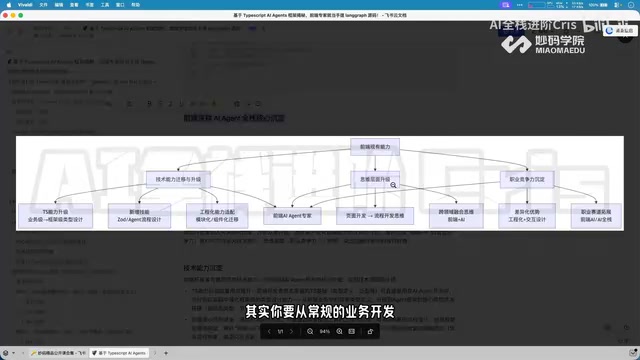
Four Core Advantages Frontend Developers Have When Transitioning to AI Agent Development
Frontend developers have key advantages for AI Agent development: TypeScript ecosystem fit, low-barrier full-stack bridging, and state management isomorphism. Learn the transition path here.