Harness Engineering: Essential Architecture Guide for Agent Development

Harness Engineering is the systematic architecture methodology for agent development, now an industry standard.
Harness Engineering is the new paradigm for agent development following Prompt Engineering and Context Engineering. Its core philosophy is harnessing LLM capabilities through architecture-driven design. Mainstream agent products like Claude Code and Cursor all adopt this architecture, with LangChain's DeepAgent as the leading implementation framework. It encompasses multi-agent collaboration, memory management, middleware layers, and MCP Server integration, representing the critical leap from toy-stage to engineering-stage agent development.
What is Harness Engineering?
If you're following the AI agent development space, there's one concept you absolutely cannot ignore — Harness Engineering. From Prompt Engineering to Context Engineering, and now to Harness Engineering, the methodology for agent development is rapidly evolving.
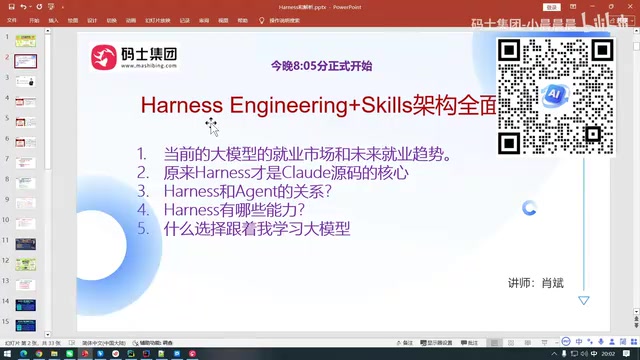
The core philosophy of Harness Engineering is: leveraging an architecture-driven approach to "harness" the capabilities of large language models, elevating agent development from scattered prompt stitching to systematic, engineering-grade architectural design. This isn't mere hype — it's a technical approach that has been validated by mainstream products.
Why is Harness Engineering So Important?
The Common Choice of Mainstream Agent Products
Here's a noteworthy fact: virtually all mainstream general-purpose agent products today are built on Harness Engineering architecture at their core. Notable examples include:
- Claude Code (Anthropic's coding agent)
- OpenAI Cloud (OpenAI's cloud-based agent)
- Cursor / Windsurf and other AI coding tools
- Human Agent (a recently popular general-purpose agent)
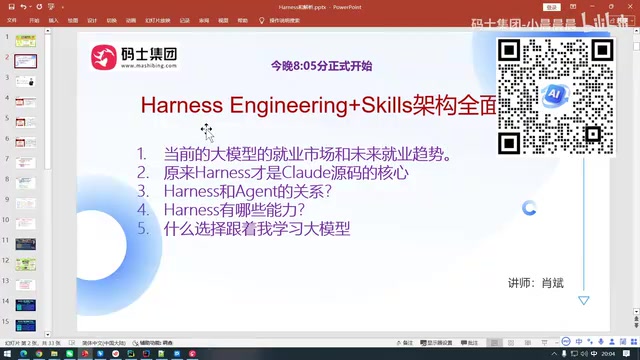
What these products share in common is that they don't simply call LLM APIs — they build a complete architectural system underneath to manage context, tool invocation, memory management, and multi-agent collaboration. This architectural system is the concrete implementation of Harness Engineering.
Direct Impact on Job Seekers
Based on real-world case studies, candidates who added Harness Engineering project experience to their resumes saw a noticeable increase in interview invitations. The logic behind this is clear:
- Clear enterprise demand: Companies building custom agents inevitably need developers who understand mainstream architectures
- Technical threshold screening: Interviewers look for Harness Engineering-related keywords on resumes
- Capability signaling: Mastering this architecture demonstrates that you understand the core principles of agent development, not just API calls
If your agent project resume lacks Harness Engineering-related content, you may very well be filtered out at the screening stage.
Technical Implementation: LangChain's DeepAgent Framework
Why Choose DeepAgent?
There are multiple framework options for implementing Harness Engineering architecture, but the most mainstream solution currently is the DeepAgent framework from the LangChain team.
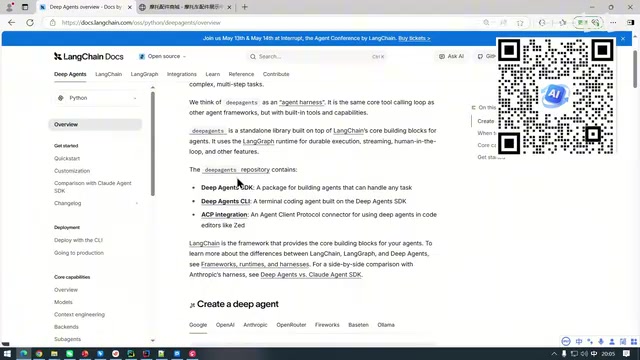
The DeepAgent homepage features a key description:
"We think of DeepAgent as an agent harness."
This isn't a third-party interpretation — it's the LangChain team's own positioning. Of course, DeepAgent isn't the only option — Anthropic's Claude Agents SDK also implements the Harness architecture. However, given LangChain's widespread adoption in enterprise development, DeepAgent is currently the most practical entry point.
Code Scale of Enterprise-Level Projects
A complete enterprise-level agent project based on Harness Engineering architecture involves substantial code. Taking a real-world project as an example:
- Backend code: approximately 5,000 lines (excluding frontend and MCP components)
- Core modules include:
- Memory Management System
- 7 Middleware components
- Sub Agent toolset
- API layer
- MCP Server
- Skill modules (with multiple subdirectories)
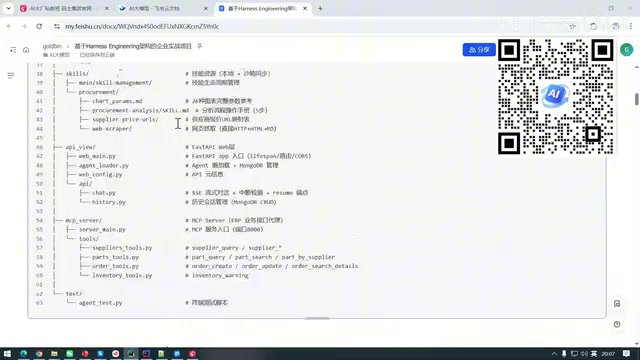
This code scale illustrates an important fact: Harness Engineering is not a lightweight concept — it's a complete architecture requiring systematic engineering practice. It involves frontend-backend separation, multi-service coordination, middleware design, and other core enterprise development capabilities.
Core Architectural Elements of Harness Engineering
Based on publicly available technical materials and real-world project analysis, Harness Engineering architecture typically includes the following core elements:
Multi-Agent Collaboration Mechanism
Unlike simple single-agent calls, the Harness architecture implements task decomposition and collaboration through Sub Agents, with each Sub Agent responsible for capabilities in a specific domain. This divide-and-conquer design makes complex task processing more efficient and controllable.
Memory Management System
Agents need to maintain context consistency across multi-turn conversations and cross-session scenarios. Memory management is a critical module in the Harness architecture. A well-designed memory system enables agents to behave more intelligently and coherently during long-term interactions.
Middleware Layer
Similar to the middleware concept in web development, the Harness architecture uses middleware to handle cross-cutting concerns such as request interception, permission control, and logging. The design of 7 middleware components reflects the complexity of enterprise applications and the demand for maintainability.
MCP Server Integration
Through the MCP (Model Context Protocol), agents can connect to external tools and data sources in a standardized way — this is critical infrastructure for achieving "harnessing" capabilities. The introduction of MCP makes agent tool invocation standardized and extensible.
Learning Path and Practical Recommendations
For developers looking to get started with Harness Engineering, here's a recommended progression:
- Understand the fundamentals: First, grasp the evolutionary logic from Prompt Engineering → Context Engineering → Harness Engineering, and understand what problem each step solves
- Get familiar with the DeepAgent framework: Start with LangChain's official documentation to understand its core APIs and design philosophy
- Build hands-on projects: Begin with simple multi-agent collaboration, then gradually add memory management, middleware, and other modules
- Stay current with industry trends: Alternative solutions like Claude Agents SDK are also worth exploring to maintain breadth of technical perspective
Harness Engineering represents a critical leap in agent development from the "toy stage" to the "engineering stage." Whether you're preparing for job interviews or driving AI project implementation within an enterprise, this is one of the most worthwhile technical directions to invest your time in right now.
Related articles
 Tutorials
Cursor + Codex Dual-IDE Collaboration: A Practical Methodology for Open-Source Project Customization
A complete methodology for open-source project customization based on real-world experience, detailing the Cursor+Codex dual-IDE workflow, seven-stage process, MVP validation, and AI source code reading techniques.
 Tutorials
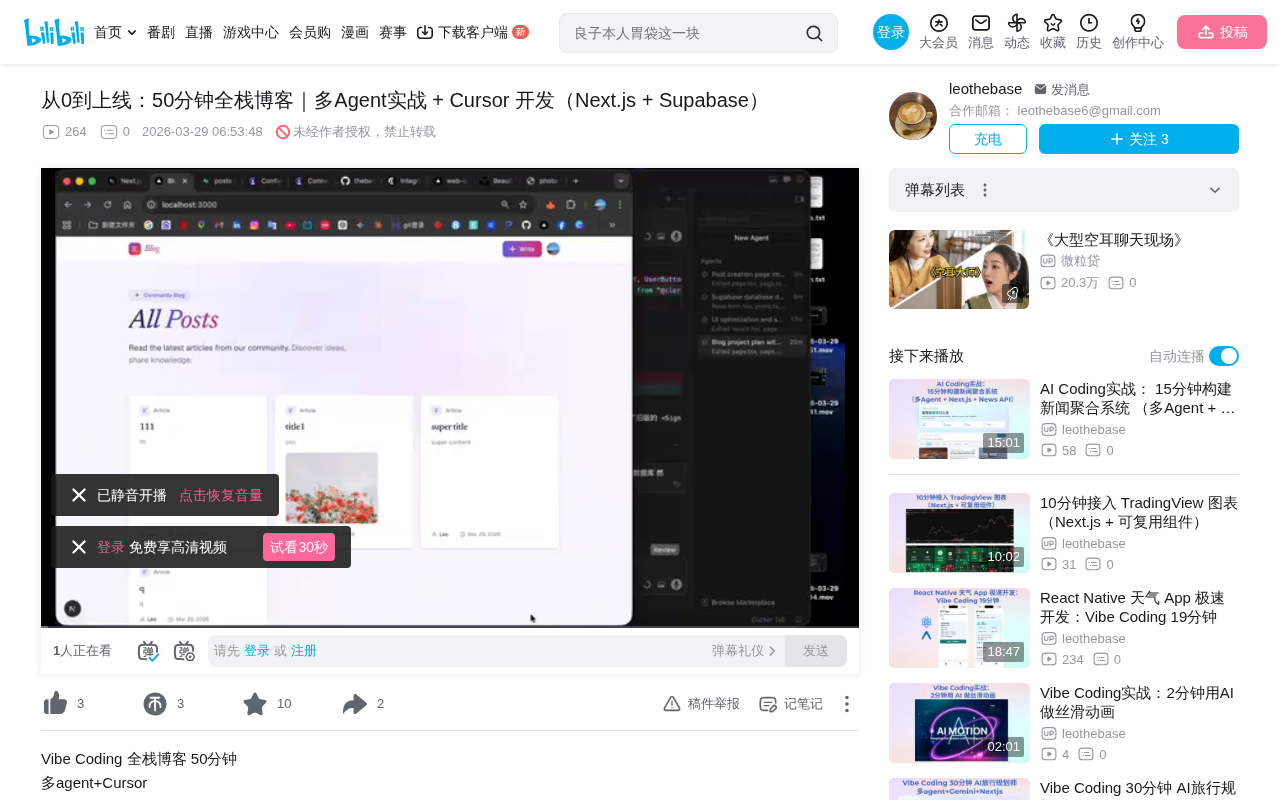
Cursor Multi-Agent in Practice: Building a Full-Stack Next.js Blog in 50 Minutes
Build a full-stack blog in 50 minutes using Cursor IDE's multi-Agent mode with Next.js, Clerk auth, and Supabase. Learn the 4-phase AI Agent workflow and key integration pitfalls.
 Tutorials
Building an AI Software Factory from Scratch: A Cursor Engineer's Hands-On Experience with Multi-Agent Collaboration
Cursor engineer Eric shares practical insights on building an AI software factory: automation levels, guardrail design, parallel Agent management, and scaling to 1000+ Agents for 24/7 development.