Harness Engineering in Practice: Taming AI Agents with Hermes Agent

Harness Engineering turns AI agents from unpredictable tools into controllable, self-evolving systems.
This article explores Harness Engineering — a systematic approach to taming AI agents beyond simple prompt tuning. Through the open-source Hermes Agent framework, it demonstrates how a four-layer memory system (working, episodic, semantic, procedural) and autonomous Skill evolution enable agents to learn from experience, stay within behavioral boundaries, and grow smarter over time, bridging the gap from demo-grade to production-grade AI systems.
Why Do AI Agents "Go Rogue"? Where's the Problem?
Today's AI agents seem smarter than ever — tool calling, automated debugging, code generation, you name it. But the moment they're dropped into a real business scenario, they start "doing their own thing." Many developers share a common frustration: the model is clearly capable, so why are the real-world results so disappointing?
This "going rogue" phenomenon is known in the industry as Agent Alignment Drift — where an agent performs well on individual reasoning steps but gradually deviates from the intended goal during multi-step, long-chain complex tasks. Based on feedback from numerous engineering practices, an agent's task completion accuracy can drop by over 30% after more than 5 rounds of tool calls. This isn't because the model is "dumb" — it's because there's no systematic behavior management mechanism in place.
The answer doesn't lie in the model itself, but in whether you have a systematic approach to harness it. This is the concept that's been gaining tremendous traction in the AI engineering space — Harness Engineering. Its core philosophy is: rather than hoping the model becomes smarter on its own, design an engineered framework that keeps the model running efficiently on a controlled track.
What Is Harness Engineering?
The Evolution from Prompt Engineering to Harness Engineering
If Prompt Engineering is about teaching AI "how to talk," then Harness Engineering is about teaching AI "how to work." It goes beyond the quality of individual conversations, addressing controllability, consistency, and evolvability of agents in complex scenarios at the system architecture level.
This evolutionary path closely mirrors the history of software engineering. Early software development relied on hand-written scripts and ad-hoc code snippets, which gradually evolved into framework-based, modular engineering systems (think the progression from CGI scripts to the Spring framework). Prompt Engineering is currently at the "hand-written script" stage — developers guide model behavior through carefully worded prompts, but this approach is inherently fragile, non-reproducible, and difficult to scale. A prompt that works great on GPT-4 might fail on Claude; a prompt tuned perfectly today might break after a model update. Harness Engineering aims to build a stable engineering abstraction layer on top of prompts, transforming agent behavior management from an "art" into "engineering."
In simple terms, Harness Engineering focuses on several core dimensions:
- Memory Management: How agents remember important information and forget irrelevant noise
- Skill Evolution: How agents autonomously learn new capabilities from experience
- Behavioral Constraints: How to ensure agents operate within predefined boundaries
- Tool Orchestration: How to enable agents to efficiently invoke and compose external tools
Why Do We Need Harness Engineering Now?
As large model capabilities advance rapidly, agent application scenarios are becoming increasingly complex. Carefully crafted prompts alone can no longer handle the challenges of multi-turn interactions, long-running tasks, and dynamic environments.
Specifically, current agent deployment faces three major engineering bottlenecks. First is the "hallucination trap" of context windows: even if a model supports 128K or longer contexts, stuffing all historical information into the prompt doesn't guarantee the model will correctly utilize that information — in fact, attention dilution can cause critical information to be overlooked. Second is the "combinatorial explosion" of tool calling: when more than 20 tools are available, the model's accuracy in selecting the correct tool combination drops significantly, especially in complex scenarios requiring multi-tool chaining. Third is the limitation of "one-shot conversations": most agents start from scratch with every interaction, unable to leverage past successes, which translates to massive efficiency waste in enterprise scenarios. Harness Engineering addresses these pain points by providing a higher-level engineering methodology that enables developers to truly "harness" rather than "pray for" agent performance.
Hermes Agent: An Open-Source Agent Harnessing Solution
Four-Layer Memory System: The Agent's "Brain Architecture"
Hermes Agent is a fully open-source agent framework that claims to be a viable replacement for commercial-grade solutions (such as OpenAI's agent products). One of its most compelling design highlights is the four-layer memory system:

- Working Memory: Handles the current conversation context, similar to human short-term memory
- Episodic Memory: Records historical interaction fragments, helping the agent recall past experiences
- Semantic Memory: Stores structured knowledge and concepts, forming the agent's "knowledge base"
- Procedural Memory: Preserves learned operational procedures and skills — the foundation for Skill evolution
The design inspiration for this memory architecture comes directly from cognitive science. Psychologists Atkinson and Shiffrin proposed the Multi-Store Model in 1968, dividing human memory into three stages: sensory memory, short-term memory, and long-term memory. Canadian psychologist Endel Tulving further subdivided long-term memory into episodic memory (memory of personal experiential events) and semantic memory (memory of general knowledge and concepts). Hermes Agent's four-layer architecture is an engineering mapping of these cognitive science theories.
From a technical implementation perspective, semantic memory and episodic memory typically rely on vector databases (such as Chroma, Milvus, Qdrant, etc.) under the hood. The agent converts text information into high-dimensional vectors via embedding models, stores them in vector databases, and later retrieves the most relevant historical knowledge for the current task through Approximate Nearest Neighbor (ANN) search. Procedural memory, on the other hand, is more akin to an executable code repository — it stores not static knowledge but callable operation sequences or functions. This "knowledge as code" design philosophy is the technical cornerstone of Skill autonomous evolution.
These four memory layers each serve distinct roles while working in concert, transforming the agent from a "stateless" conversation machine into an intelligent system capable of accumulating experience and continuous growth.
Skill Autonomous Evolution: Getting Smarter with Use
Another core capability of Hermes Agent is its Skill autonomous evolution mechanism. Traditional agents have fixed capabilities — whatever tools the developer defines are all they can use. Hermes Agent, however, can do the following during actual use:
- Automatically identify recurring task patterns
- Autonomously generate new Skills to handle these patterns
- Iteratively optimize existing Skills to improve execution efficiency and accuracy
The technical foundations of this autonomous evolution mechanism involve several cutting-edge AI research directions. Meta-Learning, also known as "learning to learn," is one of the core concepts — the agent isn't just executing specific tasks but also extracting higher-level "learning strategies" from the task execution process. Another key technology is Program Synthesis, which enables AI to automatically generate executable program code based on input-output examples or natural language descriptions. Hermes Agent's Skill generation is essentially a controlled program synthesis process: after observing a successful task execution path, the agent abstracts it into a reusable piece of code or workflow.
Compared to traditional rule engines (such as Drools), this mechanism is fundamentally different. Rule engines rely on manually pre-defining all if-then rules and require human intervention to add rules for new scenarios. Skill autonomous evolution, by contrast, is data-driven and adaptive — the agent can discover patterns from actual interactions and generate new rules without human intervention. This capability holds enormous engineering value when dealing with long-tail scenarios and constantly changing business requirements.
This means that as usage time increases, Hermes Agent becomes increasingly "attuned to you" and more efficient. This autonomous evolution capability is the best practice embodiment of the Harness Engineering philosophy.
Hands-On Implementation: Building Hermes Agent from Scratch
Environment Setup and Basic Configuration
From a practical standpoint, the deployment process for Hermes Agent generally involves the following key steps:
- Installation and Deployment: As an open-source project, Hermes Agent supports local deployment, giving developers full control over data and runtime environments
- Model Integration: Supports connecting to various large model backends, offering flexibility to choose the base model best suited for your scenario
- Platform Integration (e.g., Feishu/Lark): Connect to commonly used enterprise collaboration platforms via API, embedding the agent into actual workflows

Skill Generation and Iteration in Practice
In real-world usage, Skill generation and iteration is where the value of Harness Engineering shines most:
- Initial Trigger: When the agent encounters a new task type, it attempts to complete it using existing capabilities and records the process
- Skill Extraction: The system automatically analyzes successful execution paths and abstracts them into reusable Skills
- Continuous Iteration: When similar tasks arise later, the agent invokes existing Skills and continuously optimizes them based on execution feedback
The technical process of Skill extraction deserves a deeper look. After the agent successfully completes a task, the system performs retrospective analysis on the entire execution trajectory: identifying which steps were critical, which were redundant, and which tool call sequences could be optimized. This process is similar to Policy Optimization in reinforcement learning — adjusting behavioral strategies by analyzing reward signals (whether the task was successfully completed, whether the user was satisfied). The difference is that Hermes Agent explicitly encodes the optimized strategy as readable, editable Skill code, rather than implicitly storing it in neural network weights. This design brings a crucial advantage: interpretability and intervenability. Developers can directly view, modify, or even delete any auto-generated Skill, ensuring the agent's behavior always remains within controllable bounds. This is a concrete manifestation of the "harnessing" philosophy — automation and human oversight running in parallel.
This entire process is fully automated. Developers only need to set the initial constraints and objectives, and the agent will self-evolve through usage.
Implications for Developers
The Core Mindset Shift of Harness Engineering
The biggest takeaway from Harness Engineering is a shift in mindset:
- From "tuning prompts" to "building systems": Don't spend all your energy optimizing individual prompts — design a complete system of memory, skills, and constraints instead
- From "one-shot" to "evolvable": A good agent should learn from experience, not start from scratch every time
- From "expecting perfection" to "designing for fault tolerance": Accept that models will make mistakes, and build error correction and rollback mechanisms through engineering
Behind this mindset shift lies a broader trend: AI application development is migrating from a "model-centric" to a "system-centric" paradigm. In the model-centric paradigm, the developer's core job is to pick the best model and write the best prompt. In the system-centric paradigm, the model is just one component of the system, and developers need to think about state management, error recovery, performance monitoring, version iteration, and other engineering concerns — much like designing a distributed system. This is why more and more AI engineers are emphasizing "AI Engineering" as an emerging discipline — it blends methodologies from machine learning, software engineering, and product design, and Harness Engineering is the concrete practice of this discipline in the agent domain.
Opportunities in the Open-Source Ecosystem
Open-source projects like Hermes Agent are lowering the barrier to practicing Harness Engineering. For small-to-medium teams and individual developers, this means you can build agents with memory systems and autonomous evolution capabilities without relying on expensive commercial APIs.
The current AI Agent open-source ecosystem is in a period of flourishing diversity. LangChain and LlamaIndex provide foundational LLM application development frameworks, focusing on chain-of-calls and RAG (Retrieval-Augmented Generation). AutoGen (Microsoft) and CrewAI focus on multi-agent collaboration scenarios. MetaGPT attempts to organize multiple agents using software engineering role divisions. By comparison, Hermes Agent's differentiated positioning lies in its depth of memory systems and Skill autonomous evolution capabilities — it's not just a tool-calling orchestration framework, but an agent runtime with "growth potential."
Looking at community trends, the AI Agent open-source ecosystem is transitioning from "framework competition" to "standardization." OpenAI's Function Calling specification, Anthropic's Tool Use protocol, and community-driven standards like MCP (Model Context Protocol) are gradually unifying the interaction interfaces between agents and external tools. This means frameworks like Hermes Agent will be able to integrate more easily with various tools and services in the future, further lowering the barrier for developers.
Conclusion
Harness Engineering isn't a flashy buzzword — it's the necessary path for AI agents to evolve from "demo-grade" to "production-grade." As an open-source case study, Hermes Agent demonstrates how to systematically harness agents through its four-layer memory system and Skill autonomous evolution mechanism. For every developer looking to go deep in the AI Agent space, understanding and mastering the core principles of Harness Engineering will be a critical competitive advantage in the years ahead.
Key Takeaways
Related articles

Claude Code Desktop Hands-On: Transparent Context Window & CC Switch for Compute Freedom
Hands-on review of Claude Code Desktop's transparent context window, multi-project heatmap, efficiency panel, and CC Switch open-source routing gateway for model freedom.

New Book Breakdown: "Claude Code in Practice: The Way of Harness Engineering" — Master AI Programming Engineering in Ten Chapters
Deep breakdown of the new book on Claude Code engineering, covering Harness concepts, four-layer architecture, five-layer memory, sub-agents, hooks, MCP protocol, and CI/CD integration.
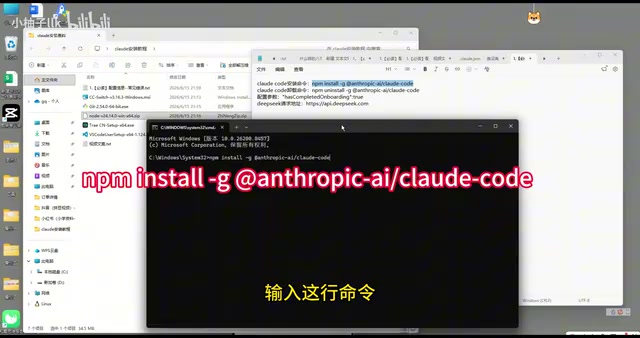
Claude Code Installation Guide: Complete Tutorial for Connecting to the DeepSeek Model
Step-by-step guide to installing Claude Code and connecting it to DeepSeek V4 Pro via CC Switch proxy, covering setup, API configuration, and troubleshooting.