Hermes Desktop Officially Launched: A Forever-Free, Self-Evolving AI Agent for Your Desktop
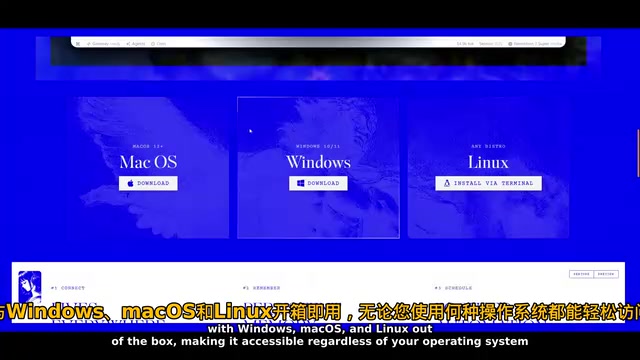
Hermes Desktop launches as a free, open-source, self-evolving AI agent for Windows, macOS, and Linux.
NewsResearch has officially released Hermes Desktop, a native desktop app bringing the full Hermes AI Agent experience to Windows, macOS, and Linux. Built on the same core as the CLI and Gateway versions, it features persistent memory, self-evolving capabilities, modular skill management, multi-platform messaging integration, cron job automation, and concurrent multi-agent workflows — all completely free under the MIT License.
From Community Project to Official Desktop App
Previously, Hermes Agent only had an unofficial community desktop version. While it allowed more users to experience this powerful AI agent, it came with significant limitations. Just recently, NewsResearch — the development team behind Hermes — officially released Hermes Desktop, a native desktop application that brings the full Hermes Agent experience directly to users' local machines.
This is not a lightweight clone or a standalone product. Hermes Desktop is built on the exact same Agent core as the CLI and Gateway versions, meaning the same configurations, API keys, sessions, skills, memory systems, and autonomous workflows are fully preserved. This design pattern is known in software engineering as "Shared Core Architecture" — different frontend interfaces (desktop GUI, command line, web gateway) all call the same underlying engine, ensuring complete behavioral consistency. Regardless of how users interact with Hermes, the underlying reasoning logic, memory retrieval, and skill scheduling remain identical. If you previously used Hermes through the terminal, all your configurations will automatically migrate; any operations performed in the desktop app will also sync across the entire Hermes ecosystem.
Why Hermes Agent Deserves Your Attention
For those unfamiliar with Hermes Agent, it's one of the most interesting open-source AI Agent projects available today. It's open-sourced under the MIT License and developed by the NewsResearch team, ranked as the third-best AI Agent framework currently available. The MIT License is one of the most permissive open-source licenses, allowing anyone to freely use, modify, and distribute the software — even for commercial purposes — with the only requirement being to retain the original copyright notice. Compared to Apache 2.0 (which requires documenting modifications) or GPL (which requires derivative works to also be open-sourced), the MIT License gives developers and enterprises maximum freedom. This is particularly important in the AI Agent space — enterprises can build internal automation systems on top of Hermes without worrying about license compliance issues. Among the current mainstream AI Agent frameworks like LangChain, AutoGPT, and CrewAI, Hermes' ability to rank in the top three demonstrates that its architecture design, feature completeness, and community activity have earned widespread recognition.
Hermes' core design philosophy is a persistent autonomous system — one that continuously evolves over time with use. This philosophy involves the fusion of multiple cutting-edge AI technologies, standing in stark contrast to traditional stateless conversational AI (like standard ChatGPT sessions where each conversation is independent and knowledge doesn't accumulate across sessions). Specifically:
- 24/7 Autonomous Operation: Can run continuously on your own infrastructure
- Long-term Memory Building: Continuously accumulates and optimizes its memory system. This typically relies on vector databases (such as ChromaDB or Qdrant) to convert conversation history and knowledge fragments into high-dimensional vectors for storage and semantic retrieval, enabling the Agent to accurately recall previous interactions and accumulated knowledge days or even months later
- Reusable Skill Creation: Automatically generates and manages reusable skill modules. This draws from the concept of "Program Synthesis" — after completing a certain type of task, the Agent abstracts the solution into a parameterizable skill module that can be directly invoked for similar future tasks instead of reasoning from scratch, dramatically improving execution efficiency
- Deepening Understanding: As interactions increase, its understanding of user needs becomes progressively deeper
This "gets better with use" characteristic is precisely what sets Hermes apart from traditional one-off conversational AI tools. Hermes' design goal isn't to build a better chatbot, but to construct an AI system with genuine "growth potential."
Full Platform Support and Installation Experience
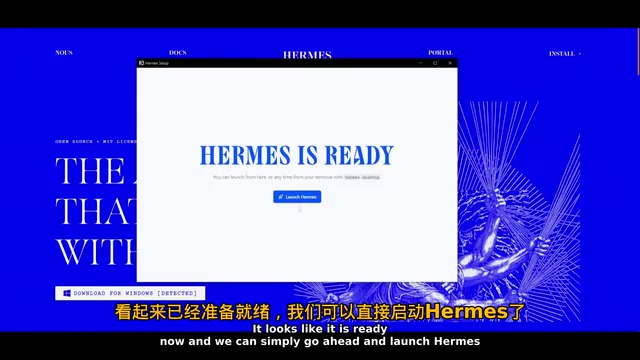
Hermes Desktop supports Windows, macOS, and Linux out of the box, significantly lowering the barrier to entry. The installation process is also quite streamlined: download the installer for your operating system from the official website, run the installation script, and click "Install Hermes" to complete all dependency installations.
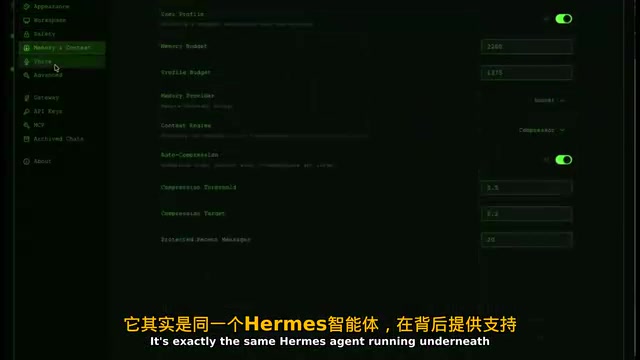
After launching, the app automatically imports all your CLI configurations. For new users, you can configure settings through the gear icon in the upper right corner, including:
- MCP integration, approval workflows, session search, vision capabilities, and other feature toggles. MCP (Model Context Protocol) is an open standard protocol introduced by Anthropic in late 2024, designed to establish a unified communication interface between AI models and external tools and data sources. Think of MCP as the "USB-C port of the AI world" — before MCP, every AI Agent framework needed to write dedicated adapters for each external tool, whereas MCP defines a standardized request-response format that allows any MCP-compliant tool to be directly invoked by any MCP-supporting Agent. Hermes' MCP integration means users can tap into the growing MCP tool ecosystem, including database queries, file system operations, API calls, and hundreds of other ready-made tool servers, vastly expanding the Agent's capability boundaries
- Model Provider Selection: Supports NewsPortal (currently offering 30 days of free access to the Step 3.7 Flash model), OpenAI, and various other options
- Theme Switching: Offers multiple interface styles, such as the Mono theme
It's worth noting that Hermes' web dashboard has also undergone a major redesign, upgraded to a fully-featured management panel that allows you to remotely monitor, configure, and manage your Hermes deployment through a browser.
Feature Overview: Far More Than Just a Chat Interface
What's truly impressive about Hermes Desktop is how it integrates multiple capabilities into a unified interface:
Skills and Tools Management
In the "Skills and Tools" panel on the left, users can enable various add-on features to enhance Hermes' capabilities, including context engines, memory processing optimization, image generation, and more. This modular skill management approach lets users flexibly customize based on actual needs. Each skill module is essentially an encapsulated capability unit — the Agent automatically determines which skills to invoke based on task requirements, while users can also manually control skill activation and deactivation, striking a balance between feature richness and resource consumption.
Multi-Channel Message Routing
In the messaging settings, you can connect the Hermes Agent to multiple communication platforms including WhatsApp, Discord, and Telegram, similar to what OpenClaw previously offered, but now fully integrated within a single application. This means you can issue task instructions to Hermes via Telegram on your phone, and the Agent will execute them on your local machine and push the results back to your chat window, enabling truly seamless cross-device, cross-platform collaboration.
Built-in File Manager and Terminal
The right panel of the desktop app provides a complete file manager and terminal functionality. You can browse files and run commands directly within the app while Hermes executes tasks, achieving a truly all-in-one workflow.
In summary, you get in a single application: skill management, a GPT-style conversational interface, tool integration, message routing, Artifacts display, and multi-Agent workflows.
Practical Demos: Frontend Development and Scheduled Tasks
Vibe Coding Frontend Development Test
In the video demo, the presenter used Hermes Desktop to execute a complete frontend application development task. The Hermes Agent was able to automatically invoke installed skills (such as design tools and web design modules) and display the generated page results in real-time in the right panel. Based on the demo results, the quality of the generated landing page was quite impressive.
Users can attach files, folders, images, async URLs, and even use preset prompt snippets to quickly kick off tasks within the conversation, making for a very smooth interaction experience.
Cron Job Task Automation
As a native desktop application, Hermes Desktop supports setting up Cron Jobs (scheduled tasks), which is an extremely practical feature. Cron Jobs originate from the cron daemon in Unix/Linux systems — a time-expression-based task scheduling mechanism. At its core is the cron expression (e.g., 0 8 * * * means every day at 8 AM), which uses five fields (minute, hour, day, month, weekday) to precisely define task execution timing. Hermes brings this classic mechanism into the AI Agent domain, with a fundamental difference from simple scheduled scripts — what it triggers is a complete Agent workflow with reasoning capabilities, tool invocation abilities, and a memory system, rather than fixed code logic. For example, you could set up a scheduled task:
Every morning, automatically search Reddit for discussions about AI Agents, summarize sentiment trends, generate a report, and save it locally.
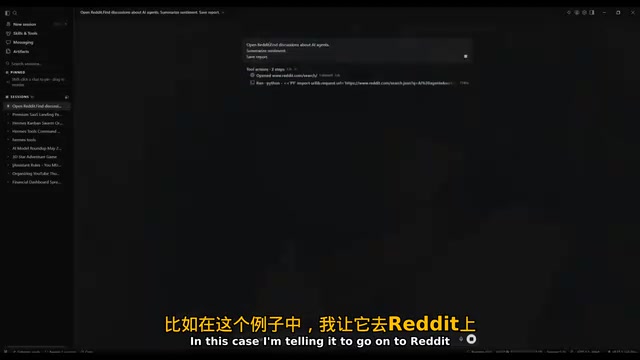
In scenarios like this, you don't need to consume expensive Codex or Claude Code token quotas — you just need a cheaper model to drive Hermes for these automated tasks. Imagine being able to read an AI news digest automatically compiled by Hermes while sipping your morning coffee — that's the true value of an autonomous Agent.
Additionally, Hermes supports multiple concurrent sessions, allowing you to deploy multiple sub-Agents processing different tasks simultaneously across different tabs, further boosting efficiency. Multi-Agent Workflow is one of the hottest research directions in AI Agents today. The core idea is to decompose complex tasks among multiple specialized Agents working collaboratively — similar to division of labor in human teams. For example, one Agent handles information retrieval, another handles data analysis, and a third handles report writing. This concurrent execution model places higher demands on system resource management, as each Agent session requires independent context windows, memory access, and tool invocation channels. Hermes' desktop app architecture efficiently manages these concurrent processes in the background while avoiding resource conflicts and state confusion.
A Major Milestone for Open-Source AI Agents
The release of Hermes Desktop marks a critical step for open-source AI Agents moving from "developer tools" to "products usable by everyday users." The features it offers — persistent memory, self-evolution, skill management, multi-platform integration — are exactly what closed-source commercial AI products are trying to achieve, yet Hermes delivers all of this completely free and open-source.
For users who want to own an AI assistant that truly belongs to them, runs on their own infrastructure, and continuously evolves over time, Hermes Desktop is undoubtedly one of the most worthwhile options to try right now.
Key Takeaways
Related articles

AI Large Model Learning Roadmap Breakdown: Three Stages from Application Development to Model Fine-Tuning
Deep breakdown of a popular AI large model learning roadmap covering LangChain, RAG, Agent, and LoRA fine-tuning across three stages, with analysis of its strengths and limitations for career changers.
AI Agent Development: A Complete 6-Week Systematic Learning Roadmap
A 6-week systematic learning roadmap for AI Agent development, covering core architecture, ReAct principles, multi-agent collaboration, RAG integration, and deployment.
Four Core Advantages Frontend Developers Have When Transitioning to AI Agent Development
Frontend developers have key advantages for AI Agent development: TypeScript ecosystem fit, low-barrier full-stack bridging, and state management isomorphism. Learn the transition path here.