Hermes Jarvis Deep Dive: The Voice-Driven All-in-One AI Assistant
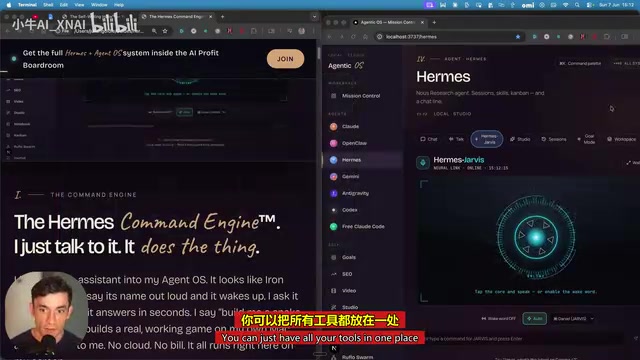
Hermes Jarvis turns voice commands into real code, apps, and system actions through a five-layer AI architecture.
Hermes Jarvis is a voice-driven AI agent assistant that goes beyond simple chatbots by actually executing tasks — from building full applications and games via voice commands to controlling your operating system. Powered by a five-layer EarMate10 architecture, it integrates multiple AI models, supports flexible interaction modes, and offers real-time code preview, representing a significant step from conversational AI to action-oriented AI.
From Sci-Fi to Reality: When an AI Assistant Can Actually Get Things Done
Remember Jarvis from Iron Man? All Tony Stark had to do was say a word, and Jarvis would handle everything from data analysis to system control. Now, a project called Hermes Jarvis is turning that sci-fi vision into reality — you simply give voice commands, and it automatically writes code, builds applications, launches programs, and even provides real-time previews of what you've created.
Unlike the basic voice input found in products like ChatGPT or Claude, Hermes Jarvis isn't just a "chatbot that talks." It's a true AI agent assistant capable of executing actions and controlling your system. This distinction is the core reason it's generating so much buzz.
Hermes Jarvis: Core Features Explained
Voice-Driven Application Development
The demo showcased several impressive scenarios:
- Create a to-do app with a single sentence: Say "Build me a to-do app," and Jarvis immediately generates a complete to-do list application with support for adding documents and populating content
- Develop a Snake game by voice: Say "Write a Snake game," and the game appears directly in the preview area, ready to run in full screen
- Quickly scaffold a business website: A single sentence generates a professional SEO agency website built with Next.js 14, React, TypeScript, and Tailwind CSS, complete with a homepage, services page, portfolio, and contact form
These aren't simple code snippet outputs — they're fully functional projects that run and preview in real time.
System-Level Operation Control
Beyond AI code generation, Hermes Jarvis can directly control your operating system. Say "Open Google," and it will actually launch the browser on your Mac. This system-level control elevates it from a chat tool to a genuine operational assistant.
Five-Layer Architecture: The EarMate10 Engine Explained
The developer introduced the five-layer architecture behind Hermes Jarvis — the technical foundation that sets it apart from ordinary voice AI assistants:
Layer 1: Voice Interaction Layer — No typing needed; just speak naturally. The system responds in a "calm British butler" style (a nod to the classic Jarvis persona) and supports a wake word feature — just call its name to activate it.
Layer 2: System Control Layer — It doesn't just chat with you; it executes real actions on Mac or Windows, such as opening apps and controlling web pages.
Layer 3: Content Building Layer — Generates code, websites, apps, and games in real time, all viewable instantly in the preview area.
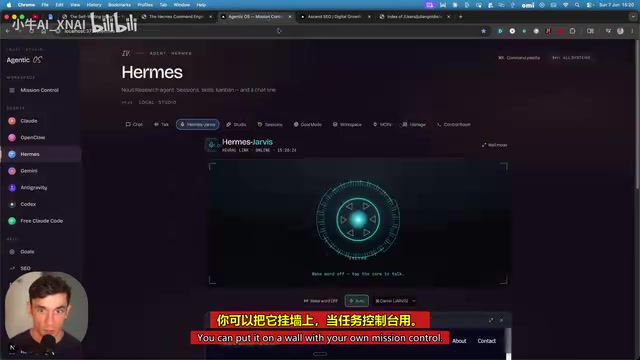
Layer 4: Task Control Layer — Offers a full-screen "battle mode" that functions as a mission control center. You can even connect it via HDMI to another display and mount it on a wall as a command station.
Layer 5: Model Integration Layer — Supports flexible switching between multiple AI models and agents.
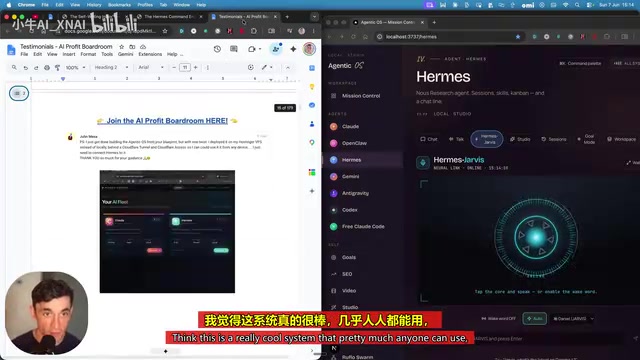
Openness and Extensibility by Design
One of the most noteworthy design philosophies of Hermes Jarvis is its high degree of openness.
Multi-Model Support
The system comes with a rich ecosystem of built-in AI agents:
- OpenClaude Studio and Claude for high-quality conversation and analysis
- AutoGPT and Lion AGI agents on standby
- Gemini and other models available on demand
- Support for local model execution, including free models on OpenRouter (such as Llama) for zero-cost local deployment
This means that no matter what new models or agents emerge in the future, they can be flexibly swapped in and integrated.
Flexible Interaction Modes
Users can choose their preferred interaction method:
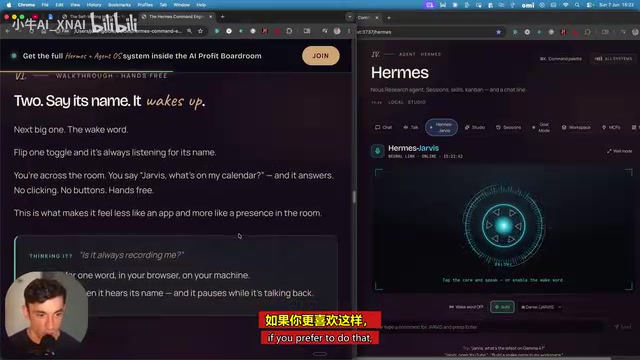
- Wake word mode: Call its name to activate — fully hands-free
- Manual mode: Toggle on/off manually to avoid continuous listening and protect privacy
- Text input mode: Traditional keyboard input is fully supported
- Auto mode and agent mode: Freely switch between two working modes
Why Voice Interaction Is a Key Breakthrough for AI Assistants
During the demo, the developer made a keen observation: communicating with AI via text often feels like "work" — you have to go back and forth, carefully craft your prompts, and it's hard to precisely control the AI agent's behavior.
Voice interaction changes this paradigm:
"If you can just talk to it directly, you can provide more detail, it feels like a natural conversation, and things just get done."
This isn't merely a change in input method — it's a fundamental shift in the human-AI collaboration model. When you can have a hands-free conversation from across the room and get a voice response along with actual execution results within seconds, an AI assistant truly transforms from a "tool" into an "assistant."
"Use It Now" vs. "Wait Until It's Perfect"
At the end of the demo, the developer raised a thought-provoking point: many people say they'll wait until AI tools are fully polished before adopting them, but those who are learning to collaborate with AI agents right now are already far ahead in skills and efficiency.
This perspective is especially meaningful in the context of Hermes Jarvis. Although the wake word feature "can be tricky to set up and doesn't always work," and the entire system is still being updated daily, the voice-driven development paradigm it demonstrates is already enough to give us a glimpse of the future of AI assistants.
A Balanced View: Limitations and Challenges of Hermes Jarvis
Of course, we need to stay grounded. Based on the demo, Hermes Jarvis still has some notable issues worth considering:
- Stability concerns: The developer himself admitted that the wake word feature "doesn't always work," and real-world reliability remains to be verified
- Capability boundaries with complex projects: The demo showcased relatively simple applications; how it performs with complex enterprise-level projects is still unclear
- Learning curve: Despite claims that "anyone can use it," configuring the system and understanding the agent operating system still requires a certain level of technical knowledge
- Ecosystem dependency: Deep ties to the Hermes Agent ecosystem may limit users' flexibility and choices
Nevertheless, the direction Hermes Jarvis represents — integrating voice interaction, AI code generation, system control, and real-time preview into a unified interface — is undeniably an important trend in AI assistant development. The leap from "conversational AI" to "action-oriented AI" may arrive sooner than we think.
Related articles
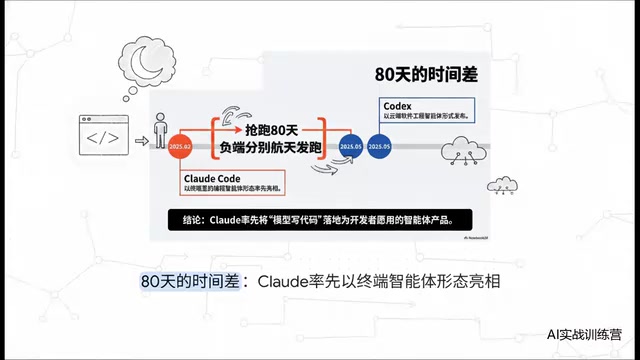
Claude Code vs Codex: A Deep Comparison — Who Wins When the Tech Converges
Deep comparison of Claude Code vs OpenAI Codex across first-mover advantage, architecture, market share, and reliability. Discover what truly matters when AI coding tools converge.
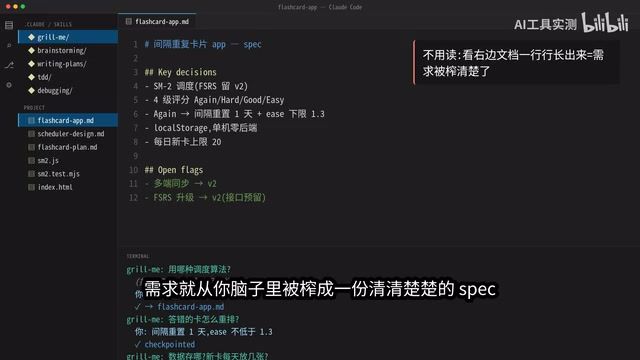
5 Daily Claude Code Tips: Let AI Interrogate You Instead
5 daily Claude Code tips: Grill Me for requirements, Brainstorming for architecture, Writing Plan for execution, TDD for testing, and Debugging for precise fixes — a complete AI coding workflow.

AITS Hands-On Review: API + Web + App Automated Testing All in One Platform
In-depth review of AITS: an AI testing platform covering API automation, Web automation, App real-device cloud testing, and performance testing end-to-end.