How Global Criminal Networks Operate: The Dark Supply Chains from the Amazon to Cyber Extortion

How poverty, corruption, and consumer demand fuel global criminal networks from the Amazon to cyberspace.
This article explores three global criminal networks documented in National Geographic's *Trafficked with Mariana van Zeller*: illegal gold mining and logging in the Amazon, South Africa's hitman-for-hire industry born from taxi wars, and cyber sexual extortion factories in the Philippines. Despite their differences, all three share common drivers—poverty creates willing participants, systemic corruption provides protection, and global consumers unknowingly fund these operations.
Introduction: Inside the World's Darkest Criminal Networks
The National Geographic documentary Trafficked with Mariana van Zeller takes viewers deep into the world's most dangerous criminal networks through the lens of an investigative journalist. From illegal gold mining and logging in the Amazon rainforest, to the hitman industry in South Africa, to cyber sexual extortion operations in the Philippines, this documentary reveals an unsettling truth: these seemingly unrelated criminal activities actually share the same operational logic—poverty breeds criminal labor, corruption provides protection, and global consumers unknowingly become the end-payers.
Illegal Gold Mining in the Amazon: A Forest Destroyed in One Week
The Staggering Scale of Destruction Seen from Above
Journalist Mariana flew deep into the Amazon interior in a small plane, witnessing firsthand the astonishing scale of illegal gold mining. From the air, countless white spots are scattered across a green ocean—each one an illegal gold mine.

Nearly 30 tons of gold are illegally mined in Brazil each year, worth over $1 billion. A miner using the alias "Alain" took the reporter to tour his operation—in just one week, vast stretches of rainforest had been leveled. Miners use mercury to extract gold, and despite Alain's claim that there's "no danger," mercury contamination can spread hundreds of kilometers along rivers.
Even more shocking is the end of the supply chain: 90% of Fortune 500 companies that invest in gold may have connections to illegal mines in Latin America. Through "gold laundering" operations that mix legal and illegal gold, smuggled gold can flow almost unimpeded into global markets—possibly ending up in the ring on your finger.
Illegal Logging: Resistance Under Death Threats
Illegal logging is the first step in Amazon deforestation. Loggers first cut down precious species like mahogany, then burn the remaining vegetation to convert the land into pasture. It's estimated that 50% of timber harvesting in Brazil is illegal, and the United States is one of the largest importers of smuggled Amazon timber.
Those who dare to resist pay with their lives. Since 2000, over 1,700 people have been killed in land conflicts, with only 10% of cases resulting in prosecution. American nun Dorothy Stang was shot six times at close range for her 30 years of opposition to illegal logging. Farmers Osvalinda and Daniel Pereira discovered pre-dug graves on their farm after reporting illegal activities—a blatant death threat.
An insider at IBAMA (Brazil's environmental protection agency) revealed that the agency's staff had been cut by more than half, and during former President Bolsonaro's administration, deforestation increased dramatically. "All of this continues to happen, worse than ever before. If we keep hiding it, it will go on forever."
The Tipping Point: 20% of the Amazon Is Already Gone
Satellite monitoring by research institute Imazon shows that 20% of the Amazon's forest has already been cleared. Scientists warn that if this continues, the Amazon could reach a "tipping point"—an irreversible collapse of the entire ecosystem. "It makes sense to think of the Amazon as the canary in the coal mine—if we can't save it, we're done."
South Africa's Hitmen: A Killing Industry Born from Taxi Wars
The Bloody Business Behind Route Disputes
In South Africa, the minibus taxi industry transports approximately 10 million passengers daily, generating about $4.7 billion in annual revenue. To seize lucrative routes, taxi bosses hire professional hitmen to eliminate competitors. Taxi boss Yanda told the reporter he had been attacked five times, with rivals spending over one million rand trying to kill him. He admitted that without bodyguards, he "wouldn't survive 15 minutes."

A hitman using the alias Jojo admitted to killing approximately 30 people. Each job pays about 25,000-30,000 rand (approximately $1,400). He started killing at 18; his parents were murdered when he was young. "You either survive or you die. You either die fighting or die crying."
Corruption as a Shield for the Hitman Industry
The hitman industry thrives in South Africa due to systemic corruption. Arms dealer Vusi revealed that he purchases handguns from police and obtains assault rifles from the military. An anonymous police officer confirmed that colleagues sell uniforms and weapons to criminals, and even provide intelligence and cover for assassination operations.
South African Police Minister Bheki Cele acknowledged the problem—since establishing a special task force in 2016, 337 hitmen have been arrested, including 47 police officers. But he also admitted that "efforts are not sufficient enough."
Victim Johanna Peña's husband was assassinated for reporting government corruption. Despite police having suspect information, no one has been arrested. "They don't care. For them, it's just a money-making job."
Cyber Sexual Extortion: From One Message to One Life
The Tragedy of 17-Year-Old Jake
Seventeen-year-old Jake received a private message on Facebook from a "pretty girl." Within minutes, the conversation escalated from flirting to demands for nude photos. After Jake sent one photo, the extortion began immediately: "You are my slave now."

Within just 24 hours, Jake was repeatedly threatened, extorted for money, and psychologically tortured. In his suicide note, he wrote: "I've decided that if the photos are posted, I will end my life." The next day, he took his own life with a gun.
In 2022 alone, there were 7,000 sextortion reports in the United States, with over 12 resulting in suicide. Young males are the highest-risk group—they are more susceptible to shame and more afraid to seek help.
How the Extortion Factories in the Philippines Operate
The reporter traced where Jake's money was sent and arrived in the Philippines. With high English proficiency, well-developed internet infrastructure, and weak law enforcement, the country has become a global hub for cyber sexual extortion.
The investigation revealed a highly organized criminal industry: "chatters" are responsible for luring victims, "collectors" handle money transfers, and "supervisors" patrol to monitor work progress. The youngest participant was only 13 years old. These "extortion factories" operate like legitimate call centers—except their product is human dignity and lives.
Maria Cabrera, known as the "Extortion Queen," is believed to be the founder of this industry. She has been arrested and released multiple times, and her criminal network has infiltrated all levels of local government. When the reporter tried to find her at her stronghold in North Hills, they were quickly driven away by local "volunteer security."
A Glimmer of Hope: The Birth of Gavin's Law
South Carolina Representative Brandon Guffey, after losing his 17-year-old son Gavin, pushed for "Gavin's Law," which raises the maximum sentence for sextortion to 20 years. In August 2023, the bill passed unanimously and was signed into law.
"I lost Gavin's battle, but if I can save other kids, that's the most important thing."
The Common Logic: Poverty, Corruption, and Consumer Responsibility
These three seemingly unrelated criminal networks reveal the same structural problems:
Poverty is the breeding ground for crime. Whether it's Amazon miners saying "if mining is shut down, we'll starve," South African hitmen citing "poverty" as the root cause, or Filipino extortionists saying "life is too hard"—low-level criminals universally believe they have no other choice.
Corruption is crime's protective shield. From Brazil's weakened environmental agencies, to South African police selling weapons, to Philippine politicians posing for photos with crime bosses—institutional corruption allows criminal networks to grow.
Consumers are the end of the chain. The gold in your phone, the hardwood flooring in your home, even your neglect of online safety—everyone may unknowingly be paying for these crimes.
Conclusion: Awareness Is the First Line of Defense Against Criminal Networks
As researchers have noted, the Amazon is "the canary in the coal mine." The rampancy of these criminal networks is a microcosm of global governance failure. Solutions require multi-level collaboration: international pressure, supply chain transparency, anti-corruption mechanisms, and most fundamentally—public awareness.
Regarding sextortion as an emerging crime, Jake's mother Cindy offered the simplest advice: "Talk to your kids. Tell them, it's just a photo."
Related articles

AI Large Model Learning Roadmap Breakdown: Three Stages from Application Development to Model Fine-Tuning
Deep breakdown of a popular AI large model learning roadmap covering LangChain, RAG, Agent, and LoRA fine-tuning across three stages, with analysis of its strengths and limitations for career changers.

AI Agent Development: A Complete 6-Week Systematic Learning Roadmap
A 6-week systematic learning roadmap for AI Agent development, covering core architecture, ReAct principles, multi-agent collaboration, RAG integration, and deployment.
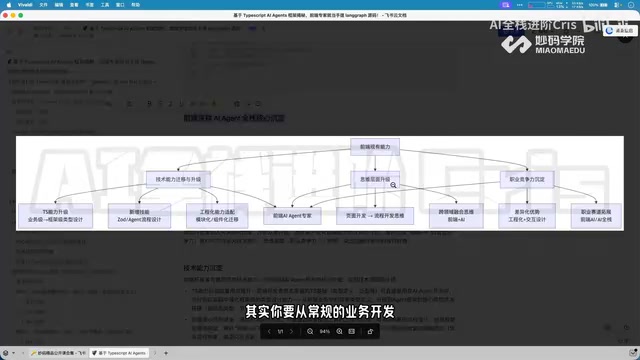
Four Core Advantages Frontend Developers Have When Transitioning to AI Agent Development
Frontend developers have key advantages for AI Agent development: TypeScript ecosystem fit, low-barrier full-stack bridging, and state management isomorphism. Learn the transition path here.