How Preply Is Redefining Language Learning with AI + Human Tutors

Preply combines AI-powered Lesson Insights with 100K human tutors to redefine personalized language learning.
Preply, the world's largest online language tutoring platform, demonstrates how AI and human tutors can work together rather than compete. Its Lesson Insights feature — powered by OpenAI — automates post-lesson reviews while tutors focus on motivation and creative teaching. With 70%+ tutor adoption, 75% learner adoption, and strong one-year retention, Preply proves that designing AI as a co-pilot rather than a replacement drives real, lasting engagement in education.
In an era where AI is sweeping through the education industry, one core question continues to puzzle practitioners: Is AI meant to replace human teachers, or empower them? Preply, the world's largest online language learning platform, offers a thought-provoking answer — not replacement, but augmentation. With 100,000 tutors covering over 90 languages across 180 countries, the platform is pioneering a new paradigm for personalized language learning through deep collaboration between AI and human tutors.
The Irreplaceable Core Value of Human Tutors
Preply's core philosophy is crystal clear: Humans have an extraordinary ability to motivate other humans, and that's where teachers truly shine. Tutors inspire students to show up for lessons, complete assignments, and maintain an energy and interactive atmosphere in class that's nearly impossible to replicate. This emotional connection and real-time feedback is something no current AI system can truly replace.
This philosophy has solid grounding in educational psychology. Albert Bandura, the founder of social cognitive theory, proposed the concept of "self-efficacy," showing that learners' beliefs about their own abilities are heavily influenced by social persuasion (such as teacher encouragement) and vicarious experiences. Even more noteworthy is linguist Stephen Krashen's "Affective Filter Hypothesis," which argues that negative emotions like anxiety and low self-confidence create a "filter barrier" that impedes language acquisition. Human tutors can perceive students' emotional states in real time and adjust accordingly — a capability that relies on the uniquely human mirror neuron system and emotional resonance mechanisms, something AI's current affective computing capabilities still cannot match.
That said, Preply has also keenly identified a pain point: a large volume of repetitive work that tutors don't want to do and students don't particularly value. Tasks like creating personalized study plans, organizing class notes, and designing practice exercises — necessary but draining of tutors' time and energy. One tutor shared in an interview that before using AI features, she spent hours on lesson prep and creating assignments, but now that time has been cut by more than half.
This leads to Preply's core product philosophy: Let AI handle repetitive tasks so humans can focus on what they do best — motivating, empathizing, and teaching creatively.
Lesson Insights: AI as a Teaching Co-Pilot
Feature Design and Core Logic
Preply's flagship AI feature is called "Lesson Insights" — essentially a personalized post-lesson review system. After each lesson, the system automatically generates:
- Lesson summary: What topics were discussed
- Performance feedback: What went well
- Improvement suggestions: What areas need work
- Next steps: How to continue improving

Behind this system lies the coordinated work of several key technologies. First is Automatic Speech Recognition (ASR), which transcribes teacher-student dialogue from online classes into text in real time. Next is Grammatical Error Correction (GEC) within Natural Language Processing (NLP) — a classic task in computational linguistics that requires models not only to identify errors but also to understand learners' native language transfer patterns. For example, Chinese native speakers learning English commonly omit articles and confuse tenses, while Spanish native speakers exhibit entirely different error patterns. Finally, there's dialogue summarization and personalized recommendation reasoning, which relies on large language models' contextual understanding and inference capabilities. The entire pipeline must handle complex multilingual, multi-accent scenarios — especially challenging when covering over 90 languages, pushing the limits of models' multilingual generalization abilities.
Crucially, these insights are presented to both learners and tutors simultaneously. For learners, it provides a clear path of progress; for tutors, it serves as data-driven support for personalized teaching. As the Preply team describes it, this transforms learning "from generic practice into highly targeted training that truly helps learners achieve their most important goals at any given point in time."
Why OpenAI Was Chosen as the Technology Partner
Preply chose OpenAI as its technology partner for one core reason: accuracy. As a language learning platform, the AI needs to provide precise feedback on users' grammar errors and expressions — the accuracy of language output is paramount. Preply's team compared multiple large language models through systematic testing within their proprietary evaluation framework, and OpenAI stood out most prominently on this critical metric.

It's worth expanding on what Preply's custom evaluation framework reflects about an industry trend — LLM Evaluation is becoming an increasingly important practice in enterprise AI applications. Unlike general-purpose benchmarks (such as academic leaderboards like MMLU or HellaSwag), vertical domain evaluation requires building domain-specific test sets and scoring criteria. In language learning scenarios, evaluation dimensions might include: precision and recall of grammar correction, naturalness of language suggestions, and adaptability to learners at different proficiency levels (from A1 beginners to C2 advanced). Common evaluation methods in the industry include human annotation comparisons, A/B testing, and using stronger models as "judges" (LLM-as-Judge). Preply's choice of OpenAI over other models indicates that differences between models remain significant on the specific dimension of language accuracy — a reminder that developers shouldn't select models based solely on general leaderboards but need to rigorously validate within their own business scenarios.
Additionally, Preply highlighted an often-overlooked partnership value: OpenAI as a partner can teach them how to use the product in the most efficient way possible. "Who better to teach you how to use it than the organization that created the world's best large language models?" This kind of deep technical partnership goes far beyond simple API calls.
Data Validation: Real-World Results of AI-Enhanced Language Learning
Whether a product works or not, the data tells the story. The adoption metrics Preply shared are quite impressive:
- Over 70% of tutors proactively chose to enable Lesson Insights
- 75% of learners proactively chose to enable the feature
- Per-lesson engagement rates are very high
- A large number of active learners continue using the feature after one year

Interestingly, the metric Preply values most isn't short-term usage rates but long-term retention. The most important signal they track is user retention over time, and the data shows that a large number of learners are still actively using Lesson Insights after one year.
Prioritizing long-term retention over short-term usage as the core metric reflects a fundamental difference between edtech products and consumer applications. In consumer internet, DAU (Daily Active Users) and time spent are common North Star metrics, but in education, "users spending more time" doesn't necessarily mean the product is better — efficient learning should actually shorten the time needed to reach goals. Therefore, education products focus more on "learning outcome retention" — whether users continue using the product because they genuinely feel they're making progress. This aligns with the "Spaced Repetition" theory in learning science: effective learning requires long-term, regular practice rather than short-term cramming. Having a large number of active users after one year indicates that Lesson Insights has successfully embedded itself into users' long-term learning rhythms, rather than being driven merely by novelty.
AI's Internal Empowerment of Engineering Teams
Preply's AI practice extends beyond user-facing product features into its internal engineering teams. With AI coding tools like Codex, engineers can spend less time memorizing syntax, fixing bugs, and troubleshooting typos, redirecting more energy toward system architecture design and solving customer problems.
Codex is OpenAI's AI programming assistant, specifically optimized for code generation tasks based on large language models. AI-assisted programming tools (including GitHub Copilot, Cursor, etc.) are reshaping the entire software development workflow. According to GitHub's research data, developers using Copilot complete tasks 55% faster on average. But the deeper change lies in the transformation of the developer's role: evolving from "code writer" to "code reviewer and architect." Developers need to devote more energy to system design, requirements understanding, and code quality control, while delegating pattern-based coding work to AI. This shift also brings new challenges, including security auditing of AI-generated code, technical debt management, and foundational skill development for junior developers — if novice developers rely on AI-generated code too early, it may hinder their deep understanding of underlying principles.
This creates an interesting parallel with the user-facing AI strategy: Whether in external teaching scenarios or internal development workflows, AI's role remains that of a "co-pilot" rather than a "replacement" — it frees up human time so people can focus on higher-value work.
Implications for the Education AI Industry
Preply's case offers several important takeaways for the entire education AI industry:
First, find the right division of labor between AI and humans. Not every aspect needs AI, and not every aspect needs humans. The key is identifying which tasks are highly repetitive and low in creativity (hand them to AI) and which require emotional connection and creativity (leave them to humans). This division of labor aligns with the economic theory of "comparative advantage" — even if AI can match human performance on certain teaching tasks, as long as humans retain a relative advantage in emotional motivation and creative teaching, a rational division of labor maximizes overall efficiency.
Second, bidirectional empowerment is more valuable than one-way replacement. Lesson Insights serves both learners and tutors simultaneously, creating a positive feedback loop: AI helps tutors better understand student needs, tutors deliver more precise instruction accordingly, and students enjoy a better learning experience. This bilateral network effect is especially critical in platform-based education products — when AI simultaneously improves the supply side (tutor efficiency) and the demand side (learning experience), the platform's overall value grows exponentially.
Third, accuracy is the lifeline of language AI. In the vertical domain of language learning, the linguistic accuracy of model output directly determines product credibility. Preply's rigorous multi-model comparative evaluation for selecting technical solutions is an approach worth emulating. Consider this: if a language learning AI provides incorrect grammar corrections, it not only fails to help learners improve but actually reinforces wrong language habits — known in language acquisition theory as "Fossilization," where incorrect language forms become solidified through repeated use and become extremely difficult to correct later.
In the field of AI education, the term "human-AI collaboration" has been used countless times, but Preply has proven with real data that it's more than just a slogan — when AI is genuinely designed to augment human capabilities rather than replace humans, users vote with their feet. An adoption rate of over 70% and sustained engagement after one year is the best proof of that.
Related articles
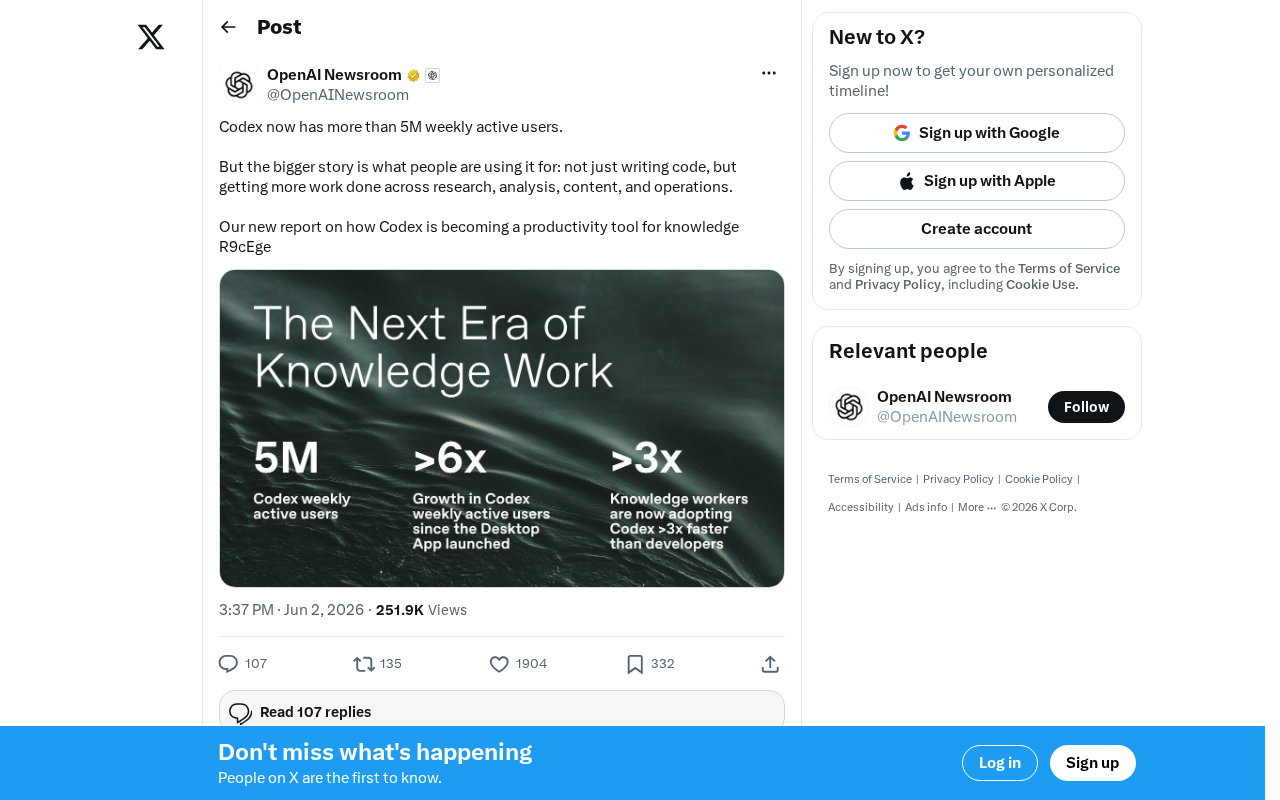
OpenAI Codex Surpasses 5 Million Weekly Active Users: The Transformation from Code Tool to Knowledge Work Platform
OpenAI Codex hits 5M weekly active users, expanding beyond code generation into research, content creation, and operations — evolving into a full knowledge work platform.

The Codex Power User Guide: 10 Tips to Make AI Actually Do the Work for You
Master 10 power-user tips for OpenAI Codex: from assigning tasks and phased planning to automated testing and code reviews. Make AI Agents truly work for you.

9 Failure Modes and Best Practices Guide for the GrillMe Skill
Deep dive into 9 common failure modes of GrillMe and GrillWithDocs skills, covering scope control, question fidelity, model selection, parallel sessions, and more best practices.