India's Richest Man Ambani's AI Strategy: Full Penetration Across Phones, Apps, and Homes for 500 Million Users
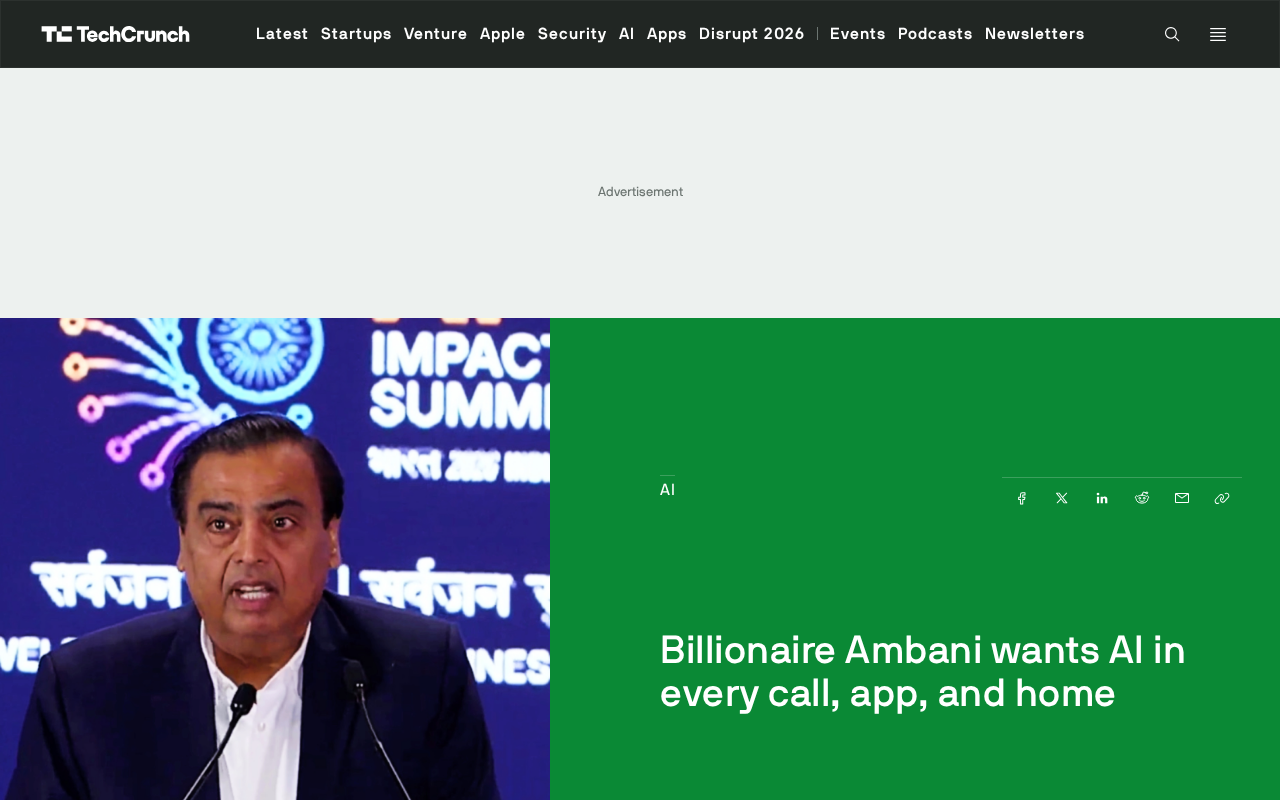
Ambani plans to embed AI into Jio's telecom infrastructure, reaching 500M+ users through calls, apps, and homes.
India's richest man Mukesh Ambani is pursuing an ambitious strategy to integrate AI into Reliance Jio's telecom services, covering over 500 million users. By embedding AI into basic phone calls with features like real-time multilingual translation, smart summaries, and voice assistants, Ambani aims to achieve consumer-side AI democratization—bypassing barriers of literacy and device capability to reach users that even super apps cannot touch.
Ambani's AI Ambition: A Super Plan Covering 500 Million Users
India's richest man, Mukesh Ambani, is driving an ambitious strategy—deeply integrating artificial intelligence into the telecom services of his Reliance conglomerate, which currently serves over 500 million users. This means AI will no longer be an exclusive tool for tech elites, but will permeate every aspect of ordinary Indian households' daily phone calls, app usage, and even smart home experiences.
From Telecom Giant to AI Platform: Reliance's Transformation Logic
Jio's Success DNA
Reliance's Jio Platforms burst onto the scene in 2016 with a disruptive free 4G strategy that completely transformed India's digital ecosystem. With extremely low tariffs and extensive network coverage, Jio rapidly accumulated over 500 million users, becoming one of the world's largest telecom operators by subscriber base. This massive user base is the core asset behind Ambani's AI strategy.
Jio's 2016 launch stands as one of the most aggressive market entry strategies in global telecom history. At the time, India's telecom market was dominated by established operators like Airtel and Vodafone Idea, with expensive data plans and extremely low 4G penetration. Ambani invested over $30 billion to build an all-IP network infrastructure, then offered completely free 4G data services to users for six months—a move that directly caused several competitors to merge or exit the market. Jio's pricing strategy was essentially a platform economics approach of "burn cash to acquire users first, then monetize through value-added services," mirroring Amazon's early loss-making expansion strategy. By 2020, Jio Platforms had attracted over $20 billion in total investment from tech giants including Facebook (now Meta), Google, and Qualcomm, validating the long-term value of this model.
Unlike Western tech companies that entered AI through cloud computing or search engines, Ambani has chosen a unique path—using the telecom network as a carrier to embed AI capabilities directly into the communication and application scenarios users engage with most frequently. This "infrastructure + AI" model has the potential to create an entirely new paradigm for AI adoption in emerging markets.
AI Embedded in Every Phone Call
Ambani's vision goes beyond adding AI features to premium products—he wants AI integrated into the most basic communication service: phone calls. Embedding AI capabilities into basic communication services is technically highly dependent on Edge Computing and on-device AI inference capabilities. Edge computing refers to moving data processing from remote cloud servers down to network edge nodes closer to users, dramatically reducing latency. For scenarios like real-time voice translation, if every call required sending voice data back to a central cloud for processing and return, latency would reach hundreds of milliseconds or even seconds, severely impacting the call experience. Therefore, Reliance needs to deploy lightweight AI models at its base stations and data centers across India to enable localized inference.
Specifically, this could encompass the following scenarios:
- Real-time voice translation: India has 22 official languages, creating enormous cross-language communication needs. In reality, India's linguistic landscape is far more complex than its 22 official languages suggest—the country has over 19,500 mother tongues and dialects. Building high-quality speech recognition and translation models covering so many languages requires massive multilingual corpus data and specialized model training, which itself is an enormous engineering challenge.
- Smart call summaries: Automatically generating call highlights to improve communication efficiency
- Enhanced voice assistants: Providing voice interaction entry points for users unfamiliar with text input
- AI call quality optimization: Intelligently adjusting audio quality based on network conditions
For a country with extreme linguistic diversity and varying levels of digital literacy, this strategy of making AI "invisible" carries profound significance. India's digital divide manifests not only in device and network access, but also in language and literacy—a large number of users are more comfortable with voice interaction than text input, and keyboard input solutions for many Indian languages are far less mature than English. By embedding AI capabilities into voice calls—the most primitive and universal form of communication—Ambani's strategy cleverly bypasses the barriers of text literacy and device performance. This design philosophy aligns with Google's logic in promoting voice search in India—in a "voice-first" market, the best entry point for AI isn't a chatbot interface, but the phone call itself.
India as a Variable in the Global AI Competition Landscape
The Scale Effect of 500 Million Users
While OpenAI, Google, Meta, and others fiercely compete on AI model capabilities, Ambani is building competitive moats on another dimension—distribution channels and user reach. 500 million active telecom users mean massive data feedback, extremely low marginal deployment costs, and unparalleled market penetration.
In global AI competition, model capabilities (such as the performance of large language models like GPT-4, Gemini, and Claude) are often viewed as core competitiveness, but Ambani's strategy reveals another equally critical dimension: distribution capability. Historically, the success or failure of technology products often depends not on the technology's inherent sophistication, but on whether it can reach enough users. Microsoft leveraged Windows' pre-installation advantage to promote IE browser and Office suite; Google used the Android ecosystem to ensure dominance of its search and app store. Telecom operators have a natural advantage here—users don't need to actively download or register for any new service; AI features can be pushed directly as a default component of network services. This "zero-friction" distribution model holds extremely high strategic value in an era of increasingly expensive user acquisition costs.
From a global perspective, this strategy shares similarities with Chinese tech companies' approach of integrating AI into super apps (like WeChat and Alipay), but Ambani's entry point is more fundamental—embedding AI directly at the telecom infrastructure layer, with broader coverage and lower user barriers. China's super app model, typified by WeChat, integrates instant messaging, social media, mobile payments, e-commerce, government services, and virtually all digital life functions into a single app, with AI capabilities (such as intelligent customer service, content recommendations, and speech recognition) embedded across various functional modules. This model's prerequisite is that users are already highly dependent on smartphones and specific apps. Ambani's path is more foundational—the telecom network is the base layer of all digital services, meaning even users with feature phones rather than smartphones can enjoy AI services through voice calls. India still has hundreds of millions of feature phone users, which means Ambani's telecom AI strategy can reach populations that the super app model cannot touch, truly achieving "last-mile" AI adoption.
Smart Home Opportunities in the Indian Market
Ambani's plan to extend AI into "home" scenarios is equally noteworthy. Reliance has already established presence in broadband services (JioFiber), smart set-top boxes, and other areas. Injecting AI capabilities into home terminals enables multiple smart functions:
- Smart voice control of home devices
- Personalized content recommendations and entertainment services
- Home security and anomaly detection
Against the backdrop of India's rapidly rising middle class, the smart home market holds enormous commercial potential.
Challenges and Prospects for Ambani's AI Strategy
Despite the grand vision, Ambani's AI strategy still faces multiple challenges:
-
Technical level: In India, where network infrastructure remains uneven, ensuring stable AI service operation in low-bandwidth environments is a key issue. India's network infrastructure development is extremely unbalanced: tier-one cities have begun deploying 5G networks, while 4G signal coverage in vast rural areas remains unstable, with effective bandwidth potentially only a few Mbps. Deploying AI services in such environments requires a series of model optimization techniques. Model Compression uses Knowledge Distillation to "condense" the capabilities of large AI models into smaller ones; Quantization reduces model parameters from 32-bit floating point to 8-bit or even 4-bit integers, dramatically reducing computation and memory usage. Additionally, Federated Learning technology allows AI models to train and perform inference locally on user devices, uploading only model updates (rather than raw data) to servers, saving bandwidth while protecting privacy. The maturity of these technologies will directly determine the feasibility of Ambani's AI strategy across India's vast rural areas.
-
Talent and ecosystem development: While India has abundant IT talent, it still lags behind the US and China in frontier AI research.
-
Data privacy and regulatory compliance: Data governance for 500 million users is an unavoidable issue. India officially passed the Digital Personal Data Protection Act (DPDPA) in August 2023—India's first comprehensive data protection legislation, after years of discussion and multiple draft revisions. The act borrows partially from the EU's GDPR framework, requiring data processors to obtain explicit user consent, granting users data deletion rights, and imposing restrictions on cross-border data transfers. However, the act has also been criticized for granting the government excessive exemption powers—government agencies can be exempt from multiple data protection obligations under broad justifications like "national security." For Reliance, managing call data, voice interaction records, and behavioral data of 500 million users requires not only meeting DPDPA compliance requirements but also addressing growing public concerns about data monopolization by large conglomerates. How to balance data-driven AI optimization with user privacy protection will be key to whether Ambani's AI strategy can earn social trust.
However, if Ambani can successfully execute this strategy, Reliance has the potential to become the world's first telecom operator to truly achieve "AI democratization"—not through expensive smart devices or subscription services, but through the phones and network connections everyone already uses.
"Democratization of AI" has been one of the tech industry's core topics in recent years, but its meaning varies significantly across contexts. In Silicon Valley, AI democratization typically refers to lowering the barrier for developers through open-source models (like Meta's LLaMA series) and low-cost APIs (like OpenAI's GPT interface). The AI democratization Ambani is driving operates on another level—lowering the barrier for end users, enabling ordinary people without digital literacy or high-end devices to enjoy AI's benefits. This "consumer-side AI democratization" has no successful precedent globally. If Reliance can prove this model's commercial viability, it will provide a replicable template for emerging markets in Africa, Southeast Asia, and Latin America that face similar challenges of linguistic diversity, digital divides, and infrastructure inequality—fundamentally changing the traditional path of AI technology diffusion from developed to developing countries.
This will provide an extremely valuable emerging market sample for the development trajectory of the global AI industry.
Key Takeaways
Related articles
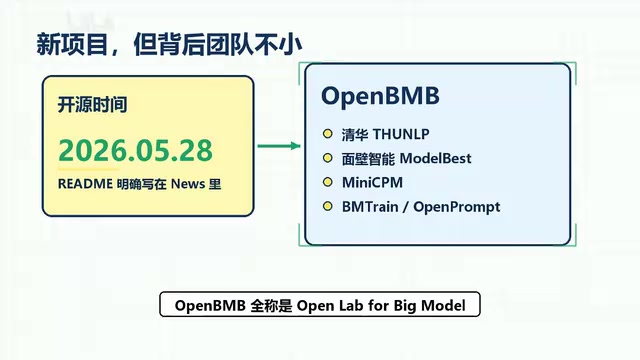
PilotDeck: A Local Console That Tames Multi-Task Agent Chaos
PilotDeck is an open-source local Agent console from a Tsinghua-affiliated team that solves multi-task chaos with workspace isolation, white-box memory management, and smart model routing.
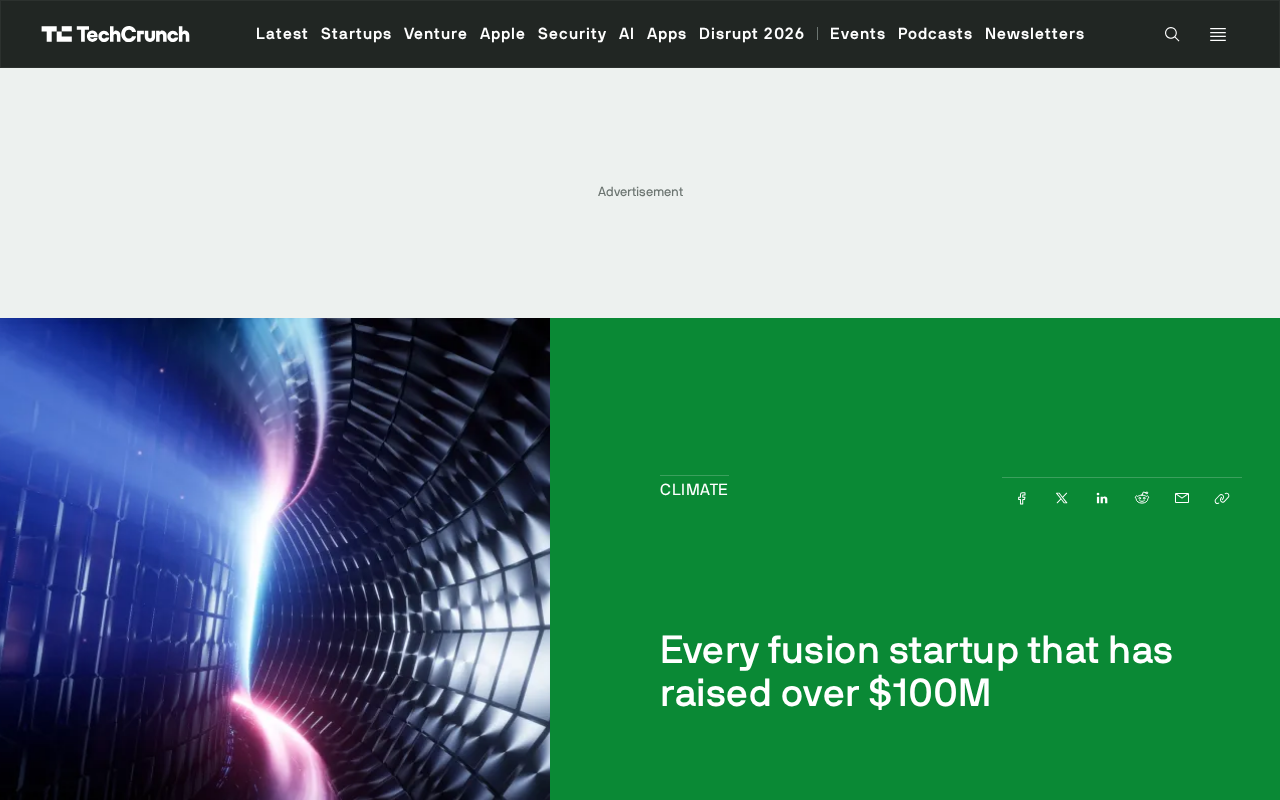
Fusion Startup Funding Landscape: A Deep Dive into the $7.1 Billion Flow and Industry Dynamics
Global fusion startups have raised $7.1B, heavily concentrated in top players. A deep analysis of funding patterns, tech pathways, commercialization challenges, and the investment logic behind this ultimate energy bet.
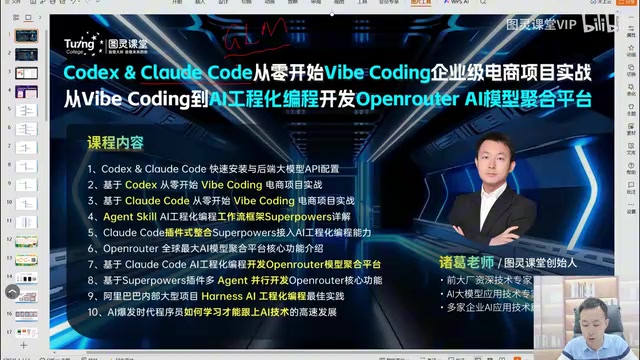
Codex and Claude Code Dual-Engine: A Practical Guide to AI-Powered Engineering
A deep dive into AI engineering with Codex and Claude Code: Vibe Coding limitations, Chinese LLM rankings, Skill-driven development, and enterprise project practices.