Indie Developer Earning $250K/Month: Breaking Down 13 Revenue Streams and YouTube Growth Strategy
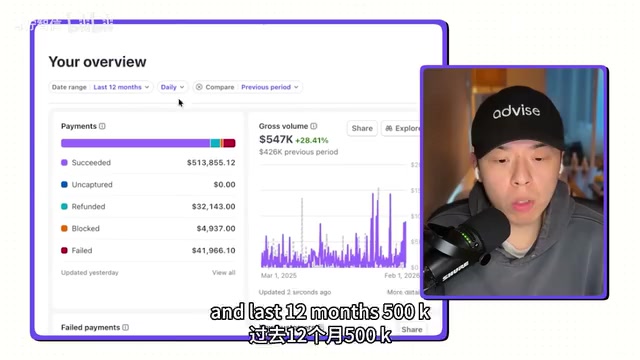
Indie developer runs 13 projects earning $250K/month using YouTube and revenue diversification.
Jackie Chow, an indie developer earning $250K/month across 13 projects, shares his journey from SEO agency to surviving Google's algorithm devastation and rebuilding through YouTube. His 7-step YouTube methodology proves that 1,800 views can outperform 30K social impressions in revenue. The article breaks down his revenue streams, explains why diversification beats focus, and shows how AI tools enable one person to run multiple SaaS products simultaneously.
Introduction: A Counterintuitive Success Story
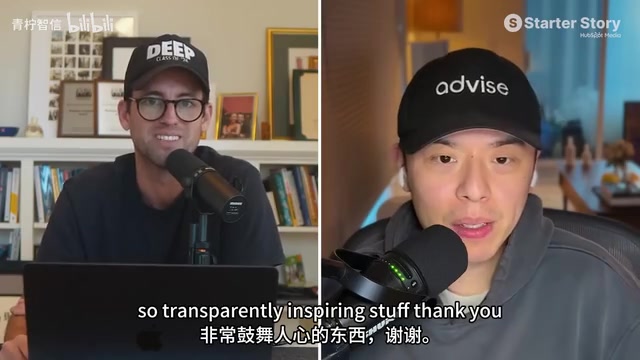
Jackie Chow, an overseas indie developer, simultaneously runs over 10 online projects with a monthly income of $250,000. His story is remarkable not just because of the revenue figure itself, but because his core philosophy runs completely counter to mainstream advice — "Everyone tells you to focus on one thing, and I'm living proof that's terrible advice."
This interview from the Starter Story channel provides a detailed breakdown of how Jackie started with an SEO agency, survived the devastating blow of Google algorithm updates, and ultimately rebuilt through YouTube and revenue diversification.
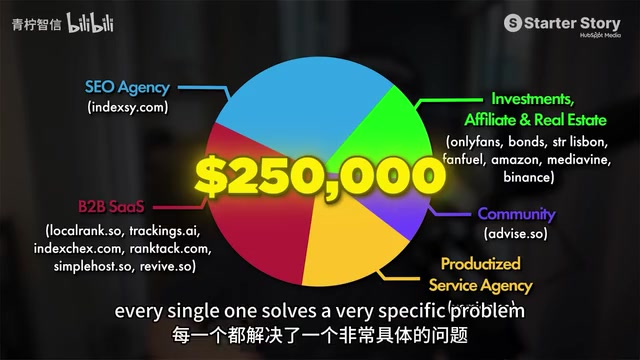

Jackie's Revenue Landscape: 13 Income Streams Explained
Let's look at the specific breakdown of this $250,000 monthly income:
- Indexy: Approximately $85,000/month, the single largest revenue source
- LocalRank: Launched less than a year ago, annual revenue of approximately $454,000, averaging about $50,000/month
- Advise: $300,000 in revenue over the past 12 months
- Trackings.ai: $25,000-$30,000/month
- SEO Agency: The foundational business running for over 10 years
- 7-8 other small projects: Each generating between $170 and $5,000/month
These projects aren't random, unrelated experiments. They almost all revolve around the core domain of SEO and digital marketing — B2B SaaS products, SEO tools, local ranking services, and more. Many of these products use subscription-based pricing models with MRR (Monthly Recurring Revenue) as the core business metric. MRR is one of the most important financial metrics in the SaaS industry, measuring the total predictable subscription revenue a business can expect each month, reflecting business predictability and stability. Compared to one-time charges, the subscription model provides indie developers with a more stable cash flow foundation and is the financial backbone that allows Jackie to sustain multiple projects simultaneously. As interview host Pat Walls noted: "He's actually doing one thing, just serving the same type of customer in different ways."
The AI Impact: How Google Algorithm Updates Destroyed a Business
Disaster Strikes
In late 2023, Jackie experienced a business nightmare. He had previously built a portfolio of content sites (including food blogs) that generated display ad and affiliate commission revenue through Google search traffic. However, Google's "Helpful Content Update" combined with AI Overview features destroyed these businesses almost overnight.
To understand the scale of this disaster, you need to understand the technical context. Google's Helpful Content Update (HCU) was a series of search algorithm changes rolled out starting August 2022, designed to demote content created primarily for search engines rather than users. By the late 2023 version, a large number of sites relying on Programmatic SEO (a strategy of bulk-generating pages targeting long-tail keywords through templates and databases) suffered severe ranking penalties, with some sites experiencing traffic drops exceeding 90%. Simultaneously, Google launched SGE (Search Generative Experience) — later renamed AI Overviews — which directly answers user questions with AI-generated summaries at the top of search result pages.
The core issue is "zero-click searches" — users can get answers through AI Overviews right on the Google search results page (such as recipes) without ever needing to click through to a website. According to research from SparkToro and other organizations, as of 2024, approximately 60% of Google searches end in "zero clicks," meaning users get the information they need without visiting any third-party website. Google directly scrapes your data and presents it as its own result. "You're essentially competing with Google," Jackie summarized.
Key Lessons
This case reveals a brutal reality of the AI era: Any business dependent on a single platform for distribution faces enormous risk. Whether it's Google search, social media algorithms, or app store rankings, platform rule changes can zero out your revenue overnight. For content sites relying on display ad networks (such as Google AdSense, Mediavine, AdThrive, etc.) and affiliate marketing commissions, this has become a structural, irreversible blow.
Jackie survived thanks to two key factors: first, his continuously operating SEO agency business in the background provided a baseline income guarantee; second, he had already accumulated two to three years of content assets on YouTube.
YouTube Acquisition Strategy: How Low View Counts Create High Conversions
Why YouTube Is the Best Acquisition Channel for Indie Developers
Jackie calls YouTube his "insurance policy." When SEO traffic collapsed, the audience he'd built on YouTube became his lifeline.
YouTube's advantage in B2B customer acquisition stems from its unique content consumption model. Unlike the "shallow attention" on platforms like Twitter/X and LinkedIn where users quickly scroll through content, YouTube viewers typically spend 5-20 minutes watching a complete video. This deep attention investment naturally builds stronger trust relationships. From an algorithm perspective, YouTube is the world's second-largest search engine, and its recommendation algorithm continuously pushes relevant content to target audiences. The "long-tail effect" of videos is extremely significant — a video published months or even years ago can still continuously generate traffic and conversions.
One data comparison illustrates the point perfectly: When the LocalRank product launched, his YouTube video received only 1,800 views but contributed 80% of revenue (helping the product reach $20,000 MRR in its first month). Meanwhile, his post on X (Twitter) received 30,000 impressions — 15 times more than YouTube — yet only contributed 20% of revenue.
The conclusion is clear: YouTube viewers have far higher trust and purchase intent than broad social media traffic. The logic behind this is that a viewer who spends 10 minutes watching an in-depth product explanation video has purchase intent that's incomparable to a user who scrolls past a tweet. YouTube's CPM (Cost Per Mille) in the B2B space is typically much higher than other platforms, which indirectly confirms the commercial value of its audience.
Seven-Step YouTube Methodology
Jackie shared his proven, complete YouTube strategy:
Step 1: Choose a niche you can completely dominate. Not "digital marketing," but "local SEO" or "AI SEO." It could be "lawyer marketing" or "plumber SEO." The narrower the better — your audience will see you as the thought leader in that space.
Step 2: Commit to daily uploads for at least six months. One long-form video plus one short video every day. Daily posting forces you to lower your standards and ship fast. "30 bad daily videos will teach you more than 2 perfect videos."
Step 3: Solve problems your audience already has. If you have a certain problem, chances are others do too. For example, "How to rank in ChatGPT?" — even if you're just exploring the question, the video will perform well.
Step 4: The first 5 seconds must have a hook. Jackie once put an unrelated image at the beginning of a video, and viewers immediately bounced. The correct approach is to get straight to the point: "Here's how I ranked in ChatGPT within 24 hours." Hook viewers in the first 5 seconds — don't waste a single frame.
Step 5: Track trends and seize first-mover advantage. New tools constantly emerge in the AI space. If you're the first to discuss a new tool or feature, you can capture recommendation traffic even with a small channel.
Step 6: Build a simple conversion funnel. Attach a newsletter link to every video, offering notes and documents as a Lead Magnet. A lead magnet is a classic digital marketing strategy that involves offering free, high-value content (such as PDF guides, templates, tools, course excerpts, etc.) in exchange for potential customers' contact information, typically an email address. Once you have the email, users enter an Email Funnel where creators can continuously reach users through newsletters, gradually building trust and recommending paid products at the right moment. The core value of this strategy lies in "owning your audience" — unlike social media followers, an email list is an asset creators truly own, unaffected by any platform's algorithm changes. According to industry data, email marketing's average ROI is approximately $36 for every $1 invested, making it one of the highest-ROI digital marketing channels. Don't hard-sell in videos — provide value first and let users naturally enter the funnel.
Step 7: Make YouTube a daily habit. Jackie has been posting daily for two and a half years, and it feels uncomfortable NOT to do it. When creation becomes a habit rather than a task, consistency is no longer an issue.
Core Philosophy: The Underlying Logic of Revenue Diversification
Not Scattered Attention, But Building an Ecosystem
Jackie's model appears to be "doing everything," but there's clear internal logic:
- Unified core competency: All projects revolve around SEO and digital marketing
- Overlapping customer base: Serving the same type of SMBs that need online customer acquisition
- Reusable tech stack: AI has dramatically lowered technical implementation barriers, allowing one person to maintain multiple products
- Shared distribution channels: YouTube content drives traffic to all products simultaneously
AI Has Lowered the Barrier to Multi-Project Operations
As Pat Walls pointed out at the end of the show: "AI can now easily create these things. The argument that 'it's too technically difficult' is over."
This statement is backed by profound technological change. AI coding assistants (such as GitHub Copilot, Cursor, Bolt, etc.) and large language models (such as GPT-4, Claude, etc.) are fundamentally changing the productivity boundaries of indie developers. Product development work that previously required a small team several weeks to complete can now potentially be done by one person with AI tools in just days to build an MVP (Minimum Viable Product). This means the cost of "validating an idea" has dropped from thousands of dollars to nearly zero — you can quickly build a prototype, put it on the market, observe feedback, and then decide whether to continue investing or decisively abandon it. This is precisely the technical foundation that enables Jackie to run 13 projects simultaneously: AI is not only the subject his products serve but also the core tool for boosting his personal productivity. The marginal cost of running multiple projects simultaneously continues to decline, while the marginal revenue from each project may remain stable or even grow.
Five Key Takeaways for Indie Developers
Jackie's story offers profound reference value for indie developers everywhere:
- Don't put all your eggs in one basket — Whether it's revenue sources or distribution channels, single dependency is the greatest risk. Jackie's experience proves that even a seemingly solid traffic source like Google can vanish instantly due to a single algorithm update.
- Video content is a severely underestimated acquisition channel — Low view counts don't equal low commercial value. 1,800 views can support $20,000 MRR. The key is audience quality, not quantity — the trust conversion rate from deep content consumption far exceeds shallow exposure.
- Daily consistency beats perfection — Continuous output builds trust and creative habits; perfectionism is the enemy of growth. This aligns with the Lean Startup methodology's principle of "iterate fast, learn continuously."
- Expand around core competencies — Diversification doesn't mean scattering; it means monetizing the same capability in multiple ways. Jackie's 13 projects may seem sprawling, but they all exist within his circle of competence in SEO and digital marketing, sharing customer bases, tech stacks, and distribution channels.
- Speed is the moat — Validate fast, iterate fast, claim positions fast — especially now when AI tools are rapidly evolving. When AI dramatically lowers the technical barriers to building products, execution speed and market sensitivity become the most critical competitive advantages.
In today's world where AI is rapidly reshaping the business landscape, Jackie's experience proves one thing: Adaptability and diversification may be more important than single-minded focus on one direction.
Related articles

Claude Code at One Year: A Programming Revolution from Single Agent to Agent Army
Claude Code turns one. From running thousands of Agents in parallel to Auto Mode replacing Plan Mode, explore how Anthropic's team is reshaping AI coding workflows.
Coze Agent in Practice: Building an AI Test Case Generation Workflow from Scratch
Learn how to build an AI test case generation agent on Coze, covering agent vs. LLM differences, workflow orchestration, model selection, and prompt engineering tips.

Anthropic's Latest Research: AI Recursive Self-Improvement Is Rapidly Approaching Human-Level Capability
Anthropic's new research reveals AI recursive self-improvement progress: Claude writes 80%+ of code, achieves 52x training speedup, and outperforms humans at 64% of research decision points.