iOS 28 and iPhone's 20th Anniversary: Apple's Epic Transformation Is Coming
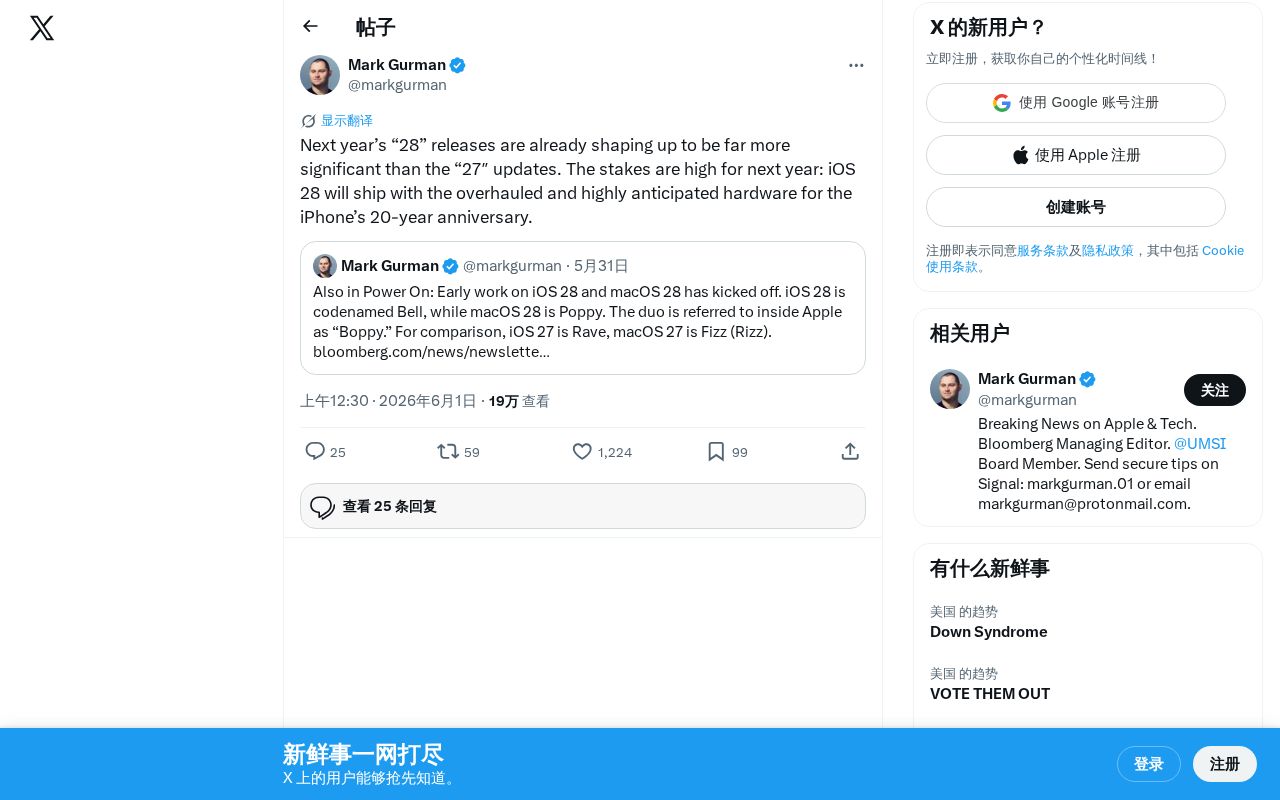
iOS 28 and a redesigned iPhone will mark Apple's biggest product revolution for the 20th anniversary in 2027.
Leaks suggest Apple's iOS 28 and accompanying hardware will represent a major strategic leap beyond the incremental iOS 27 updates, timed to coincide with iPhone's 20th anniversary in 2027. The update is expected to bring fundamental changes in design language, AI capabilities, and potentially foldable device support, requiring early developer preparation.
Apple's "28 Series" Updates Are Building Momentum
According to tech leakers on Twitter, Apple's "28 series" system updates (iOS 28, macOS 28, etc.) for next year have entered the planning stage, and their significance will far exceed this year's "27 series" updates. This news has quickly sparked intense industry attention regarding a comprehensive upgrade to Apple's ecosystem.
Notably, Apple's operating system version naming has undergone multiple changes over the years. iOS was originally named with incrementing numbers (iOS 1 through iOS 18), while macOS transitioned from cat names (like Leopard and Lion) to California landmark names (like Yosemite and Monterey), and more recently to names like Sequoia. The unified "28 series" naming mentioned in the leak suggests Apple may be pushing toward cross-platform version number unification — a move entirely consistent with Apple's ecosystem convergence strategy in recent years. From Apple Silicon's unified chip architecture to SwiftUI's unified development framework, version number unification would further reinforce the "one Apple ecosystem" brand identity.
iPhone's 20th Anniversary: A Dual Revolution in Hardware and Software
The Strategic Significance of a Historic Milestone
2027 will mark the 20th anniversary of the iPhone's release. Since the original iPhone debuted in 2007, this product has completely reshaped the landscape of mobile computing. For Apple, the 20th anniversary isn't just a symbolic milestone — it's a critical window to showcase technological prowess and innovative vision.
Looking back, on January 9, 2007, Steve Jobs unveiled the original iPhone at Macworld, combining an iPod, a phone, and an internet communications device into one. At the time, the smartphone market was dominated by BlackBerry, Palm, and Nokia Symbian, and touchscreen operation was considered imprecise. The iPhone's multi-touch technology, visual voicemail, and full Safari browser completely upended industry assumptions. Over the following two decades, iPhone has sold over 2.5 billion units, creating the most successful single product line in consumer electronics history, with peak annual revenue exceeding $200 billion. Against this historical backdrop, the 20th anniversary product update carries enormous market expectations.
The leaked information explicitly states that iOS 28 will debut alongside "completely redesigned and highly anticipated hardware." This indicates Apple is simultaneously advancing deep hardware-software co-development, aiming to deliver a sufficiently stunning product at the 20th anniversary milestone.
Why iOS 28 Is More Exciting Than iOS 27
Looking at Apple's product cadence, this year's iOS 27 and related updates focus more on incremental improvements, while next year's "28 series" carries a much larger strategic mission. This alternating "major year/minor year" pattern is nothing new in Apple's history — the company tends to concentrate major architectural changes and design language revolutions in specific years to coincide with key hardware releases.
Apple's "major/minor year" pattern can be traced back to the iPhone's S-series update tradition. Early iPhones followed an alternating rhythm of "new design year + S optimization year," such as iPhone 4 (revolution) and iPhone 4S (refinement). On the software side, iOS 7 (2013) brought a complete flat design overhaul, while iOS 8 focused on feature refinement. iOS 14 introduced major UI changes like widgets and App Library, while iOS 15 concentrated on polish and detail. This rhythm allows Apple to concentrate engineering resources on technical breakthroughs during revolution years, then digest user feedback and improve stability during optimization years. Following this pattern, iOS 28 as a "major year" product is highly likely to bring fundamental changes at the interface design language or interaction paradigm level.
Industry Impact and Forward-Looking Analysis
The Competitive Landscape Faces a Reshuffling
Apple's choice to launch a large-scale revolution on iPhone's 20th anniversary is clearly a carefully considered strategic move. In a competitive environment where AI technology is rapidly iterating and foldable phones are maturing, Apple needs a sufficiently impactful product update to solidify its market leadership position.
In the AI space, generative AI technology has deeply penetrated mobile operating systems during 2024-2025. Google has integrated its Gemini large model into Android, Samsung launched its Galaxy AI suite, and Apple introduced system-level AI features under the Apple Intelligence brand. Current core challenges in mobile AI include: computational limitations of on-device inference (requiring a balance between power consumption and performance), the tension between privacy protection and cloud collaboration, and the potential disruption of traditional app interaction paradigms by AI Agents. For iOS 28 to achieve breakthroughs in AI, it may need fundamental innovations in neural engine architecture, private cloud computing frameworks, and multimodal interaction.
Regarding foldable screens, this technology has undergone five generations of iteration since Samsung's Galaxy Fold first launched in 2019. Current mainstream foldables use ultra-thin glass (UTG) cover layers, hinge durability generally exceeds 400,000 folds, and screen crease issues have been significantly improved through waterdrop hinge designs. Samsung, Huawei, OPPO, and other manufacturers have pushed foldables into mainstream price segments. Apple has long been rumored to be developing a foldable device, with patent filings covering self-healing display materials and crease-free hinge structures. If a foldable iPhone launches for the 20th anniversary, it would mark this category's official entry into full mainstream adoption while profoundly influencing product definitions across the entire industry.
Developers Need to Plan Ahead
If iOS 28 truly brings major architectural adjustments, the developer community needs to begin adaptation work as early as possible. Based on past experience, Apple typically releases technical signals at WWDC to give developers ample preparation and migration time.
WWDC (Worldwide Developers Conference) is Apple's core technical event held every June, typically releasing Beta versions of new systems to developers 3-4 months in advance. Apple's ecosystem has over 36 million registered developers, with App Store annual transaction volume exceeding $1.1 trillion. Major system architecture changes (such as the 2020 migration from Intel to Apple Silicon, or the 2019 launch of Project Catalyst) typically require 12-18 months of developer adaptation. If iOS 28 involves interaction paradigm-level changes — such as an entirely new AI-driven interface framework or foldable screen adaptation APIs — Apple may begin laying the groundwork with related development tools and API frameworks at WWDC 2026, maximizing preparation time for developers.
Conclusion
While specific details about iOS 28 and the iPhone 20th anniversary hardware have yet to surface, the tone of current leaks suggests Apple internally has extremely high expectations and resource investment for next year's product lineup. Whether you're a consumer or a developer, there's every reason to keep a close eye on Apple's 20th anniversary showcase.
Key Takeaways
Related articles

Claude Code for Test Development in Practice: An AI Programming Workflow That Doubles Your Efficiency
A practical guide to Claude Code for test development: auto-generating test scripts, Plan Mode workflows, MCP + Playwright integration, and Subagent parallel tasks to build systematic AI-assisted workflows.

Hermes Agent Hands-On Review: An AI Efficiency Revolution for Indie Game Developers
Indie game developer reviews Hermes Agent vs OpenClaude: intelligent context compression, real-time Memory, remote control via Telegram, and practical use cases in game dev, social media, and email.
Vibe Coding Beginner's Guide: Tool Selection Across Three Categories with Practical Examples
A comprehensive guide to Vibe Coding's three tool categories: Agent frameworks, CLI Coding, and IDE tools, with practical examples including Snake game and data analysis workbench.