Is Time an Illusion? A Deep Dive into What Physics Reveals About the Nature of Time
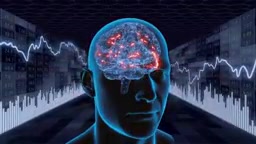
Modern physics reveals time's flow may be an illusion, with past, present, and future potentially coexisting.
This article explores what modern physics reveals about the nature of time—from Einstein's block universe where past, present, and future coexist, to entropy as the sole driver of time's arrow, to Kip Thorne's wormhole time machine thought experiment. It examines why consciousness can only exist in the direction of increasing entropy and why we haven't seen visitors from the future.
Time seems like the most fundamental aspect of reality. It marches relentlessly forward, we remember the past but cannot foresee the future, and cause and effect proceed in orderly fashion. Yet modern physics reveals a deeply unsettling truth: the flow of time may be an illusion, the distinction between past, present, and future may not exist at all. More radically still, under certain conditions, spacetime itself might even permit time travel.
This article systematically examines cutting-edge thinking about the nature of time from a physics perspective—from Einstein's block universe, to the relationship between entropy and the arrow of time, to the theoretical possibility of time travel through wormholes.

The Block Universe: Is Time Just Another Dimension?
Einstein's theory of relativity supports a concept known as the "Block Universe." In this framework, the universe is a four-dimensional spacetime structure where every event has not only spatial coordinates but also a temporal coordinate. Your current location corresponds to a point in three-dimensional space, and simultaneously to a point on the time axis.
Here's the key insight: just as the space 10 feet in front of you is equally as real as the space 10 feet behind you, the next 10 minutes and the past 10 minutes equally "exist." MIT physicist Max Tegmark put this point more bluntly: we can either view the universe as a three-dimensional space where "things happen," or as a four-dimensional block universe where "nothing happens."
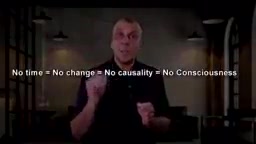
If the latter is true, then change is an illusion. Everything—past, present, future—is already "there," like a DVD. The plot unfolds within the movie, but the DVD itself never changes. Our feeling that "the past has already happened" exists solely because our brains store memories of the past. Without memory, would we even have a sense of time?
British physicist John Barbour proposed an even more radical view: time itself does not exist—only change does. Time is merely a byproduct of change. If change ceased, time would cease to exist.
What Would Happen If Time Stopped?
This thought experiment reveals the deep nature of time. If time stopped simultaneously throughout the entire universe, what would happen? The answer: nothing would happen, and you would never know. Because all processes in your brain would also stop, you would have no conscious experience whatsoever. Time might have already stopped and restarted at this very moment—you could never detect it.
An even more interesting question: what if time stopped for everything except you? It wouldn't be as romantic as science fiction movies suggest. First, you couldn't breathe, because the air molecules around you would have stopped moving. Even if you managed to maintain a one-meter "time buffer zone" around your body, you couldn't see anything beyond it—because light would also have stopped propagating, leaving everything outside in total darkness.
Though extreme, this thought experiment reveals an important truth: time, light, motion, and consciousness—concepts that seem independent—are actually deeply entangled with one another.
Entropy and the Arrow of Time: Why Does Time Only Flow Forward?
The fundamental equations of physics are "time-symmetric"—they work equally well whether time runs forward or backward. So why do we only experience time flowing forward?
The answer lies in the second law of thermodynamics: entropy always increases. You can scramble an egg, but you can't unscramble it. That's entropy increase. Entropy appears to be the sole reason the arrow of time points forward.
MIT professor Alan Guth, a pioneer of cosmic inflation theory, offered a profound explanation. He argued that information and entropy are nearly the same thing. To remember the past, you need to form memories; forming memories means increasing information; increasing information means increasing entropy. Therefore, conscious systems can only operate in the direction of increasing entropy.
This means: we are conscious because we live in a universe where entropy is constantly increasing. In a universe where entropy decreases, consciousness cannot exist. This doesn't rule out the existence of a time-reversed universe—it's just that no consciousness would exist within it to experience it.
So why did the universe start in a low-entropy state? Guth's answer is equally elegant: if the universe is infinitely large, then its total potential entropy is also infinite. In that case, no matter what entropy value you start with, it's "low entropy," because there's always a higher entropy state to reach. Whatever the entropy of the Big Bang was, it was necessarily the lowest—because the universe can always become more disordered.
Time Dilation: Einstein Proved Time Is Not Absolute
Einstein discovered something even stranger than the arrow of time: time itself is not universal—it can be stretched and slowed. Under different gravitational fields and at different velocities, different observers experience completely different rates of time passage.
This has been repeatedly verified by experiment. Scientists placed one atomic clock at sea level and another synchronized clock on a mountaintop, finding that the sea-level clock ran slightly slower. Similarly, atomic clocks placed on high-speed jets run slower than stationary clocks on the ground.
If you traveled at 99.5% the speed of light, your clock would run 10 times slower than one on Earth—your 1 year would equal 10 years on Earth. But in your own reference frame, you wouldn't feel anything unusual; time would still pass at one second per second for you. Only when you returned to Earth and compared clocks would you discover the difference.
You may not have noticed, but physics rules out the possibility of clocks running at different speeds within the same reference frame. The movie scenario where someone "freezes time" at a single location while moving normally themselves is pure fantasy—physics does not allow it.
Wormhole Time Machines: A Theoretical Path to the Past
Since relativity shows that time can be bent, physicists naturally ask: can spacetime be manipulated so extremely that it curves backward?
One solution to Einstein's field equations predicts Einstein-Rosen bridges—wormholes—tunnels connecting two distant points in spacetime. Caltech physicist Kip Thorne (also the scientific consultant for the film Interstellar) designed a thought experiment for time travel using wormholes:
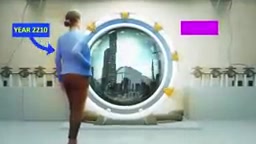
Imagine that in the distant future, we create a stable, traversable wormhole on Earth. One end is placed on a spacecraft traveling at 99.5% the speed of light, while the other end remains in an Earth laboratory. After the spacecraft flies for one year and returns, due to time dilation, 10 years have passed on Earth, but the wormhole on the spacecraft has only experienced 1 year. At this point, an astronaut could pass through the spacecraft's wormhole end and emerge in the laboratory's "past"—achieving backward time travel.
But there's a critical limitation: you cannot travel back to a time before the wormhole was created. This perhaps explains why we haven't seen time travelers from the future—because the wormhole time machine hasn't been invented yet.
Real-World Obstacles and Technical Challenges of Wormholes
Wormholes face enormous technical challenges. First, no one has ever directly observed a wormhole, although some astronomers have proposed in academic journals that certain "black holes" at galactic centers might actually be wormholes, distinguishable by their gamma-ray distribution patterns.
Second, wormholes are theoretically extremely unstable. High gravity would cause a wormhole to collapse the instant anything with mass or energy enters it—even a single photon could destroy it. Keeping a wormhole open requires "exotic matter"—matter with negative energy density or negative mass.
Negative energy density has indeed been confirmed to exist in the Casimir effect, but at magnitudes far too small to sustain a wormhole. Physicists have proposed theoretical schemes for creating wormholes using charged black holes and "dark sector" matter, but the required exotic matter has yet to be discovered.
The Ultimate Meaning of Time: The Iron Laws of Physics and the Poetry of Existence
Physics has fundamentally transformed our understanding of the nature of time. Einstein proved time is not absolute; thermodynamics revealed why time seems to flow only forward; general relativity opened a theoretical window suggesting spacetime itself might allow travel to the past.
But a core puzzle remains unsolved: Why did the universe begin in such a low-entropy state? Until this question is answered, the true nature of time remains hidden in the deepest fog of physics.
Perhaps it is precisely because of time travel's limitations—we can never re-experience this moment—that the present becomes so precious. Earth's beauty, the grandeur of the sky, time spent with loved ones—all will vanish forever into the river of time, never to be revisited by any future version of ourselves. The irreversibility of time is both an iron law of physics and the poetry of existence.
Related articles

AI Agent Development: A Complete 6-Week Systematic Learning Roadmap
A 6-week systematic learning roadmap for AI Agent development, covering core architecture, ReAct principles, multi-agent collaboration, RAG integration, and deployment.
Four Core Advantages Frontend Developers Have When Transitioning to AI Agent Development
Frontend developers have key advantages for AI Agent development: TypeScript ecosystem fit, low-barrier full-stack bridging, and state management isomorphism. Learn the transition path here.
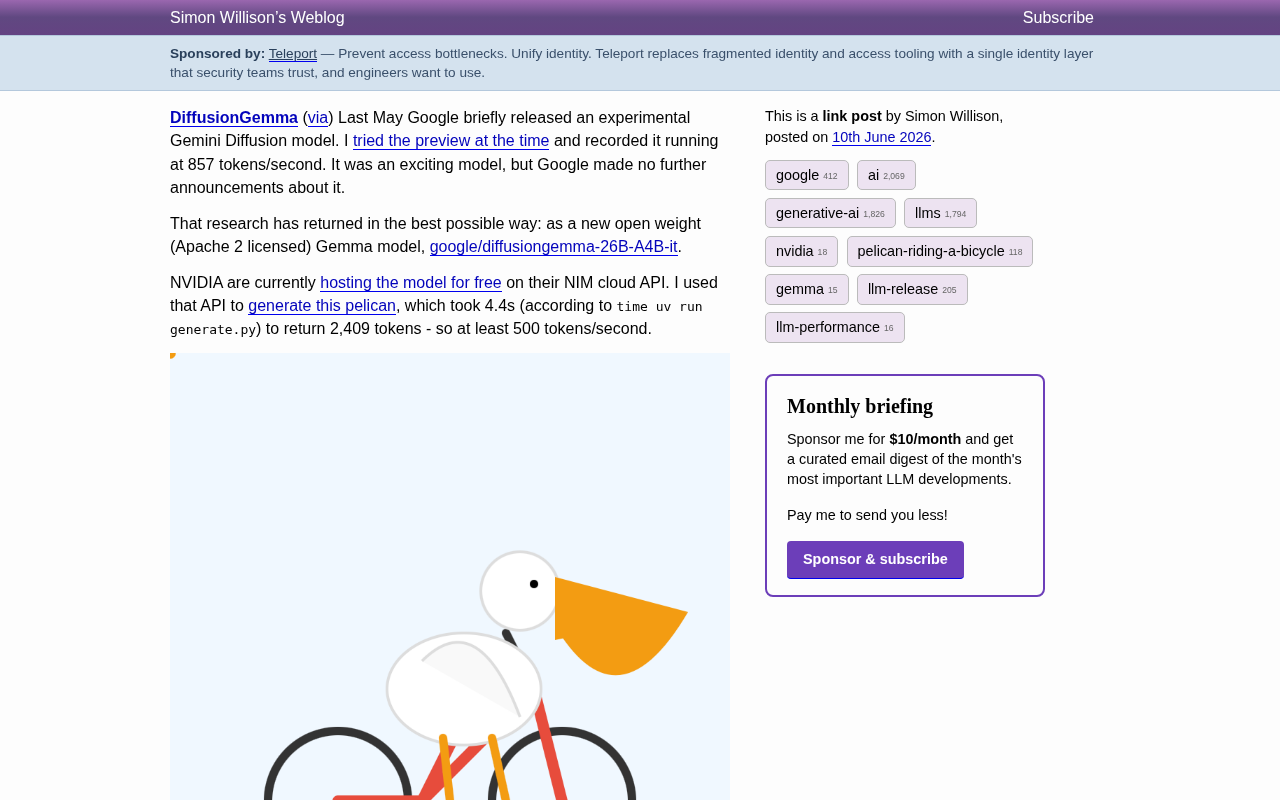
DiffusionGemma: Google's Open-Source Diffusion Language Model Exceeding 500 Tokens/s
Google releases DiffusionGemma, an open-source diffusion language model with Apache 2.0 license. The 26B-parameter MoE model achieves over 500 tokens/s in real-world tests.