Java Backend Interview Prep Roadmap: A 6-Week Sprint Guide Integrating AI Agent Development

A 6-week Java backend interview prep guide blending traditional tech stack mastery with AI Agent development skills.
This guide presents a structured 6-week preparation roadmap for Java backend interviews that integrates traditional topics (JVM, Spring Boot, Redis, microservices) with emerging AI development skills including Spring AI, LangChain4j, and RAG. It follows a progressive approach: weeks 1-2 cover Java fundamentals and JVM internals, weeks 3-4 tackle enterprise tech stacks and AI Agent development pipelines, and weeks 5-6 focus on end-to-end project practice. Best suited for developers with 1-3 years of experience preparing for job switches.
Introduction: The New Direction of Java Backend Interviews
Java backend interviews have undergone a profound transformation over the past two years. Memorizing traditional interview Q&A is no longer enough — interviewers at major tech companies have started frequently assessing candidates' ability to integrate AI large language models, their Agent development experience, and their practical solutions for RAG (Retrieval-Augmented Generation). A content creator shared a six-week preparation roadmap that systematically integrates the traditional Java backend tech stack with AI-powered development, making it a valuable reference for developers preparing for job switches or fall recruitment.
RAG has been one of the most mainstream architectures for enterprise AI applications since 2023. The core idea is this: large language models have knowledge cutoff dates and cannot directly access internal enterprise data. RAG works by first retrieving relevant document fragments from an external knowledge base, then injecting these fragments as context into the model's prompt, enabling the model to generate answers based on real data. For Java backend developers, implementing RAG involves document parsing, text chunking, vector storage (typically using vector databases like Milvus or Elasticsearch), similarity search, and prompt assembly — each step requiring solid backend engineering capabilities.
Phase 1 (Weeks 1-2): Solidifying Java Fundamentals
Core Fundamentals Cannot Be Skipped
Many people rush through their preparation, jumping straight to distributed systems and AI integration, only to find themselves lost because their foundations are shaky. The core tasks for the first two weeks include:
- Java Core Fundamentals: Collections framework, multithreading, IO models, and other high-frequency topics
- JVM Internals: Memory model, garbage collection mechanisms, class loading process
- Computer Networking: TCP/UDP, HTTP/HTTPS, three-way handshake and four-way teardown
- MySQL Database: Index principles, transaction isolation levels, writing complex business SQL
JVM-related knowledge in major tech company interviews has evolved from concept memorization to scenario-based analytical skills. Interviewers typically present a production issue scenario (such as frequent Full GC, memory leaks, or thread deadlocks) and ask candidates to perform root cause analysis starting from the JVM memory model. Java's memory model divides the runtime data area into the heap, method area, VM stack, native method stack, and program counter. The generational management of heap memory (young generation, old generation) directly affects the choice of garbage collection strategy. Understanding how modern garbage collectors like G1 and ZGC work, and being able to tune JVM parameters based on application characteristics, is an essential skill for senior Java developers.
Newly Required Content: AI Integration Basics
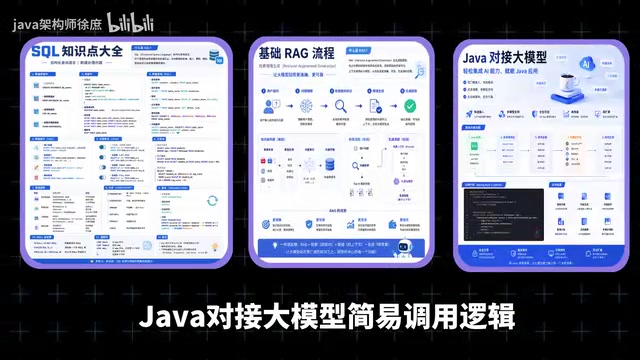
Unlike previous years, current Java backend interviews have started testing basic understanding of RAG workflows and simple Java-to-LLM integration logic. This doesn't require you to be an AI expert, but you need to have fundamental AI backend development awareness to keep up with new hiring standards.
Phase 2 (Weeks 3-4): Enterprise Tech Stack & AI Development Pipeline
Deep Dive into Traditional Tech Stack
Once the fundamentals are solid, move into the high-frequency core technologies used in interviews and daily work:
- Spring Boot: Complete runtime mechanism and engineering development standards
- Redis Caching: Solutions for cache penetration, breakdown, and avalanche
- Message Queues: Application scenarios and business pain points solved by RabbitMQ/RocketMQ
- Distributed & Microservices Architecture: Service registration and discovery, configuration centers, distributed tracing
Interview Must-Know: AI Agent Development Module
This is the biggest variable in recent interviews. Major tech companies have started requiring Java-based LLM integration solutions in backend interviews, specifically covering:
- Spring AI: The AI integration framework within the Spring ecosystem, seamlessly connected with Spring Boot
- LangChain4j: The Java version of LangChain, used for building AI application pipelines
- Enterprise-Grade Agent Development: How to build deployable intelligent agent systems with Java
Spring AI is the official AI integration framework launched by Spring in late 2023, currently in a rapid iteration phase. Its design philosophy continues Spring's signature style — shielding underlying differences through a unified abstraction layer. Developers can use the same set of APIs to connect with different LLM providers like OpenAI, Anthropic, and Ollama, switching models by simply modifying configuration without changing business code. Spring AI also includes built-in modules for vector storage, Function Calling, conversation memory management, and other common AI application development components, enabling Java developers to build complete AI application pipelines without deeply learning the Python ecosystem.
LangChain4j is the Java ecosystem implementation of the LangChain philosophy, driven by community development. LangChain was originally an orchestration framework in the Python community for building LLM applications, with its core contribution being the definition of key abstractions like Chain (chained calls), Agent (intelligent agents), and Tool (tool invocation). LangChain4j ports these abstractions to the Java world with adaptations for Java's strong typing characteristics. The difference from Spring AI is that Spring AI leans more toward model invocation abstraction at the infrastructure layer, while LangChain4j focuses more on upper-level application orchestration logic — the two are often used together in real projects.

Without learning this content, you'll easily get eliminated in interviews. After completing these two weeks, your development perspective will completely transcend the pure CRUD level.
Phase 3 (Weeks 5-6): End-to-End Project Practice
Aligned with Real Interview Scenarios at Major Companies
The final two weeks are the project practice phase, with the goal of producing project experience that can be written on your resume and withstand interviewer deep-dives:
- Enterprise System Design: Integrated solutions combining caching, message queues, and database sharding
- Performance Tuning: Practical optimization for high-concurrency, high-availability production scenarios
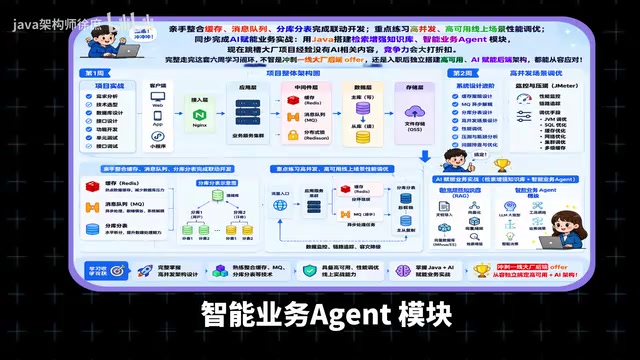
- AI-Empowered Business Practice: Building RAG-enhanced knowledge bases and intelligent business Agent modules with Java
AI Agent (intelligent agent) is one of the core paradigms for current LLM applications. Unlike simple conversational AI, Agents possess autonomous planning and tool-calling capabilities. Their workflow typically goes like this: after receiving a user instruction, the Agent autonomously decomposes the task, selects appropriate tools (such as database queries, API calls, file read/write operations) to execute, and decides the next action based on execution results until the task is complete. For Java backend developers, building enterprise-grade Agents requires solving engineering challenges like tool registration and permission control, execution chain observability, exception handling and rollback mechanisms, and multi-Agent collaboration — these are precisely the core competencies of backend engineers.
Why Projects Must Include AI Content
When switching to a major tech company now, if your project experience doesn't include AI-related content, your competitiveness will be significantly diminished. What interviewers want to see isn't that you can call an API, but that you can deeply integrate AI capabilities with business scenarios to solve real problems.
Objective Analysis: Value and Limitations of This Prep Roadmap
What's Worth Affirming
- Accurate direction assessment: Java + AI integration is indeed a clear trend for backend positions, with Spring AI and LangChain4j continuing to gain momentum
- Well-designed pacing: The progressive structure of fundamentals → advanced topics → hands-on practice follows sound learning principles
- Realistic time expectations: Six weeks is a feasible intensive learning cycle for developers with some existing foundation
Issues to Be Aware Of
- Mastering all content in six weeks is unrealistic for beginners: This roadmap is better suited for working developers with 1-3 years of experience who need systematic review and to fill AI knowledge gaps
- AI Agent development is still rapidly evolving: Framework versions and best practices may change within months, so stay current with the latest documentation
- Interview prep ≠ real-world capability: A prep roadmap can help you pass interviews, but genuine AI engineering skills require continuous accumulation through project work
Summary: Advice for Developers at Different Stages
- Fresh graduates / Fall recruitment: Prioritize solidifying Java fundamentals and traditional interview topics; for AI, understanding concepts and basic API calls is sufficient
- 1-3 years experience, job switching: Focus on filling gaps in distributed systems and AI Agent development; prepare a project that includes RAG
- Senior developers: Focus on AI integration solutions at the architecture design level; be able to clearly articulate AI's positioning and value within a system
Regardless of your current stage, Java backend + AI-integrated development is no longer optional — it's a required course. The sooner you build a knowledge system in this area, the more initiative you'll have in the upcoming job market.
Related articles
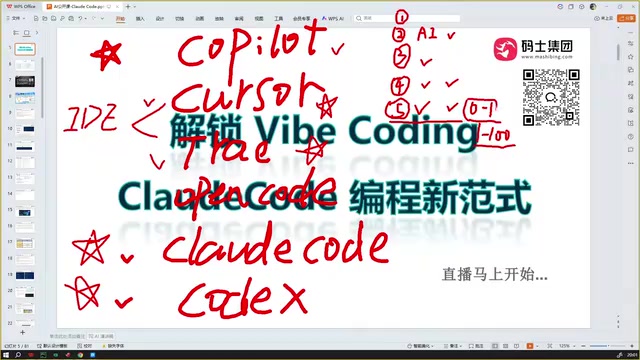
Claude Code Installation Guide & The Five Stages of AI Programming Tools Explained
Complete Claude Code installation guide with the five stages of AI programming tools, from manual coding to agents. Learn 0-to-1 project building and 1-to-100 iteration challenges.

Enterprise-Level AI Project Rules Files: 5 Hard Rules + 6 Writing Techniques
AI keeps messing up your code? Learn 5 hard rules and 6 writing techniques for enterprise-level Rules files in Claude Code, Cursor & more, with templates.
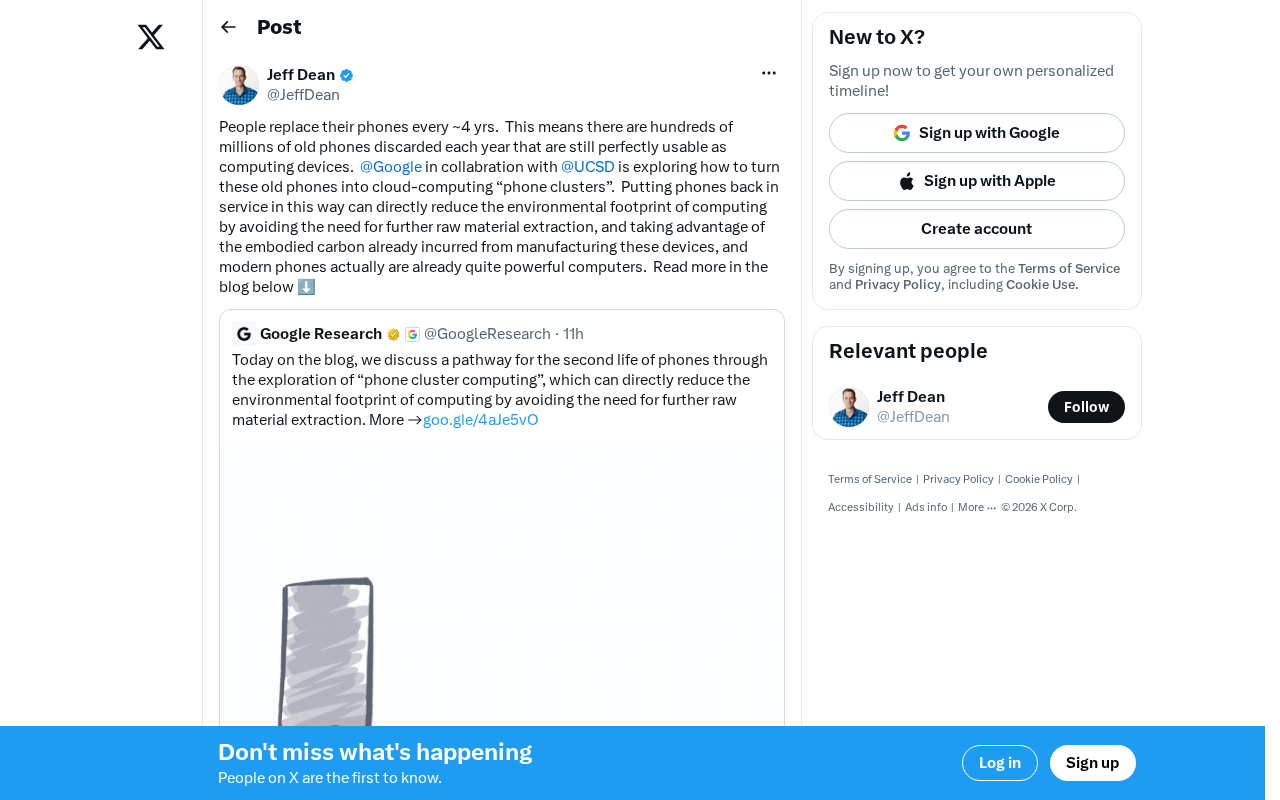
Building Cloud Computing Clusters from Old Phones: Google and UCSD Explore a New Path to Sustainable Computing
Google and UCSD explore building cloud clusters from old phones, leveraging ARM chip efficiency to cut e-waste and data center carbon footprints.