Keyroll: An In-Depth Look at a Stability-Focused Claude Refill Tool
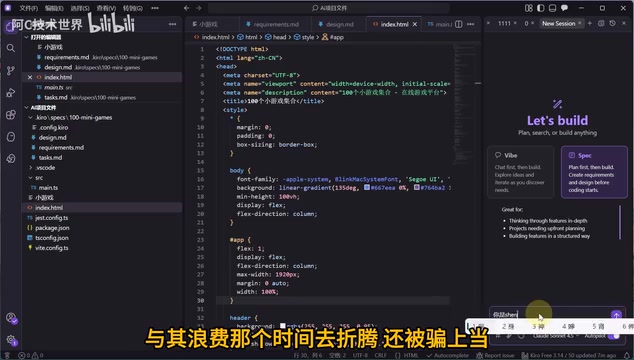
A deep dive into Keyroll, a Claude refill tool that prioritizes stability over chasing the latest models.
This article provides an in-depth look at Keyroll, a Claude refill tool gaining attention for its stability and fast response times. It explains the technical mechanisms behind key rotation, discusses why prioritizing stability over chasing the latest model versions is a pragmatic choice for developers, and examines critical security, compliance, and long-term planning considerations when using third-party proxy tools.
The Developer's Claude Usage Limit Dilemma
For developers who heavily rely on Claude for AI-powered coding, the usage limits on official accounts have always been a persistent headache. When you're deep in a coding flow, a sudden rate limit notification can break your rhythm and seriously hurt productivity.
Anthropic's rate limiting on Claude is a common API governance strategy. Specifically, Claude Pro subscribers encounter sliding-window-based message frequency limits — when the number of tokens sent within a given time window exceeds a threshold, the system triggers a cooldown period, typically requiring a wait of several hours before usage can resume. This mechanism is designed to balance GPU inference compute allocation across servers and prevent a small number of heavy users from monopolizing computational resources. AI coding scenarios are particularly prone to hitting these limits because they involve large context inputs and lengthy code outputs, consuming tokens far faster than ordinary conversations.
Around this pain point, various Claude "refill" solutions have emerged in the community — from so-called OPES exploits to various API proxy services. Developers spend considerable time bouncing between different solutions. However, many of these are either unstable or pose security risks.
These refill solutions can be broadly categorized into several technical approaches: OPES (One-Person-Enterprise-Subscription) exploits involve obtaining or sharing enterprise-tier API keys through various means, leveraging the higher call quotas of enterprise plans to bypass personal account limits. API proxy services set up an intermediary layer (Reverse Proxy) that forwards user requests to backend servers with valid API keys — essentially a resource pool where multiple users share high-quota accounts. Other solutions achieve the refill effect by automatically rotating cookies or session tokens across multiple accounts. The common problems with these approaches include: questionable legitimacy of key sources, shared accounts that could be banned by the provider at any time, and intermediary nodes that may log users' complete conversation data.
Keyroll: Overview and Core Features
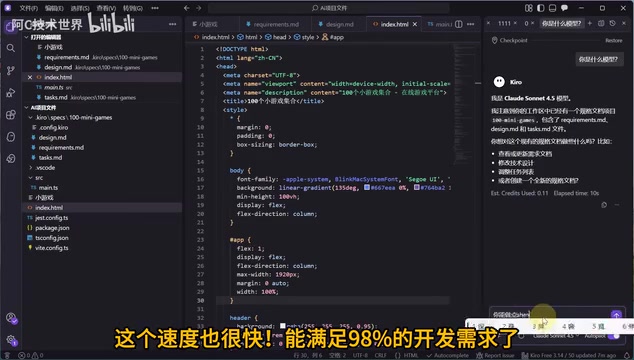
Recently, a Claude refill tool called Keyroll has attracted widespread attention in the Bilibili developer community. According to content creators, the tool's core advantage lies in its stability — it has been running consistently for an extended period, which is uncommon among similar refill tools.
The name "Keyroll" itself hints at its core technical mechanism — Key Rotation. In software engineering, key rotation is originally a security practice of periodically changing API keys to reduce the risk of leaks. In the context of refill tools, this concept is borrowed to describe a strategy of automatically switching between multiple API keys: when one key's call quota approaches its limit, the system automatically switches to the next available key, providing seamless, transparent service to the user. This load-balancing approach to key management requires maintaining a key pool and monitoring each key's remaining quota and cooldown status in real time. The technical implementation involves distributed systems concepts such as request queue management, failover, and health checks.
Based on the video demonstrations, Keyroll's main features include:
- Fast response speed: Demos show good response times, close to the official experience
- High stability: Long-term operation without frequent interruptions, with outstanding availability
- Broad coverage: Reportedly meets approximately 98% of daily development needs

Stability vs. Chasing the Latest: How Should Developers Choose?
The video raises a thought-provoking point for developers: Rather than chasing the latest model versions (such as Claude 4.7, 4.8, etc.), it's better to choose a stable, reliable tool and stick with it.
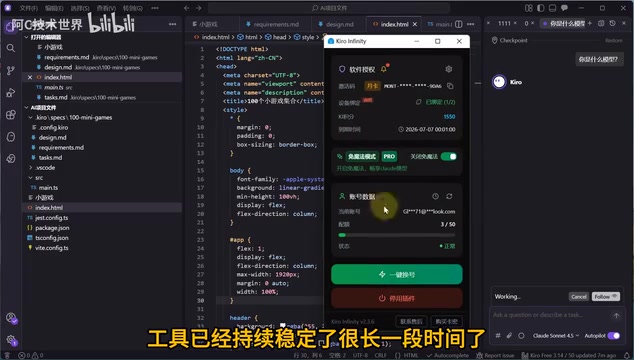
This perspective has deep technical merit. Version iterations of large language models don't always mean uniform improvements across all tasks. Taking the Claude series as an example, from Claude 3 Sonnet to Claude 3.5 Sonnet to Claude 4 Sonnet, the score improvements on coding benchmarks (such as SWE-bench, HumanEval, etc.) show diminishing returns with each upgrade. This aligns with the "low-hanging fruit effect" in AI — early versions have more room for improvement, while subsequent versions see progressively smaller marginal gains. In real-world coding scenarios, the model's core capabilities — understanding requirements, generating correct syntax, following code conventions, handling common design patterns — already show quite minimal differences between mainstream versions. What truly affects the development experience is often engineering metrics like context window size, response latency, and service availability, rather than tiny gaps in model intelligence itself.
In practical development scenarios, the hidden costs of frequently switching tools and model versions are often underestimated:
- Time cost: Every new solution requires configuration, testing, and adaptation
- Risk cost: Cracking tools from unknown sources may pose data leak risks
- Continuity cost: A pattern of "one day on, five days off" severely disrupts development rhythm
For most everyday coding tasks, current mainstream Claude models are already powerful enough, and the minor differences between model versions have far less impact on actual development output than many imagine. This is precisely the theoretical basis for a "stability-first" strategy — rather than expending energy chasing versions, it's better to focus your attention on the code itself.
Important Considerations When Using Claude Refill Tools
While refill tools can address the immediate pain of usage limits, there are several important points to keep in mind:
Security Considerations
Any third-party proxy tool means your code and conversation content passes through additional service nodes. When working on projects involving sensitive business logic or private data, you need to carefully evaluate data security risks.
From a deeper technical perspective, when developers use Claude through a third-party proxy service, the complete request chain becomes: User Client → Proxy Server → Anthropic API. In this chain, the proxy server acts as a Man-in-the-Middle with full access to all transmitted data, including code snippets sent by users, project architecture descriptions, business logic explanations, and all content generated by the model. Even if the proxy service claims not to log data, users have no way to verify this promise. The deeper risks include: code may contain database connection strings, API keys, internal system architecture, and other sensitive information; conversation context may reveal a company's undisclosed product plans or technical strategies. For developers handling data in regulated industries such as finance, healthcare, or government, using such tools may directly violate data protection regulations (such as GDPR, China's Personal Information Protection Law, etc.).
Compliance Issues
Refill tools are fundamentally a means of bypassing official usage limits, which may violate Anthropic's Terms of Service. Developers should understand the potential account risks and prepare accordingly.
Long-Term Planning
For teams and enterprise users, obtaining stable usage quotas through the official API or enterprise subscriptions is the recommended approach. Third-party refill tools are better suited as temporary transitional solutions for individual developers, not as long-term infrastructure dependencies.
Anthropic offers multi-tiered official solutions worth knowing about: Under the pay-per-use API model, Claude 3.5 Sonnet is priced at approximately $3 per million input tokens and $15 per million output tokens, with no hard cap on call frequency (only a requests-per-minute rate limit that can be increased upon request). Claude for Enterprise provides higher rate limits, SSO single sign-on, an admin console, contractual guarantees that data won't be used for model training, and other enterprise-grade features. Additionally, accessing Claude through cloud platforms like Amazon Bedrock and Google Cloud Vertex AI provides extra security compliance certifications and SLA service level agreements from the cloud providers. While these official solutions cost more than free refill tools, their guarantees in data security, service stability, and legal compliance are unmatched by third-party tools.
Conclusion: The Pragmatic Choice of Prioritizing Stability
As a Claude refill tool, Keyroll's core selling points are stability and response speed. For individual developers constrained by Claude's usage limits, choosing a community-verified stable tool is indeed more pragmatic than constantly chasing various new solutions. That said, users should also maintain a clear-eyed awareness of such tools' limitations and potential risks, making rational trade-offs between convenience and security. Ultimately, as the AI coding tools market matures and official pricing strategies evolve, developers should take the long view — a stable workflow built on a compliant foundation is the only truly sustainable productivity solution.
Related articles
Claude Code Installation & Setup Guide: Low-Cost Vibe Coding with Chinese AI Models
Step-by-step guide to installing Claude Code and configuring it with Chinese models like DeepSeek for low-cost vibe coding, including Node.js setup and CCSwitcher usage.

OpenLLMVTuber: A Deep Dive into the Open-Source AI Virtual Character Framework
Deep dive into OpenLLMVTuber, a 10K-star open-source AI virtual character framework integrating ASR, LLM, TTS, and Live2D with voice interruption, visual perception, and modular architecture.

1700+ Top Developer Personal Website Collection: A Treasure Trove of Frontend Design Inspiration
A GitHub repo with 24,000+ stars featuring 1,700+ personal websites from top developers and designers worldwide. Styles range from minimalist to cyberpunk to 3D effects — perfect for design inspiration.