Kiro Free One-Month Trial: Complete Guide to Signing Up and Using Claude Opus 4.7
Get Claude Opus 4.7 free for a month via Kiro's Pro plan trial — here's how.
AWS's AI coding tool Kiro offers a free first month of its $20/month Pro plan, giving users access to Claude Opus 4.7 and 1,000 monthly calls. This guide covers registration, subscription, hands-on model experience, quota management tips, and a critical reminder to cancel auto-renewal to avoid charges.
Introduction
Kiro, the AI coding tool launched by AWS, recently rolled out an attractive promotion: a free first month of the Pro plan, normally priced at $20/month. This means users can experience top-tier models like Claude Opus 4.7 and Opus 4.6 at zero cost, with 1,000 monthly API calls included.
For anyone who's been wanting to try the most powerful AI models but hesitant about subscription fees, this is an opportunity you don't want to miss. This article walks you through Kiro's registration process, subscription steps, and a hands-on review of Claude Opus 4.7.
What Is Kiro and Why Should You Care?
Kiro is an AI coding assistant from Amazon AWS, positioned similarly to popular tools like Cursor and Windsurf. It integrates multiple mainstream large language models, including:
- Claude Series: Opus 4.7, Opus 4.6
- Claude Code Series
- Other Models: Sonnet, MiniMax, and more
What sets Kiro apart from other AI coding tools is its generous free trial policy — the Pro plan is free for the first month, with 1,000 model calls included. Whether you're using it for coding assistance or everyday conversations, this quota is more than enough for most users.
Complete Guide to Kiro Registration and Subscription
Step 1: Prepare Your Account and Sign In
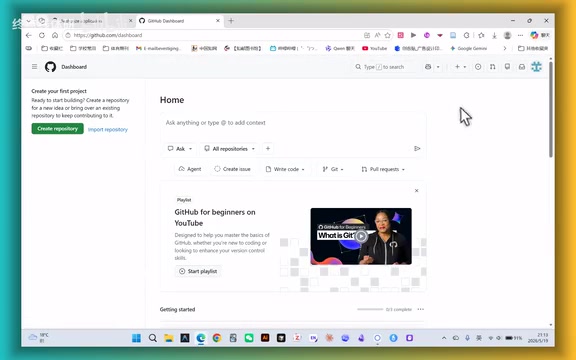
Go to the Kiro website and click "Sign In / Download." The following login methods are currently supported:
- Google Account
- GitHub Account (Recommended)
- Amazon Account
- Organization Account
Using a GitHub account is recommended for a quick and straightforward registration process. If you're just looking to try the free trial, consider using a secondary account.
Step 2: Subscribe to the Pro Plan (First Month Free)
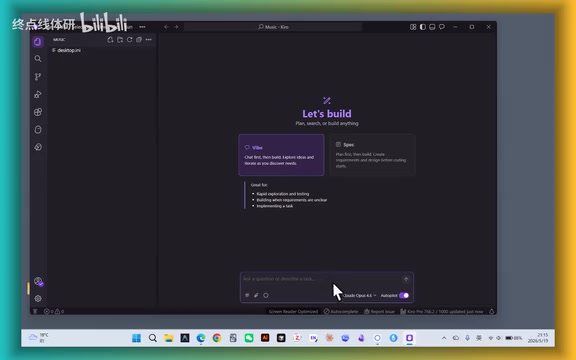
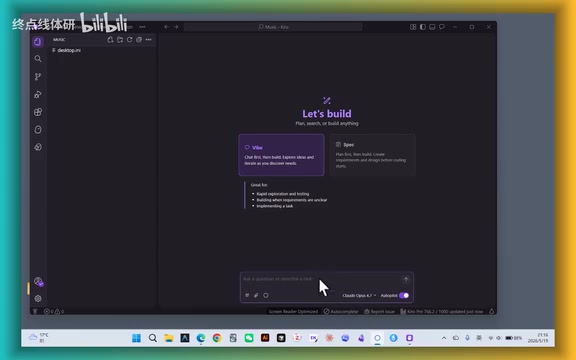
Once logged in, you'll enter Kiro's workspace where you can start chatting with the AI right away. To unlock full features and top-tier models, you'll need to subscribe to the Pro plan:
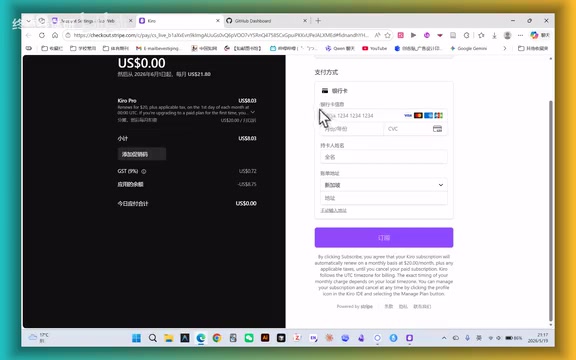
- Click the subscription entry point — you'll see it priced at $20/month
- Look for the first-month price showing $0 (free)
- Enter your email and link an internationally-enabled credit card to complete the subscription
- ⚠️ Critical Step: Cancel auto-renewal immediately after subscribing to avoid being charged $20 the following month
After canceling auto-renewal, your free quota for the current month remains fully active and usable until it expires.
Step 3: Select Claude Opus 4.7 and Start Using It
Once subscribed, open the Kiro editor and you'll find all available models in the model selection menu. It's recommended to go straight for Claude Opus 4.7 — Anthropic's most powerful flagship model. Since it's a free trial, you might as well use the best.
Hands-On Review of Claude Opus 4.7
Coding Ability: Complex Tasks Done in One or Two Exchanges
Based on real-world usage, Opus 4.7 delivers impressive performance on coding tasks. For example, when asked to generate a well-designed webpage, Opus 4.7 can produce a complete page with smooth scrolling effects, standard SWAP functionality, and polished animations — all in a single response.
Compared to other models, the key difference lies in task completion efficiency:
- Opus 4.7: Gets the job done in one or two exchanges
- Other models: May require multiple rounds of back-and-forth adjustments to achieve satisfactory results
This efficiency gap becomes even more pronounced when handling complex tasks like academic paper-related work.
Conversational Depth: Far More Than Just a Coding Tool
Opus 4.7 isn't just a coding assistant — it excels in deep conversations as well. Whether the topic is investment and finance, tech and fintech, or philosophical reasoning, Opus 4.7 delivers insightful and substantive responses. As one of the most widely recognized top-tier large language models, it truly leads in both breadth of knowledge and depth of reasoning.
Tips and Important Reminders
Quota Management Tips
1,000 monthly calls may not sound like a lot, but with smart allocation, it's more than sufficient. Here are some strategies:
- Use Opus 4.7 for important tasks: Save the best model for your most valuable needs
- Switch to lower-tier models for simple queries: Use Sonnet or similar models for lightweight, everyday questions
- Minimize wasted conversations: Describe your requirements clearly in a single prompt to avoid burning through quota on multiple correction rounds
Three Key Reminders
- Always cancel auto-renewal: This is a recurring subscription — after the free first month, you'll be automatically charged $20. Cancel immediately after subscribing
- Credit card requirement: You'll need an internationally-enabled credit card (Visa, Mastercard, etc.)
- Prioritize top-tier models: Since it's a free trial, go straight for Opus 4.7 — lower-tier models are freely available on many other platforms
Conclusion
Kiro's first-month-free strategy offers users a rare, zero-barrier opportunity to experience top-tier AI models. As one of the most powerful large language models available today, Claude Opus 4.7 delivers outstanding performance in coding assistance, deep conversations, and complex task handling. If you've been wanting to try an Opus-level model but held back by subscription costs, this free trial is well worth a shot.
That said, keep expectations realistic: a one-month free trial is primarily a chance to feel the capability differences between models. For long-term use, you'll still need to weigh the cost-effectiveness. Make the most of the free period to thoroughly explore all features and decide whether a paid subscription is worth it for you.
Related articles
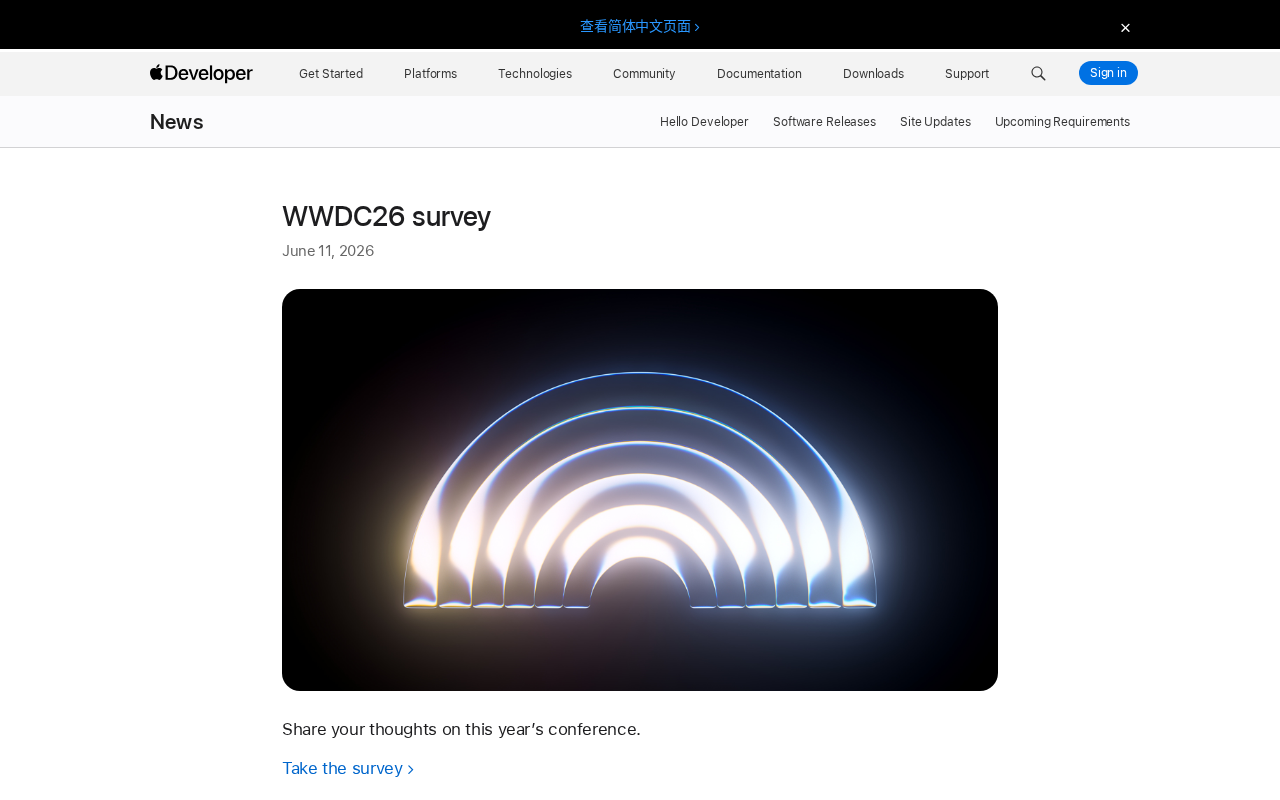
Apple Opens WWDC26 Developer Survey: How to Participate and Share Your Feedback
Apple has opened the WWDC26 developer survey, inviting global developers to share feedback. Learn about the survey's background, this year's AI highlights, and how to participate.

AI Large Language Model Learning Roadmap: A Systematic Path from Zero to Project Implementation
A detailed AI LLM learning roadmap covering Transformer architecture, Prompt Engineering, RAG, Agent development, model fine-tuning & deployment, with enterprise project guides.
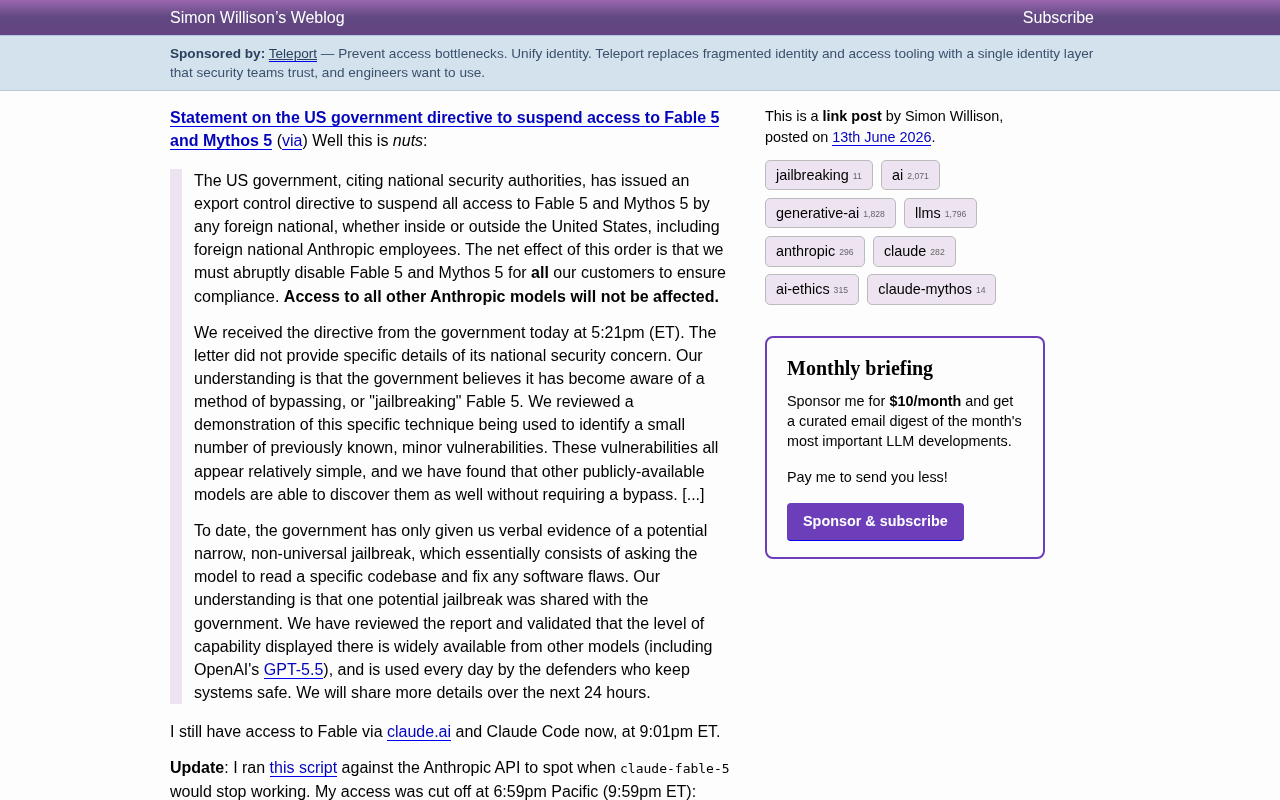
Anthropic's Fable 5 Halted by Emergency U.S. Government Ban: A Complete Breakdown
The U.S. government emergency-banned Anthropic's Fable 5 and Mythos 5 on national security grounds, with just 5 hours from notice to enforcement. Full analysis of the timeline, rationale, and industry impact.