LangChain from Beginner to Agent Development: A Complete Learning Path for LLM Application Development
LangChain from Beginner to Agent Devel…
A complete learning path for LangChain development from basics to Agent implementation.
This article provides a systematic learning roadmap for LangChain LLM application development. It covers three phases: foundational concepts and environment setup (Prompt Engineering, tokens, Temperature), core components (Document Loaders, Text Splitters, Embeddings, Vector Stores, RAG systems), and Agent development using the ReAct paradigm and LangGraph. Practical project recommendations and learning strategies are included.
Why LLM Application Development Has Become an Essential Skill for Developers
Artificial intelligence has moved from the laboratory into every aspect of daily life — phone cameras recognizing objects, autonomous vehicles navigating streets, and intelligent customer service providing instant responses. All these scenarios are powered by AI technology. In the field of AI application development, LangChain, as the core framework connecting Large Language Models (LLMs) with real-world business scenarios, is becoming a must-learn for developers.
Large Language Models (LLMs) are deep learning models trained on the Transformer architecture. Through pre-training on massive text datasets, they learn the statistical patterns and knowledge representations of language. The GPT series, Claude, LLaMA, and others all belong to this category. Their core capability lies in generating coherent, logical output text based on input text (Prompts) — essentially functioning as conditional probability prediction systems. It's precisely this powerful text understanding and generation capability that makes building applications around LLMs possible.
For developers looking to enter the field of LLM application development, LangChain provides a standardized toolchain that allows you to quickly build intelligent applications with conversation, retrieval, and reasoning capabilities without constructing complex AI systems from scratch.
What Is LangChain: Core Positioning and Value
LangChain is an open-source framework for LLM application development. Its core value lies in seamlessly integrating the capabilities of large language models with external data sources, tools, and business logic. To use an analogy: if the large model is the "brain," then LangChain is the "nervous system" connecting the brain to the limbs.
Through LangChain, developers can achieve the following core capabilities:
- Chains: Link multiple LLM calls and processing steps into complete workflows. The design philosophy of chains is similar to Unix pipes — the output of each step serves as the input for the next. Developers can combine data preprocessing, model calls, and result post-processing into reusable pipelines.
- Retrieval-Augmented Generation (RAG): Enable large models to answer questions based on private knowledge bases, solving the hallucination problem. The core idea behind RAG is to retrieve relevant document fragments from an external knowledge base before the model generates an answer, injecting these fragments as context into the Prompt so the model generates responses based on real data. This approach effectively addresses the "hallucination" problem (where models fabricate non-existent information) while avoiding the high cost of fine-tuning the entire model. A typical RAG pipeline includes: document chunking → vectorization → storage in a vector database → retrieving similar fragments during user queries → assembling the Prompt → model generation.
- Agents: Give large models the ability to use tools and make autonomous decisions
- Memory Management: Add contextual memory to conversation systems for coherent multi-turn dialogues. Memory management solves the inherently stateless nature of LLMs — each API call is independent from the model's perspective. The Memory module stores conversation history and injects it into subsequent requests, giving users a coherent conversational experience.
Why Developers Prefer LangChain
Among the many LLM development frameworks (such as LlamaIndex, Semantic Kernel, Haystack, etc.), LangChain stands out for several key reasons:
- Comprehensive ecosystem: Supports dozens of LLM integrations including OpenAI, Anthropic, and various Chinese model providers, along with hundreds of third-party tools and data source connectors
- Well-designed abstraction layer: The unified interface design makes switching underlying models extremely simple — developers only need to modify one line of configuration to switch from GPT-4 to Claude or domestic models
- Active community: Over 90K Stars on GitHub, with abundant documentation and tutorial resources, making it easy to find solutions when encountering problems
- Full pipeline support: Combined with tools like LangSmith (an observability platform), it enables monitoring, debugging, and deployment from prototype to production. LangServe provides one-click deployment of Chains as REST APIs
Complete Learning Path from Zero to Agent Development
Phase 1: Fundamental Principles and Environment Setup
The first step in learning LangChain is understanding the basic working principles of large language models, including core concepts like Prompt Engineering, the Token mechanism, and Temperature parameters.
Prompt Engineering refers to the technique of carefully designing text instructions fed to large models to guide them toward desired outputs. Common strategies include: Few-shot Learning (providing a few input-output examples in the Prompt for the model to learn patterns), Chain-of-Thought (guiding the model to reason step by step with instructions like "let's think step by step," significantly improving accuracy on complex problems), and role assignment (having the model assume a specific role for more professional output). Tokens are the basic units of text processing for models — they're not simply characters or words, but sub-word fragments derived through tokenization algorithms like BPE. A single Chinese character typically corresponds to 1-2 tokens. The Temperature parameter controls output randomness: a value of 0 produces the most deterministic output (suitable for factual Q&A), while values approaching 1 produce more creative and diverse results (suitable for creative writing).
On this foundation, set up your Python development environment and install LangChain along with related dependencies.
Beginners are advised to start with the following areas:
- Understanding LLM input/output mechanisms and API calling methods (including streaming output, asynchronous calls, and other patterns)
- Mastering Prompt template design methods and best practices (LangChain provides utility classes like PromptTemplate and ChatPromptTemplate for managing and reusing Prompts)
- Learning to use LangChain to call different LLM APIs (such as OpenAI, Wenxin Yiyan, Tongyi Qianwen, etc.) and experiencing the convenience of a unified interface
Phase 2: Deep Dive into Core Components
After mastering the basics, you need to study LangChain's major core modules in depth:
- Document Loaders: Load data from various sources including PDFs, web pages, and databases. LangChain has over 160 built-in Document Loaders, covering virtually all common data sources from local files (PDF, Word, CSV) to cloud services (Notion, Google Drive, S3) to web scraping.
- Text Splitters: Split long documents into text fragments suitable for model processing. Due to LLM context window limitations (e.g., GPT-4 Turbo has a 128K token limit), long documents must be split into smaller chunks. Splitting strategies directly impact retrieval quality. Common methods include splitting by character count, by semantic paragraphs, recursive splitting, etc., while setting appropriate overlap regions to avoid information fragmentation.
- Embeddings + Vector Stores: Text vectorization and vector database usage (e.g., Chroma, FAISS). Embeddings are a technique for converting text into high-dimensional numerical vectors, where semantically similar texts are closer together in vector space. Vector databases are specifically designed to store and efficiently retrieve these vectors, supporting approximate nearest neighbor (ANN) searches based on cosine similarity or Euclidean distance, capable of finding the most relevant content fragments from millions of documents in milliseconds. Commonly used embedding models include OpenAI's text-embedding-3-small and the open-source BGE series.
- Retrievers: Build efficient retrieval pipelines to improve answer accuracy. Beyond basic similarity retrieval, LangChain supports various advanced retrieval strategies, such as MultiQueryRetriever (automatically generating multiple query variants to improve recall), contextual compression retrieval (filtering irrelevant content), and hybrid retrieval (combining keyword search with semantic search).
The core goal of this phase is to independently build a complete RAG (Retrieval-Augmented Generation) system — one of the most common LLM application scenarios in enterprises today, widely used in enterprise knowledge base Q&A, intelligent customer service, document analysis, and other business applications.
Phase 3: Agent Development in Practice
Agents are the most imaginative part of LangChain. Unlike simple chain calls, Agents can autonomously decide which tools to use and in what order to execute them based on user input, possessing a degree of "autonomous reasoning" capability.
The core mechanism of Agents originates from the ReAct (Reasoning + Acting) paradigm, where the model performs a "think-act-observe" loop at each step: the model first analyzes user intent and reasons (Thought), then decides which tool to call and executes it (Action), observes the tool's returned results (Observation), and then decides the next action — cycling until the task is complete. This mechanism upgrades AI from a passive Q&A system to an active task executor. LangChain currently recommends using LangGraph to build more complex Agent systems. Based on the concept of directed graphs, it makes Agent state management and flow control more flexible and controllable.
Recommended hands-on projects include:
- Information Retrieval Assistant: Build an intelligent assistant that can search the internet and automatically summarize information, involving search API integration, information extraction, and summary generation
- Data Analysis Agent: Develop an automated tool that can read databases, write and execute SQL/Python code, and generate visualization charts and analysis reports
- Multi-Agent Collaboration System: Build complex business systems where multiple Agents work together with division of labor — for example, one Agent handles information gathering, one handles analysis and reasoning, and one handles report writing, collaborating through message-passing mechanisms to complete complex tasks
Through hands-on work on these projects, you'll truly understand Agent decision-making mechanisms and tool-calling workflows, while mastering the ability to handle practical engineering issues like circular calls and error recovery that Agents may encounter.
Learning Recommendations and Common Pitfalls
Application Developers Don't Need to Master Model Theory
The AI field does have a reputation for high barriers and difficulty, but application-layer developers don't need to deeply understand the mathematical principles of model training (such as backpropagation, matrix operations in attention mechanisms, loss function optimization, etc.). LangChain was designed specifically to lower the barrier to LLM application development, allowing more developers to focus on business logic rather than underlying algorithms. Just as web developers don't need to understand every detail of the TCP/IP protocol stack to build excellent web applications, LLM application developers need to understand the model's capability boundaries and optimal usage patterns, not its internal implementation details.
Practice-First Learning Strategy
A "theory + practice" alternating approach is recommended:
- After learning each component, immediately write code to verify the results and deepen understanding through actual output
- Start with small projects and gradually increase system complexity — for example, from single-turn Q&A → multi-turn dialogue → RAG system → Agent application
- Keep up with LangChain version updates, as the framework iterates quickly (from the early Chain paradigm to the currently recommended LCEL expression language and LangGraph), and stay current with the latest best practices
- Think about implementation directions in the context of real business scenarios to avoid purely theoretical learning. Try building practical projects like internal knowledge base Q&A systems or automated report generation tools for your team
Conclusion
Mastering LLM application development has become one of the core competitive advantages for developers. As the most mainstream LLM application development framework, LangChain provides complete technology stack support from basic Prompt calls to complex multi-Agent systems. Whether you're a Python beginner or an experienced backend developer, through a systematic learning path — first building a solid foundation, then mastering core components, and finally integrating everything through Agent development — you can acquire the core skills of LLM application development in a relatively short time and apply them to real projects.
LLM technology is still evolving rapidly, with model capabilities continuously improving, framework tools constantly iterating, and new application paradigms emerging. Establishing a systematic knowledge framework and practical experience early on will help you secure an advantageous position in this wave of technological advancement.
Related articles
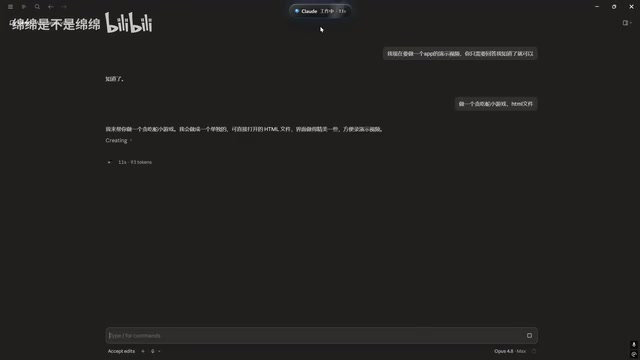
Claude Code Desktop Status Capsule: An Open-Source Widget for Real-Time AI Coding Status Monitoring
An open-source desktop status capsule that monitors Claude Code's idle, working, and completed states in real time, with multi-conversation management, memos, and music control for developers.

GPT-5.2 Codex vs Opus 4.5 Hands-On: A Comprehensive Comparison of Coding Ability, Speed, and Developer Experience
Hands-on comparison of GPT-5.2 Codex vs Opus 4.5 across frontend generation, physics simulation, 3D scenes, and code refactoring, with practical selection advice.
Deep Dive into the Three AI Programmin…
Deep Dive into the Three AI Programming Frameworks: The Right Way to Do Specification-Driven Development
Deep dive into the three frameworks of Specification-Driven Development (SDD) for AI programming: Blueprint, Execution Flow, and Change Records — solving the problem of AI code going off the rails.