Microsoft Rayfin SDK Released: Building Secure Enterprise Data Applications on Fabric
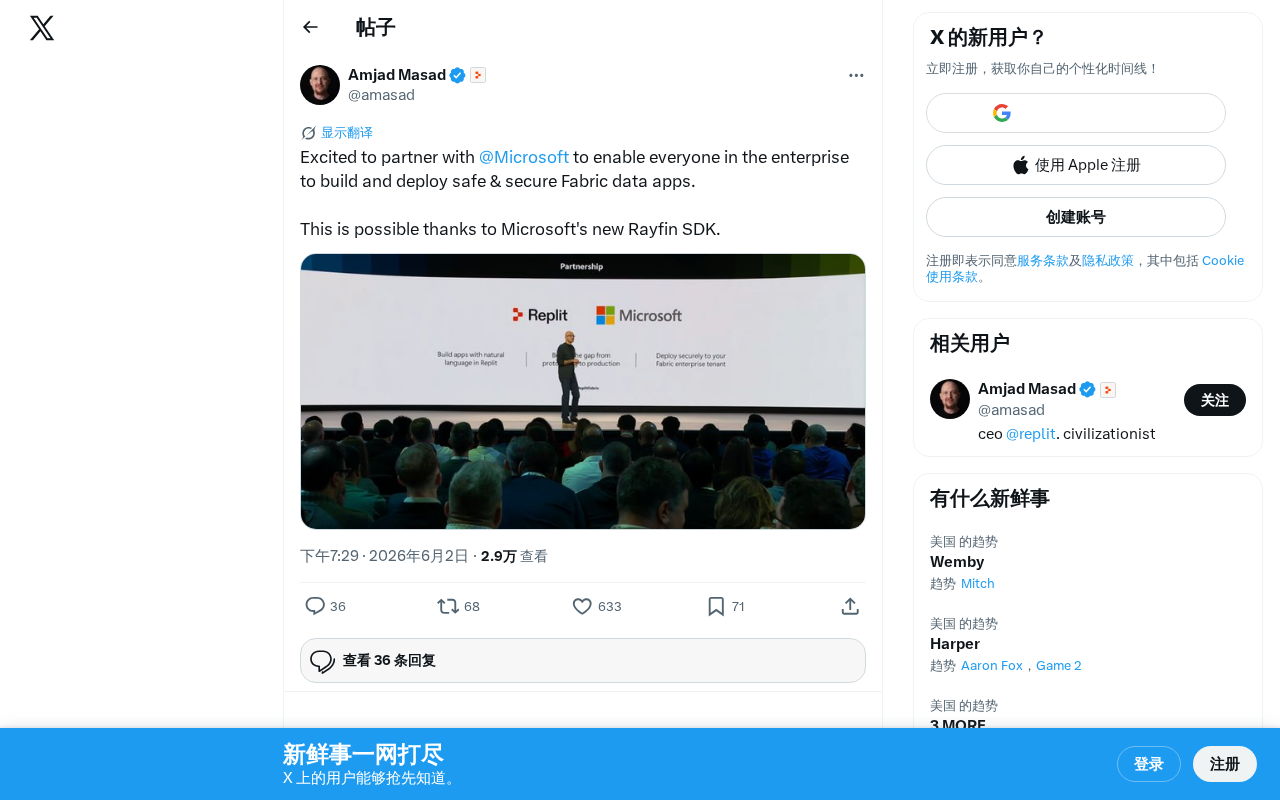
Microsoft releases Rayfin SDK to enable secure enterprise data app development on Microsoft Fabric.
Microsoft has launched the Rayfin SDK, a development toolkit for building secure data applications on the Microsoft Fabric platform. With security-first design, democratized development for non-technical users, and deep Fabric integration, the SDK aims to expand the Fabric ecosystem while lowering barriers to enterprise data application development amid growing AI-driven demand.
Microsoft Rayfin SDK: A New Foundation for Enterprise Data Application Development
Microsoft recently announced the launch of the new Rayfin SDK, designed to help enterprise users build and deploy secure, reliable data applications on the Microsoft Fabric platform. This announcement has attracted widespread industry attention, marking a significant step forward in Microsoft's enterprise data platform ecosystem development.
What Is Rayfin SDK? Core Positioning and Design Philosophy
Based on publicly available information, Rayfin SDK is a development toolkit released by Microsoft for the Microsoft Fabric ecosystem. An SDK (Software Development Kit) is a collection of standardized programming interfaces, tool libraries, and documentation that platform vendors provide to developers. In the enterprise data platform space, the quality of an SDK directly determines the vitality of the third-party application ecosystem. Successful SDK examples include Salesforce's Lightning Platform SDK and Snowflake's Snowpark, both of which significantly expanded their respective platform ecosystems by reducing development complexity.
The core objective of Rayfin SDK is to lower the barrier to enterprise data application development, enabling more people—not just professional developers—to participate in building and deploying data applications.
Key Features of Rayfin SDK
-
Security First: The SDK treats security as a core design principle, ensuring enterprise data applications meet strict security and compliance requirements throughout the build and deployment process. Security compliance for enterprise data applications spans multiple layers: data encryption (at rest and in transit), authentication and authorization (such as OAuth 2.0, RBAC role-based access control), data lineage tracking, audit logging, and compliance with industry regulations like GDPR, HIPAA, and SOC 2. Embedding security capabilities at the SDK level means developers don't need to build security infrastructure from scratch—instead, they can achieve compliance-grade data protection by calling standardized APIs, significantly reducing the risk of security vulnerabilities.
-
Development for Everyone: The emphasis on "enable everyone in the enterprise" means the toolkit is committed to lowering technical barriers and democratizing data application development. Democratization of data application development is one of the core trends in enterprise technology in recent years. Gartner predicts that by 2025, 70% of new applications will be built by non-professional developers using low-code/no-code tools. Drivers of this trend include shortages of professional development talent, surging demand from business units for data applications, and the maturation of AI-assisted programming tools.
-
Deep Integration with the Fabric Platform: As part of the Microsoft Fabric ecosystem, Rayfin SDK can fully leverage Fabric's data lake, data warehouse, real-time analytics, and other capabilities.
The Continued Expansion of the Microsoft Fabric Ecosystem
Since its release in 2023, Microsoft Fabric has been rapidly expanding its ecosystem. As Microsoft's unified data analytics platform, Fabric integrates multiple capabilities including data engineering, data science, real-time analytics, data warehousing, and business intelligence. Specifically, Fabric consolidates Power BI, Azure Synapse Analytics, Azure Data Factory, and several other previously independent services into a single end-to-end SaaS solution. It uses OneLake as a unified data lake storage layer, supports the Delta Lake open format, and fundamentally eliminates the data silo problem inherent in traditional data architectures. Its multi-engine architecture allows users to complete the entire workflow—from data ingestion, transformation, and storage to analytics and visualization—on a single platform.
The release of Rayfin SDK can be seen as a strategic move by Microsoft to further open up Fabric platform capabilities. By providing a standardized SDK, Microsoft is achieving the following objectives:
- Attracting more partners to join the Fabric ecosystem and enrich the application marketplace
- Standardizing application development workflows to reduce fragmentation risks
- Strengthening security governance capabilities to provide comprehensive assurance for enterprise-grade deployments
What Rayfin SDK Means for Enterprise Users
For enterprise users, the emergence of Rayfin SDK means that building data applications on the Fabric platform will become more standardized and efficient. This is especially important given the current explosive growth of AI-driven data applications, where a secure, standardized development framework is critically needed.
Typical Use Cases
- Rapid development of internal enterprise data analytics dashboards
- Deployment of AI and machine learning applications based on Fabric data
- Cross-departmental data sharing and collaborative application development
- Data solutions for heavily regulated industries such as finance and healthcare
Industry Trends in Enterprise Data Platforms
Microsoft's move reflects an important trend in the enterprise data platform space: the shift from providing infrastructure capabilities to offering complete application development ecosystems. The current enterprise cloud data platform market features a three-way competition: Microsoft (Azure + Fabric), AWS (Redshift + Lake Formation + SageMaker), and Google Cloud (BigQuery + Vertex AI). Additionally, independent vendors like Snowflake and Databricks hold significant market share. The competitive focus among vendors has shifted from pure compute and storage capabilities to ecosystem completeness—whoever can offer a richer application marketplace, lower development barriers, and stronger AI integration will hold the advantage in the next phase of competition.
As more enterprises migrate their data assets to unified cloud platforms, unlocking data value while ensuring security has become a key battleground among major cloud vendors. The specific technical details and full feature set of Rayfin SDK await further disclosure from Microsoft, but based on positive feedback from partners, this toolkit is poised to become an indispensable component of the Fabric ecosystem.
Key Takeaways
Related articles

Claude Code for Test Development in Practice: An AI Programming Workflow That Doubles Your Efficiency
A practical guide to Claude Code for test development: auto-generating test scripts, Plan Mode workflows, MCP + Playwright integration, and Subagent parallel tasks to build systematic AI-assisted workflows.

Hermes Agent Hands-On Review: An AI Efficiency Revolution for Indie Game Developers
Indie game developer reviews Hermes Agent vs OpenClaude: intelligent context compression, real-time Memory, remote control via Telegram, and practical use cases in game dev, social media, and email.
Vibe Coding Beginner's Guide: Tool Selection Across Three Categories with Practical Examples
A comprehensive guide to Vibe Coding's three tool categories: Agent frameworks, CLI Coding, and IDE tools, with practical examples including Snake game and data analysis workbench.