Nobel Laureate John Jumper Leaves DeepMind to Join Anthropic
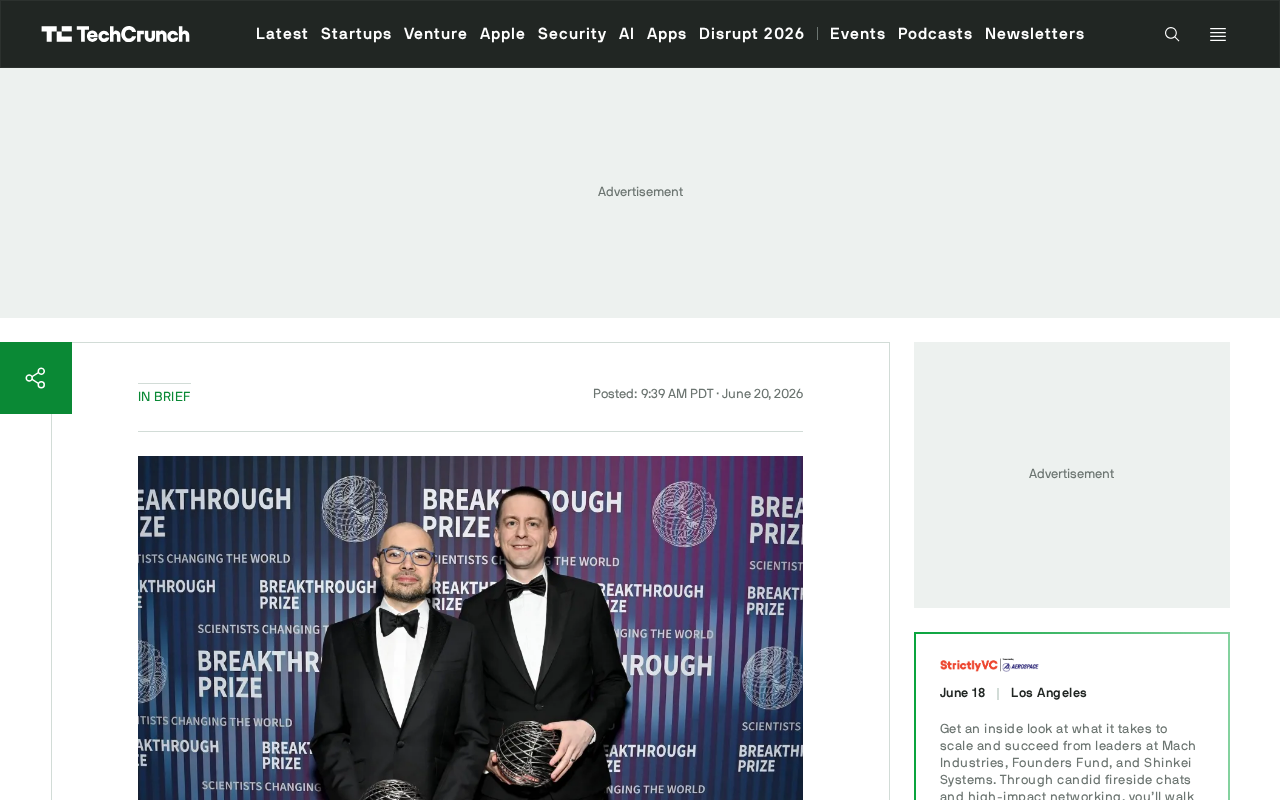
Nobel laureate John Jumper leaves Google DeepMind to join Anthropic, shaking up the AI talent landscape.
2024 Nobel Chemistry laureate John Jumper, who led the groundbreaking AlphaFold project at Google DeepMind, has officially joined Anthropic. This landmark move highlights the intensifying AI talent war, raises concerns about DeepMind's brain drain, and signals Anthropic's strategic expansion beyond language models into AI for Science — potentially reshaping competition across the entire AI industry.
Major Personnel Shakeup: Nobel Laureate John Jumper Moves to Anthropic
According to the latest reports, 2024 Nobel Prize in Chemistry laureate and AlphaFold project lead John Jumper has officially announced his departure from Google DeepMind to join rival Anthropic. The news has sent shockwaves through the AI industry and is widely regarded as one of the most significant events in the ongoing AI talent war.
Who Is John Jumper: From AlphaFold to the Nobel Prize in Chemistry
The Key Figure Behind Solving the Protein Folding Problem
John Jumper is one of the most influential researchers in the field of AI for Science. During his time at Google DeepMind, he led the development of AlphaFold — an AI system capable of predicting the three-dimensional structures of proteins with atomic-level accuracy. This work is widely credited with solving a 50-year grand challenge in biology known as the "protein folding problem."
To appreciate the magnitude of this achievement, it helps to understand the deep significance of the protein folding problem. Proteins are composed of amino acid chains, and their biological functions are entirely determined by the three-dimensional structures formed when those chains fold. Ever since 1972 Nobel Chemistry laureate Christian Anfinsen proposed the hypothesis that "amino acid sequences determine protein structure," scientists spent half a century trying to predict structure from sequence. Traditional experimental methods — such as X-ray crystallography and cryo-electron microscopy — took months or even years and were prohibitively expensive. AlphaFold2 stunned the scientific community at the 2020 CASP14 (Critical Assessment of protein Structure Prediction) competition by achieving near-experimental accuracy. DeepMind subsequently released a database of predicted structures for over 200 million proteins, dramatically accelerating drug development, enzyme engineering, and disease mechanism research worldwide.
In 2024, Jumper was awarded the Nobel Prize in Chemistry for AlphaFold's groundbreaking contributions. This marked the first time AI technology received Nobel recognition in the field of chemistry, signaling that the enormous potential of artificial intelligence in fundamental scientific research had been affirmed by the highest academic institution.
Jumper Isn't the Only One Leaving DeepMind
Notably, Jumper is not the only heavyweight to depart Google DeepMind. Reports indicate that other prominent researchers have also chosen to leave in recent months. This trend suggests that Google DeepMind is facing unprecedented talent retention pressure.
In fact, this brain drain is far from an isolated phenomenon. In recent years, as the generative AI wave has exploded, massive capital has flowed into AI startups — companies that can often offer highly competitive compensation packages (including substantial equity incentives), flatter organizational structures, and greater research autonomy. By contrast, research teams within large tech companies frequently face commercialization pressures, hierarchical approval processes, and shifting project priorities. Several senior researchers from DeepMind and Google Brain had already left to start their own companies or join competitors, including multiple co-authors of the Transformer paper (Attention Is All You Need), who went on to found Character.AI, Cohere, Adept, and other companies. This ongoing talent migration is profoundly reshaping the entire AI research landscape.
The Strategic Ambition Behind Anthropic's Recruitment of Jumper
From AI Safety Research to Full-Spectrum Competition
Anthropic was founded by former OpenAI executives Dario Amodei and Daniela Amodei, initially positioning itself around AI safety research. However, with the success of the Claude model series and substantial fundraising, Anthropic is transforming from a "safety-first" research organization into a full-fledged AI powerhouse.
Understanding Anthropic's background helps contextualize the strategic significance of this hire. Founded in 2021, Dario and Daniela previously served as OpenAI's VP of Research and VP of Operations, respectively, before departing to start their own venture due to disagreements with OpenAI's leadership over AI safety philosophy. Anthropic's core technical philosophy is "Constitutional AI" — guiding and constraining AI behavior through an explicit set of principles rather than relying solely on Reinforcement Learning from Human Feedback (RLHF). The company's flagship Claude series of large language models has demonstrated outstanding performance in coding, reasoning, and long-context processing, making it the most formidable competitor to OpenAI's GPT series. As of 2025, Anthropic has raised over $10 billion in cumulative funding from investors including Google, Amazon, and Salesforce, with a valuation placing it among the world's most highly valued AI companies.
Recruiting a Nobel Prize-caliber scientist like Jumper sends a clear signal: Anthropic's ambitions extend far beyond large language models and conversational AI — the company aims to expand AI capabilities into broader domains such as scientific discovery. Jumper's deep expertise in AI for Science could help Anthropic establish entirely new competitive advantages in vertical domains like biomedicine and materials science.
The Battle for Top AI Talent Reaches a Fever Pitch
This personnel move reflects the fierce intensity of talent competition in today's AI industry. Top AI researchers have become scarce resources that major tech companies and AI labs are all scrambling to secure. While Google DeepMind boasts deep research heritage and abundant computational resources, it faces formidable challenges from emerging AI companies like Anthropic and OpenAI in terms of compensation, research freedom, and company culture.
The Far-Reaching Impact of This Move on the AI Industry Landscape
Concerns Mounting for Google DeepMind
Jumper's departure is a significant blow to Google DeepMind. AlphaFold is one of DeepMind's most iconic achievements and a key showcase of Google's AI research prowess. The loss of core talent not only affects the progress of existing projects but could also undermine team morale and trigger a chain reaction of further departures.
The AI for Science Competitive Landscape Faces Reshaping
From a broader perspective, Jumper's move to Anthropic could reshape the competitive landscape of AI in scientific research. Previously, Google DeepMind held a near-monopoly in the AI for Science space, with projects like AlphaFold and AlphaGo establishing its absolute leadership in the field. Jumper's arrival could enable Anthropic to rapidly acquire critical capabilities in this arena.
AI for Science — AI-driven scientific discovery — is one of the most closely watched AI application areas in recent years. Beyond AlphaFold, notable achievements in this field include DeepMind's FunSearch for mathematical theorem discovery, GraphCast for weather forecasting, and Microsoft Research's scientific foundation models. The core logic of this field is that AI can identify patterns in high-dimensional, complex scientific data that humans struggle to detect, thereby accelerating the entire pipeline from hypothesis generation to experimental design to result validation. AI for Science has already demonstrated enormous potential in drug molecule design, new materials discovery, genomics, and climate simulation, and has been designated a strategic technology priority by multiple governments. Jumper's arrival means Anthropic is well-positioned to rapidly build a competitive research team on this strategic high ground.
This also signals a broader trend: future competition among AI companies will not be limited to who has the better language model, but will extend to who can more effectively leverage AI to drive scientific discovery and technological innovation. AI for Science is becoming the new strategic frontier.
Conclusion
A Nobel laureate leaving Google DeepMind for Anthropic — the symbolic significance of this event far exceeds that of an individual career decision. It signals a subtle shift in the balance of power within the AI industry and foreshadows further expansion of AI technology's application boundaries. For the industry as a whole, while the movement of top talent may cause short-term turbulence, in the long run, intensified competition will accelerate the pace at which AI technology benefits human society.
Related articles

A Giant Shot: An AI Screenshot Tool with Built-in MCP That Lets AI Directly Control Your Computer
A Giant Shot is a desktop screenshot tool with a built-in MCP Server, offering 11 annotation tools, smart OCR, AI chat, and desktop automation for Cursor and Claude Desktop.

Three Essential Claude Code Configuration Techniques: A Practical Guide to CLAUDE.md, Memory & MCP
Master three Claude Code configuration techniques: use CLAUDE.md for project rules, Memory for auto-learning preferences, and MCP for connecting GitHub and external tools.

Token Doomsday: The Industry Truth Behind AI Coding's Spiraling Costs
GitHub Copilot shifts from flat-rate to per-token billing, sending dev costs from $29/mo to $1,000+. Uber burns its annual AI budget in months. A deep dive into Token Doomsday.