Token Doomsday: The Industry Truth Behind AI Coding's Spiraling Costs

AI coding's shift to per-token billing triggers a cost crisis across the entire software industry.
The shift from flat-rate to per-token billing for AI coding tools like GitHub Copilot has triggered "Token Doomsday" — developers see costs surge from $29/month to over $1,000, while enterprises like Uber burn through annual AI budgets in months. The article examines the deep contradictions this exposes: absent ROI measurement, dangerous vendor lock-in, and degrading fundamental coding skills, while exploring industry responses including AI FinOps tools and tiered token strategies.
From All-You-Can-Eat Subscriptions to Pay-Per-Token: The Sharp U-Turn in Token Economics
Recently, the term "Token Doomsday" has gone viral in developer circles. The industry narrative has pivoted sharply from "Token Maxing" (burning through tokens recklessly) to "Token Sinway" (penny-pinching every token). The catalyst for all of this? Microsoft's major pricing overhaul of GitHub Copilot.
The original $29/month unlimited plan was replaced with per-token billing. To understand the implications, you need to know that tokens are the fundamental units large language models use to process text — they don't simply equate to a single word or character. In GPT-series models, one English word is typically split into 1 to 3 tokens, while a single Chinese character often requires 2 to 3 tokens. More critically, each code completion request includes not just the user's input (Prompt Tokens), but also the model's generated output (Completion Tokens), plus large chunks of code files sent along for context (Context Tokens). A seemingly simple code completion can actually consume thousands or even tens of thousands of tokens. This explains why, after the billing switch, a huge number of developers were blindsided — workloads that used to cost $29 a month were now running up bills of hundreds or even thousands of dollars.
In fact, since GitHub Copilot officially launched in June 2022, it has relied on OpenAI's Codex and GPT-series models under the hood, meaning Microsoft pays OpenAI inference costs for every API call. Industry estimates suggest that under the flat-rate model, heavy users were actually consuming $80–100 worth of compute per month — far exceeding their subscription fees. Microsoft had long subsidized usage to capture market share, but as the user base grew and more expensive models were integrated (such as GPT-4o and Claude 3.5), this subsidy model became unsustainable. The shift to usage-based billing is essentially passing the true inference costs through to end users.
This isn't just a problem for individual developers. When AI-assisted coding shifts from a "fixed cost" to a "variable cost," the entire industry's cost model gets upended. The former "use it as much as you can" encouragement turned overnight into "every single token must be carefully budgeted."
Enterprises in Crisis: Real Cases of AI Budgets Going Up in Smoke
If individual developers are feeling the pinch, enterprises are hemorrhaging. Several cases that have come to light are jaw-dropping:
- Uber: Burned through its entire 2026 annual AI budget in just four months
- Priceline: Renewal prices for AI tools (Cursor, etc.) surged 4 to 5x
- A mystery company: Accidentally spent $500 million on tokens in a single month

Uber's case is particularly worth examining in depth. Modern large tech companies typically maintain codebases ranging from tens of millions to hundreds of millions of lines of code. When AI coding tools are deployed at scale across thousands of engineers' daily workflows, token consumption grows exponentially. Each engineer might perform hundreds of code completions, code reviews, and refactoring operations per day, with each operation requiring large volumes of contextual code to be sent to the model. Take a team of 5,000 engineers as an example: if each person consumes 500,000 tokens per day, at GPT-4-tier pricing, monthly costs can easily blow past several million dollars. More critically, many enterprises set their AI budgets based on the fixed expenditures of the flat-rate model, completely failing to anticipate the cost elasticity of usage-based billing.
Even Microsoft itself wasn't spared — it axed its Cloud Code project after just a few months of use. When the AI tool provider itself is cutting costs, you know the problem is serious.
These cases reveal a harsh reality: during AI coding's honeymoon phase, virtually no enterprise seriously calculated actual token consumption. When the usage-based bills arrived, many companies discovered they had been "flying blind" all along.
The Developer's Absurd Predicament: Damned If You Use Less, Damned If You Use More
Perhaps the most absurd situation belongs to the frontline developers. This upheaval in token economics has trapped workers in a "Schrödinger's KPI" state.
Before: Companies mandated AI tool usage. Use too few tokens and you'd get called into a meeting, questioned with "Are you not embracing AI?"
Now: Use too many tokens and you'd also get called into a meeting, questioned with "Are you wasting company resources?"

The situation in China is evolving in parallel. One developer lamented online: "The company capped our tokens, but I can't go back to coding the old-fashioned way anymore." This statement captures a deeper dilemma — when developers have already adapted their workflows around AI-assisted coding, suddenly restricting token quotas can cause productivity to fall off a cliff.
It's like being given a car for your commute, then suddenly being told fuel is now out of pocket and the price has gone up tenfold — but you've already forgotten how to ride a bicycle.
Industry Response: From Wild Growth to Precision Operations
Facing the token cost crisis, the industry is rapidly developing a new set of countermeasures.
The Rise of AI Cost Monitoring Tools
Various AI cost monitoring tools and efficiency optimization solutions are gaining traction. Enterprises are no longer just asking "What can AI do?" — they're seriously evaluating "Is this task worth burning that many tokens?"

This trend closely mirrors the FinOps (Financial Operations) movement in cloud computing. FinOps is a cloud financial management practice framework that emerged around 2019, standardized by the FinOps Foundation (under the Linux Foundation). Its core philosophy is to have engineering, finance, and business teams collaboratively manage cloud spending through three phases: real-time visibility, optimization, and operations to maximize cost efficiency. In the early days of cloud computing, enterprises went through the same growing pains of "rush to the cloud first, deal with the exploding bills later" — many companies saw cloud spending exceed budgets by 300%–500%. It took about five years for FinOps to mature. Now the AI space is replicating this trajectory. We can expect to see dedicated "AI FinOps" roles and toolchains emerge to help enterprises achieve granular token spend management.
Tokenomics Standardization Efforts
The Linux Foundation has even established a Tokenomics Foundation specifically to develop industry standards for token cost management. This signals that token economics is evolving from a vague concept into a formalized, institutionalized discipline.
Notably, the term Tokenomics originally comes from the blockchain and cryptocurrency world, referring to the design of token issuance, distribution, and circulation mechanisms. In the AI context, it has been redefined as the cost accounting, budget management, and efficiency optimization framework surrounding LLM token consumption. The Linux Foundation's involvement is significant — as one of the most influential organizations in the open-source world, it has previously driven the establishment of critical technology standards through the Cloud Native Computing Foundation (CNCF), OpenSSF, and others. The Tokenomics Foundation's goals include: establishing unified token cost measurement standards, developing open-source token usage monitoring tools, defining enterprise-grade token budget management best practices, and promoting transparency and comparability in token pricing across different AI service providers.
Tiered Token Strategies for Development Teams
More and more teams are implementing tiered strategies:
- Core logic: Written by humans to ensure quality and controllable costs
- Repetitive work: AI-assisted, but with token budget caps
- Exploratory tasks: Strict ROI evaluation before committing tokens
The essence of this tiered strategy is a granular decomposition of AI coding's value. Not all programming tasks benefit equally from AI assistance — writing boilerplate code, unit tests, and documentation comments offer the highest cost-effectiveness for AI. Meanwhile, work involving complex business logic, system architecture design, and performance optimization often sees limited AI contribution with massive token consumption, since the model needs to process extensive context to provide meaningful suggestions.
A Sober Reflection: Three Deep Contradictions Exposed by Token Doomsday
"Token Doomsday" appears to be a pricing issue on the surface, but it actually exposes several deep contradictions in the current AI coding ecosystem.
First, the long-standing absence of value measurement for AI coding. The flat-rate model masked a critical question: we never truly quantified the ROI of AI-assisted coding. When costs become transparent, many seemingly efficient AI use cases simply don't pencil out economically.
Second, the dependency risk of vendor lock-in. Once developers and teams are deeply embedded in AI workflows, the vendor gains enormous pricing power. This "free first, harvest later" model is nothing new in the tech industry, but its impact in AI coding is particularly profound.
Traditional vendor lock-in primarily manifests in data formats, API interfaces, and migration costs. But AI coding tool lock-in goes deeper — it changes developers' thinking patterns and work habits. When teams have redesigned their code review processes, testing strategies, and even staffing around AI-assisted coding, the cost of switching tools goes far beyond the technical layer. This closely parallels the early days of cloud computing: enterprises were initially lured to the cloud by low prices, only to discover prohibitively high migration costs once deeply dependent, while cloud providers gradually raised prices. The difference is that switching AI coding tools also involves developers re-adapting their personal skills — this "cognitive lock-in" is harder to break than technical lock-in.
Third, the concern over degrading fundamental coding skills. "I can't go back to coding the old-fashioned way" is not a joke. If an entire generation of developers grows up with AI assistance, the degradation of fundamental coding skills becomes a real industry risk when AI becomes expensive or unavailable. This concern is far from unfounded — in education, research has shown that over-reliance on calculators weakens students' mental arithmetic abilities, and the widespread adoption of GPS navigation has been proven to reduce human spatial cognition. The impact of AI coding tools on developers' "muscle memory" and "problem decomposition skills" may take years to fully manifest, but once a generational skill gap forms, the cost of repair will be extraordinarily high.
Conclusion: From Frenzy to Rationality
The era of burning tokens without a care is indeed over. But that's not necessarily a bad thing. Just as cloud computing evolved from "all in" to the precision management of FinOps, AI coding also needs to go through the journey from frenzy to rationality.
Looking back at cloud computing's trajectory — from AWS launching S3 and EC2 in 2006, the industry went through roughly a decade of "cloud migration frenzy," followed by widespread "Cloud Bill Shock" around 2016, which ultimately gave rise to the FinOps movement and a suite of cost optimization tools and practices. AI coding is retracing this path at a much faster pace — the journey from frenzied adoption to cost awakening took cloud computing ten years; AI coding may need only two to three.
The question truly worth pondering isn't "What do we do about expensive tokens?" but rather "Did we overestimate AI coding's cost-effectiveness at this stage from the very beginning?" When the tide goes out, the ones left standing will be the teams that have genuinely thought through how to use AI — and where to use it.
Related articles

Claude Code Skills and MCP Resources: A Complete Guide from Beginner to Expert
A comprehensive guide to Claude Code Skills and MCP resources, covering international platforms like Skills.mp and Smithery plus Chinese alternatives, with a quick selection guide to boost AI coding productivity.

AI Code Output Up 10x — How Do You Keep Code Review from Collapsing?
When AI code generation outpaces human review, Code Review becomes the biggest bottleneck. Learn guardrail systems, architecture constraint tests, and TDD-driven Agent development strategies.
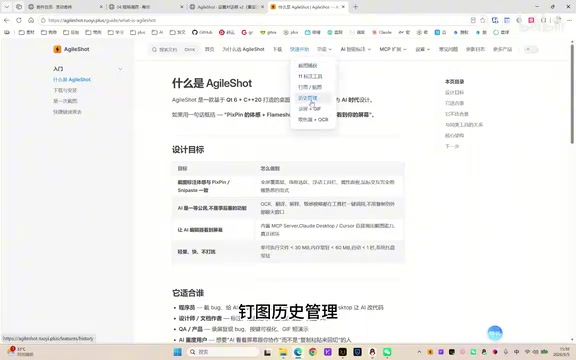
A Giant Shot: An AI Screenshot Tool with Built-in MCP That Lets AI Directly Control Your Computer
A Giant Shot is a desktop screenshot tool with a built-in MCP Server, offering 11 annotation tools, smart OCR, AI chat, and desktop automation for Cursor and Claude Desktop.