OpenAI CFO In-Depth Interview: $122 Billion Fundraise, the Compute War, and New AI Devices
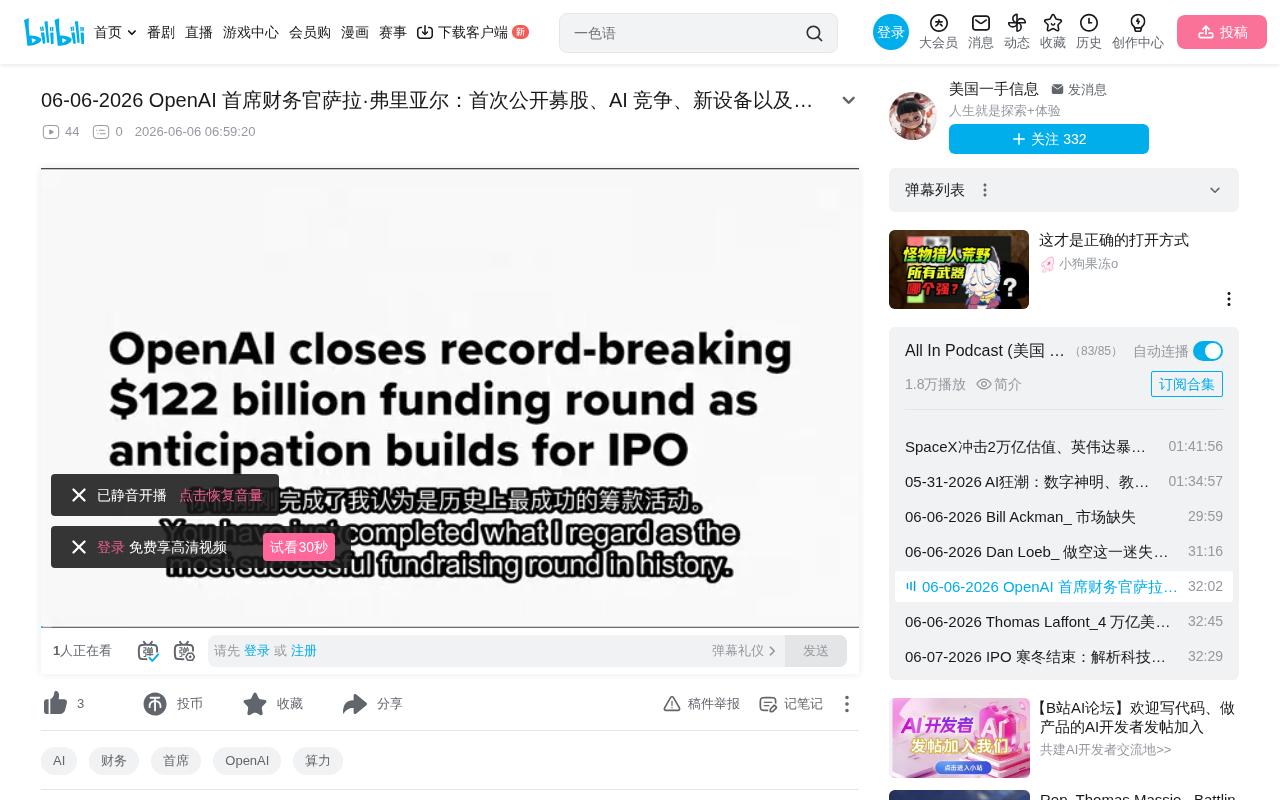
OpenAI's CFO reveals the strategy behind its record $122B raise, compute crunch, and upcoming consumer device.
In a rare in-depth interview, OpenAI CFO Sarah Fryer detailed the logic behind the company's historic $122 billion fundraise, warning that compute capacity will be nearly impossible to buy by 2026. She revealed a 97% drop in per-token inference costs over two years, a diversified chip and cloud strategy, a mysterious consumer device with Jony Ive launching next year, and plans to build an ad-supported business model combining Google's high-intent search with Meta's demographic targeting.
Introduction: The Strategic Logic Behind the Largest Fundraise in History
OpenAI Chief Financial Officer Sarah Fryer recently gave a rare, detailed look into the company's capital allocation strategy, compute infrastructure plans, competitive positioning, and upcoming consumer hardware device in an in-depth interview. The conversation was extraordinarily information-dense, covering everything from IPO timing to advertising business models, offering a first-hand perspective on the current competitive landscape of the AI industry.
$122 Billion Fundraise: A Milestone, Not the Finish Line
Sarah Fryer confirmed that OpenAI has just completed a $122 billion fundraise — the largest private funding round in history, dwarfing the previous largest IPO (Saudi Aramco's roughly $30 billion) by several orders of magnitude.
When pressed about IPO timing — especially given that Anthropic had just confidentially filed its S-1 — Fryer was remarkably composed: "An IPO is just a milestone, not the finish line. Don't run a company with an IPO as the goal — it's simply another form of financing."
She emphasized that her core responsibility as CFO is to "create maximum optionality for the company." In her view, the market is ultimately a "weighing machine" rather than a "popularity machine" — nobody remembers whether Google or Yahoo, Lyft or Uber went public first.
The Underlying Logic of Capital Requirements
Why is such an enormous amount of capital needed? Fryer laid out a clear framework: building 1 gigawatt of AI compute infrastructure costs approximately $50 billion all-in (land, power, shell, chips). And 1 gigawatt roughly corresponds to $10 billion in annual revenue potential. This means the $122 billion fundraise needs to be carefully allocated across compute buildouts through 2028 and beyond.
The Compute War: No Spare Capacity Left to Buy by 2026
Fryer's description of the current compute supply situation was striking: "In 2026, if you want to buy more compute, good luck. Tell me where to find it, because I don't know. 2027 is also quite constrained."
Multiple Bottlenecks Across the Supply Chain
She outlined the cascading bottlenecks throughout the compute supply chain:
- Energy: Electricity costs continue to rise
- Land and regulation: Building permits need to be obtained quickly
- Chips and memory: Supply chains are tight
- Talent: The education system isn't producing enough qualified people
- Community trust: You can't impose projects top-down on communities
A Diversified Compute Strategy
Fryer used a "Rubik's Cube" analogy to describe the evolution of OpenAI's compute strategy. Two years ago, the company had just one cloud provider (Microsoft Azure), one chip vendor (NVIDIA), one product (ChatGPT), and one price point ($20/month). Today, it has fully diversified:
Cloud providers: Oracle, CoreWeave, Microsoft, GCP, AWS, and multiple emerging cloud vendors. The core value of CSPs lies in converting CapEx into OpEx.
Chips: NVIDIA remains the top choice (the next major training run will be on Vera Rubin this fall), while AMD, Cerebras (already live, with impressive low-latency performance), and custom chips developed in partnership with Broadcom have been brought into the mix.
Self-built data centers: A co-built data center with SoftBank Energy in Texas marks the shift from a pure CSP model to a "custom build" approach. Sam Altman was in Saline, Michigan that very day, cutting the ribbon on a 1-gigawatt Oracle data center — a project expected to bring $2.5 billion in tax revenue, 2,500 union jobs, and $45 million in education investment to Michigan.
The Cost Curve: A 97% Drop and the Business Model Flywheel
Fryer revealed a staggering figure: from GPT-4 to GPT-5.4, the per-token inference cost dropped approximately 97% — and this happened in just two years. While the latest GPT-5.5 raised API prices, the effective per-token cost for customers still decreased by 20%-30%.
The Core Logic of Capital Allocation
She articulated a key insight: if you make investment decisions based on today's cost structure, you'll misprice future returns. You have to "lean forward" with investment, because the cost curve is declining faster than expected.
Regarding revenue forecasting, 2026-2027 can be modeled with reasonable precision using a bottom-up approach (products × price × users), but longer-term projections require working backward — "how much revenue should this compute capacity correspond to?" She candidly admitted, "The shape of the demand curve has consistently exceeded our expectations."
Competitive Positioning: The Moat at the AI Infrastructure Layer
Faced with the pointed question that "Anthropic has surpassed OpenAI in the developer and enterprise markets," Fryer didn't dodge — instead, she responded from the angle of strategic differentiation.
The Compounding Advantage of a Single Model
OpenAI's strategy is to build an "AI infrastructure layer" — a single foundation model with multiple interfaces facing the world:
- ChatGPT: Over 900 million weekly users, now both a noun and a verb
- Codex: Grew from near zero to 5 million users since launch (just crossed that milestone over the weekend)
- Frontier: Enterprise-grade product
A single model creates compounding effects: more users → more data → stronger personalization → lower unit costs → higher margins → more capital to invest in compute.
Memory and Context as Competitive Barriers
Fryer placed special emphasis on "memory" as a competitive moat. She drew an analogy from her Wall Street days: data might tell you a stock should go up, but a trader's intuition tells you a certain fund is being forced to unwind — this kind of "enterprise intuition" is exactly what AI models can develop through accumulated memory and context. When a model deeply understands how a business operates, that stickiness far exceeds a simple API call.
Consumer Hardware: The Mysterious Device in Collaboration with Jony Ive
One of the most eye-catching revelations from the interview concerned OpenAI's consumer hardware collaboration with Jony Ive. Fryer disclosed:
- It will be officially unveiled by the end of the year
- It will be available for purchase in early next year
- She has personally experienced it
- When asked if it felt like "using the iPhone for the first time," her response was: "What Jony and the team are truly great at is infusing humanity into a device. When you see it, you can feel it. It feels very natural, and very lovable."
- She used the word "intimacy" to describe the experience — no need to pull out your phone, seamlessly integrated into life
This suggests the device may take some form of wearable form factor, emphasizing natural interaction and emotional connection rather than a screen-dominated experience.
Advertising Business: How ChatGPT Combines the Best of Google and Meta
On the business model front, Fryer quoted a colleague: "If Google and Meta had a baby, it would be ChatGPT."
She revealed that OpenAI has captured at least 11% of search market share, but the actual impact is far greater — because Google Search counts each page refresh as one query, while an entire ChatGPT conversation (which might contain 50 questions) counts as just one.
ChatGPT's advertising advantages include:
- High intent (similar to Google Search): Users explicitly express their needs
- Demographics + memory (surpassing Meta): The model knows who you are, your preferences, and your context
She pledged to uphold a key principle: model outputs will always be based on the best answer rather than sponsored content, and there will always be an ad-free paid tier available.
A Stunning Engagement Ladder
Fryer shared a set of data points revealing the depth of AI usage:
- Free users: ~7 conversations per day
- First paid tier: ~15 (2x)
- Plus users ($20/month): ~21 (3x)
- Pro users: ~77 (11x)
This "commitment curve" demonstrates that once users experience the value of AI, usage depth grows exponentially — much like the evolution from flip phones to smartphones.
Conclusion: Capital Allocation for a New Era
The core message of this interview is clear: OpenAI is making "forward investments" at an unprecedented scale. In 2026, when compute supply will be severely constrained, whoever controls compute will hold the competitive advantage. Fryer's strategy is clear and bold — through diversified compute sources, a continuously declining cost curve, and a full-coverage strategy spanning consumers to enterprises, OpenAI is building an AI infrastructure layer analogous to a "utility company."
When asked whether she worries about competitors, her answer perhaps best encapsulates OpenAI's mindset: "We're all running our own race, but we also need to recognize that we're part of an ecosystem and need to push progress forward together."
Related articles

AI Agent Systematic Learning Path: From Zero to Independent Development
A systematic AI Agent learning path covering core principles, Prompt engineering, RAG, multi-Agent collaboration, and hands-on projects for beginners.
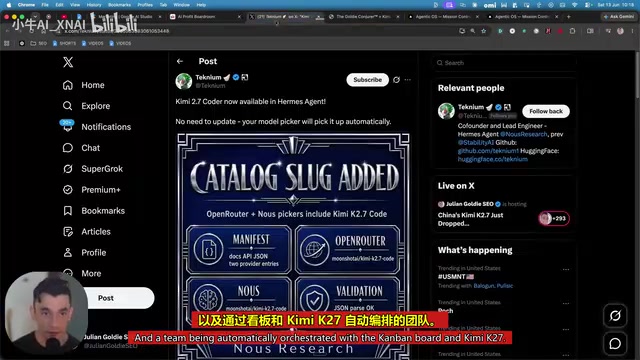
Kimi K2.7 + Hermes Agent Real-World Test: Generate Complete Applications with a Single Sentence
Hands-on test of Kimi K2.7 integrated with Hermes Agent: generate complete 3D games and web OS apps from a single sentence, with benchmark data vs Claude 3.5.
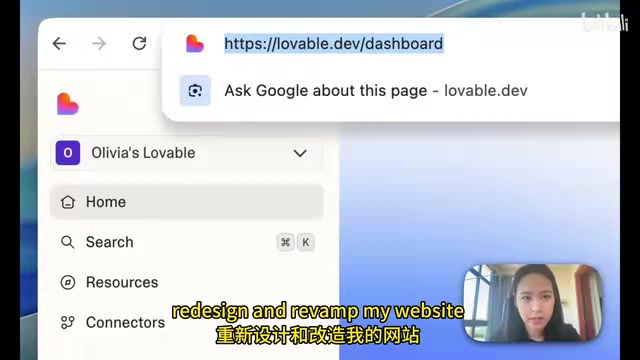
Build a Personal Website with One Prompt Using Lovable: A Zero-Code Free Deployment Guide
Learn how to use Lovable AI to generate a professional personal website with one prompt and deploy it for free. Complete walkthrough from writing prompts to one-click publishing — no coding required.