OpenAI Filed Its IPO Hours After WWDC: A Carefully Orchestrated Timing Play
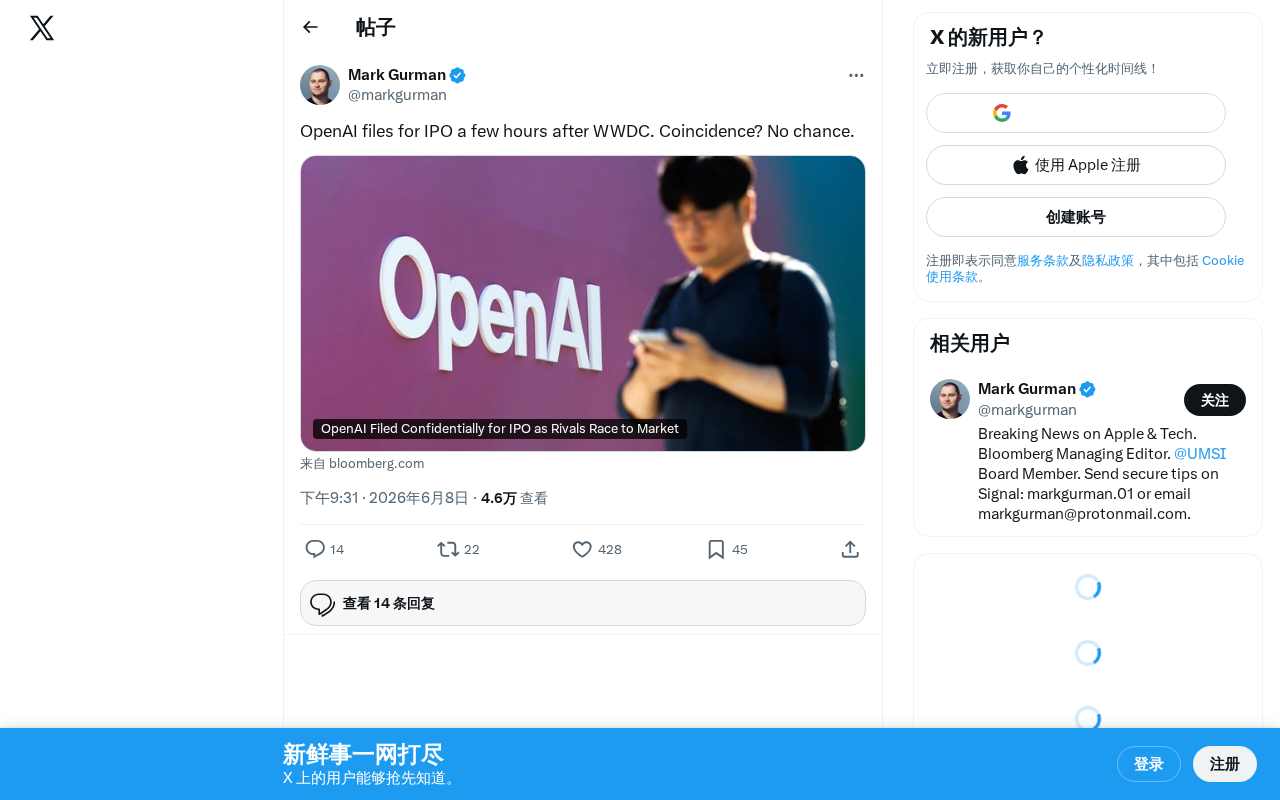
OpenAI strategically filed its IPO hours after WWDC to ride the AI hype wave.
OpenAI filed its IPO just hours after Apple's WWDC 2025, in a carefully timed move to capitalize on peak AI enthusiasm. By riding Apple's AI narrative and filling the post-WWDC news cycle gap, OpenAI maximized media coverage and investor attention. The IPO marks the company's full transformation from nonprofit to public tech giant and could trigger a broader wave of AI company listings.
Event Overview
OpenAI chose to file its IPO (Initial Public Offering) just hours after Apple's WWDC 2025 concluded, a timing decision that sparked widespread discussion across the tech world. As one Twitter commenter put it bluntly: "Coincidence? No chance."
This was no coincidence — it was a precisely calculated capital markets maneuver. OpenAI is riding the wave of AI hype generated by Apple's WWDC to build momentum for its own IPO.
Why Did OpenAI File Its IPO Right After WWDC?
Riding Apple's AI Narrative
Every year, WWDC is a marquee event for the global tech industry, drawing hundreds of millions of eyeballs to Apple's latest products and technologies. WWDC 2025 was heavily focused on AI-related features and strategic initiatives. With global media, investors, and the public all fixated on the narrative of "how AI will change everything," OpenAI seized this window to file its IPO application, maximizing its ability to ride the wave of public discourse.
Investor confidence and enthusiasm for the AI sector peaks right after WWDC — and that's exactly the market sentiment OpenAI wanted to capture.
Filling the News Cycle Gap
After WWDC wraps up, tech media enters a "content hunger" phase — the major WWDC stories have already been filed, and editors are looking for the next blockbuster topic to fill their pages. OpenAI's IPO news dropped right into that gap like a bombshell, virtually guaranteeing headline-level coverage.
This kind of "news cycle management" is a PR strategy commonly employed by top Silicon Valley companies, and OpenAI clearly knows the playbook well.
The Strategic Calculus Behind OpenAI's IPO
A Complete Transformation from Nonprofit to Public Company
OpenAI's IPO marks the company's full transformation from its origins as a nonprofit AI research organization into a profit-driven, publicly traded tech giant. This shift has been years in the making: first came the creation of a "capped-profit" subsidiary, then a recent corporate restructuring — and the IPO is the final destination on that path.
For Sam Altman and OpenAI's leadership, going public means more than just accessing a larger pool of capital. It means securing a continuous supply of ammunition in the AI arms race against competitors like Google, Meta, and Anthropic. The compute required to train next-generation large models demands astronomical investment, and private fundraising alone is no longer sustainable.
Maximizing Valuation and Market Expectations
OpenAI's private valuation had already reached the hundreds-of-billions-of-dollars range. Going public at the peak of the AI boom allows the company to maximize its IPO valuation. WWDC served as a shot of adrenaline for the entire AI sector — Apple's full embrace of AI sent a clear signal to the market: AI is not a bubble; it's the core driver of the tech industry for the next decade.
Far-Reaching Implications for the AI Industry
The Beginning of an AI IPO Wave
OpenAI's IPO could very well kick off a wave of AI company listings. Anthropic, xAI, and others are watching closely — once OpenAI successfully goes public and achieves a strong valuation, other AI unicorns will accelerate their own IPO timelines. This will reshape the entire capital landscape of the AI industry.
Competitive Dynamics and Commercialization Pressure
As a public company, OpenAI will face the pressure of quarterly earnings reports and will need to prove its ability to monetize to public investors. This could push OpenAI to pursue more aggressive product monetization strategies, and it also means its research direction may increasingly be driven by commercial interests.
Final Thoughts
In Silicon Valley, timing is everything. OpenAI's decision to file its IPO right after WWDC demonstrates not just a deep understanding of capital markets, but a precise read on the rhythm of the entire tech industry. As Apple stoked the flames of the AI narrative, OpenAI stepped in at just the right moment to harvest market enthusiasm — a textbook example of capital markets timing.
The question worth watching next: How will OpenAI's IPO pricing reflect the market's true expectations for the AI industry? That number may well define the next bellwether for tech investing.
Related articles

AI Agent Systematic Learning Path: From Zero to Independent Development
A systematic AI Agent learning path covering core principles, Prompt engineering, RAG, multi-Agent collaboration, and hands-on projects for beginners.
Kimi K2.7 + Hermes Agent Real-World Test: Generate Complete Applications with a Single Sentence
Hands-on test of Kimi K2.7 integrated with Hermes Agent: generate complete 3D games and web OS apps from a single sentence, with benchmark data vs Claude 3.5.

Build a Personal Website with One Prompt Using Lovable: A Zero-Code Free Deployment Guide
Learn how to use Lovable AI to generate a professional personal website with one prompt and deploy it for free. Complete walkthrough from writing prompts to one-click publishing — no coding required.