OpenAI o3 Diagnoses Rare Childhood Diseases: A Deep Dive into the NEJM AI Study

OpenAI's o3 Deep Research helps diagnose rare childhood diseases in a landmark NEJM AI study.
OpenAI, Boston Children's Hospital, and Harvard published a study in NEJM AI demonstrating how the o3 Deep Research model helps clinicians solve previously undiagnosed rare childhood disease cases. By combining deep reasoning with large-scale literature retrieval, the AI assists doctors in identifying overlooked clues and generating new diagnostic hypotheses, bringing long-awaited answers to families on years-long diagnostic odysseys.
Research Background: The Dilemma of Rare Disease Diagnosis
Rare disease diagnosis has long been one of the most challenging problems in medicine. For families with children affected by rare diseases, the lengthy diagnostic process often means years or even longer of waiting—a phenomenon known in medicine as the "diagnostic odyssey." According to Global Genes, rare disease patients wait an average of 5-7 years from symptom onset to correct diagnosis, during which they may see 7-8 different specialists and receive 2-3 misdiagnoses. In the United States, a rare disease is defined as one affecting fewer than 200,000 people, while in the EU the threshold is a prevalence below 1 in 2,000. Because individual rare diseases affect so few patients, most clinicians may never encounter a specific rare disease throughout their entire career, making experience accumulation virtually impossible. Furthermore, approximately 80% of rare diseases have a genetic basis, but interpreting genetic variants is itself a highly complex task—many variants have unclear clinical significance (so-called "variants of uncertain significance," or VUS). Many cases remain unresolved even after multiple rounds of expert consultation, becoming medical "cold cases."
Recently, a research team from OpenAI, Boston Children's Hospital, and Harvard University published a landmark study in the top-tier medical AI journal NEJM AI. Boston Children's Hospital is one of the world's premier pediatric medical institutions, consistently ranked as the best children's hospital in the United States by U.S. News & World Report. Its Undiagnosed Diseases Program brings together multidisciplinary expert teams in genetics, genomics, and metabolic medicine, specifically handling difficult cases that other medical institutions cannot diagnose. The hospital is also a pioneer in genomic medicine—its Manton Center for Orphan Disease Research and Individualized Medicine has extensive experience in the clinical application of whole-genome sequencing and exome sequencing. This collaboration with OpenAI represents a deep integration of a top-tier clinical institution with cutting-edge AI technology. The study demonstrates how the o3 Deep Research model can help clinicians revisit previously unresolved rare childhood disease cases and find answers for families who have been waiting for years.


How o3 Deep Research Breaks Through Rare Disease Diagnostic Bottlenecks
The Unique Capabilities of o3 Deep Research
The core tool of this study is OpenAI's o3 Deep Research model. Unlike conventional large language models, Deep Research possesses deep reasoning and large-scale literature retrieval capabilities, enabling systematic searching and cross-referencing across vast medical literature.
From a technical architecture perspective, o3 Deep Research is an AI system with "deep research" capabilities launched by OpenAI in 2025, built on top of the o3 reasoning model. Unlike traditional large language models (such as GPT-4) that primarily rely on pre-trained knowledge, Deep Research can actively initiate multiple rounds of web searches during reasoning, retrieving and integrating the latest information from professional medical databases such as PubMed, OMIM (Online Mendelian Inheritance in Man), and ClinVar (Clinical Variants database) in real time. Its core technical advantage lies in the deep fusion of Chain-of-Thought reasoning with Retrieval-Augmented Generation (RAG)—the model can not only search literature but also establish logical connections between search results and identify cross-literature pattern matching. This capability is particularly critical in scenarios like rare diseases that require cross-disciplinary knowledge verification.
This capability is especially crucial for rare disease diagnosis—relevant literature for rare diseases is often scattered across different journals and databases, making comprehensive coverage nearly impossible through human effort alone. The research team submitted previously undiagnosed rare childhood disease cases to o3 Deep Research for analysis—cases that had already undergone repeated discussion by multiple experts without reaching a definitive diagnostic conclusion.
Bringing Definitive Answers to Families Who Have Waited for Years
The results showed that o3 Deep Research can help clinicians rediscover overlooked clues, propose new diagnostic hypotheses, and successfully find answers in some cases. This means families who have been waiting for years finally have the opportunity to receive a definitive diagnosis—which matters not only for treatment planning but also for the family's understanding of the disease and future planning.
One notable detail: the study explicitly emphasizes that AI "helped clinicians" rather than "replaced clinicians." Throughout the entire process, o3 Deep Research served as a powerful assistive tool, with final diagnostic decisions still made by professional physicians.
Why This Study Is Significant
The Authority of NEJM AI Publication
The New England Journal of Medicine (NEJM) is one of the world's most influential medical journals, and its AI sub-journal NEJM AI carries equally high academic authority. Founded in 1812, NEJM is one of the oldest and highest-impact-factor general medical journals in the world (with an impact factor consistently exceeding 150). NEJM AI, officially launched in 2024, focuses on the intersection of artificial intelligence and medicine, inheriting the parent journal's extremely rigorous peer review standards and specifically publishing high-quality research on AI applications in clinical medicine. Publishing in this journal means the research has withstood scrutiny from top medical experts not only in terms of technical innovation but also in clinical effectiveness and methodological rigor. This stands in stark contrast to many medical AI studies published only at computer science conferences, which often lack validation in real clinical settings. The fact that this study was published in NEJM AI itself speaks to the rigor of the research design and the reliability of its conclusions, and represents an important milestone for AI in rare disease diagnosis gaining recognition from a top medical journal.
The Leap from General AI to Specialized Clinical Scenarios
Previously, large language model applications in healthcare were mostly concentrated in relatively simple scenarios such as common disease Q&A and medical knowledge popularization. Looking back at the evolution of AI in medical diagnosis, early expert systems (such as MYCIN in the 1970s) relied on manually written rule bases with limited coverage; after the rise of deep learning in the 2010s, AI achieved breakthroughs in medical image recognition (such as skin cancer detection and diabetic retinopathy screening), but these applications were essentially pattern recognition tasks; since 2023, large language models have begun demonstrating capabilities in medical knowledge Q&A—GPT-4's performance on the United States Medical Licensing Examination (USMLE) already exceeds the human average. However, there is an enormous gap between answering standardized exam questions and solving complex real-world diagnostic problems.
Rare disease diagnosis is an extremely complex task requiring the model to simultaneously possess deep reasoning, cross-disciplinary knowledge integration, and large-scale literature retrieval capabilities. The model needs not only to "know" medical knowledge but also to generate and verify hypotheses from incomplete, ambiguous, or even contradictory clinical information—precisely the technical threshold that o3 Deep Research aims to cross.
The successful application of o3 Deep Research in this scenario marks a critical step forward for AI from general medical assistant to specialized clinical decision support tool.
Potential Impact on the Global Rare Disease Research Ecosystem
There are approximately 7,000 known rare diseases worldwide, affecting about 300 million people, with a large proportion of cases facing diagnostic difficulties. Of these 7,000 rare diseases, fewer than 5% have FDA-approved treatments. The core challenge facing rare disease research is "fragmentation"—patients are scattered around the world, and the number of cases any single research center can accumulate is extremely limited, severely constraining understanding of disease natural history and the conduct of clinical trials.
In recent years, multiple international collaborative projects have attempted to break through this impasse, including the NIH's Undiagnosed Diseases Network (UDN), the European Union's European Reference Networks (ERNs), and the International Rare Diseases Research Consortium (IRDiRC). These projects have made significant progress through data sharing and cross-national collaboration, but approximately 50% of patients with suspected genetic diseases still cannot obtain a definitive molecular diagnosis after whole-exome sequencing.
If the o3 Deep Research methodology can be broadly applied, it has the potential to fill this gap through automated literature mining and phenotype-genotype association analysis, systematically accelerating the rare disease diagnostic process, shortening patient wait times, and even driving the discovery of new rare disease causative genes and pathogenic mechanisms.
Issues to Address for Broader Implementation
Despite the exciting nature of this research, several key issues need to be resolved for practical deployment:
- Sample Size and Reproducibility: Currently available public information has not disclosed detailed case numbers or specific diagnostic success rates. Larger-scale validation studies are needed to confirm the generalizability of the results.
- Patient Data Privacy and Compliance: Rare disease patient data is extremely sensitive. How to fully leverage AI capabilities while protecting patient privacy is a core issue that must be addressed for practical deployment. Privacy protection for rare disease patient data faces unique challenges: because patient populations are so small, even after de-identification, the combination of clinical features of rare disease patients may itself be highly identifiable. At the regulatory level, the U.S. HIPAA (Health Insurance Portability and Accountability Act) and the EU's GDPR (General Data Protection Regulation) set strict requirements for health data processing. At the technical level, privacy-preserving computing technologies such as Federated Learning, Differential Privacy, and Homomorphic Encryption are being explored for medical AI scenarios, enabling models to learn and reason without directly accessing raw patient data. Additionally, when AI systems need to retrieve external databases in real time, ensuring that the query process itself does not leak patient information is also a technical issue requiring careful design.
- Clinical Implementation Pathway: From research paper to routine clinical use, multiple steps are still needed including regulatory approval, clinical workflow integration, and physician training.
Conclusion
This study, jointly completed by OpenAI, Boston Children's Hospital, and Harvard University, demonstrates the enormous potential of AI deep reasoning capabilities in one of medicine's most challenging domains—rare childhood disease diagnosis. o3 Deep Research is not merely a technological breakthrough; it brings tangible hope to families enduring the agony of prolonged diagnostic waiting.
As AI technology continues to advance and clinical validation deepens, we have reason to expect that more unresolved rare disease "cold cases" will be cracked one by one, and more families will benefit.
Related articles

Ponytail Plugin for Claude Code Tested: Dramatically Less Code, 50% Lower Costs
Real-world testing of Claude Code plugin Ponytail: YAGNI decision ladder dramatically reduces AI-generated code, cutting costs 47%-77% with weather dashboard comparison and benchmark analysis.
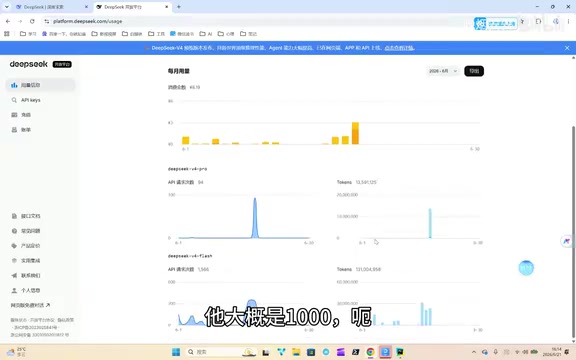
DeepSeek + Resonix: A Low-Cost AI Coding Solution — 150 Million Tokens for Just $1.10
Real-world test: DeepSeek API + Resonix coding tool consumed 150M tokens for just $1.10. Deep dive into DeepSeek pricing, Resonix's 95% cache hit rate, and honest comparison with GPT models.
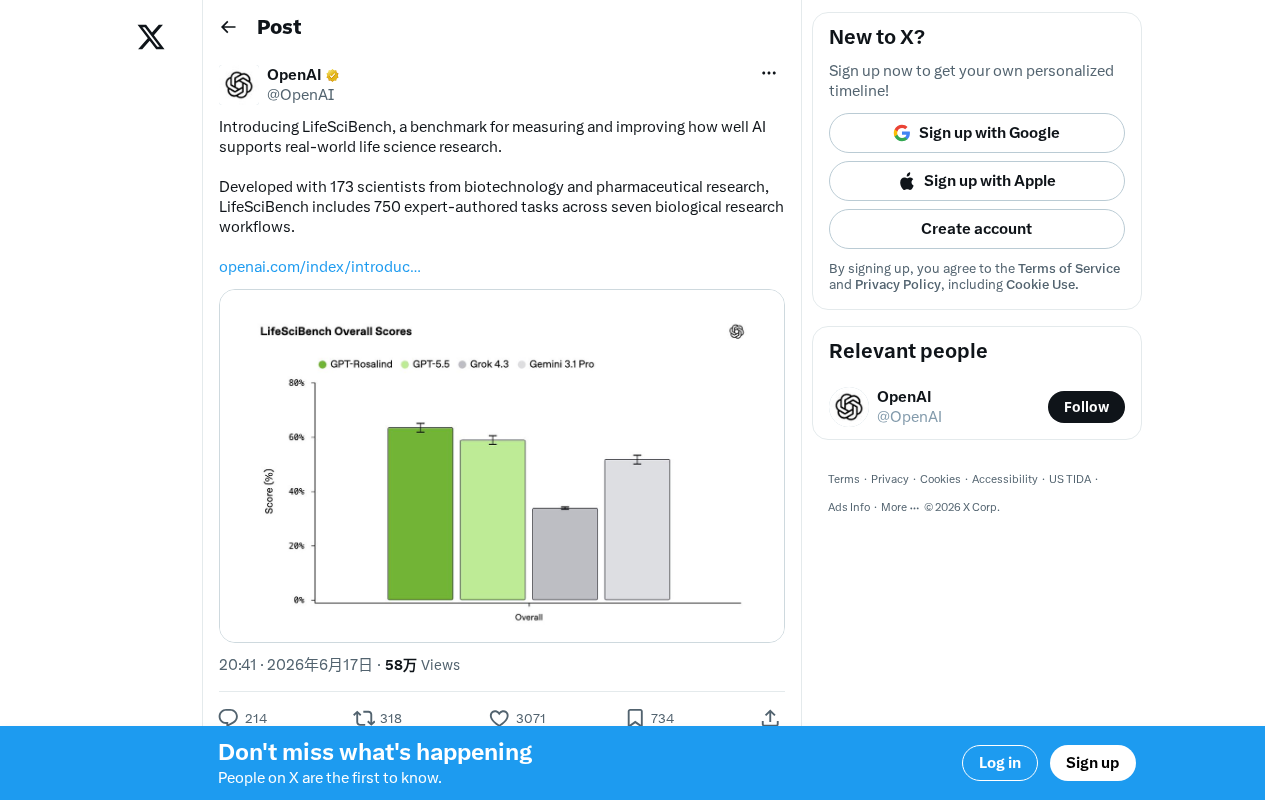
LifeSciBench: A Life Science AI Benchmark Built by 173 Scientists
LifeSciBench is a life science AI benchmark developed by 173 biotech and pharma scientists, featuring 750 expert tasks across seven research workflows.