OpenAI o3 Helps Boston Children's Hospital Tackle Rare Genetic Disease Diagnosis Challenges
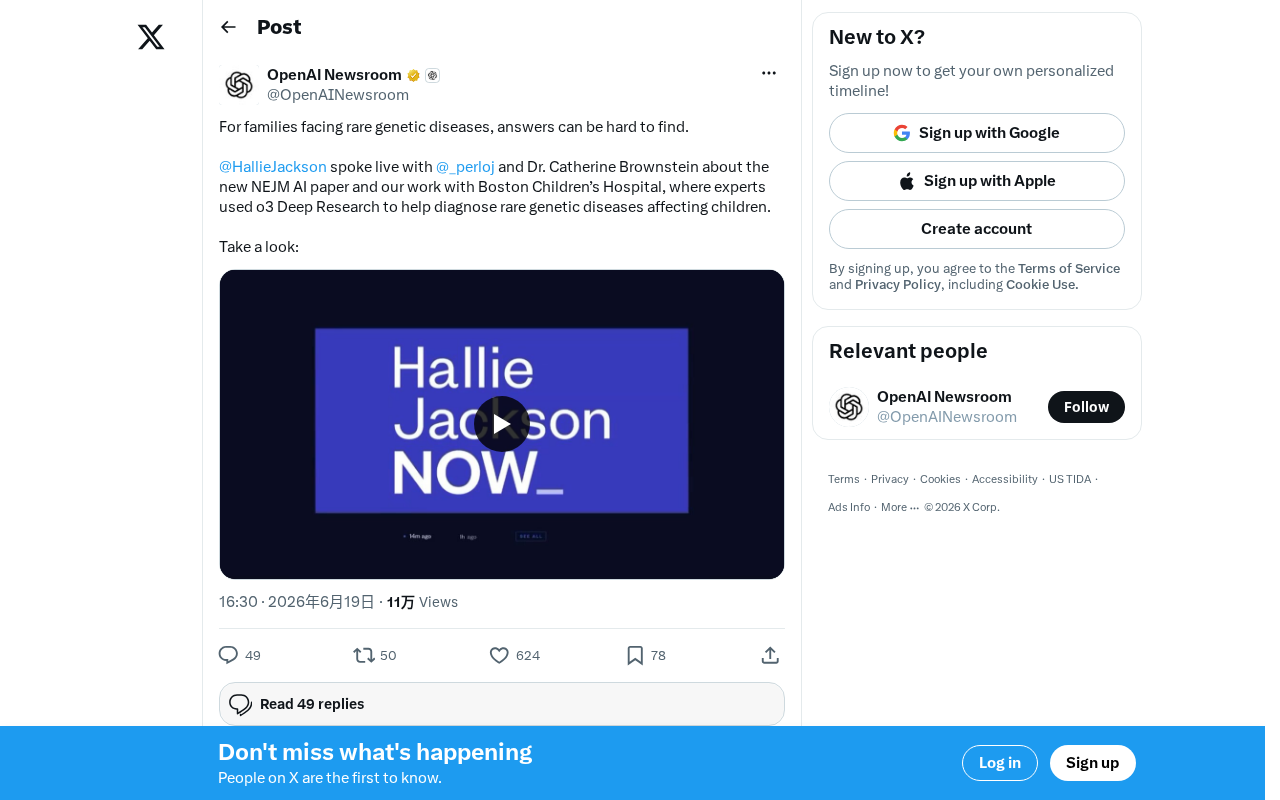
OpenAI o3 Deep Research partners with Boston Children's Hospital to revolutionize rare genetic disease diagnosis.
OpenAI and Boston Children's Hospital have published a study in NEJM AI demonstrating how the o3 Deep Research model can assist in diagnosing rare genetic diseases in children. By leveraging deep reasoning and autonomous literature retrieval, the AI dramatically accelerates the traditionally time-consuming diagnostic workflow while keeping final clinical decisions in the hands of expert geneticists — a human-AI collaboration model that could democratize access to rare disease diagnosis worldwide.
When Rare Disease Families Meet AI: A Collaboration Reshaping the Diagnostic Landscape
For families facing rare genetic diseases, obtaining an accurate diagnosis is often a long and agonizing journey. Many children are shuttled between hospitals for years without ever receiving a clear answer. However, a joint research effort by OpenAI and Boston Children's Hospital is bringing real hope to this predicament.
Recently, OpenAI shared the latest progress of this collaboration on social media. NBC News anchor Hallie Jackson conducted an in-depth on-air conversation with OpenAI's Perlo J and Dr. Catherine Brownstein of Boston Children's Hospital, discussing their latest paper published in NEJM AI (The New England Journal of Medicine — AI). The study demonstrates how OpenAI's o3 Deep Research model can assist in diagnosing rare genetic diseases affecting children.
The Core Pain Points of Rare Disease Diagnosis
The fundamental reason rare genetic diseases are so difficult to diagnose lies in their very "rarity." There are over 7,000 known rare diseases worldwide, yet each affects only a tiny number of patients — meaning that even the most experienced genetics specialists may never accumulate enough case experience over an entire career.
Notably, "rare" does not mean small in impact. According to the World Health Organization, a rare disease is generally defined as one with a prevalence of fewer than 5 in 10,000. While the number of patients for any single rare disease is extremely small, the more than 7,000 known rare diseases collectively affect approximately 300 million people globally, with about 80% having a genetic basis. In the United States, the Orphan Drug Act defines a rare disease as one affecting no more than 200,000 people; in the EU, the threshold is no more than 5 cases per 10,000 people. Roughly 50% of rare diseases have onset in childhood, and about 30% of children with rare diseases do not survive past age five. These statistics reveal a cruel paradox: rare diseases are not "rare" in aggregate, yet research resources and clinical experience for each specific condition remain extremely scarce.
The traditional diagnostic workflow typically requires geneticists to manually search vast bodies of literature, cross-reference genetic variant databases, and analyze the correlations between a patient's phenotype and genotype — a process that takes weeks or even months and is highly dependent on the individual expert's knowledge and judgment. Specifically, modern rare disease genetic diagnosis usually begins with whole exome sequencing (WES) or whole genome sequencing (WGS). WES covers approximately 2% of the human genome's coding regions (exons), which contain about 85% of known pathogenic variants; WGS covers all 3 billion base pairs. After sequencing, bioinformatics pipelines align the raw data to a reference genome and identify tens of thousands of variant sites. The critical next step is variant filtering and prioritization — progressively narrowing the pool of candidate pathogenic variants based on variant frequency (occurrence in population databases such as gnomAD), functional predictions (scores from tools like SIFT and PolyPhen-2), and relevance to the patient's phenotype. This process traditionally requires geneticists to manually review multiple databases including ClinVar, OMIM, and HGMD, making it the most time-consuming bottleneck in the entire diagnostic workflow.
For under-resourced healthcare facilities and families in remote areas, access to top-tier genetics expertise is nearly impossible.
How OpenAI o3 Deep Research Steps Into Rare Disease Diagnosis
The core tool in this study is OpenAI's o3 Deep Research model. Unlike conventional large language models, Deep Research possesses deep reasoning and autonomous research capabilities — it can systematically search, read, and synthesize vast amounts of medical literature and genetic database information, simulating an expert-level literature review process.
From a technical architecture perspective, o3 Deep Research is an advanced reasoning model launched by OpenAI in 2025, built on the o-series "Chain-of-Thought" reasoning architecture but augmented with autonomous information retrieval and multi-step research planning capabilities. Unlike standard LLMs that rely solely on training data to generate responses, Deep Research can proactively formulate research plans, retrieve academic literature, databases, and specialized resources from the internet in real time, and then perform multiple rounds of reasoning and cross-validation on the collected information. This "agentic research" paradigm enables it to simulate a human researcher's workflow — formulating hypotheses, gathering evidence, confirming or refuting hypotheses, and iterating deeper — a process that may involve dozens or even hundreds of autonomous retrieval and reasoning cycles.
In the practical application at Boston Children's Hospital, the expert team inputs a child's genomic data, clinical phenotype, and other information into the o3 Deep Research system. The AI model then automatically conducts multiple rounds of deep retrieval and reasoning, searching through massive genetics literature and variant databases for potential pathogenic genes and variant sites, ultimately generating diagnostic recommendations for clinical experts to review.
The value of this human-AI collaboration model lies in the fact that AI handles the most time-consuming aspects of information retrieval and preliminary screening, while the final clinical judgment is still made by experienced geneticists. This not only dramatically shortens the diagnostic timeline but may also uncover rare associations that human experts might miss due to knowledge gaps.
The Academic Significance of the NEJM AI Publication
The publication of these research findings in the AI-focused journal under The New England Journal of Medicine speaks volumes about the study's academic weight. NEJM AI was officially launched in 2024 as a sub-journal of The New England Journal of Medicine (NEJM, with an impact factor exceeding 150), the world's most influential medical journal, and focuses on AI applications in medicine. NEJM itself was founded in 1812 and is one of the oldest and most-cited medical journals in the world, with extremely rigorous peer-review standards and a typical acceptance rate below 5%. The very creation of NEJM AI signifies the medical community's formal recognition of AI technology, and research published in this journal must undergo strict methodological review and clinical significance assessment — lending important academic credibility to this collaborative work.
Dr. Catherine Brownstein, a genetics specialist at Boston Children's Hospital, leads a team with a long-standing commitment to researching undiagnosed rare diseases. This collaboration with OpenAI represents a significant milestone for AI in precision medicine.
It's worth noting a key detail: this is not a story about AI replacing doctors, but rather a quintessential case of AI augmenting physician capabilities. The publication provides peer-reviewed, evidence-based support for AI-assisted rare disease diagnosis and is expected to encourage more healthcare institutions to adopt similar human-AI collaborative diagnostic models.
The Far-Reaching Impact of AI-Assisted Diagnosis on the Rare Disease Field
The significance of this research extends well beyond the technical level. From a broader perspective, it points to several key trends:
Democratization of diagnosis: If AI can "encode" the diagnostic capabilities of top genetics experts into a scalable tool, then even under-resourced healthcare facilities could potentially offer patients high-quality genetic disease diagnosis.
Shortening the diagnostic odyssey: Rare disease patients wait an average of 5–7 years before receiving a confirmed diagnosis. This prolonged wait, known as the "Diagnostic Odyssey," places an enormous psychological and financial burden on families. "Diagnostic Odyssey" is a term specific to the rare disease field, describing the long and tortuous process between symptom onset and confirmed diagnosis. According to data from the Global Alliance for Genomics and Health (GA4GH), rare disease patients see an average of 7–8 different specialists and at least 40% are misdiagnosed at least once during this process. The cost of this journey is staggering: in the United States, a rare disease family's average annual medical expenditure can be 3–5 times that of a typical family; psychologically, the prolonged uncertainty leads to anxiety or depression symptoms in approximately 60% of parents of children with rare diseases. Even more heartbreaking, about 6% of rare disease patients die before ever receiving a diagnosis. AI-assisted diagnosis has the potential to dramatically compress this waiting period, fundamentally changing the fate of these families.
Accelerating the discovery of new disease entities: AI's powerful ability to synthesize literature may help researchers identify previously unrecognized gene-disease associations, expanding the rare disease knowledge graph.
Outlook and Reflections: The Future of AI-Assisted Rare Disease Diagnosis
Of course, AI-assisted rare disease diagnosis is still in its early stages. The model's accuracy, its ability to interpret rare variants, and its generalization performance across different populations all require larger-scale clinical validation. Additionally, how to seamlessly integrate AI tools into existing clinical workflows and how to address the legal and ethical issues surrounding AI diagnostic recommendations are topics that warrant ongoing discussion.
On the regulatory front, AI-assisted medical diagnosis involves complex ethical and legal issues. In the United States, the FDA has established a regulatory framework for AI/ML medical devices, having approved over 900 AI medical algorithms by the end of 2024. However, rare disease diagnostic AI faces unique challenges: due to the scarcity of training data, the traditional large-scale clinical trial validation model cannot be directly applied. Furthermore, when AI-generated diagnostic recommendations conflict with human expert opinions, there is no clear legal framework for assigning liability. The EU's AI Act classifies medical diagnostic AI as a "high-risk" application, requiring strict conditions around transparency, explainability, and human oversight. Striking the right balance between promoting innovation and safeguarding patient safety is a challenge that regulatory bodies worldwide are actively exploring.
But there is no doubt that this collaboration between OpenAI and Boston Children's Hospital points us toward an inspiring direction: with AI assistance, rare disease diagnostic challenges once considered "unsolvable" are finding answers, one step at a time. For families searching in the dark, this may be the most precious ray of hope.
Related articles
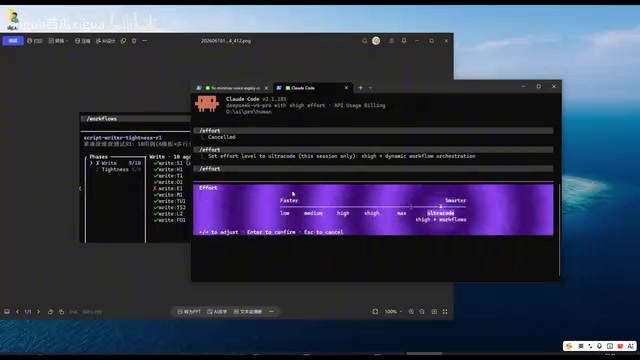
Claude Code Workflow in Action: 68 Sub-Agents Working Concurrently
Hands-on test of Claude Code's Workflow mode with 68 concurrent sub-agents. Covers setup, write-review separation, real concurrency results, and token costs.
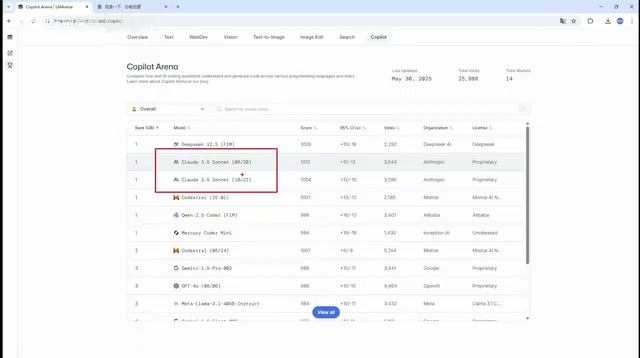
What Is Cursor? A Complete Guide to the AI-Native Programming IDE's Core Features and Use Cases
An in-depth look at Cursor, the AI-native programming IDE, covering intelligent code generation, multi-model support, context awareness, and how it compares to traditional IDEs across six key dimensions.
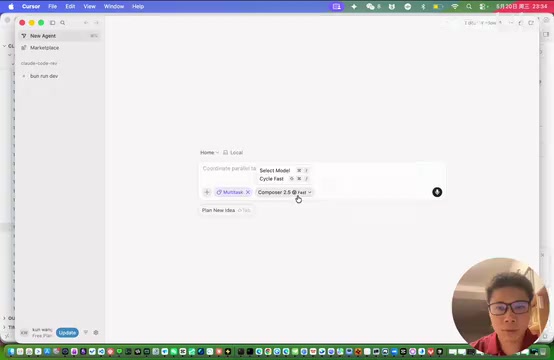
Cursor Composer 2.5: The Secret Behind an Open-Source Model's Reinforcement Training to a Top-3 Coding Benchmark Ranking
Cursor built Composer 2.5 on Kimi K2 open-source model, ranking 3rd on coding benchmarks and surpassing K2.6. Deep dive into Cursor's data flywheel, product architecture, and pricing.