OpenAI's Cash Black Hole: Why $40 Billion in Funding Still Isn't Enough
OpenAI's Cash Black Hole: Why $40 Bill…
OpenAI's $40B fundraise masks a cash crisis that may end in acquisition by Microsoft.
Despite raising the largest private funding round in history, OpenAI faces a slow-motion crisis: much of Microsoft's investment arrives as Azure credits rather than cash, projected cumulative losses reach $143 billion, only 2 of 11 founders remain, and the company lacks any meaningful competitive moat against Google. The most likely outcome is acquisition by Microsoft at far below peak valuation.
The Hidden Crisis Behind the Fastest Growth
When OpenAI launched ChatGPT in 2022, it set a historic record for consumer technology adoption speed. Sam Altman was briefly seen as the prophet of the AI era, sitting before a U.S. Senate hearing and declaring he was building "the most disruptive and dangerous technology humanity has ever created."
Yet, setting aside the technology itself—which is undeniably real—what may actually be an illusion is whether OpenAI can survive long enough as an independent company to profit from it. Peel back the glossy fundraising headlines, and you'll find a company in the grip of a slow-motion crisis. The question was never whether AI would change the world, but whether OpenAI would still be around when that day comes.
The Fundraising Mirage: A Closed Loop of Hundreds of Billions
Media headlines are deeply misleading. Microsoft has poured tens of billions into OpenAI, and Altman raised another $40 billion—the largest private funding round in human history. It looks like cash is abundant, but the reality is far from it.
Azure Credits ≠ Real Cash
A significant portion of Microsoft's investment didn't arrive as cash in the bank, but as Azure cloud service credits—essentially "corporate gift cards" that can only be spent on Microsoft's own platform. OpenAI books it as funding raised, Microsoft records it as cloud revenue, and both sides show growth on paper, but a massive amount of money never actually leaves this ecosystem.
This "closed-loop funding" trick isn't new. During the late-1990s dot-com bubble, startups bought ads from each other and booked them as revenue; in the early 2000s, Enron used "round-trip transactions" to inflate its books; WeWork propped up its valuation through internal financial engineering. The playbook is always the same: it holds up as long as new money keeps flowing in, but the moment inflows slow down, the underlying economic problems are immediately exposed.
What's even more fatal—you can't pay lawyers or office rent with digital coupons. OpenAI must continuously scramble for real cash from external investors just to make payroll every quarter.
Burn Rate: The Largest Loss Machine in Human History
Astronomical Loss Projections
OpenAI's projected annual burn rate starts at $8 billion, with internal forecasts showing rapid escalation to $14 billion and eventually $40 billion. Microsoft filings suggest quarterly losses of approximately $12 billion. According to one set of projections, cumulative losses before reaching profitability will hit $143 billion. No startup in human history has ever bled this much.
The Mathematical Trap of Scaling Laws
The foundational thesis driving the entire AI boom is "scaling laws": bigger models plus more data equals smarter AI. For years this rule held almost without exception, but there's an overlooked trap buried in the math—every doubling of intelligence requires roughly 5x the compute, 5x the energy, and 5x the infrastructure. The capability curve is rising, but the cost curve is rising even faster.
Altman himself has admitted that a single training run now costs over $1 billion, before accounting for salaries and legal fees. NVIDIA Blackwell chips cost tens of thousands of dollars each, and once the next generation arrives, the previous generation of equipment immediately becomes a liability—equivalent to scrapping and replacing an entire fleet every 18 months.
The Overlooked Water Consumption
Purdue University researchers estimate that a simple conversation with ChatGPT (10-50 questions) consumes approximately 500 milliliters of water. Texas data centers alone are estimated to consume 46 billion gallons of water annually, projected to approach 400 billion gallons by 2030. All these resources go toward sustaining a product that loses money on nearly every interaction at the free tier.
The Talent Exodus: Only 2 of 11 Founders Remain
OpenAI was founded by 11 people in 2015. Today, only two founders are still actively working there: Sam Altman and researcher Wojciech Zaremba.
The list of key departures is staggering:
- Ilya Sutskever (Chief Scientist): Left to start a new company focused on safe AI
- John Schulman: Built ChatGPT's research infrastructure, then joined Anthropic
- Mira Murati (CTO): Departed
- Bob McGrew (Chief Research Officer): Departed
- Jan Leike (AI Safety team lead): Resigned and went straight to Anthropic
The Trust Crisis Behind the Departures
According to The Atlantic, Murati reportedly said, "I don't feel comfortable with Sam leading us toward AGI." Sutskever allegedly provided the board with a self-destructing PDF containing Slack screenshots documenting dozens of what he called examples of "lying or toxic behavior."
These aren't disgruntled rank-and-file employees venting—these are the CTO and Chief Scientist of the world's most important AI company telling the board they don't trust their own CEO. The board fired Altman, but days later reinstated him amid employee backlash, and the board that fired him was subsequently restructured.
No Moat: The Most Fatal Structural Weakness
The Red Alert Incident
Altman once sent a company-wide "red alert": Google's Gemini had surpassed GPT-series models on key benchmarks. He privately told employees that Gemini could create "economic headwinds." Shopping agents, health features, personalized assistant projects were all delayed, even advertising plans were shelved, and all engineers were redirected to fortify the flagship product.
Gemini's active users surpassed 650 million, while OpenAI's own traffic showed month-over-month declines on multiple occasions.
Google's Fundamental Advantage
Google doesn't just have better models—it can instantly deploy AI across billions of existing touchpoints: YouTube, Search, Gmail, Android—while funding AI development with its high-margin advertising business. OpenAI has no such safety net: no existing business generating steady revenue, no distribution network built over decades, no switching costs, no proprietary data locking in users, and no network effects.
The moment a competitor offers comparable answers at a lower price—or for free—users will leave. This is the moat that never existed.
Legal Storms and Regulatory Pressure
The Musk Lawsuit
Elon Musk contributed $38 million (roughly 60% of OpenAI's early seed funding) and is now suing the company he helped create. The reasoning is straightforward: he funded a nonprofit meant to benefit humanity, and it turned into a for-profit company valued at $500 billion. The damages sought range from $79 billion to $134 billion. If he wins at the upper end, the payout alone would nearly equal OpenAI's projected cumulative losses.
Regulatory Pressure
Washington and Brussels are investigating whether the Microsoft partnership involves antitrust violations. Legal costs are climbing, compliance expenses are rising, and every hundred million dollars paid to lawyers generates zero revenue.
The Most Likely Ending: Acquisition
By most projections, at its current burn rate, OpenAI's cash reserves will be severely squeezed within the next few years. The most likely outcome isn't a spectacular bankruptcy, but an acquisition.
Microsoft is already deeply intertwined with OpenAI's infrastructure and has been subsidizing its survival through cloud service credits—making it the most natural buyer, acquiring the world's most recognizable AI company at a price far below its peak valuation.
OpenAI proved that scaling laws do work, but it also proved that the AI revolution has fully entered its industrial phase. Success in this field requires not just brilliant research, but sprawling data centers, gigawatts of power, and capital reserves that only sovereign nations and the world's largest corporations can sustain.
The AI startup era may already be over, and the company that started it all may not survive to witness what comes next.
Related articles

CodeGraph: Give Your Coding Agent a Code Map, Save 47% Tokens
CodeGraph is an open-source project with ~40K GitHub stars that uses Tree-sitter to build a local queryable code map, helping Claude Code and Cursor reduce 47% token usage and 58% tool calls.
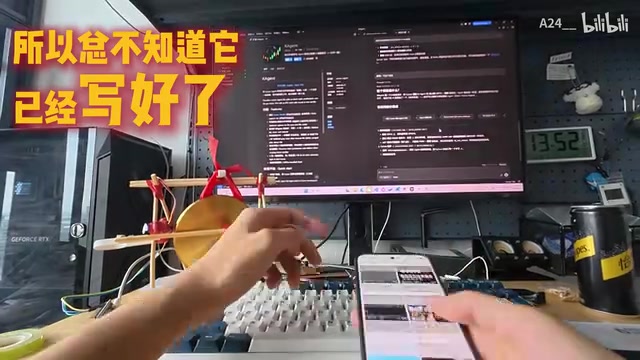
AI Finishes Writing Code, Automatically Strikes a Gong to Alert You: Open-Source Physical Feedback Tool DAgent
A developer built a physical feedback device with chopsticks and a small gong that auto-strikes when AI finishes coding. Now open-sourced as DAgent, it also simulates IPO bell-ringing when creating new files.

Level Up Claude Code: Building an Enhanced Plan Mode with Grill Me
Learn how to install and use the Grill Me Skill for Claude Code, replacing AI guesswork with structured questioning to clarify requirements before generating execution plans.