OpenAI's Financial Services Strategy Explained: GPT-5.5 Capabilities and European Inference Residency in Detail

OpenAI unveils GPT-5.5 financial capabilities, European inference residency, and enterprise AI strategies for banking.
OpenAI's financial services GTM lead Katy Elkin outlined the company's strategy for AI in banking, featuring GPT-5.5's advanced financial analysis capabilities, the launch of European Inference Residency for regulatory compliance, and the Trusted Access Program for cybersecurity. Case studies from NatWest (200+ AI projects), CBA (50,000 employee deployment), and Revolut (end-to-end AI integration) demonstrate how financial institutions are using AI to transform workflows, multiply workforce output, and democratize personalized services.
Overview
Katy Elkin, GTM Lead for OpenAI's Financial Services team, delivered a comprehensive presentation to financial executives outlining three core application directions for AI in financial services. She also announced several major product updates, including GPT-5.5's financial capabilities, European inference data residency, and the Trusted Access Program for enterprise clients.
This presentation not only showcased OpenAI's deep commitment to the financial industry but also revealed a key trend: AI is evolving from an auxiliary tool into a critical driver of competitive advantage for financial institutions.



Three Core Questions Facing Financial Institutions
Katy noted that in working with leading global financial institutions, executives consistently raise three key questions:
- How to redefine the workforce so that AI drives greater business value?
- How to restructure workflows to more efficiently capture AI's impact?
- How to embed AI into products to gain an edge in fierce market competition?
These three questions essentially correspond to three levels of AI penetration in the financial industry—from internal efficiency gains, to process reengineering, to customer-facing product innovation.
AI-Driven Financial Workflow Transformation
NatWest Bank: 200+ AI Projects in Practice
Risk management, compliance review, and operational processes have long been constrained by high costs and complexity. AI is now helping banks fundamentally redesign their business architecture. UK-based NatWest Bank is a prime example—they've partnered deeply with OpenAI to help customers navigate financial challenges ranging from mortgages to everyday money management.
NatWest is currently exploring over 200 AI projects, with more than 25 already in production. Notably, their AI assistant Quora Plus has improved customer satisfaction scores by over 150%—a remarkably impressive figure.
From Process Optimization to Process Reinvention
The key insight here is that AI isn't merely making incremental improvements to existing processes—it's enabling banks to "design workflows from scratch" and operate in entirely new ways. This means traditional financial institutions have the opportunity to shed the burden of legacy systems and rebuild more efficient, more agile business architectures.
The Workforce Multiplier Effect: How AI Empowers Financial Teams
CBA (Commonwealth Bank of Australia): AI Adoption Across 50,000 Employees
The Commonwealth Bank of Australia (CBA), the country's largest bank, has deployed ChatGPT Enterprise to 50,000 employees. Their core strategy is building "AI fluency"—enabling teams to proficiently use ChatGPT, custom applications, and custom Agents in daily work across customer service, fraud detection, digital banking, and operations.
Additionally, CBA has partnered with OpenAI to provide cybersecurity protection programs for over 1 million small businesses. Katy specifically emphasized that CBA is a benchmark case for regulated banks rolling out AI adoption company-wide.
AI as the "Always-On Colleague" for Financial Professionals
Within financial institutions, AI is becoming an always-on collaborator—executing repetitive tasks, providing data insights, and multiplying team output. This allows top financial talent to dedicate more time and energy to client relationship building and high-value revenue-generating activities, rather than being consumed by administrative work.
AI Redefining the Financial Product Experience
Revolut: End-to-End AI Product Integration
Revolut is working closely with the OpenAI team to embed AI across the entire customer experience chain—from AI-powered financial crime detection systems to their intelligent AI assistant Rita. The collaboration has yielded stronger fraud detection capabilities, reduced operational friction, and faster, more accurate service support for millions of customers.
Democratization of Personalized Financial Services
Katy raised an important point: the level of customized service once reserved exclusively for high-net-worth clients can now be extended to all customers through AI technology. This is essentially the democratization of financial services enabled by AI—it dramatically reduces the marginal cost of personalization, allowing financial institutions to deliver refined customer experiences at scale.
Furthermore, OpenAI is collaborating with clients on several frontier projects including trading AI research, code infrastructure modernization (including COBOL legacy system migration), and personalized wealth management.
GPT-5.5 Core Capabilities and Product Updates Explained
The Most Powerful Model for Professional Work Scenarios
GPT-5.5 is positioned as OpenAI's most powerful model to date, specifically designed for professional work scenarios such as financial analysis, data processing, and code writing. On the GDP-Val evaluation benchmark—a standardized test specifically measuring a model's ability to complete economically valuable work, covering tasks like spreadsheet processing, presentation creation, and deep research—GPT-5.5 demonstrated state-of-the-art performance.
At the same time, OpenAI continues to reduce costs while improving model capabilities, making each generation of models both more intelligent and more cost-effective.
Codex Security and the Trusted Access Program
Addressing the financial industry's extremely high cybersecurity requirements, OpenAI launched Codex Security, a product specifically designed to identify and patch security vulnerabilities in software code. Additionally, OpenAI officially launched the Trusted Access Program, which allows vetted, trusted enterprise clients to access GPT-5.5 cybersecurity models for critical security scenarios such as red team testing and infrastructure vulnerability detection.
European Inference Residency: A Compliance Milestone
For European financial institutions, the most impactful announcement was the first-ever launch of European Inference Residency. This means the GPUs powering AI inference computations will be deployed directly in European data centers—financial data no longer needs to cross borders for inference processing.
Combined with existing data storage residency support and enterprise-grade key management capabilities, European Inference Residency eliminates one of the biggest compliance barriers to AI adoption for strictly regulated European financial institutions. It represents a significant commitment from OpenAI on data sovereignty and privacy protection.
Strategic Significance and Outlook for AI in Financial Services
OpenAI's financial services strategy clearly demonstrates three levels of strategic ambition:
- Infrastructure Layer: Fully meeting regional regulatory compliance requirements through data residency, end-to-end encryption, and enterprise security controls
- Platform Layer: Building an enterprise intelligence platform supporting granular governance, real-time monitoring, and scaled deployment management
- Application Layer: Co-building industry solutions with financial clients, covering the complete chain from internal operational efficiency to external customer-facing products
As Katy stated in her presentation, AI is advancing faster than any technology wave we've seen before, with no signs of slowing down. For financial institutions, "staying at the technology frontier" is more critical than ever. This is no longer a question of "whether to adopt AI," but rather "how to achieve scaled deployment quickly and securely."
Related articles
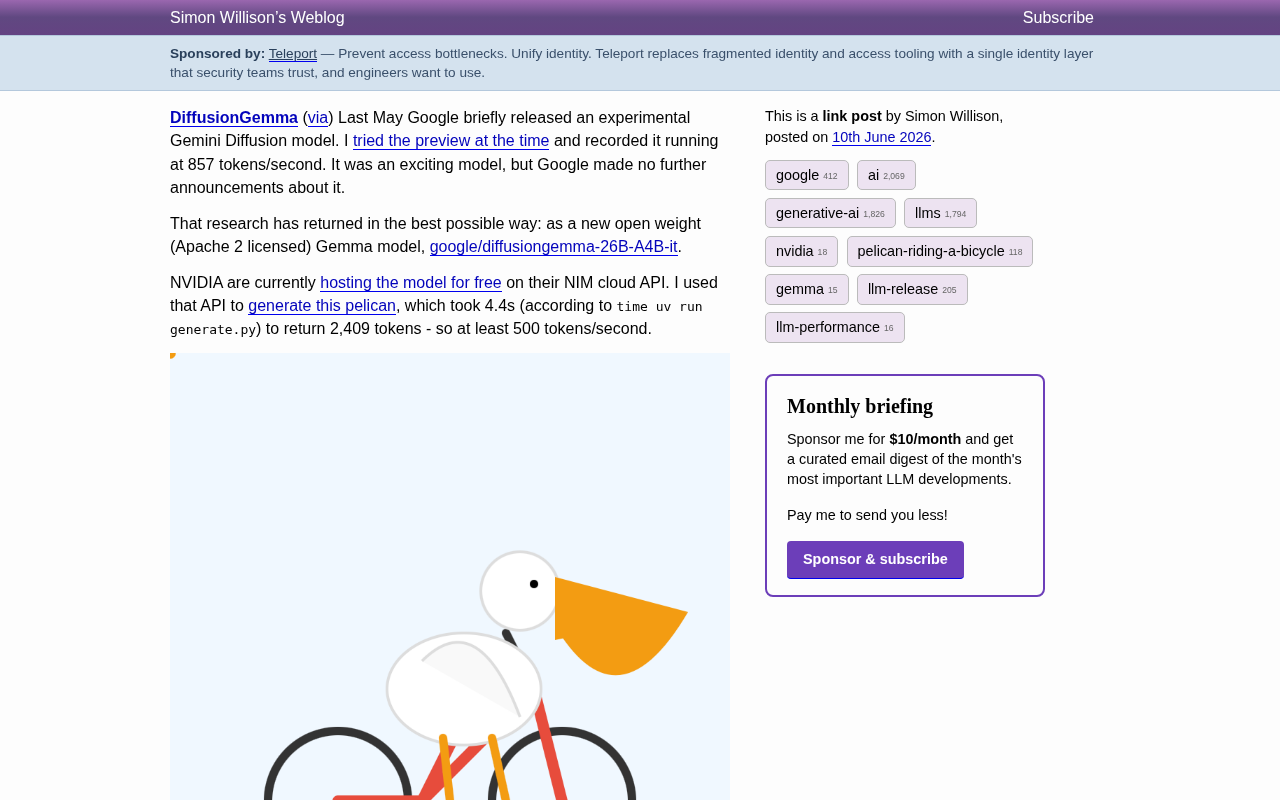
DiffusionGemma: Google's Open-Source Diffusion Language Model Exceeding 500 Tokens/s
Google releases DiffusionGemma, an open-source diffusion language model with Apache 2.0 license. The 26B-parameter MoE model achieves over 500 tokens/s in real-world tests.
Reviving a 28-Year-Old Quake 2 Custom …
Reviving a 28-Year-Old Quake 2 Custom Map with AI: New Possibilities in Digital Archaeology
A developer used AI tools to revive a 28-year-old Quake 2 custom map as a browser game, showcasing AI's new role in digital heritage restoration and game preservation.
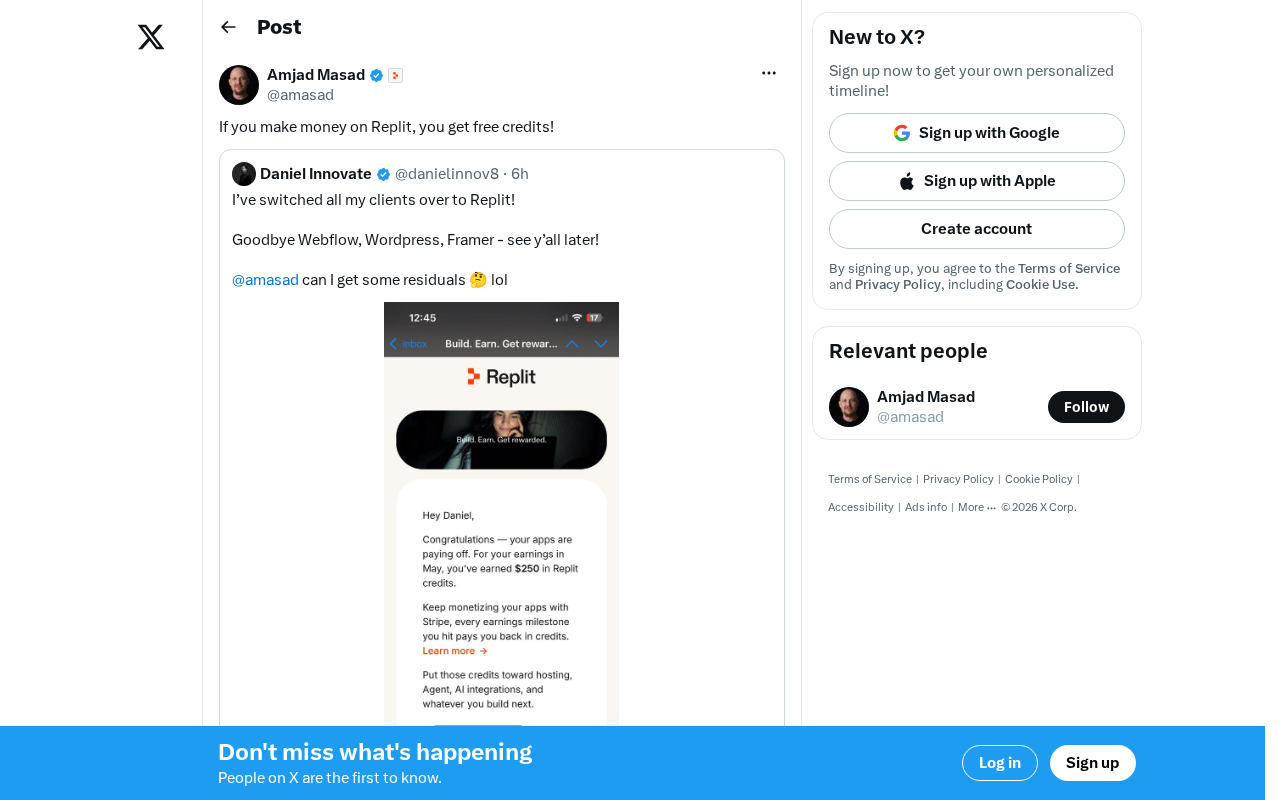
Replit's Revenue Incentive Policy Explained: Earn Money on the Platform, Get Free Credits
Replit's new revenue incentive policy gives developers free credits when they earn money on the platform. A deep dive into its impact on indie developers and the AI platform landscape.