Opus 4.8 vs GPT 5.5 Cost Comparison: Money-Saving Strategies with Tiered Model Pairing
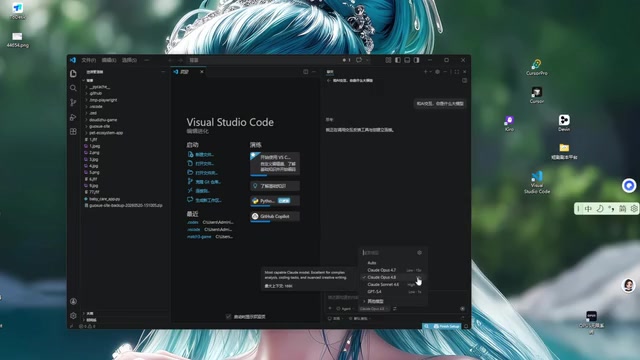
Opus 4.8 costs 15x more than base models — here's how tiered pairing with GPT 5.5 saves money.
Claude Opus 4.8 delivers impressive coding capabilities but at a 15x token consumption multiplier. GPT 5.5 offers fast responses with flexible model pairing support. This article compares their real-world costs and shares practical strategies — tiered usage, model routing in tools like Cursor, and budget monitoring — to help developers balance performance and spending.
Introduction
With Claude Opus 4.8 and GPT 5.5 both going live, the AI coding space is entering another round of model upgrades. However, greater capabilities often come with higher costs. How much do these top-tier models actually burn through in real-world use? And how can you control spending through smart model pairing? This article provides a detailed cost analysis based on hands-on experience.
Opus 4.8 in Practice: Impressive Coding Power but Staggering Token Consumption
Based on real-world usage feedback, Claude Opus 4.8's coding capabilities are genuinely impressive — excelling at code generation, logical reasoning, and complex task handling. However, its token consumption is equally staggering.
According to actual testing data, Opus 4.8's consumption multiplier reaches a whopping 15x, meaning the cost for the same amount of usage is 15 times that of a base model. For developers who use AI coding tools heavily on a daily basis, that number is substantial. Even Opus 4.7 has relatively high consumption — the entire 4.7 and 4.8 series falls into the "heavyweight" consumption tier.
The Math Behind Token Consumption Multipliers
The token consumption multiplier is a core metric for measuring LLM usage costs. The so-called "15x consumption" refers to the billing ratio relative to base models (such as Claude Haiku or GPT-4o mini). LLM billing is typically split into input tokens and output tokens. Premium models not only have higher per-token prices but also tend to generate longer Chain of Thought reasoning when handling complex tasks, significantly increasing output token counts. Taking Opus 4.8 as an example, its output pricing may fall in the $75–150 per million tokens range, while lightweight models might only cost $5–10. When both factors compound, the actual cost gap can far exceed the nominal 15x.

While Opus 4.8's performance on complex coding tasks is genuinely commendable, using it without restraint could result in a monthly API bill that's a real shock.
The Architectural Evolution of the Claude Opus Series
The Claude Opus series is Anthropic's highest-end model product line, focused on complex reasoning and long-context processing. From Opus 3 to the Opus 4.x series, Anthropic has continuously iterated on code comprehension depth, multi-step reasoning accuracy, and instruction-following capabilities. A notable improvement in Opus 4.8 over its predecessors is its holistic understanding of large codebases — it can simultaneously process dependency relationships across dozens of files within an ultra-long context window. This is particularly valuable for enterprise-level architectural refactoring, but it's also precisely this capability that drives the significant increase in token consumption.
GPT 5.5 in Practice: Fast Response Times with Flexible Pairing Options
In comparison, GPT 5.5 is also ready for production use, and it performs excellently in terms of response speed.
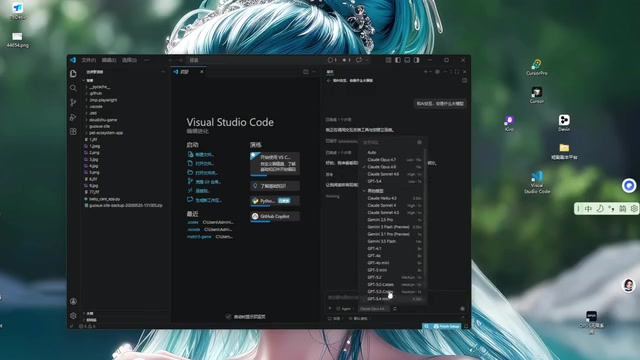
GPT 5.5's Market Position and Technical Characteristics
GPT 5.5 is a significant iteration within OpenAI's GPT-5 series. Compared to pure reasoning models (like the o-series), it emphasizes a balance between response speed and general capability. Version 5.5 features significant optimizations in inference latency, employing more efficient attention mechanisms and inference acceleration techniques that deliver high-quality output at near-real-time speeds. This "fast and accurate" characteristic makes it particularly suitable for coding scenarios requiring frequent interaction — developers don't need to wait tens of seconds to see code suggestions.
A major advantage of GPT 5.5 is that it supports tiered model pairing. Users can flexibly choose different model tiers based on task complexity — routing simple tasks to lightweight models and only calling premium models for complex work — striking a balance between performance and cost.
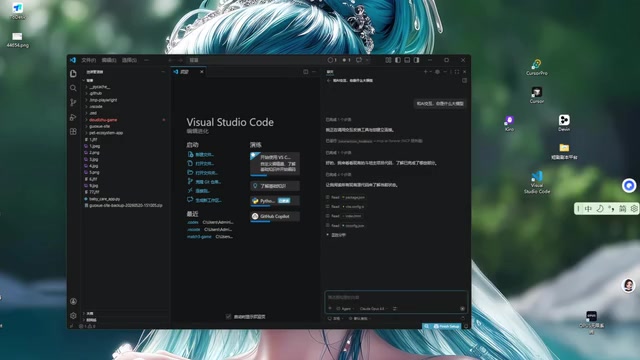
This tiered pairing strategy is crucial for controlling overall AI coding costs.
Cost Optimization Strategies: Tiered Pairing Is the Key to Saving Money
Facing consumption multipliers of 4–5x or even 15x, a well-thought-out model pairing strategy becomes essential. Here are some practical recommendations:
Tiered Usage: Call Different Models Based on Need
Not every coding task requires the most powerful model. Routine code completion, simple function writing, and similar tasks can be handled perfectly well by lower-cost models. Reserve Opus 4.8-level top-tier models for complex architecture design, tricky bug investigation, and similarly demanding scenarios.
Leverage Model Pairing Features in Tools Like Cursor
In AI coding tools like Cursor, you can combine different models. For example, pair Cursor with auxiliary tools (like Cline) to let lightweight models handle routine requests while heavy-duty models focus on core challenges. This dramatically reduces both Opus 4.8 call frequency and overall costs.
Model Routing Mechanisms in AI Coding Tools
The reason next-generation AI coding IDEs like Cursor and Windsurf can implement tiered pairing is their underlying Model Routing mechanism. This mechanism automatically or manually distributes requests to different model tiers based on input complexity, context length, task type, and other dimensions. For instance, simple code completion requests might be routed to a fast, low-cost small model, while complex instructions involving multi-file refactoring trigger a top-tier model. Some tools even incorporate an "intent classifier" that uses a lightweight model to assess task difficulty before the request is sent, then decides which model to actually call — achieving cost optimization without the user even noticing.
Monitor Token Usage and Set Monthly Budget Caps
Developers should build the habit of monitoring token consumption and set reasonable daily or monthly budget limits to avoid unknowingly racking up excessive charges. Most API platforms provide usage monitoring dashboards — using them effectively can help keep spending under control.
Conclusion
Opus 4.8 and GPT 5.5 are both top-tier models in today's AI coding landscape — their capabilities are undeniable. But "powerful" and "expensive" are often two sides of the same coin. For individual developers and small teams, blindly chasing the most powerful model isn't wise. Tiered pairing and on-demand calling is the most pragmatic usage strategy.
As model competition intensifies and technology continues to evolve, the cost of using these premium models will likely decrease over time. But until then, being budget-conscious remains a required course for every AI tool user.
Related articles
AI Coding Test: Building a Multi-Device Synced Teleprompter from Scratch with a One-Sentence Prompt
Zero coding skills, one sentence prompt — AI builds a multi-device synced teleprompter from scratch. Hands-on comparison of Codex, Claude Code, and Gemini across 17 minutes of fully automated development.
Musk's Never Give Up Philosophy: From Near Bankruptcy to Industry Disruption
Decoding the real stories behind Musk's 'I don't ever give up' — from SpaceX's three failed launches to Tesla's production hell, and what his extreme persistence means for tech entrepreneurs.
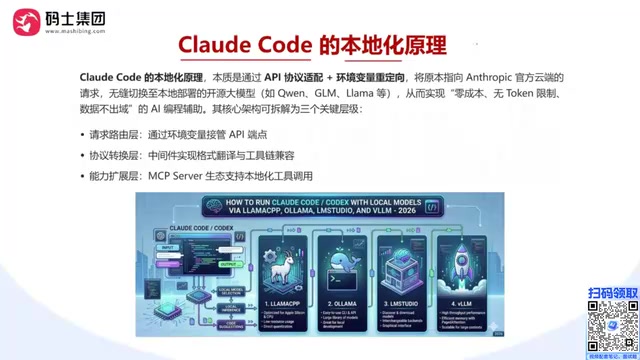
Claude Code with Local LLMs: Token-Free Deployment Guide & Configuration
Learn how to connect Claude Code to local LLMs for token-free AI coding. Covers three-layer architecture, Ollama/LM Studio/vLLM setup, protocol translation, and hardware selection.