Opus 4.8 Lands on Cosmos: Breaking Down Its Long-Running Autonomous Task Execution

Opus 4.8 launches on Cosmos with multi-hour autonomous execution and end-to-end ticket-to-PR automation.
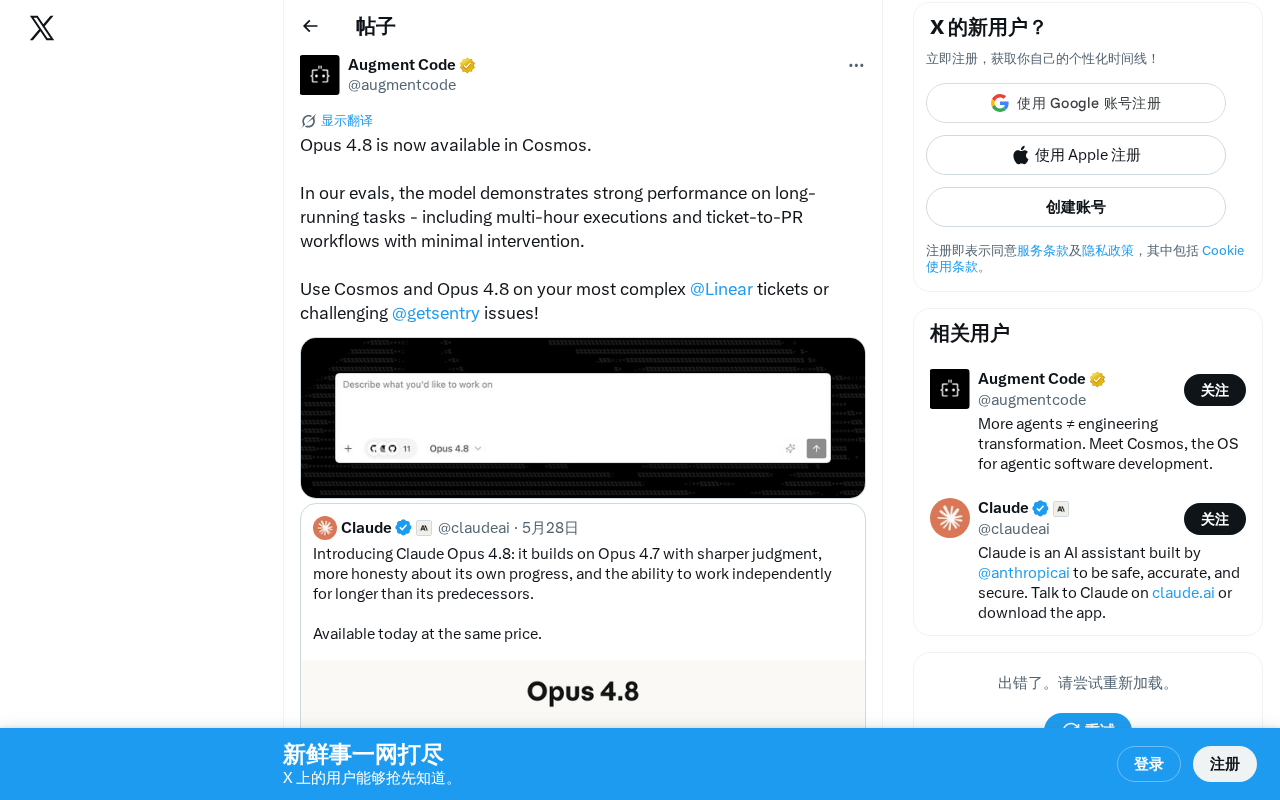
Anthropic's Claude Opus 4.8 is now live on the Cosmos agent platform, with its core highlight being long-running autonomous execution — supporting multi-hour continuous task processing and end-to-end ticket-to-PR automated workflows with minimal human intervention. Deeply integrated with Linear for project management and Sentry for error monitoring, the model marks a significant shift in AI coding assistants from assisted completion to autonomous execution, poised to reshape developer roles and team collaboration.
Opus 4.8 Officially Launches on the Cosmos Platform
Anthropic's Claude Opus 4.8 model is now live on the Cosmos platform. Cosmos is a developer-focused AI agent platform designed to extend the capabilities of large language models beyond simple conversational Q&A into real-world software engineering task execution. Unlike traditional AI chat interfaces, Cosmos emphasizes an "agentic" working mode — where AI doesn't just answer questions but actively operates on code repositories, executes commands, and interacts with external services. The emergence of platforms like this represents a significant step in AI applications transitioning from "tools" to "collaborators."
Within Anthropic's model lineup, the Opus series has always been positioned as the highest-capability tier. Compared to the lighter-weight Sonnet and Haiku series, Opus offers significant advantages in reasoning depth, code generation quality, and long-context understanding — though at a correspondingly higher computational cost. As an iteration of the series, Opus 4.8 builds on its strong reasoning capabilities while specifically reinforcing stability during long-running autonomous execution. According to official evaluation data, the model demonstrates strong performance on long-running tasks, including multi-hour continuous execution and end-to-end ticket-to-PR (Pull Request) workflows, with minimal human intervention required.
Core Capability: Long-Running Autonomous Execution
Multi-Hour Continuous Task Processing
The most striking feature of Opus 4.8 is its performance on long-running tasks. Traditional AI coding assistants often suffer from context loss and logical fragmentation when handling complex, time-consuming tasks. The core technical challenge behind this is context management: large language models have a fixed context window — the maximum number of tokens they can process at once. As task execution time increases and the accumulation of code files, log outputs, and intermediate states grows, it's easy to exceed the context window's limits. Solving this problem typically requires techniques like context compression, segmented memory, and tool calling, enabling the model to maintain an accurate understanding of the overall task state within a limited window.
Opus 4.8 is reportedly capable of stable execution over multiple hours, meaning it can handle larger-scale code refactoring, complex system integration testing, and even architectural adjustments spanning multiple files and modules. This long-running stability is likely the result of Anthropic's ongoing optimization of agentic AI architecture — completing tasks through a "plan-execute-observe-adjust" loop. The model first decomposes high-level tasks into executable sub-steps, then implements them incrementally through tool calls (such as file read/write, terminal command execution, and API requests), observing the results of each step and adjusting subsequent plans accordingly. This architecture relies on the coordinated interplay of the model's planning ability, tool-use ability, and error recovery ability — weakness in any single component could cause long-running tasks to fail.
Ticket-to-PR Automated Workflow
Another key capability is the "ticket-to-PR" workflow — starting from receiving a task ticket, autonomously completing code writing and testing, and ultimately generating a review-ready Pull Request.
Pull Requests (PRs) are the core collaboration mechanism in modern Git-based software development. After completing code changes on an independent branch, developers submit a merge request to the main branch via a PR, where team members can conduct code reviews, discussions, and automated test verification. A high-quality PR typically includes a clear change description, well-organized code splits, passing CI/CD tests, and necessary documentation updates. For AI to autonomously generate PRs that meet these standards, it needs to do more than just write code — it must understand the project's coding conventions, testing requirements, and commit practices.
This end-to-end automation capability dramatically reduces the time developers spend on repetitive work, allowing engineers to focus on higher-level architectural design and product decisions.
Real-World Use Cases and Developer Tool Integration
Deep Integration with Mainstream Development Tools
The Cosmos platform specifically highlights Opus 4.8's integration with two mainstream development tools:
-
Linear: Linear is a project management tool that has rapidly gained adoption among tech companies in recent years, known for its minimalist design and smooth user experience. Compared to traditional project management tools like Jira, Linear places greater emphasis on speed and developer experience, supporting keyboard-shortcut-driven workflows. Its issue system supports rich metadata annotations, including priority, labels, milestones, and relationships. AI integration with Linear means the model can directly read requirement descriptions, acceptance criteria, and contextual information from tickets, translating them into concrete code implementations. Developers can hand off their most complex Linear tickets directly to Opus 4.8, achieving automated flow from requirements to code.
-
Sentry: Sentry is an industry-leading application error monitoring and performance tracking platform, used by hundreds of thousands of development teams to capture production environment exceptions in real time. When an application crashes or errors occur, Sentry automatically collects complete error stacks, user environment information, request parameters, and breadcrumb logs, helping developers quickly identify root causes. Opus 4.8's integration with Sentry enables the model to automatically parse these error reports, understand the context in which exceptions occurred, pinpoint the exact code location, and generate fix patches — a process that might otherwise take developers hours of investigation.
This seamless integration with existing development toolchains means AI coding assistants are no longer isolated tools but are truly embedded in developers' daily workflows.
Industry Trend: AI Coding Assistants Enter the Autonomous Execution Era
From Assisted Completion to Independent Task Execution
The release of Opus 4.8 reflects a significant trend in AI-assisted programming: the shift from "assisted completion" to "autonomous execution." Early AI coding tools primarily offered code completion and simple Q&A functionality — first-generation AI coding assistants like GitHub Copilot mainly provided line-level or function-level code suggestions within the IDE, with developers still needing to review each line and manually integrate suggestions. Today's models are evolving toward independently completing complex engineering tasks, driven by comprehensive improvements in large language models' reasoning capabilities, tool-use abilities, and long-term planning skills.
The breakthrough in multi-hour execution capability means AI is no longer limited to small tasks that can be completed in a few minutes — it can now take on work that would originally require a developer half a day or even a full day. This has profound implications for software development productivity.
Implications for Developers and Teams
For development teams, the maturation of tools like this means:
- Changes in task allocation — More routine development tasks can be delegated to AI, such as bug fixes, feature migrations, test case writing, and other highly standardized work. Team project management processes may need to add "AI-executable" task labels to distinguish between tickets suited for human handling versus AI handling.
- Increased importance of code review — When AI generates large volumes of code, human review becomes the critical quality assurance checkpoint. This requires teams to establish more systematic code review processes, including the organic combination of automated code quality tools (such as static analysis and security scanning) with human review. Reviewers need stronger architectural judgment to evaluate how AI-generated code fits within the overall system.
- Evolution of the engineer's role — From "the person who writes code" to "the person who designs systems and reviews AI output." This doesn't mean programming skills become less important — on the contrary, engineers need a deeper understanding of system architecture, performance optimization, and security to effectively guide AI work and evaluate its output quality.
Summary
The launch of Opus 4.8 on Cosmos marks another step forward in AI coding assistants' autonomy and persistence. While the specific degree of "minimal intervention" remains to be validated by more users, the complete automated workflow from ticket to PR already demonstrates AI's enormous potential in software engineering. For teams focused on improving development efficiency, this tool is well worth keeping an eye on.
Key Takeaways
- Opus 4.8 is now live on the Cosmos platform, featuring long-running task execution capabilities
- Supports multi-hour continuous execution and end-to-end ticket-to-PR automated workflows
- Deep integration with mainstream development tools like Linear and Sentry
- Reflects the industry trend of AI programming shifting from assisted completion to autonomous execution
- Will have a profound impact on developer roles and workflows
Related articles
 Tech Frontiers
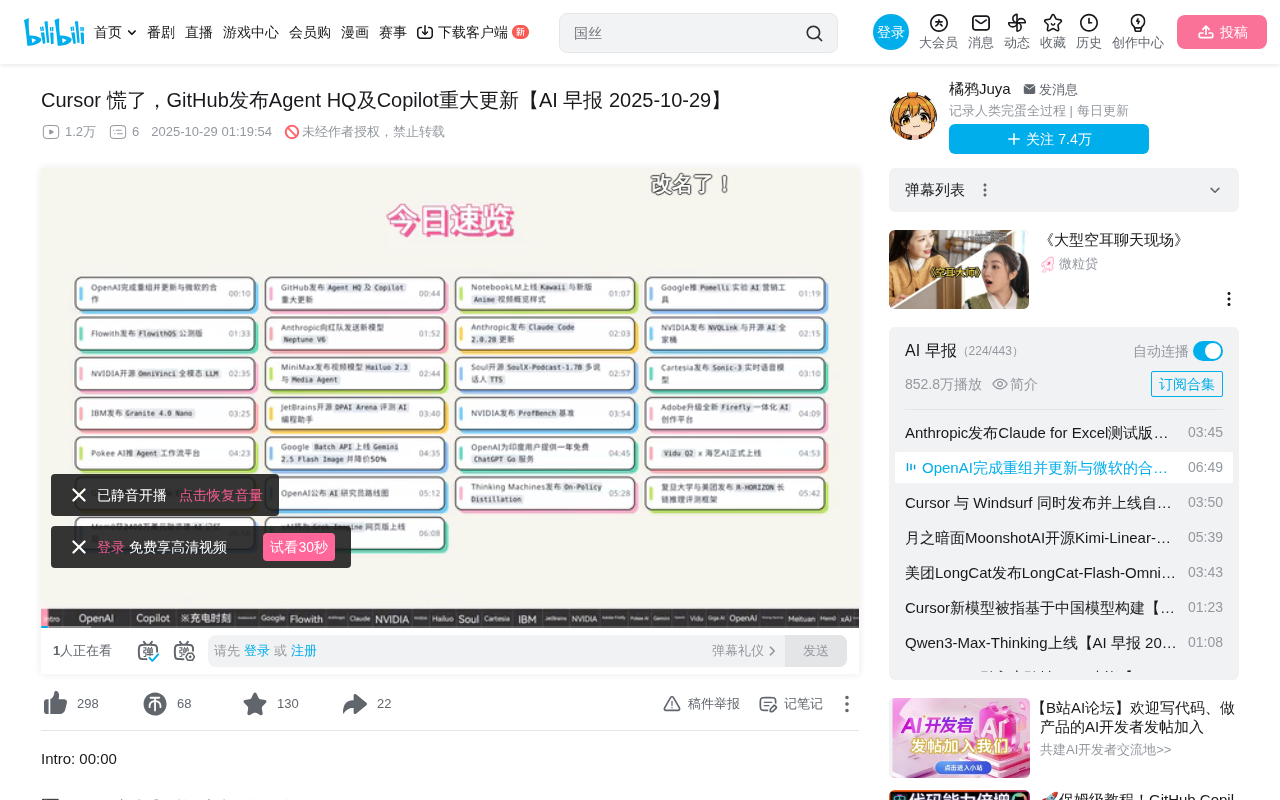
GitHub Agent HQ Launch: AI Coding Tools Enter the Era of Platform Competition
GitHub Universe unveils Agent HQ platform for unified coding agent management, Copilot upgrades with multi-model support. OpenAI completes restructuring, Anthropic tests new model, NVIDIA open-sources AI models.
 Tech Frontiers
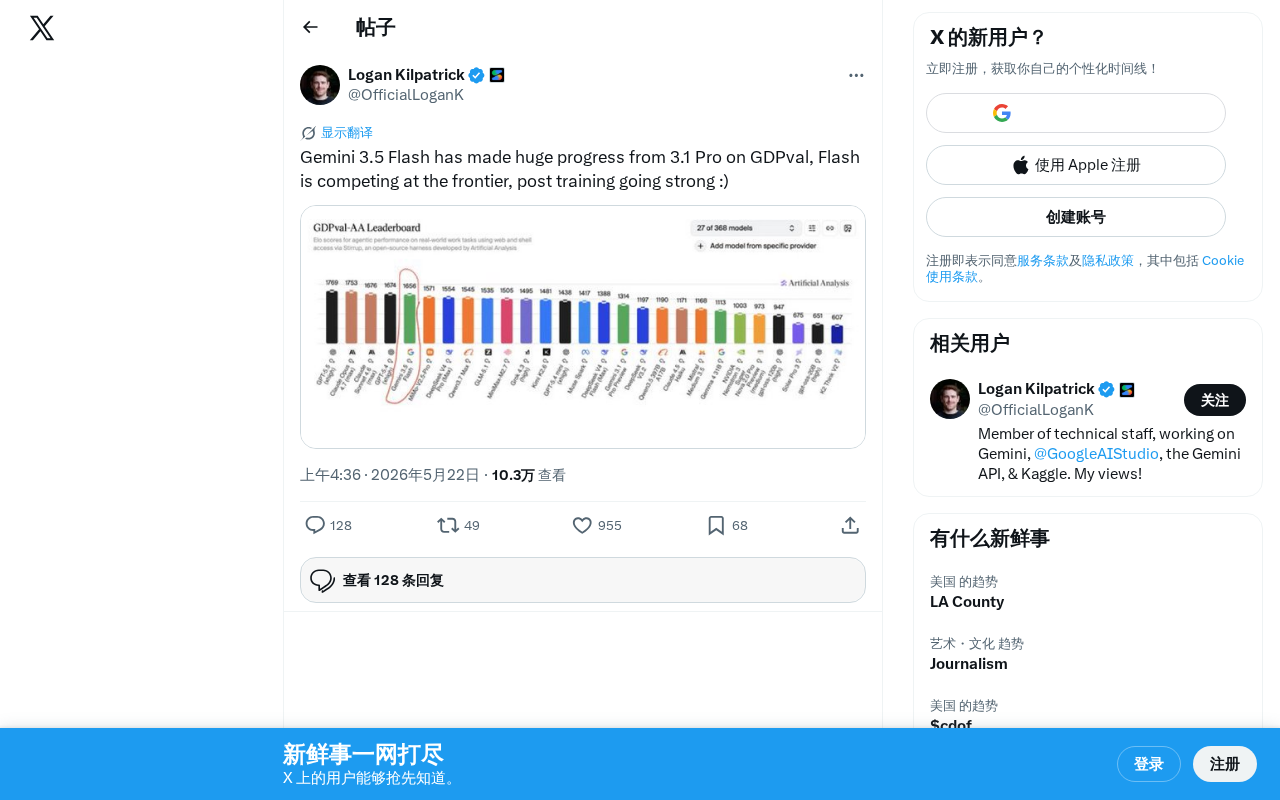
Gemini 3.5 Flash Achieves a Massive Leap on the GDPval Benchmark
Google Gemini 3.5 Flash surpasses Gemini 3.1 Pro on the GDPval benchmark. The lightweight Flash model leverages post-training techniques to approach frontier-level performance, redefining the balance between quality and cost.
 Tech Frontiers
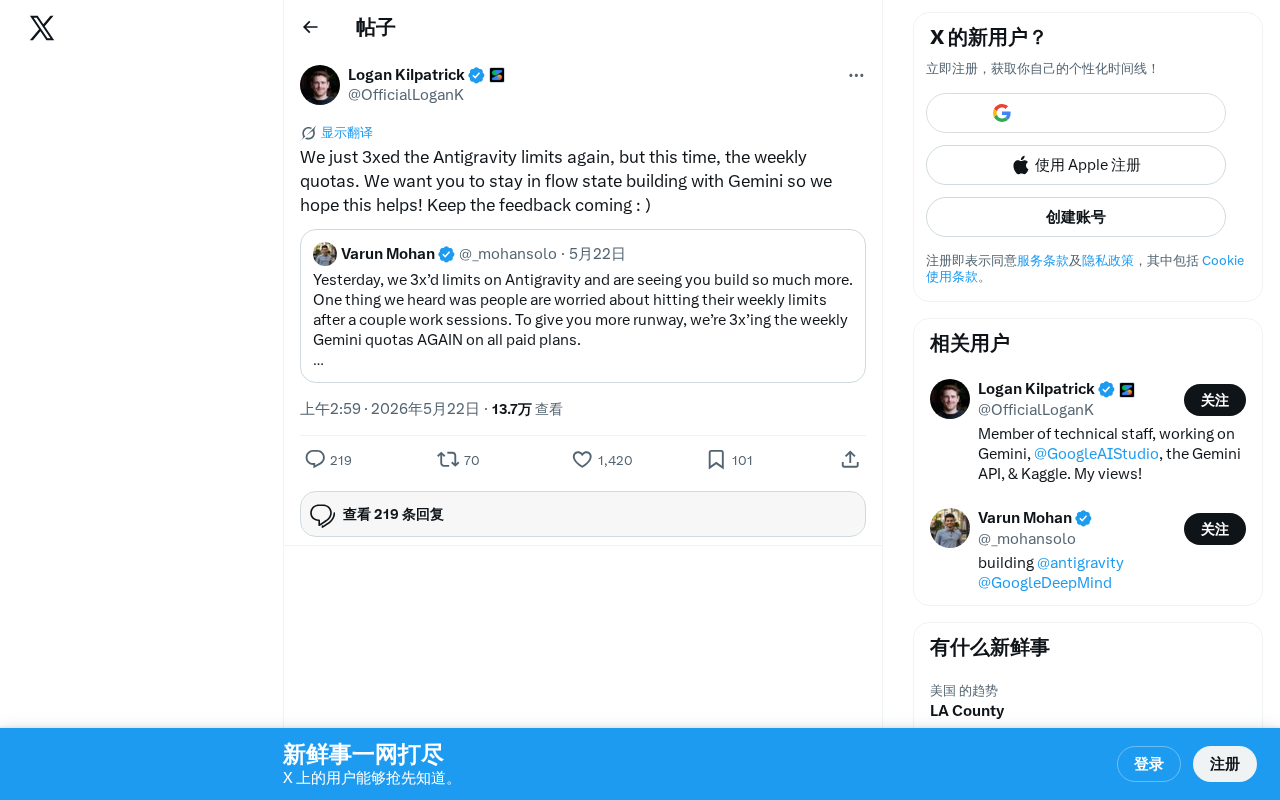
Google Gemini Antigravity Weekly Quota Tripled — AI Coding Without Limits
Google Gemini triples Antigravity weekly quotas following a prior daily quota boost. Analyzing the impact on developers and its strategic significance in AI coding.