Payment Challenges for Overseas AI Subscriptions: A Complete Analysis of Virtual Card Solutions — Pros and Cons
A comprehensive guide to payment solutions for Chinese users subscribing to overseas AI services.
This article addresses the payment challenges Chinese users face when subscribing to overseas AI platforms like ChatGPT and Midjourney. It compares mainstream solutions including proxy payment services, virtual cards, and Apple Gift Cards, analyzing the compliance risks, hidden fees, and security concerns of each approach. The guide also offers evaluation criteria for choosing reliable virtual card platforms and suggests considering competitive domestic AI alternatives.
The Payment Dilemma for Chinese Users Subscribing to Overseas AI Services
As overseas AI tools like ChatGPT, Midjourney, and Claude become increasingly popular, more and more users in China face a practical problem: How do you successfully complete subscription payments on overseas AI platforms?
Domestic bank cards (including Visa/Mastercard dual-branded cards) frequently encounter payment failures and risk control blocks when binding to overseas AI platforms. This has spawned a massive market for "proxy payment" and "virtual card" services. However, this market is a mixed bag, and users need to exercise extra caution when choosing a payment solution.


Current Mainstream Payment Solutions for Overseas AI Subscriptions
Option 1: Proxy Payment Services
There are numerous AI membership proxy payment services on the market, typically priced 30%-100% above official subscription rates. The core risks of these services include:
- Account security concerns: Some proxy services require your account credentials, creating information leakage risks
- Account ban risk: Multiple users sharing a payment method can easily trigger platform risk control mechanisms
- Vendor disappearance: Small proxy vendors offer no guarantees, leaving you with no recourse when problems arise
- Opaque pricing: Exchange rate margins and layered fees mean actual costs far exceed expectations
Option 2: Overseas Virtual Cards
Virtual card solutions have gradually become the mainstream choice in recent years. Typical features of these products include:
- Account activation through passport-based KYC (identity verification)
- Receiving an overseas Visa or Mastercard virtual card number
- After top-up, the card can be used directly for subscription payments on ChatGPT, Midjourney, and other overseas platforms
- Some platforms advertise zero card issuance fees and low transaction fees
Option 3: Other Alternative Approaches
Besides the above two options, there are several other available methods:
- Apple Gift Card top-up: Suitable for iOS subscriptions, relatively simple to operate
- Asking overseas friends to subscribe on your behalf: Higher security but less convenient
- Domestic AI platform mirror sites: Support Alipay/WeChat Pay, but service stability varies widely
Key Issues to Watch When Using Virtual Cards for AI Subscriptions
Compliance and Security Risks
Virtual card services themselves exist in a regulatory gray area. Users must understand the following risks before using them:
- KYC data security: Card activation requires submitting sensitive personal information like passports — make sure to verify the platform's data protection capabilities and compliance credentials
- Fund security: Are funds loaded onto the virtual card protected? Does the platform hold relevant financial licenses?
- Exchange rates and hidden fees: Platforms claiming "zero fees" often manipulate exchange rates, meaning actual costs may not be low at all
- Platform stability: If a virtual card platform ceases operations, whether you can successfully recover your remaining balance is a major concern
How to Evaluate Virtual Card Platform Reliability
When choosing a virtual card platform, consider evaluating from the following dimensions:
- Operating entity background: Is it backed by reputable institutions? Are company registration details and license information verifiable?
- User reputation: What is the platform's long-term reputation in communities? Are there numerous complaints or disputes?
- Fee transparency: Are card issuance fees, top-up fees, transaction fees, and exchange rate spreads clearly disclosed on the official website?
- Customer service responsiveness: Can you get timely technical support when payment issues arise?
- Operating history: New platforms carry significantly higher risks than mature platforms that have been running for years
A Rational Look at Virtual Card Platform "Perks" and "Cashback"
Many virtual card platforms promote through referral code mechanisms and new user benefits. Keep a clear head about these:
- So-called "new user perks" are usually limited in value (e.g., a few dollars in discount coupons) — essentially the platform's customer acquisition cost
- "AI subscription cashback" requires careful reading of activity rules, with focus on cashback conditions and payout timelines
- Referral code promotion means the recommender has a financial interest, so their reviews should be taken with a grain of salt
Core advice: Don't let small perks distract you from evaluating platform security and reliability — don't lose big trying to save small.
A Longer-Term Perspective: Domestic AI Tools Are Worth Watching
Fundamentally, the payment barriers Chinese users face when subscribing to overseas AI services reflect an infrastructure gap in cross-border digital service consumption. The good news is that with the rapid development of China's AI ecosystem, users now have an increasing number of domestic alternatives:
- Domestic large language models: Products like DeepSeek, Kimi, and Tongyi Qianwen have become quite competitive, with daily usage experiences continuously improving
- Domestic AI image generation tools: Multiple platforms now support high-quality image generation, with results comparable to Midjourney in certain scenarios
- Aggregation platforms: Some domestic platforms offer multi-model API access with Alipay and WeChat Pay support, lowering the barrier to entry
For users who genuinely need access to original overseas services, virtual cards are currently one of the more viable options — but thorough risk assessment is essential, and choosing a mature platform validated by the market is critical.
Conclusion
The payment challenge for overseas AI subscriptions is a real pain point for Chinese users, but the choice of solution requires careful consideration. Whether it's proxy payment services or virtual cards, each comes with its own risks and limitations.
Before making a decision, users should thoroughly understand platform backgrounds, fee structures, and potential risks. On the other hand, it's worth keeping an eye on the development of domestic AI tools — in many practical use cases, local solutions are already good enough, and they eliminate all the hassles of cross-border payments.
Related articles

Xiaomi MIMO vs. Huawei Pangu AI Strategy Comparison: The Android vs. iOS Battle of the Agent Era
Xiaomi releases open-source MIMO Code while Huawei enters the Agent era with Pangu. Compare their AI strategies: Xiaomi's Android-like open ecosystem vs. Huawei's iOS-like vertical integration.

What Is Google WebMCP? A Deep Dive into the New Standard for AI Agents to Directly Invoke Web Functionality
A deep dive into Google WebMCP (Web Model Context Protocol): how it works, its technical implementation, and use cases. Learn how WebMCP lets AI Agents directly invoke web tools.
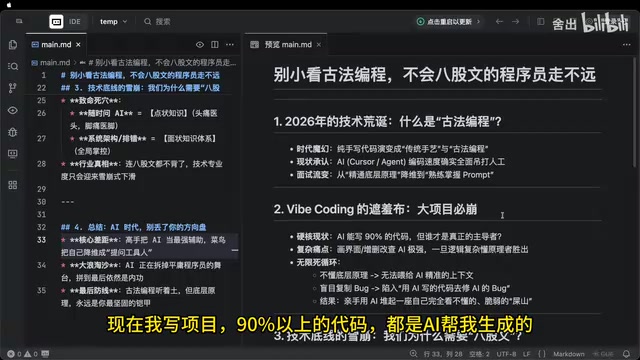
AI Can't Kill Old-School Programming: Why Fundamentals Are Still a Developer's Moat
Vibe Coding is trending, but can it replace solid fundamentals? A deep analysis of why core principles, systems thinking, and knowledge frameworks remain a developer's moat in the AI era.