Replit President Michele Catasta: 50 Million People Building Software with Natural Language

Replit hits 50M users building software via natural language with Claude integration.
Replit President Michele Catasta reveals that over 50 million people now use the platform to build software through natural language powered by Anthropic's Claude. The deep Claude integration enables non-technical users to create full-stack applications by simply describing what they want. Amid fierce competition from Cursor, Windsurf, and GitHub Copilot, Replit differentiates with its fully cloud-based, no-code-knowledge-required approach, positioning itself at the forefront of programming democratization.
From a 16-Year-Old's Dream to Leading an AI Coding Platform
Michele Catasta (@pirroh) currently serves as President and Head of AI at Replit — a platform that enables anyone to build software using natural language. As early as age 16, he set a goal of making software development accessible to everyone. Today, that vision is becoming reality at a remarkable pace.
Replit (originally Repl.it) was founded by Amjad Masad in 2016, initially positioned as a browser-based online integrated development environment (IDE) supporting instant coding, execution, and collaboration across 50+ programming languages. Unlike traditional local IDEs that require tedious environment setup, Replit moved the entire development environment to the cloud — users can start coding the moment they open a browser. Starting in 2023, Replit made a major pivot toward an AI-native direction, launching AI features like Replit Agent and Ghostwriter, redefining the platform from an "online code editor" to an "AI software building platform." As Head of AI, Michele Catasta has been the driving force behind this strategic transformation.
The 50 Million User Milestone: Replit's Deep Integration with Claude
According to the latest data, over 50 million people are now using Claude on the Replit platform to build software. This figure not only reflects the explosive growth of AI coding tools but also signals that the era of "everyone can code" is accelerating.
Replit's deep integration with Anthropic's Claude model allows users to create applications through natural language descriptions alone, without needing to master traditional programming languages. Claude is a family of large language models developed by Anthropic, renowned for its exceptional performance in code generation, long-context understanding, and instruction following. Anthropic was founded in 2021 by former OpenAI Research VP Dario Amodei and others, with a strong emphasis on AI safety research. The company employs alignment techniques such as Constitutional AI to reduce the risk of harmful outputs while maintaining powerful capabilities. In coding scenarios, Claude 3.5 Sonnet and subsequent versions have demonstrated code generation abilities that rival or even surpass GPT-4, making it the preferred underlying model for coding platforms like Replit.
This human-AI collaboration model dramatically lowers the barrier to software development, enabling people from non-technical backgrounds — designers, product managers, entrepreneurs — to independently build software.
The Industry Significance of Natural Language Programming
A Core Driver of Programming Democratization
Replit's trajectory represents a major trend in the AI coding space: evolving from assisting developers in writing code to enabling non-developers to simply "speak" the software they want into existence. This isn't merely a tool-level evolution — it's a fundamental shift in the software development paradigm.
The core technical pipeline of natural language programming involves several key stages: after a user inputs their intent in natural language, a large language model interprets the semantics and generates code, the code executes in a sandboxed environment, and results are fed back to the user for iteration. This process involves critical technologies including intent parsing (converting ambiguous natural language into precise technical requirements), code generation (transforming requirements into executable code), automatic error correction (the model automatically detects and fixes runtime errors), and multi-turn conversational context management. Replit's AI Agent integrates all these capabilities into an end-to-end automated workflow — a user simply needs to describe "I want a web app that tracks my personal expenses," and the system automatically handles full-stack development from the frontend interface to the backend database.
Platform Competition in the AI Agent Era
In the current AI coding landscape, Replit has established a significant user-scale moat through its first-mover advantage as a cloud IDE and its deep integration with Claude. The 50 million user figure demonstrates that Replit maintains strong growth momentum amid fierce competition.
The AI coding tools sector entered an explosive growth phase in 2024–2025, with an increasingly complex competitive landscape. Cursor, developed by Anysphere, is built on a VS Code fork and focuses on a local IDE + AI-assisted developer experience, achieving a valuation exceeding $600 million. Windsurf (formerly Codeium) positions itself as an AI-native IDE emphasizing end-to-end automated coding. GitHub Copilot, as a Microsoft product, leverages GitHub's massive developer ecosystem to dominate the enterprise market. Unlike these tools that primarily target professional developers, Replit's core differentiation lies in its fully cloud-based architecture and product design oriented toward non-technical users — no software installation required, no need to understand code structure. This allows Replit to serve a broader but lower-technical-threshold user base, carving out a unique market position.
Looking Ahead
Michele Catasta's journey from a teenage dream to leading an AI coding platform with 50 million users is itself the best testament to technological idealism. As large language model capabilities continue to advance, the boundaries of natural language programming will expand further, and Replit stands at the forefront of this transformation.
Notably, as the barrier to programming approaches zero, the software industry's value chain will undergo profound restructuring — the core competitive advantage will shift from "can you write code" to "can you ask the right questions" and "can you design excellent user experiences." This means the profile of future software creators will become far more diverse, and Replit is building the infrastructure for this new era.
Key Takeaways
Related articles

Claude Code for Test Development in Practice: An AI Programming Workflow That Doubles Your Efficiency
A practical guide to Claude Code for test development: auto-generating test scripts, Plan Mode workflows, MCP + Playwright integration, and Subagent parallel tasks to build systematic AI-assisted workflows.
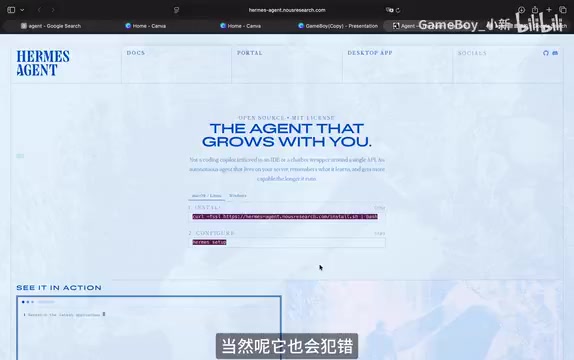
Hermes Agent Hands-On Review: An AI Efficiency Revolution for Indie Game Developers
Indie game developer reviews Hermes Agent vs OpenClaude: intelligent context compression, real-time Memory, remote control via Telegram, and practical use cases in game dev, social media, and email.
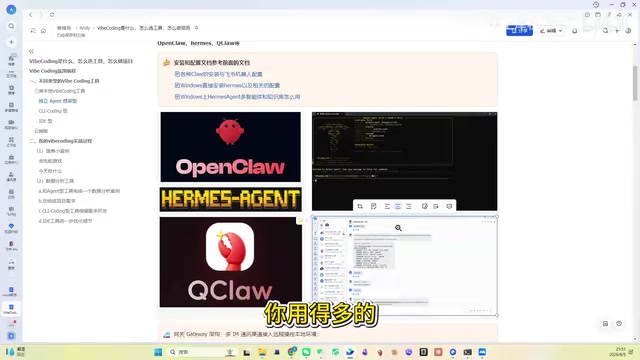
Vibe Coding Beginner's Guide: Tool Selection Across Three Categories with Practical Examples
A comprehensive guide to Vibe Coding's three tool categories: Agent frameworks, CLI Coding, and IDE tools, with practical examples including Snake game and data analysis workbench.