Replit: The Evolution from AI Coding Tool to Startup Accelerator

How Replit is evolving from an online IDE into a startup operating system for indie hackers.
Replit is differentiating itself in the crowded AI coding tool market by focusing not on code elegance but on speed to market and monetization. By encapsulating infrastructure complexity and leveraging AI Agents that act as junior full-stack engineers, Replit targets indie developers and entrepreneurs who want the shortest path from idea to revenue — positioning itself as a startup operating system rather than just another IDE.
Replit's Core Philosophy: Eliminate Distractions, Focus on Monetization
Replit's founder recently shared the platform's core positioning on social media: Remove all distractions and let users focus on what truly matters — getting products to market and generating revenue.
This brief statement precisely captures Replit's differentiation strategy in the AI coding tool competition. While numerous AI code generation tools race to outdo each other on technical benchmarks, Replit has chosen a more pragmatic path — not helping you write the most elegant code, but helping you ship products to market as fast as possible.
From Online IDE to Startup Operating System
Redefining the Developer Experience
The traditional software development workflow is full of "distractions": environment configuration, dependency management, deployment operations, server maintenance… These forms of technical debt consume enormous amounts of time and energy from entrepreneurs. Take a typical web application as an example: developers need to install Node.js or Python runtimes, configure database connections, resolve npm or pip dependency conflicts, write Dockerfiles, set up CI/CD pipelines, purchase and manage cloud servers, and configure domain names and SSL certificates — this work often accounts for 30%-50% of total project time, yet produces zero direct business value.
Replit's approach is to encapsulate all of these layers. Through the Nix package management system and containerization technology, complex infrastructure is abstracted into built-in platform capabilities. Users can open a browser and immediately access a complete development environment, enjoying a one-stop development experience from coding to deployment.
Combined with its AI Agent capabilities, Replit is transforming itself from an online IDE into a "startup operating system." Notably, Replit's AI Agent is not a simple code completion tool — it's an intelligent agent capable of understanding project context and autonomously executing multi-step tasks. Built on large language models, it can parse users' natural language requirements, automatically create file structures, write frontend and backend code, configure databases, handle API integrations, and debug autonomously when errors occur. This is fundamentally different from traditional Copilot-style line-by-line completion — in Agent mode, AI plays the role of a junior full-stack engineer, not a typing assistant. Users simply describe their ideas in natural language, and the AI helps generate a runnable application prototype, while the platform handles all infrastructure-level complexity. The generated application can be published as a live, accessible online product with a single click.
A Product Philosophy Centered on Business Outcomes
You may not have noticed, but Replit explicitly positions "getting the bag" (making money) as the user's core goal. This reflects an important trend in the AI development tools space: A tool's value is no longer measured by technical complexity, but by business output.
This positioning creates clear differentiation between Replit and AI coding tools like Cursor and GitHub Copilot that target professional developers. The current AI coding tool landscape has formed a multi-layered competitive structure: GitHub Copilot, backed by the Microsoft and OpenAI ecosystem, focuses on code completion and chat assistance within VS Code, with over a million monthly active developers; Cursor, as a standalone IDE, is known for its deep code understanding and multi-file editing capabilities, and is highly favored by professional engineers; Windsurf (formerly Codeium) is pushing forward with free-tier strategies and enterprise-grade deployment; and there are also tools like Bolt.new and Lovable that specialize in rapid frontend application generation. These products serve engineers who already have technical skills, while Replit targets entrepreneurs and indie developers who have ideas, want to monetize them, but don't want to be bogged down by technical details.
This group is the core driving force behind the rapidly growing "Indie Hacker Economy" in recent years. Statistics show that global indie developers are generating annual revenue in the billions of dollars through SaaS products, API services, mobile apps, and other channels. The thriving ecosystems of platforms like Gumroad, Stripe, and the Indie Hackers community are proof of this trend. The typical characteristics of this group are: varying levels of technical ability, but sharp business instincts, fast execution speed, and extreme sensitivity to development efficiency. They don't need the most powerful IDE — they need the shortest path from idea to income. The emergence of AI tools has further lowered the technical barrier, enabling more entrepreneurs without technical backgrounds to participate in building software products.
Replit's Implications for the AI Coding Tool Landscape
Competition among AI coding tools has entered a white-hot phase. As underlying model capabilities converge across products, the gap in code generation quality is narrowing, and differentiated competition is shifting from "whose code generation is more accurate" to "whose end-to-end experience is more complete." In this context, whoever can better solve the "last mile" problem — from code to product, from product to revenue — will win the larger market.
This "last mile" problem carries deep significance in the software industry. Historically, countless technically sound products have failed because they couldn't bridge the gap from prototype to commercialization. This gap includes: payment integration (Stripe, PayPal, etc.), user authentication systems, data compliance (GDPR, privacy policies), app store reviews, SEO optimization, customer support systems, and more. None of these involve core product logic, yet each is a necessary condition for commercialization. Replit is attempting to incorporate these commercialization infrastructure components into its one-stop service through a platform-based approach, including its built-in deployment service Replit Deployments and upcoming payment, database, and other capabilities.
Replit's strategy is essentially about subtraction: reducing the number of things users need to worry about and lowering the friction from idea to monetization. This outcome-oriented product philosophy may represent the next evolutionary direction for AI development tools.
For indie developers and small startup teams, the criteria for choosing development tools are shifting from "how powerful are the features" to "can it help me make money faster." Replit clearly understands this, and this is precisely the unique ecological niche it has found amid fierce AI coding tool competition.
Key Takeaways
Related articles
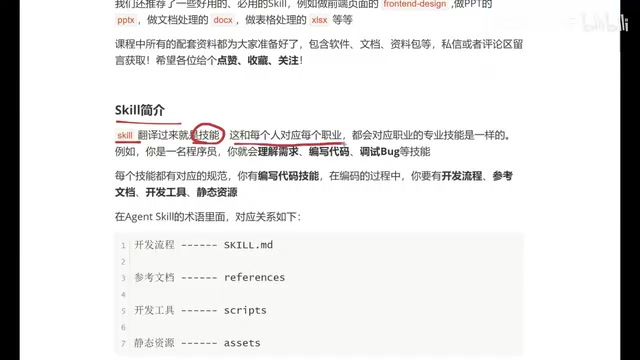
Beginner's Guide to Agent Skills: Structure Breakdown & Custom AI Skill Development
A deep dive into Agent Skill's core concepts and internal structure, covering skill.md, references, scripts, and assets with a restaurant poster Skill example.
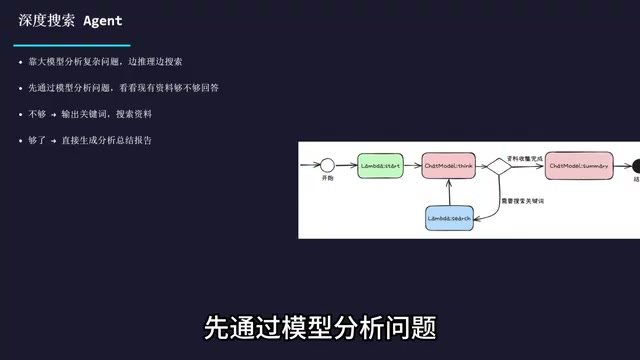
Complete Guide to Commercial AI Agent Development: From Requirements Analysis to Production Deployment
Complete guide to commercial AI agent development from scratch, covering requirements analysis, architecture design (ReAct framework, deep search, intent recognition), hands-on Coze platform implementation, workflow creation, and production deployment.
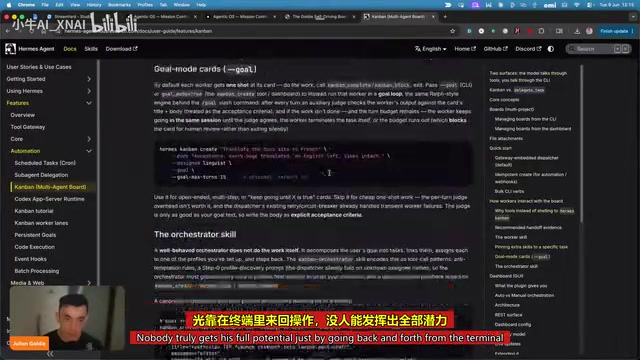
Hermes AI Kanban: A Five-Layer Autonomous Architecture for Fully Automated Delivery from Idea to Finished Product
Deep dive into Hermes Kanban 2.0's five-layer autonomous architecture covering intelligent planning, human approval gates, multi-agent execution, and Obsidian integration for fully automated delivery.