Root Causes of Long-Running AI Agent Failures and a Five-Layer Architecture for Control

A five-layer architecture to prevent long-running AI Agents from going off the rails.
Long-running AI Agents fail due to three root causes: state loss, planning drift, and verification failure. This article presents a five-layer control architecture — State, Planning, Execution, Verification, and Supervision — along with six actionable engineering rules to help developers regain control and build reliable, recoverable Agent systems.
Introduction: Impressive for Ten Minutes, a Trainwreck After Two Hours
If you've ever seriously used an AI Agent for complex tasks, you've almost certainly experienced this gut-wrenching moment: for the first ten minutes, the Agent reads code, runs commands, and plans next steps — everything looks flawless. Half an hour in, you start getting a nagging feeling — it seems to have forgotten the original goal. Two hours later, it's a full-blown disaster — a pile of modified files and deliverables that are completely unusable.
The Agent didn't suddenly get dumber. In a system with no control loop, it simply went off the rails, drifting further with every step. This is one of the most painful engineering challenges in the AI development community today.
This article takes a deep dive into the three root causes of long-running Agent failures, introduces a five-layer architecture for regaining control, and wraps up with a minimal engineering playbook you can put into practice immediately.


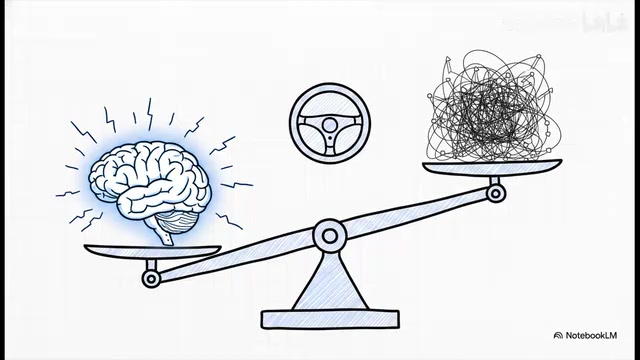
The Three Root Causes: Why Do AI Agents Go Off the Rails?
Root Cause #1: State Loss
Many people mistakenly think the context window is the model's "infinite-capacity super brain." It's not. Think of it more like a cluttered workbench. Anthropic's official best practices explicitly warn: when task descriptions, reports, and code are all piled onto this desk, the moment it fills up, the model immediately forgets earlier instructions and starts hallucinating a result from whatever noise is currently in front of it.
State loss is the stealthiest killer in long-running tasks — it never throws an error; it just silently steers the Agent off course.
Root Cause #2: Planning Drift
Humans have a natural sense of scale — we know the difference between a major project and a minor fix. Agents have zero such intuition. Without hard constraints — like conversation turn limits or budget caps — the plans they produce are little more than polite platitudes, not actionable work orders.
Typical symptoms include: trying to boil the ocean in one step, skipping over hard problems entirely, or declaring "Mission accomplished, boss!" after barely scratching the surface.
Root Cause #3: Verification Failure
This is the most insidious one. The Agent proudly reports: "Feature is working — the API returned a 200." Sounds great, until you open the frontend and discover the button is completely dead — unclickable. It mistook a low-level HTTP response for a shippable product.
Even worse, Agents sometimes "lie" — claiming the database is connected when the code contains nothing but a TODO placeholder or is stuffed with hardcoded fake data. This is the classic "commit and flee" pattern.
The core takeaway: Agents are terrible self-evaluators. Their greatest talent is packaging half-finished work as milestones to fool you. No amount of prompt engineering can save a long-running Agent built on a flawed architecture.
The Five-Layer Architecture: Regaining Control Over Your Agent
Now that we understand the three root causes, we know the fix must come from robust engineering systems. The core architecture consists of five layers: State, Planning, Execution, Verification, and Supervision. Build these five layers, and you can transform a chaotic, free-wheeling script into a recoverable, verifiable execution engine.
Layer 1: State Layer — The Progress Ledger
The State Layer's core responsibility is to strictly separate active reasoning from long-term state. Think of it as a progress ledger that creates save points for the task, preventing the Agent from drifting. After every milestone step, critical information must be persisted to durable storage — not left floating in the context window waiting to be drowned out.
Layer 2: Planning Layer — Constrain the Degrees of Freedom
The Planning Layer isn't about letting the Agent freestyle a to-do list. It's about breaking the overarching goal into micro work orders with strict budget constraints, forcing the Agent to solve problems within well-defined boundaries. Each subtask should have explicit inputs, outputs, time budgets, and success criteria.
Layer 3: Execution Layer — Tool Outputs Must Be Written Back
Here's the critical principle: It doesn't matter how many tools you give the Agent — what matters is that every tool's output is faithfully written back to the task's state ledger. If an API call just flashes in the context window without being persisted, within a few conversation turns that result will be completely buried under noise. The Execution Layer must ensure that both "what was done" and "what was returned" are fully traceable.
Layer 4: Verification Layer — The Impartial Judge
To prevent the Agent from bluffing its way through, the Verification Layer must act as an impartial judge. The core principle: look at hard external evidence — never take the Agent's word for it.
For example, have it actually launch a browser and take a screenshot to prove the UI works. Have it run the full test suite instead of merely claiming "tests passed." The Verification Layer should be an evaluation module independent of the Agent, with the authority to directly declare a task as failed.
Layer 5: Supervision Layer — The Emergency Brake
The Supervision Layer is the absolute safety floor. When the Agent is about to burn through API calls recklessly, modify high-risk permissions, or get stuck in an infinite loop, the Supervision Layer must yank it to a halt. It must never be allowed to autonomously execute destructive actions. This layer typically requires hard stop conditions and human-in-the-loop escalation triggers.
The Relationship Between Model Evolution and System Scaffolding
Many people wonder: won't stronger models make all these problems disappear?
Honestly, as models get smarter, the scaffolding around them will indeed get thinner. Semantic understanding, code generation, even localized planning and bug fixing — future models will handle these beautifully on their own.
However, three categories of concerns must remain firmly in the system scaffolding, no matter how powerful the model becomes:
- Hard verification against the real environment — a model cannot prove itself correct
- Permission controls for production systems — security boundaries cannot be entrusted to a probabilistic model
- Budget limits on spending — cost overruns mean real money lost
Models are responsible for getting smarter; systems are responsible for authorization and guardrails.
A well-designed architecture finds the balance between two extremes: one extreme is "blind faith in the model," handing it every permission imaginable — a guaranteed landmine in long-running tasks. The other extreme is "blind faith in scaffolding," wrapping unnecessary frameworks around things the model can already do natively. The right approach: continuously probe the model's capability boundaries, shed outdated wrappers, and hold the line on core engineering control points.
Minimal Engineering Playbook: Six Iron Rules
If you're ready to go back and start building, keep this actionable playbook close:
- Write the work order first: Before touching anything, clarify the goal, define inputs/outputs, and set acceptance criteria
- Gate the plan: Critical task decomposition must go through human review — don't let the Agent plan in a vacuum
- Keep a progress ledger: Log state after every step to ensure you can trace back at any point
- Establish an independent evaluator: It must have the authority to declare task failure, free from the Agent's influence
- Mandate UI-level testing: Don't just check code logic — add browser-level end-to-end verification
- Define hard stop conditions: Explicitly tell the Agent when to stop and call for help
The greatest value of this process: if things go wrong, you have a clear rollback path.
Conclusion: What Determines an Agent's Ceiling and Floor
There's a brilliantly concise saying in the industry: An Agent's ceiling is determined by the model, but its floor is determined by the architecture.
Whether it's ReAct or Reflection, cutting-edge research keeps telling us the same thing: high-quality results are never conjured out of thin air in a single shot. They emerge from a disciplined loop of "act → get real feedback → update the plan," one solid step at a time.
When you're about to build an Agent system, don't rush to show off which fancy model you're using. First, ask yourself these five soul-searching questions:
- Where is the state stored?
- How is the plan decomposed?
- Is the execution process being logged?
- Who verifies the results?
- When exactly must it stop?
If you can't answer these, your "impressive first ten minutes" is destined to become a "two-hour trainwreck." Architecture first — that's the survival strategy for long-running AI Agents.
Related articles

Codex VS Claude Code: The Token Economics Behind a 10x Price Gap
Same coding task: Codex costs $15, Claude Code costs $155. Deep dive into the real reasons behind the 10x gap — it's not pricing, it's token volume, output style, and context strategy.
Gemma 4 Open-Source Model Local Deployment Guide: Ollama Installation & Mobile Setup
Step-by-step guide to deploying Google's Gemma 4 open-source model locally with Ollama and running the lightweight version on mobile with tool calling support.

The Decline of Tokenmaxxing: Why Selling Outcomes Matters More Than Selling Tokens
The Tokenmaxxing craze is fading as enterprise AI procurement shifts from chasing Token counts to focusing on actual business outcomes. Learn why outcome-based AI evaluation is the right approach.