Sakana AI Launches RSI Lab: The Path to Recursive Self-Improvement Where AI Builds AI

Sakana AI launches RSI Lab to build AI systems that autonomously improve themselves.
Sakana AI has officially established RSI Lab, a dedicated research team focused on recursive self-improvement — enabling AI to autonomously improve its own architecture. Building on two years of research including The AI Scientist and Darwin Gödel Machine, the lab outlines a four-stage roadmap from agent-native models to democratized AI, emphasizing creativity over compute as the key driver of progress.
What Is Recursive Self-Improvement (RSI)?
A new AI paradigm is gaining momentum worldwide — Recursive Self-Improvement (RSI). The concept is straightforward: let AI improve itself, creating a continuous loop of evolution.
Japanese AI research company Sakana AI recently announced the official launch of a dedicated research team called "RSI Lab," focused on redesigning the AI development process itself. This isn't a fresh start — it's a natural extension of two years of systematic research.
Sakana AI's core philosophy carries a certain philosophical depth: major technological breakthroughs often don't emerge from resource-rich environments, but are forged under severe constraints. Human cognition didn't arise from a brain with unlimited computational power — it's the product of long evolution under limited resources. Japan's global manufacturing competitiveness didn't come from abundant natural resources, but from the continuous reinvention of production systems themselves.
Two Years of Research at Sakana AI: From Theory to Systems
Key Research Achievements at a Glance
Sakana AI has built an impressive body of work in the RSI space, forming a clear trajectory of technical evolution:
LLM-Squared (2024): In collaboration with Oxford and Cambridge, this project had LLMs invent better methods for training LLMs. The result was DiscoPOP, a preference optimization algorithm that was nearly autonomously discovered and described by an LLM during an evolutionary process.
The Darwin Gödel Machine (2025): Developed with UBC, this system achieves continuous self-improvement through mutation and selection of self-modifying code agents. On the SWE-bench benchmark, it automatically more than doubled initial performance, with an absolute improvement of 30 percentage points.
ShinkaEvolve (2025): An open-source framework that solved complex optimization problems in just 150 trials, demonstrating exceptional sample efficiency. It even autonomously designed a novel load-balancing loss function for MoE (Mixture of Experts) architectures.
ALE-Agent (2025): An optimization agent that defeated 804 human contestants to win first place in AtCoder Heuristic Contest 058, with the ability to extract lessons from its own failures.
Digital Red Queen (2026): In collaboration with MIT, this project reproduced endless adversarial co-evolution in the classic programming game Core War, observing phenomena analogous to "convergent evolution" in biology.
The AI Scientist (2024–2026): A system capable of automating the entire research pipeline — from ideation and experimentation to paper writing and peer review. In 2025, a fully AI-generated paper passed peer review at a top conference workshop, and was published in Nature in March 2026.
Core Design Philosophy: Creativity Over Compute
The common underlying logic across all these projects is: drive progress through creativity, not compute. ShinkaEvolve solved problems in 150 trials that brute-force search couldn't handle. ALE-Agent surpassed experts not by scaling up inference compute, but by learning from failure. What Sakana AI pursues isn't self-improvement powered by maximum compute, but self-improvement that advances with the fewest possible trials.
The Four-Stage RSI Roadmap: From Models to AI Democratization
Sakana AI outlines the realization of recursive self-improvement in four progressive stages:
Stage 1: Agent Native Model Not a model designed for chat-based Q&A, but a foundation model purpose-built from the ground up for autonomous agent use cases, including the ability to internally simulate how the world works.
Stage 2: The AI Scientist Enabling models to autonomously drive the end-to-end research process, progressively expanding the frontiers of scientific knowledge.
Stage 3: Recursive Self-Improvement AI begins writing, testing, and verifying its own architectural code. This is the decisive turning point where the AI-improving-AI loop truly begins.
Stage 4: Democratized AI Once efficient self-improvement becomes a reality, countries, organizations, and domains that can't compete with hyperscale cloud providers on raw compute can build the AI they truly need with their own hands.
Why Is Sakana AI Pursuing RSI in Japan?
The answer to this question perfectly embodies Sakana AI's core belief. Japan's compute resources are not insignificant globally, but they fall far short of hyperscale cloud providers. Precisely for this reason, computationally efficient self-improvement is an unavoidable prerequisite for Japan's AI development.
More importantly, technology refined under constraints ends up being more broadly applicable than technology built on abundant compute. Japan's national Sovereign AI strategy also provides institutional support for this direction.
Startups around the world are emerging under the banner of self-improving AI, with some building directly on Sakana AI's earlier research. The vision of "self-restructuring AI" is becoming a major industry-wide trend.
Responsible RSI: Safety as a Prerequisite for Continuous Evolution
Two years of building these systems have given Sakana AI deep insight into failure modes: evolutionary loops that gradually drift outside intended boundaries; self-modifications that score well on benchmarks but fail in real-world use; agents that find shortcuts to circumvent constraints.
The team is explicit: these aren't rare exceptions — they are core engineering challenges inherent to RSI technology. RSI Lab's principles include: publicly releasing results including failures; and incorporating verifiable safety measures into the self-improvement loop from the very beginning.
Their perspective is worth reflecting on: Responsible RSI isn't a constraint on performance — it's the very prerequisite that enables performance to keep improving.
RSI Lab Recruitment and Future Outlook
RSI Lab is currently recruiting two types of core talent at its Tokyo headquarters:
-
Research Scientists: Researchers with proven track records at top frontier labs who are willing to go beyond standard benchmark competitions — particularly those exploring new principles of machine intelligence that reduce required compute, and applying open-ended evolution concepts to areas like cybersecurity and automated red-teaming.
-
Software Engineers: Systems and infrastructure specialists who can optimize search pipelines, manage large-scale distributed computing environments, and run automated code generation mechanisms at production scale.
Sakana AI is transforming "AI building AI" from a science fiction concept into a solvable engineering problem. As global AI competition intensifies, this approach of "winning through ingenuity" rather than "winning through brute force" may be the most promising direction for nations and organizations with limited compute resources.
Related articles

The Clotilda: Underwater Archaeological Discovery of America's Last Slave Ship
The Clotilda, America's last slave ship, was discovered by underwater archaeologists in Alabama nearly 160 years after sinking. Learn about the search, key evidence, and other slave trade shipwreck discoveries.
Sakana AI in Practice: Reshaping Banking Lending Operations with AI Agents — Technology and Strategy
Deep dive into how Sakana AI applies AI Agents to banking lending operations, covering end-to-end support from information gathering to approval document generation, plus technical challenges and human-AI collaboration design.
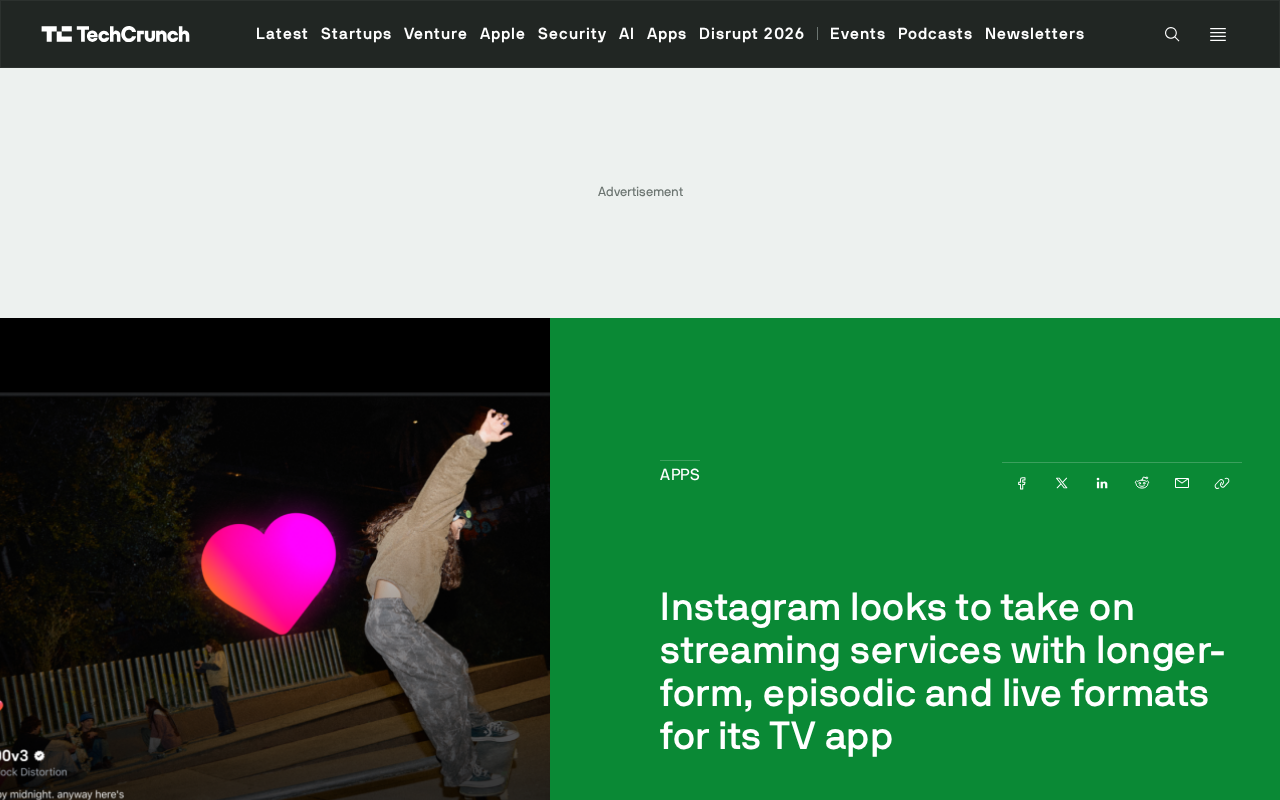
Instagram Enters the Living Room: Long-Form Video, Series, and Live Streaming Challenge Netflix
Instagram is building a TV app with long-form video, episodic series, and live streaming to challenge Netflix. Deep analysis of its living room strategy and industry impact.